de Jonge Daniëlle S W, Merten Véronique, Bayer Till, Puebla Oscar, Reusch Thorsten B H, Hoving Henk-Jan T
Faculty of Mathematics and Natural Sciences, University of Groningen, Groningen, The Netherlands.
Marine Evolutionary Ecology, GEOMAR Helmholtz Centre for Ocean Research Kiel, Kiel, Germany.
R Soc Open Sci. 2021 Feb 10;8(2):201388. doi: 10.1098/rsos.201388.
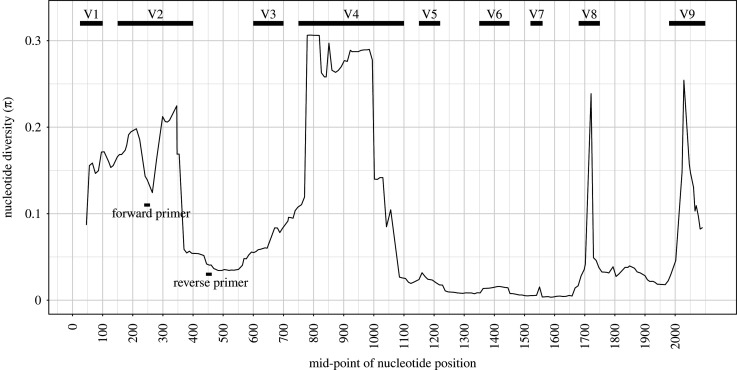
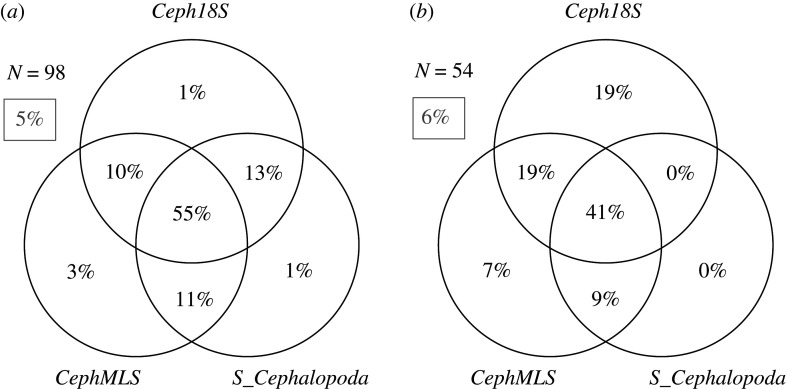
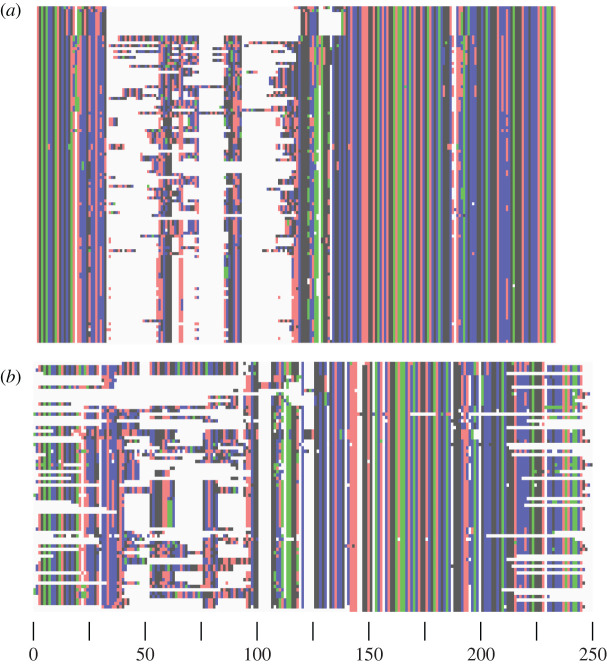
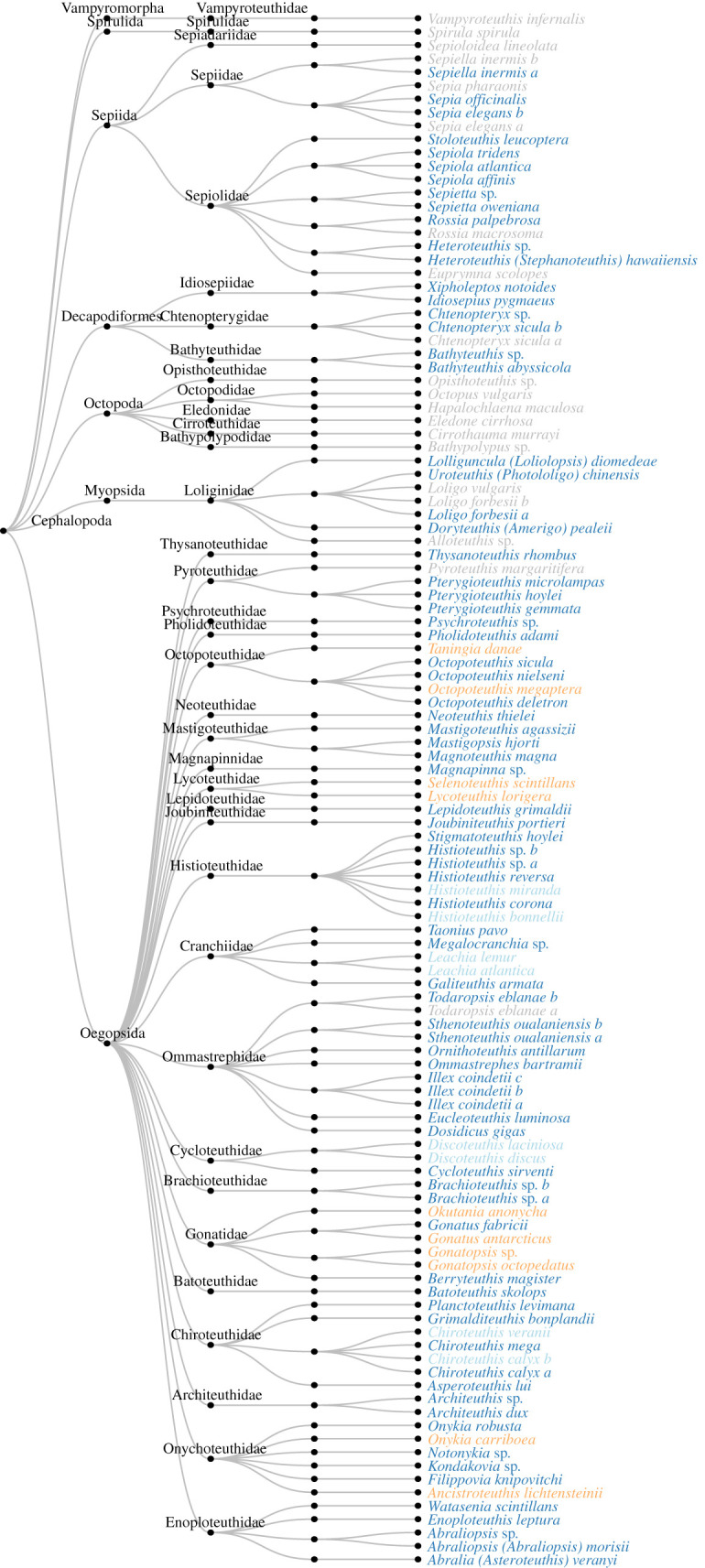
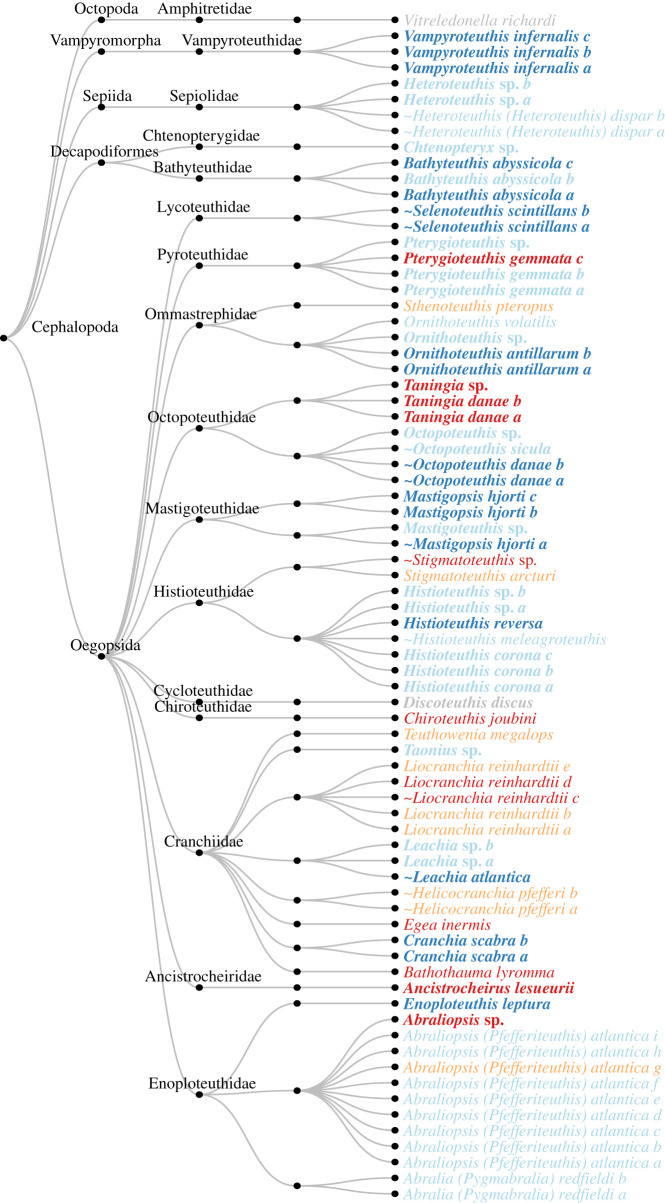
Cephalopods are pivotal components of marine food webs, but biodiversity studies are hampered by challenges to sample these agile marine molluscs. Metabarcoding of environmental DNA (eDNA) is a potentially powerful technique to study oceanic cephalopod biodiversity and distribution but has not been applied thus far. We present a novel universal primer pair for metabarcoding cephalopods from eDNA, (Forward: 5'-CGC GGC GCT ACA TAT TAG AC-3', Reverse: 5'-GCA CTT AAC CGA CCG TCG AC-3'). The primer pair targets the hypervariable region V2 of the nuclear 18S rRNA gene and amplifies a relatively short target sequence of approximately 200 bp in order to allow the amplification of degraded DNA. tests on a reference database and empirical tests on DNA extracts from cephalopod tissue estimate that 44-66% of cephalopod species, corresponding to about 310-460 species, can be amplified and identified with this primer pair. A multi-marker approach with the novel and two previously published cephalopod mitochondrial 16S rRNA primer sets targeting the same region (Jarman . 2006 , 268-271; Peters . 2015 , 1428-1439) is estimated to amplify and identify 89% of all cephalopod species, of which an estimated 19% can only be identified by . All sequences obtained with were submitted to GenBank, resulting in new 18S rRNA sequences for 13 cephalopod taxa.
头足类动物是海洋食物网的关键组成部分,但由于对这些敏捷的海洋软体动物进行采样存在挑战,生物多样性研究受到了阻碍。环境DNA(eDNA)的代谢条形码技术是一种研究海洋头足类动物生物多样性和分布的潜在强大技术,但迄今为止尚未得到应用。我们提出了一种用于从头足类动物eDNA中进行代谢条形码分析的新型通用引物对(正向:5'-CGC GGC GCT ACA TAT TAG AC-3',反向:5'-GCA CTT AAC CGA CCG TCG AC-3')。该引物对靶向核18S rRNA基因的高变区V2,并扩增出约200 bp的相对较短的目标序列,以便能够扩增降解的DNA。在参考数据库上的测试以及对头足类动物组织DNA提取物的实证测试估计,使用该引物对可以扩增和鉴定44%-66%的头足类物种,相当于约310-460个物种。一种采用新型引物对以及另外两个先前发表的靶向同一区域的头足类动物线粒体16S rRNA引物组的多标记方法估计可以扩增和鉴定所有头足类物种的89%,其中估计有19%只能通过新型引物对来鉴定。使用新型引物对获得的所有序列都已提交到GenBank,产生了13个头足类分类单元的新18S rRNA序列。