Vancouver Prostate Centre, Department of Urologic Science, University of British Columbia, Vancouver, Canada.
School of Medicine, Koç University, Istanbul, Turkey.
Genome Biol. 2021 May 11;22(1):149. doi: 10.1186/s13059-021-02339-6.
Androgen receptor (AR) is critical to the initiation, growth, and progression of prostate cancer. Once activated, the AR binds to cis-regulatory enhancer elements on DNA that drive gene expression. Yet, there are 10-100× more binding sites than differentially expressed genes. It is unclear how or if these excess binding sites impact gene transcription.
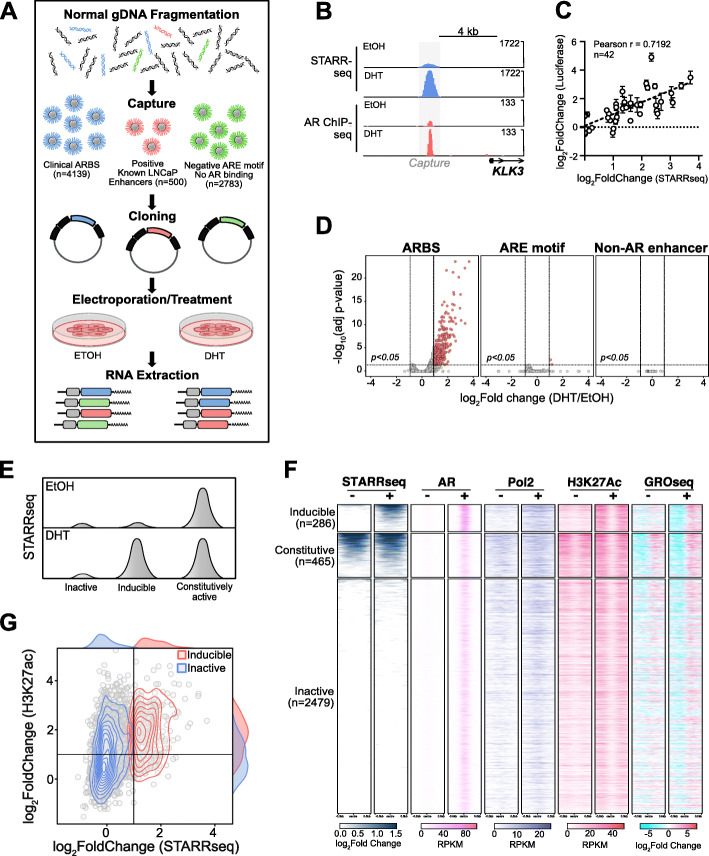
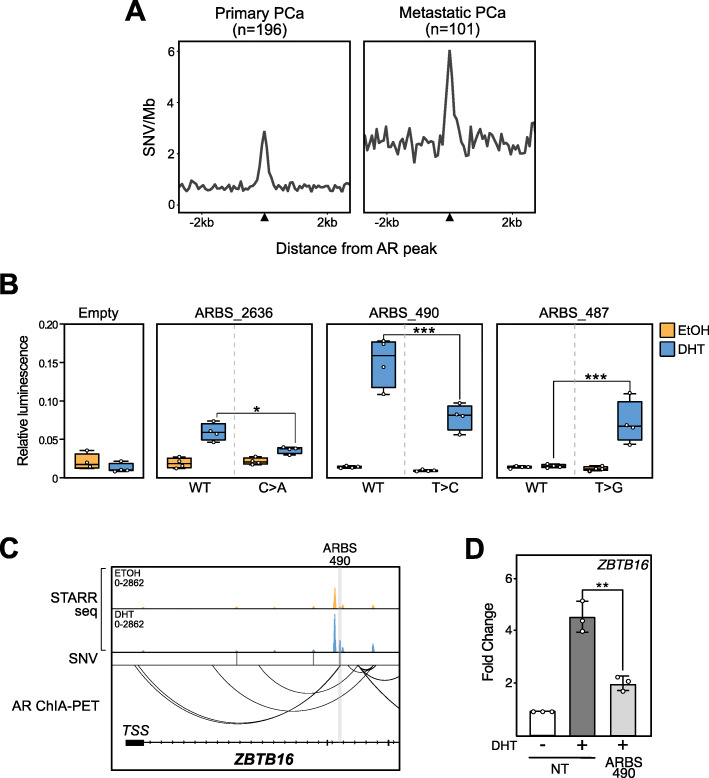
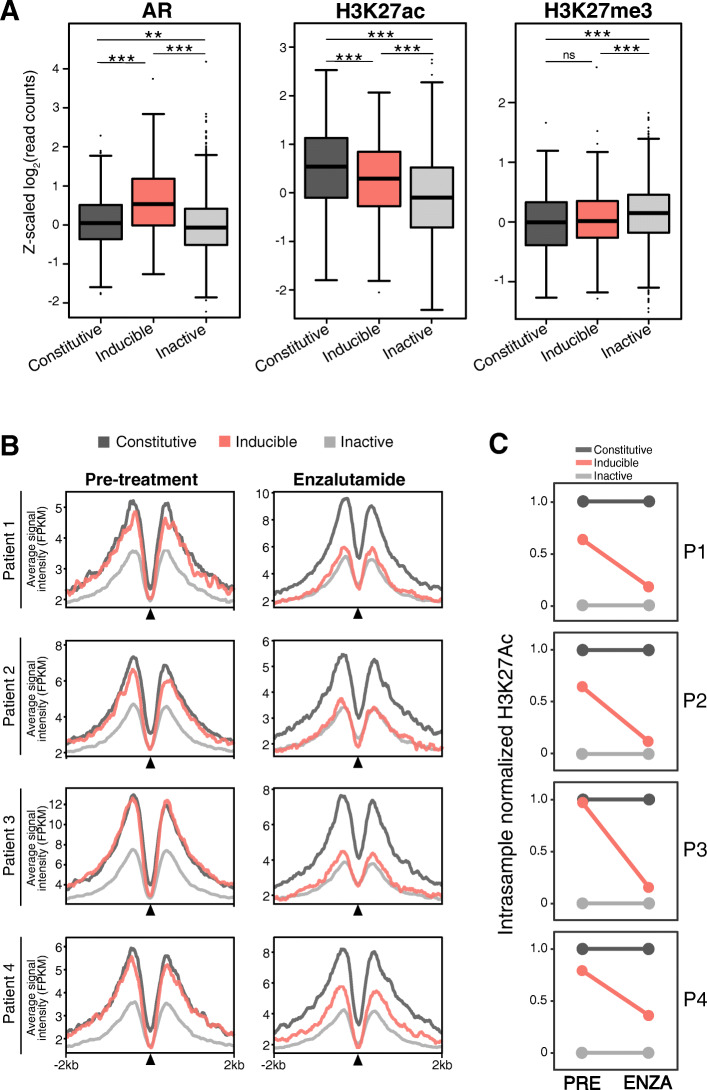
To characterize the regulatory logic of AR-mediated transcription, we generated a locus-specific map of enhancer activity by functionally testing all common clinical AR binding sites with Self-Transcribing Active Regulatory Regions sequencing (STARRseq). Only 7% of AR binding sites displayed androgen-dependent enhancer activity. Instead, the vast majority of AR binding sites were either inactive or constitutively active enhancers. These annotations strongly correlated with enhancer-associated features of both in vitro cell lines and clinical prostate cancer samples. Evaluating the effect of each enhancer class on transcription, we found that AR-regulated enhancers frequently interact with promoters and form central chromosomal loops that are required for transcription. Somatic mutations of these critical AR-regulated enhancers often impact enhancer activity.
Using a functional map of AR enhancer activity, we demonstrated that AR-regulated enhancers act as a regulatory hub that increases interactions with other AR binding sites and gene promoters.
雄激素受体(AR)对前列腺癌的发生、生长和进展至关重要。一旦被激活,AR 就会与 DNA 上的顺式调节增强子元件结合,从而驱动基因表达。然而,有 10-100 倍以上的结合位点比差异表达的基因多。目前尚不清楚这些多余的结合位点是否以及如何影响基因转录。
为了表征 AR 介导的转录的调控逻辑,我们通过自我转录活性调控区测序(STARRseq)功能测试所有常见的临床 AR 结合位点,生成了一个具有特定基因座的增强子活性图谱。只有 7%的 AR 结合位点显示出雄激素依赖性增强子活性。相反,绝大多数 AR 结合位点要么是无活性的,要么是组成性的增强子。这些注释与体外细胞系和临床前列腺癌样本的增强子相关特征强烈相关。评估每个增强子类别对转录的影响,我们发现 AR 调节的增强子经常与启动子相互作用,并形成中央染色体环,这是转录所必需的。这些关键的 AR 调节增强子的体细胞突变通常会影响增强子活性。
使用 AR 增强子活性的功能图谱,我们证明了 AR 调节的增强子作为一个调控枢纽,增加了与其他 AR 结合位点和基因启动子的相互作用。