School of Medicine, Koç University, Istanbul, 34450, Turkey.
Vancouver Prostate Centre, University of British Columbia, Vancouver, V6H 3Z6, BC, Canada.
Nat Commun. 2020 Feb 11;11(1):832. doi: 10.1038/s41467-020-14644-y.
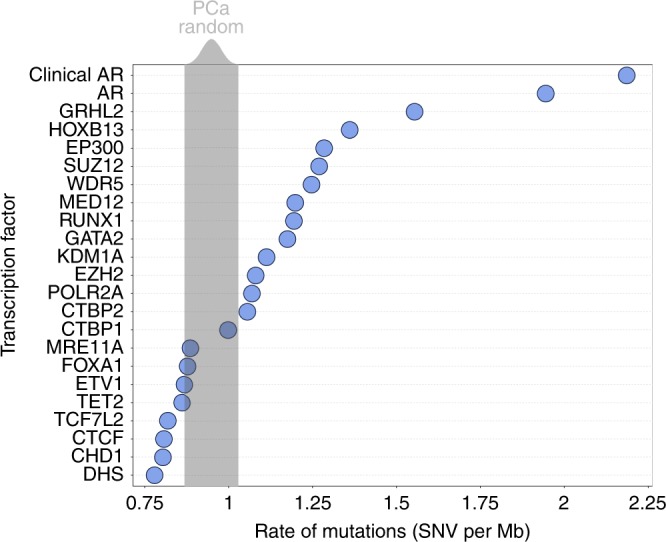
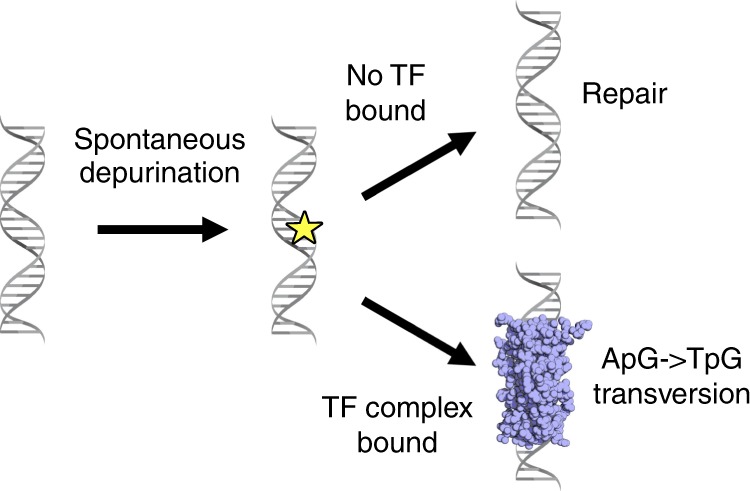
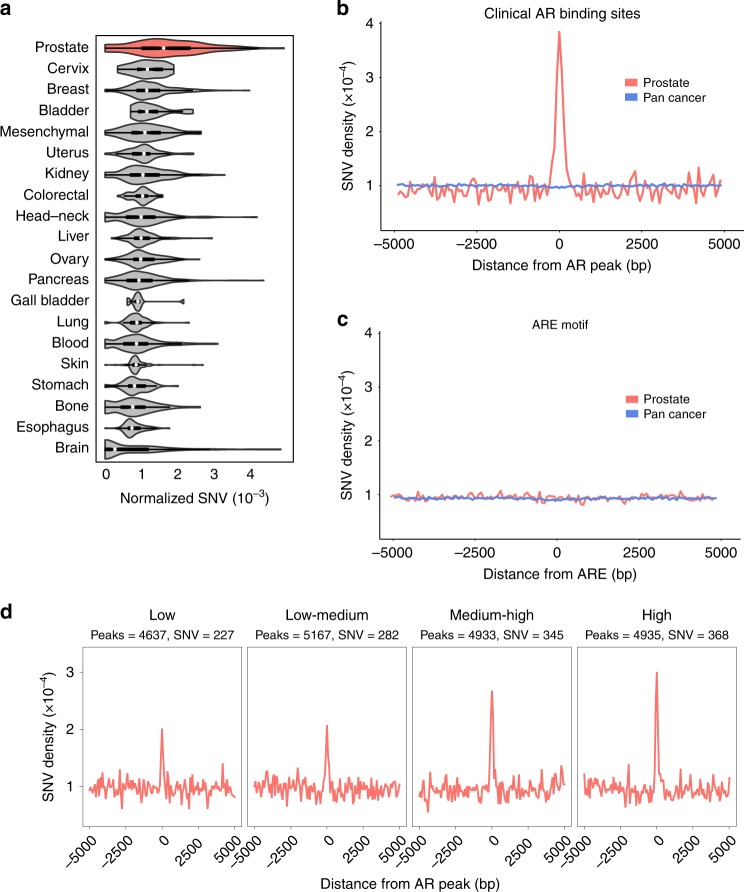
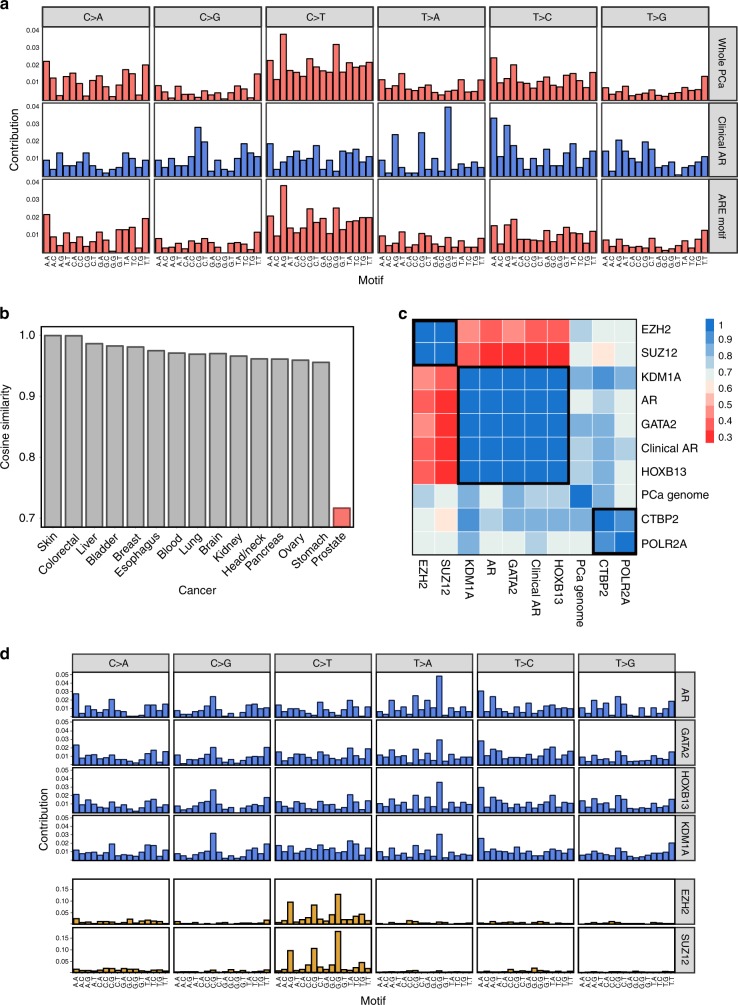
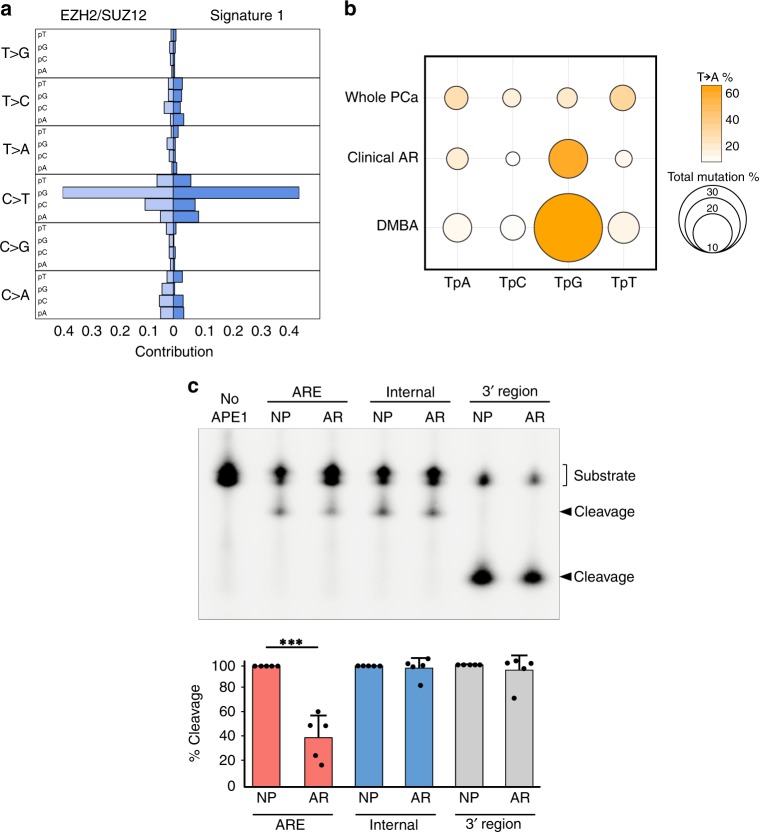
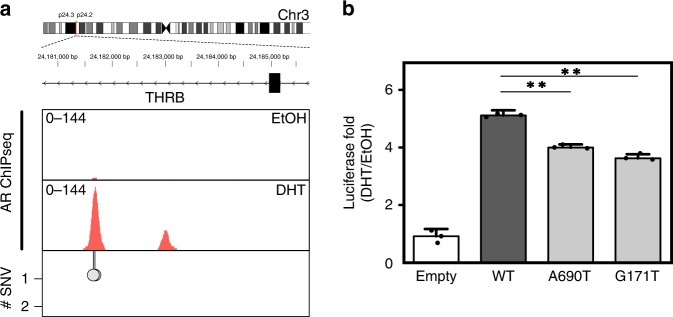
Androgen receptor (AR) signalling is essential in nearly all prostate cancers. Any alterations to AR-mediated transcription can have a profound effect on carcinogenesis and tumor growth. While mutations of the AR protein have been extensively studied, little is known about those somatic mutations that occur at the non-coding regions where AR binds DNA. Using clinical whole genome sequencing, we show that AR binding sites have a dramatically increased rate of mutations that is greater than any other transcription factor and specific to only prostate cancer. Demonstrating this may be common to lineage-specific transcription factors, estrogen receptor binding sites were also found to have elevated rate of mutations in breast cancer. We provide evidence that these mutations at AR binding sites, and likely other related transcription factors, are caused by faulty repair of abasic sites. Overall, this work demonstrates that non-coding AR binding sites are frequently mutated in prostate cancer and can impact enhancer activity.
雄激素受体 (AR) 信号在几乎所有前列腺癌中都至关重要。AR 介导的转录的任何改变都可能对癌变和肿瘤生长产生深远影响。虽然已经广泛研究了 AR 蛋白的突变,但对于发生在 AR 与 DNA 结合的非编码区域的体细胞突变知之甚少。通过临床全基因组测序,我们表明 AR 结合位点的突变率显著增加,高于任何其他转录因子,并且仅特异性存在于前列腺癌中。证明这一点可能对谱系特异性转录因子是常见的,在乳腺癌中也发现雌激素受体结合位点的突变率升高。我们提供的证据表明,AR 结合位点的这些突变,以及可能的其他相关转录因子,是由碱基缺失位点的错误修复引起的。总的来说,这项工作表明,非编码 AR 结合位点在前列腺癌中经常发生突变,并可能影响增强子活性。