Department of Microbiology and Cell Biology, Tokyo Metropolitan Institute of Medical Science, Setagaya-ku, Tokyo, Japan.
Division of Pathogenesis and Disease Regulation, Department of Pathology, Shiga University of Medical Science, Setatsukinowa, Otsu, Shiga, Japan.
Nat Commun. 2021 May 11;12(1):2654. doi: 10.1038/s41467-021-22964-w.
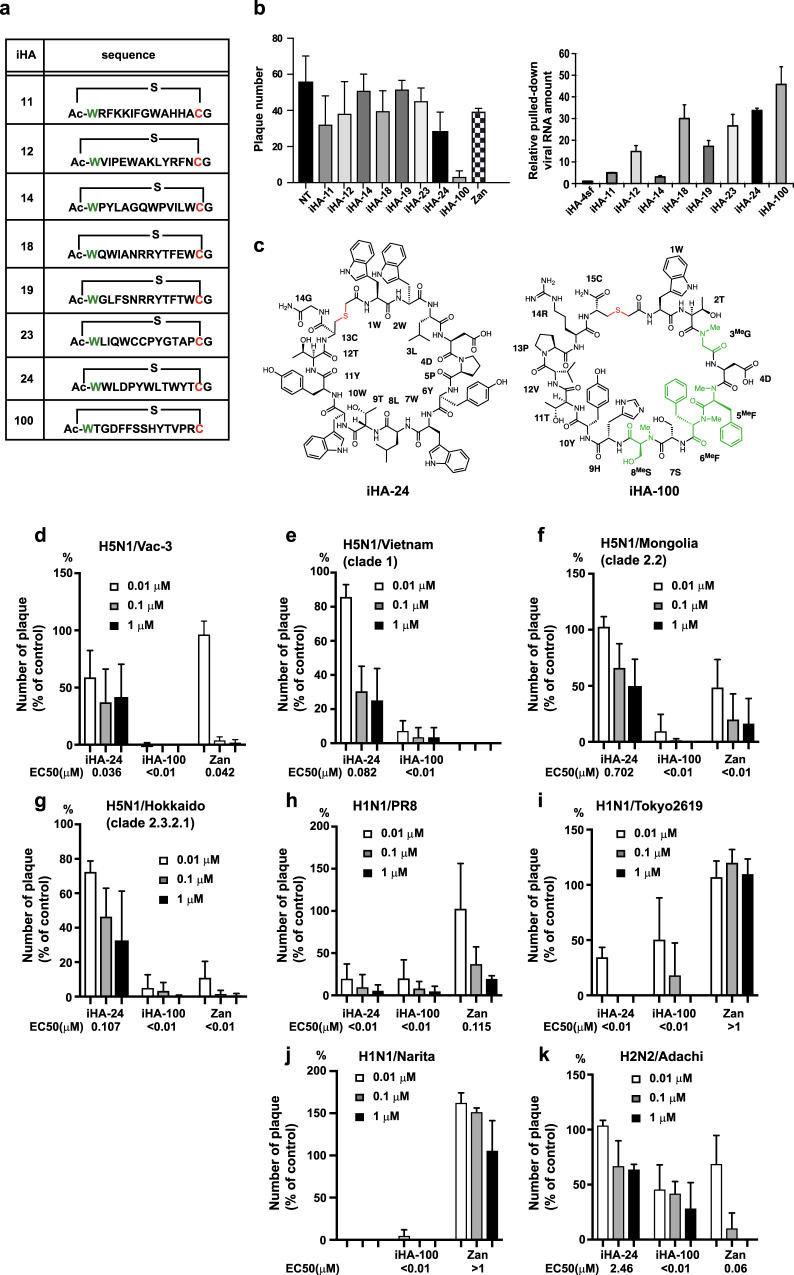
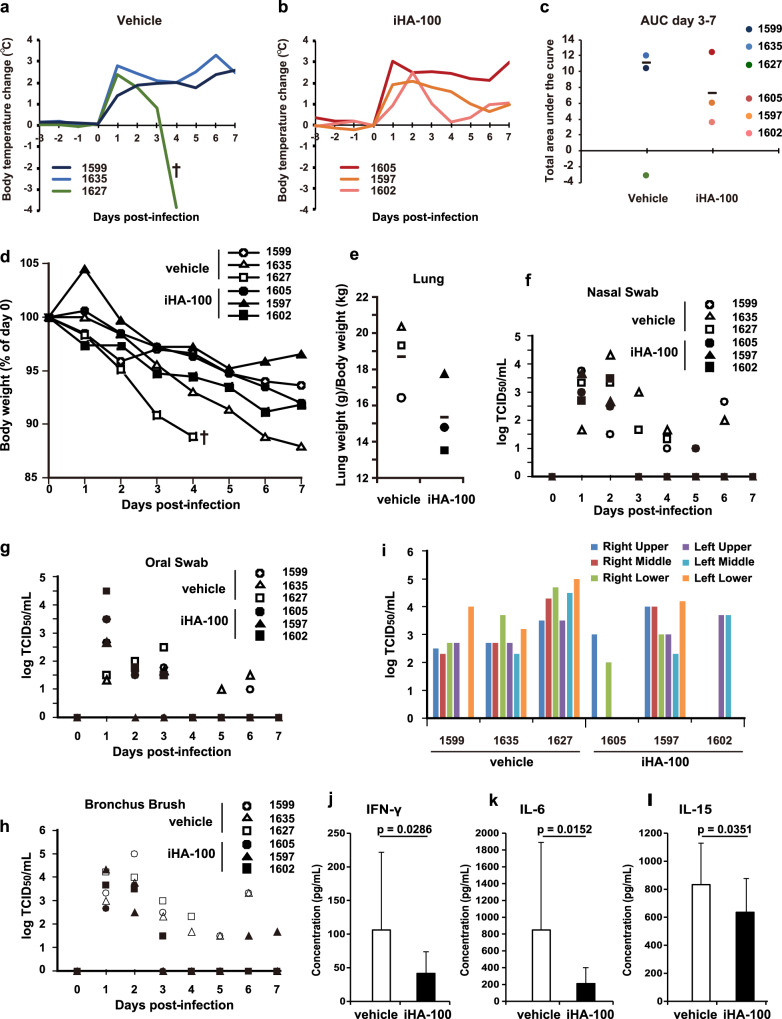
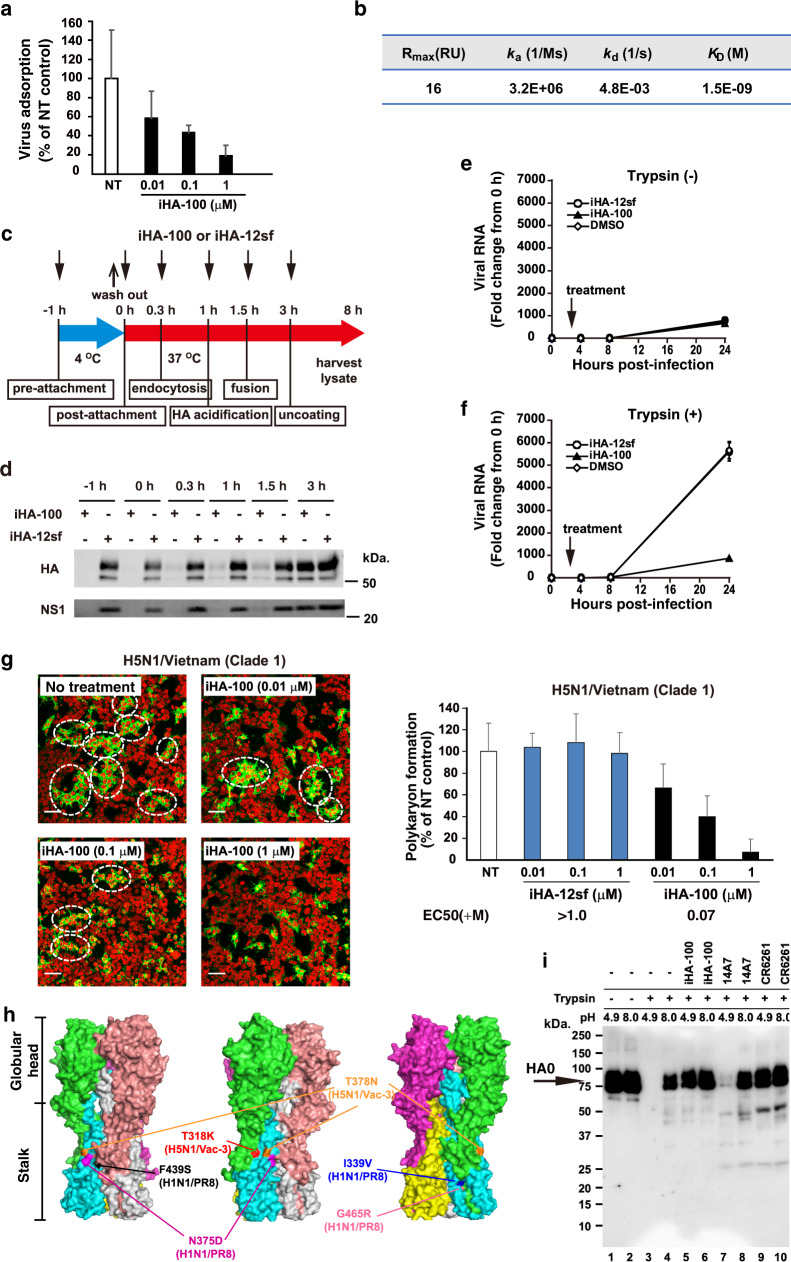
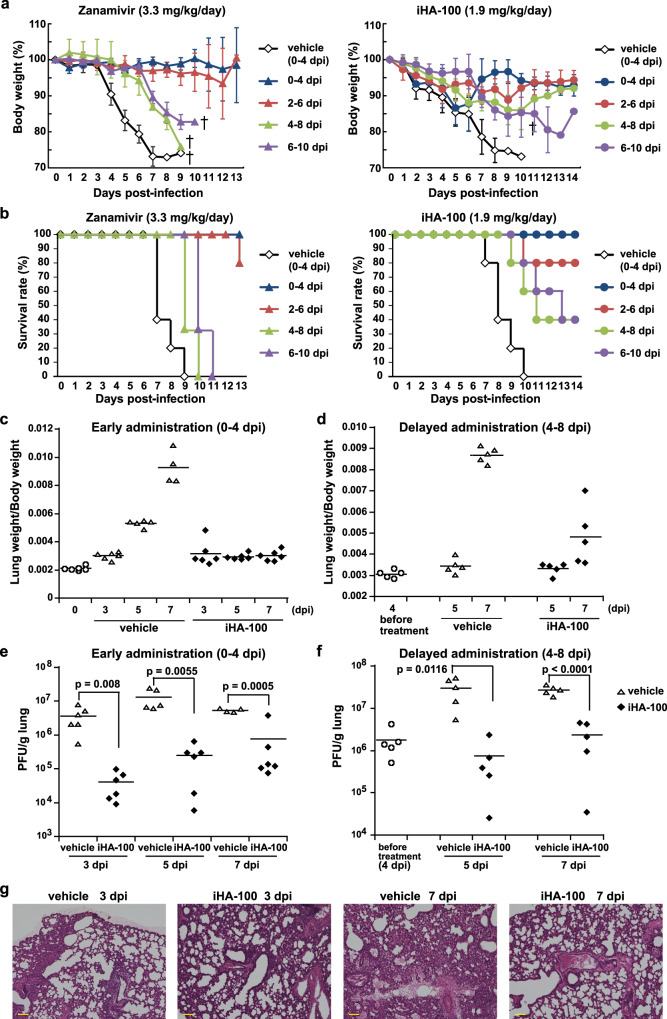
Most anti-influenza drugs currently used, such as oseltamivir and zanamivir, inhibit the enzymatic activity of neuraminidase. However, neuraminidase inhibitor-resistant viruses have already been identified from various influenza virus isolates. Here, we report the development of a class of macrocyclic peptides that bind the influenza viral envelope protein hemagglutinin, named iHA. Of 28 iHAs examined, iHA-24 and iHA-100 have inhibitory effects on the in vitro replication of a wide range of Group 1 influenza viruses. In particular, iHA-100 bifunctionally inhibits hemagglutinin-mediated adsorption and membrane fusion through binding to the stalk domain of hemagglutinin. Moreover, iHA-100 shows powerful efficacy in inhibiting the growth of highly pathogenic influenza viruses and preventing severe pneumonia at later stages of infection in mouse and non-human primate cynomolgus macaque models. This study shows the potential for developing cyclic peptides that can be produced more efficiently than antibodies and have multiple functions as next-generation, mid-sized biomolecules.
目前使用的大多数抗流感药物,如奥司他韦和扎那米韦,都能抑制神经氨酸酶的酶活性。然而,已经从各种流感病毒分离株中鉴定出了对神经氨酸酶抑制剂有抗性的病毒。在这里,我们报告了一类大环肽的开发,这些肽结合流感病毒包膜蛋白血凝素,命名为 iHA。在研究的 28 种 iHAs 中,iHA-24 和 iHA-100 对广泛的 1 组流感病毒的体外复制具有抑制作用。特别是,iHA-100 通过与血凝素的茎部结构域结合,双功能抑制血凝素介导的吸附和膜融合。此外,iHA-100 在抑制高致病性流感病毒的生长和预防感染后期严重肺炎方面在小鼠和非人类灵长类动物食蟹猴模型中显示出强大的疗效。这项研究表明,开发具有比抗体更高效生产能力和多种功能的环状肽作为下一代中分子生物的潜力。