Department of Life Sciences, College of Science and General Studies, Alfaisal University, Riyadh, 11533, Kingdom of Saudi Arabia.
Southern Marine Science and Engineering Guangdong Laboratory (Guangzhou), Guangzhou, People's Republic of China.
Sci Rep. 2021 May 11;11(1):9995. doi: 10.1038/s41598-021-89345-7.
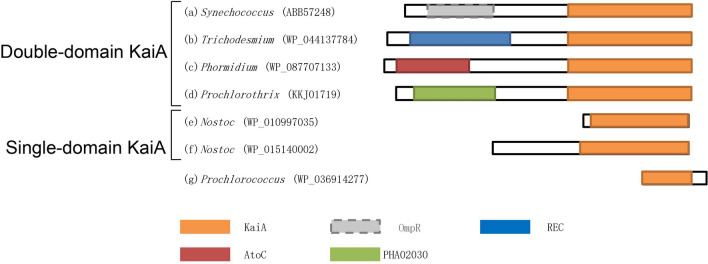
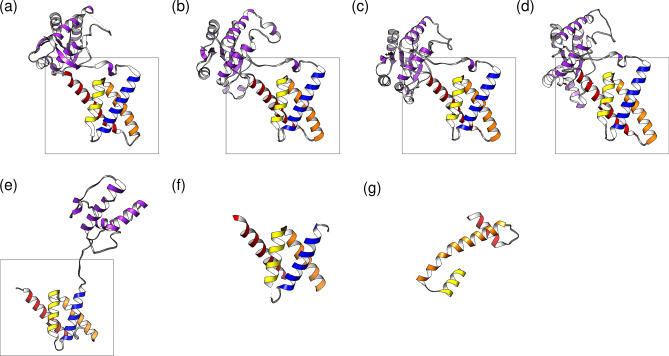
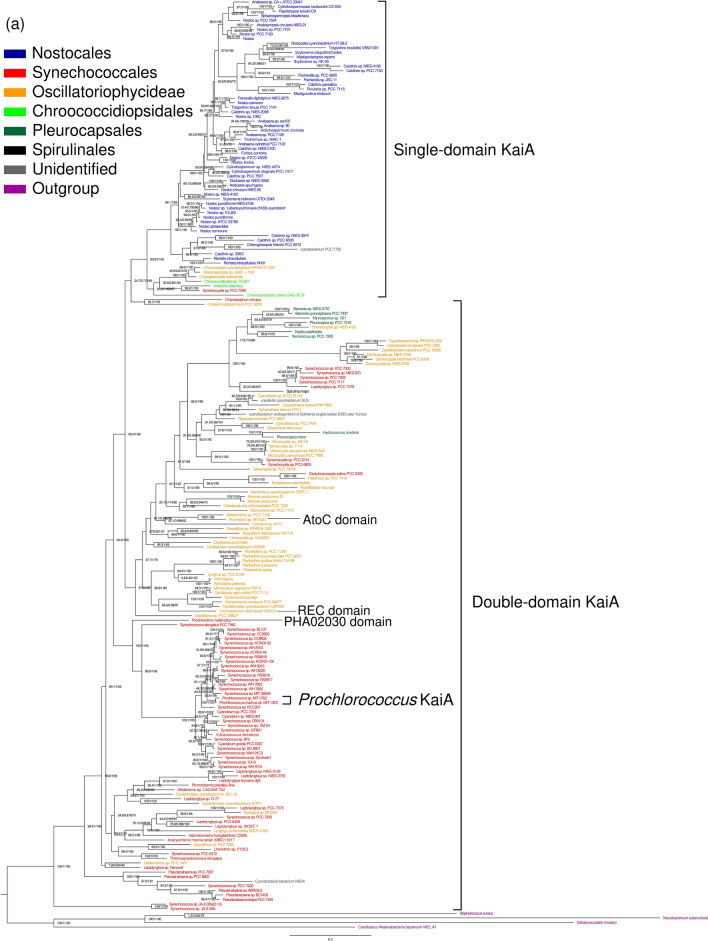
The circadian system of cyanobacteria is built upon a central oscillator consisting of three genes, kaiA, kaiB, and kaiC. The KaiA protein plays a key role in phosphorylation/dephosphorylation cycles of KaiC, which occur over the 24-h period. We conducted a comprehensive evolutionary analysis of the kaiA genes across cyanobacteria. The results show that, in contrast to the previous reports, kaiA has an ancient origin and is as old as cyanobacteria. The kaiA homologs are present in nearly all analyzed cyanobacteria, except Gloeobacter, and have varying domain architecture. Some Prochlorococcales, which were previously reported to lack the kaiA gene, possess a drastically truncated homolog. The existence of the diverse kaiA homologs suggests significant variation of the circadian mechanism, which was described for the model cyanobacterium, Synechococcus elongatus PCC7942. The major structural modifications in the kaiA genes (duplications, acquisition and loss of domains) have apparently been induced by global environmental changes in the different geological periods.
蓝藻的生物钟系统建立在一个由三个基因(kaiA、kaiB 和 kaiC)组成的中央振荡器上。KaiA 蛋白在 KaiC 的磷酸化/去磷酸化循环中起着关键作用,这个循环发生在 24 小时内。我们对蓝藻中的 kaiA 基因进行了全面的进化分析。结果表明,与之前的报道相反,kaiA 具有古老的起源,与蓝藻一样古老。kaiA 同源物几乎存在于所有分析的蓝藻中,除了 Glcobacter,并且具有不同的结构域架构。一些以前被报道缺乏 kaiA 基因的 Prochlorococcales 拥有一个明显截短的同源物。多样化的 kaiA 同源物的存在表明生物钟机制存在显著差异,这在模型蓝藻 Synechococcus elongatus PCC7942 中已有描述。kaiA 基因的主要结构修饰(复制、获得和丢失结构域)显然是由不同地质时期的全球环境变化引起的。