Huang Yun-Ning, Xu Yuan-Yi, Ma Qian, Li Meng-Qi, Guo Jia-Xin, Wang Xiaofei, Jin Xiu, Shang Jing, Jiao Long-Xing
Department of Gastrointestinal Surgery, The Affiliated People's Hospital of Ningxia Medical University, Yinchuan, Ningxia , P.R. China.
Department of Pathology, Ningxia Medical University, Yinchuan, Ningxia, P.R. China.
J Cancer. 2021 Apr 12;12(11):3367-3377. doi: 10.7150/jca.55550. eCollection 2021.
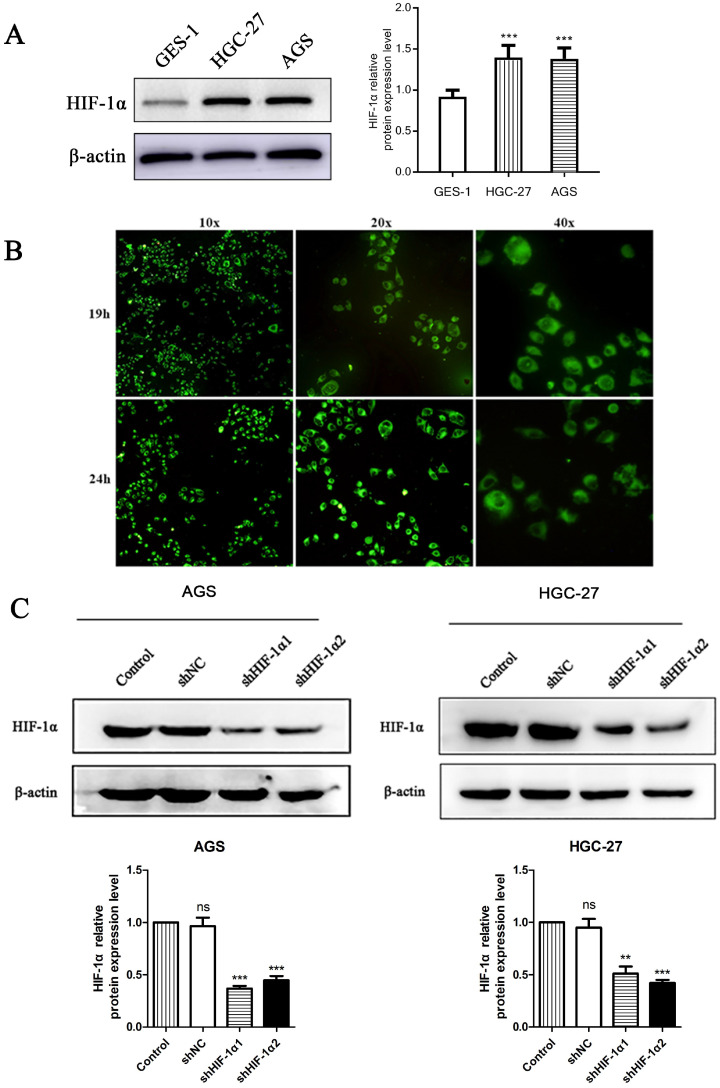
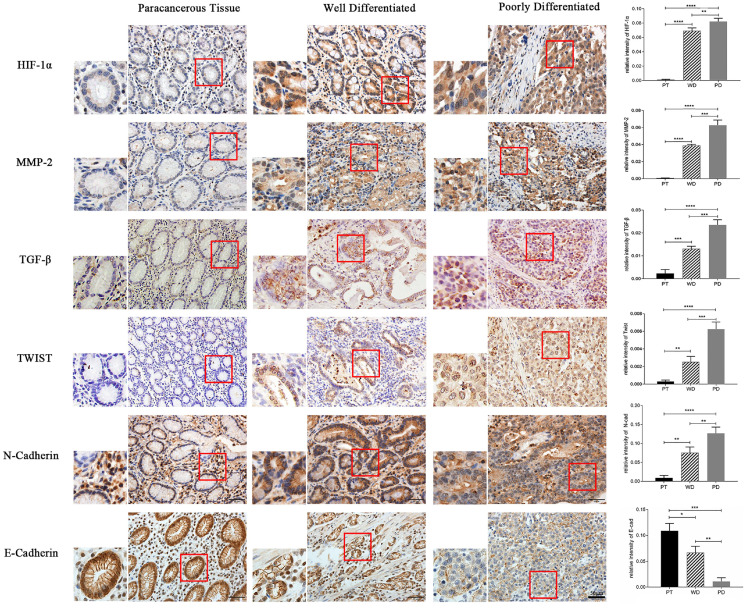
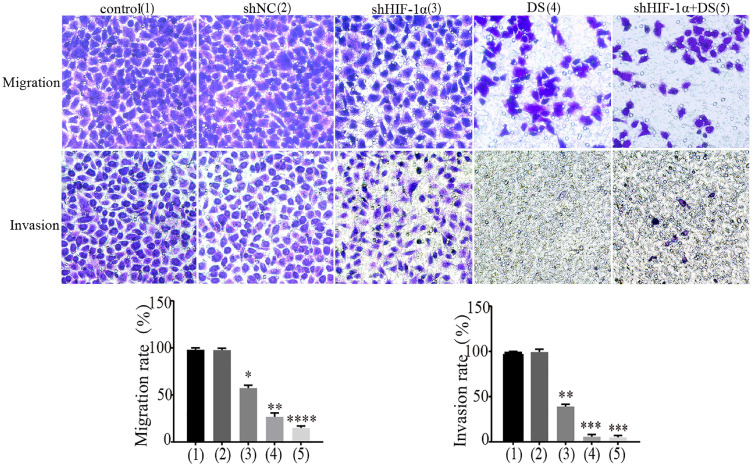
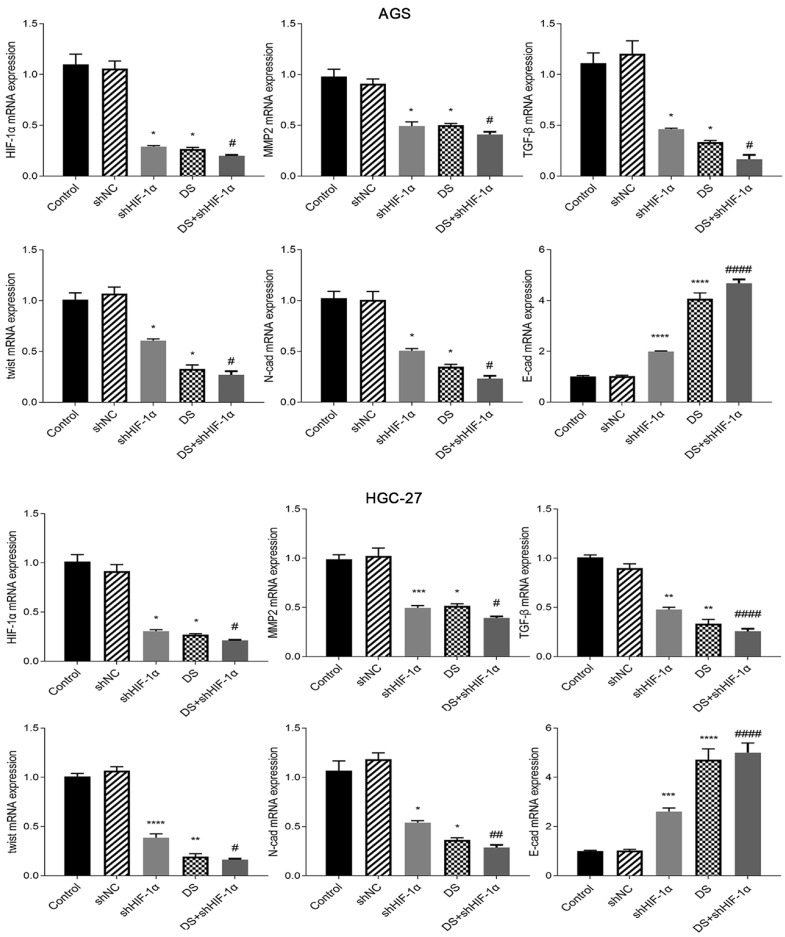
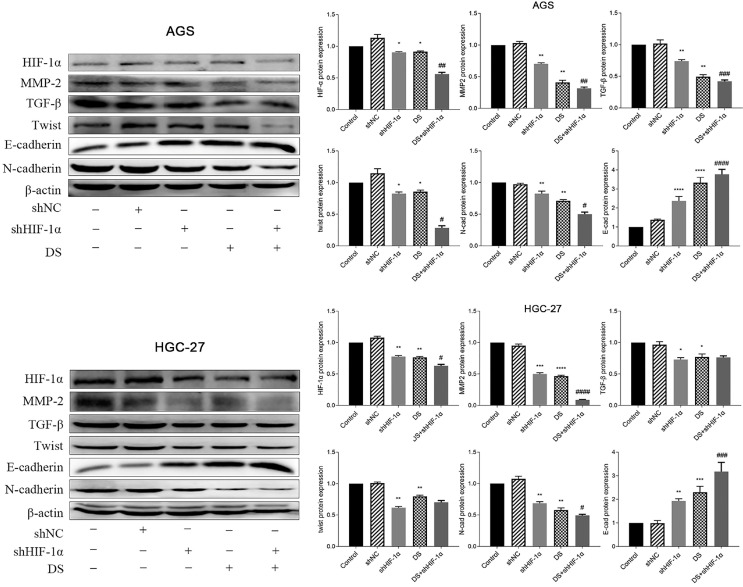
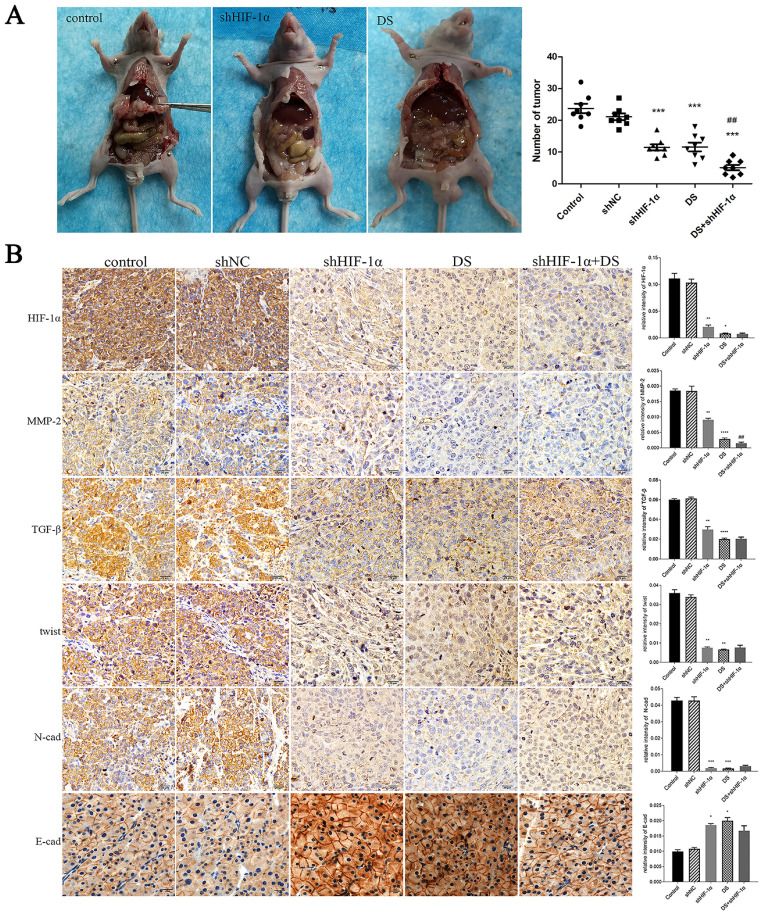
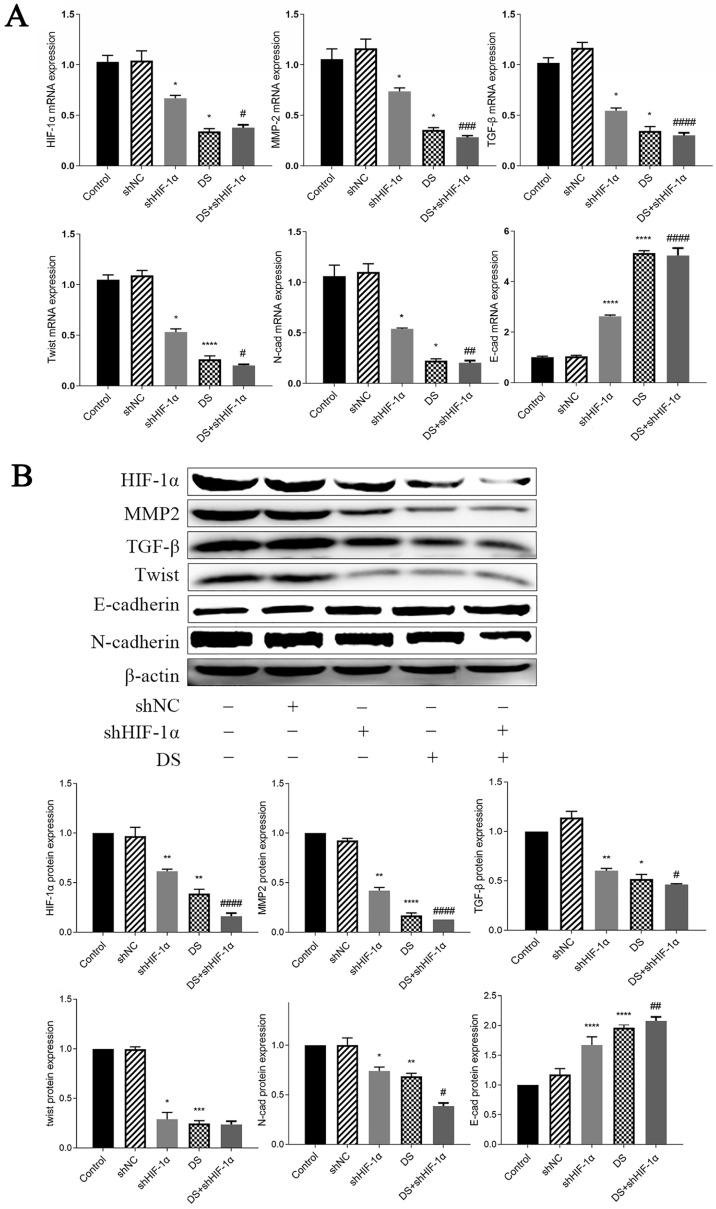
The peritoneal implant metastasis is one of the main pathway and main cause for high mortality for gastric cancer metastasis. Researchs show that epithelial-mesenchymal transition (EMT) playing essential role in modulating gastric cancer metastasis, and the expression of hypoxia inducible factor-1α (HIF-1α) can promote EMT in tumor cells. This research aims to explore the influence and mechanism of Dextran Sulfate (DS) affecting EMT of human gastric cancer. In the present study, we found that DS can enter into the cytoplasm and function in it. Inhibition of HIF-1α or DS significantly inhibit the migration and invasion of human gastric cancer cells, and decrease the mRNA and protein expressions of HIF-1α, matrix metalloproteinase-2 (MMP-2), transforming growth factor-β (TGF-β), Twist and N-cadherin (N-cad), rise E-cadherin (E-cad) expression, DS with HIF-1α knockdown has a stronger effect. studies indicated that compared with using DS or HIF-1α knockdown alone, DS with HIF-1α knockdown can better suppress the volume and number of metastatic tumors, and reduce the mRNA and protein expressions of HIF-1α, MMP-2, TGF-β, Twist and N-cad in metastatic tumor tissues of nude mice. We further demonstrated that the expression of HIF-1α, MMP-2, TGF-β , Twist and N-cad were higher in well and poorly differentiated gastric cancer than paracancerous tissue, and poorly differentiated gastric cancer were even higher, while E-cad expression was opposite. Taken together, this study shows that DS can interfere the expression of HIF-1α, thereby inhibiting TGF-β-mediated EMT of gastric cancer cells, and demonstrated a promising application of DS in gastric cancer therapy.
腹膜种植转移是胃癌转移的主要途径之一,也是导致胃癌高死亡率的主要原因。研究表明,上皮-间质转化(EMT)在调控胃癌转移中起关键作用,缺氧诱导因子-1α(HIF-1α)的表达可促进肿瘤细胞的EMT。本研究旨在探讨硫酸葡聚糖(DS)对人胃癌EMT的影响及其机制。在本研究中,我们发现DS可进入细胞质并在其中发挥作用。抑制HIF-1α或DS可显著抑制人胃癌细胞的迁移和侵袭,并降低HIF-1α、基质金属蛋白酶-2(MMP-2)、转化生长因子-β(TGF-β)、Twist和N-钙黏蛋白(N-cad)的mRNA和蛋白表达,增加E-钙黏蛋白(E-cad)的表达,DS与HIF-1α基因敲低联合使用时效果更强。研究表明,与单独使用DS或HIF-1α基因敲低相比,DS与HIF-1α基因敲低联合使用能更好地抑制裸鼠转移瘤的体积和数量,并降低转移瘤组织中HIF-1α、MMP-2、TGF-β、Twist和N-cad的mRNA和蛋白表达。我们进一步证明,HIF-1α、MMP-2、TGF-β、Twist和N-cad在高分化和低分化胃癌中的表达均高于癌旁组织,且低分化胃癌中的表达更高,而E-cad的表达则相反。综上所述,本研究表明DS可干扰HIF-1α的表达,从而抑制TGF-β介导的胃癌细胞EMT,显示出DS在胃癌治疗中有良好的应用前景。