Department of Experimental and Clinical Biomedical Sciences "Mario Serio", University of Florence, 50134 Florence, Italy.
Department of Neuroscience, Psychology, Drug Research and Child Health, University of Florence, 50139 Florence, Italy.
ACS Chem Neurosci. 2021 Jun 2;12(11):1905-1918. doi: 10.1021/acschemneuro.0c00828. Epub 2021 May 12.
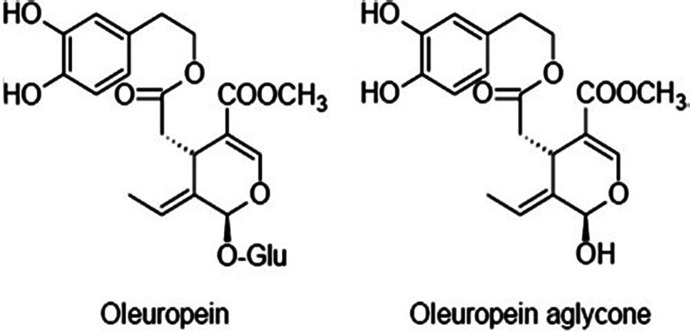
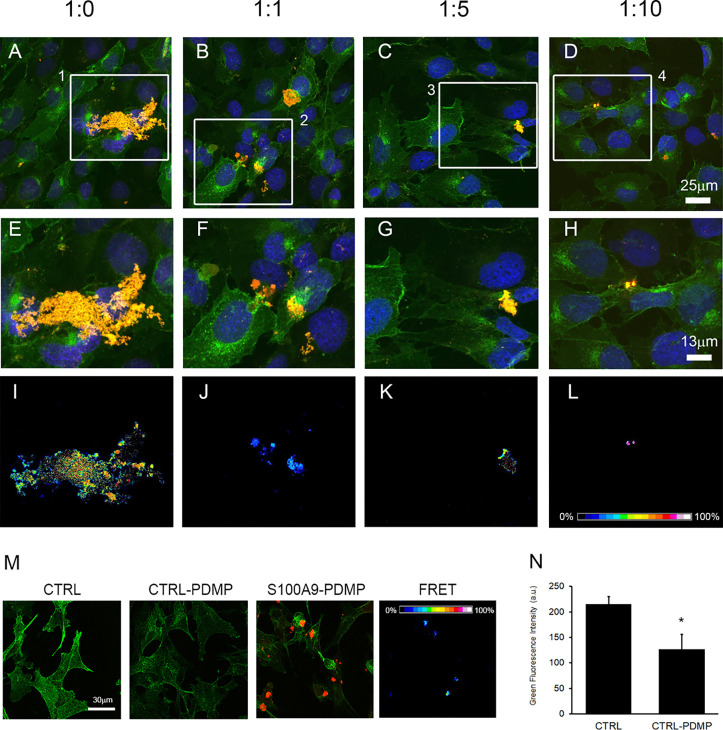
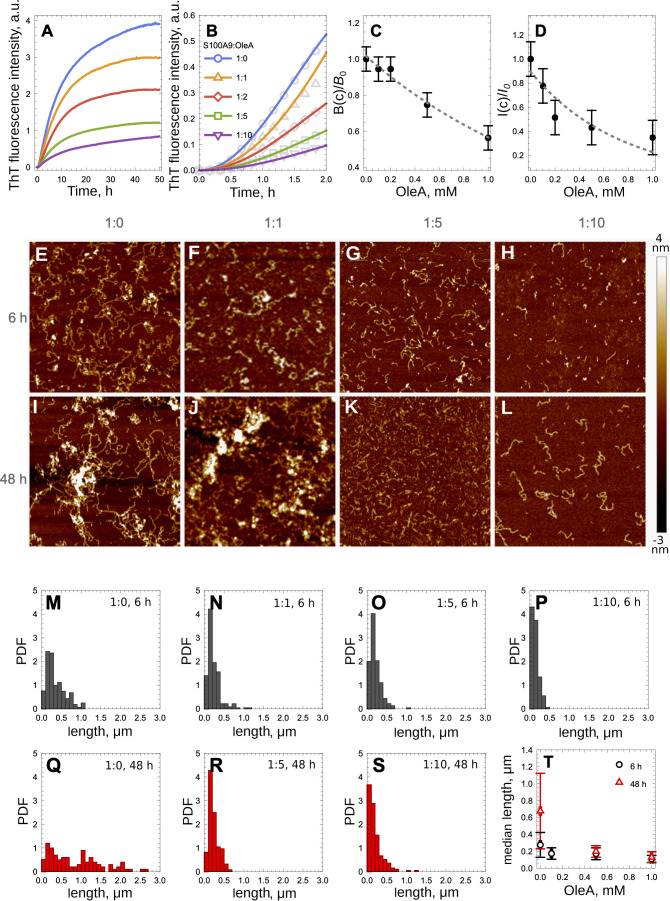
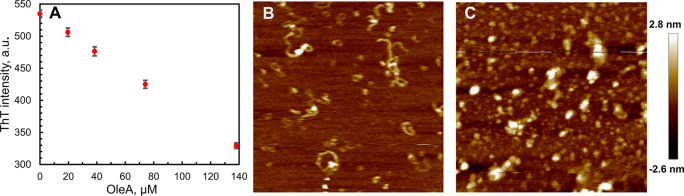
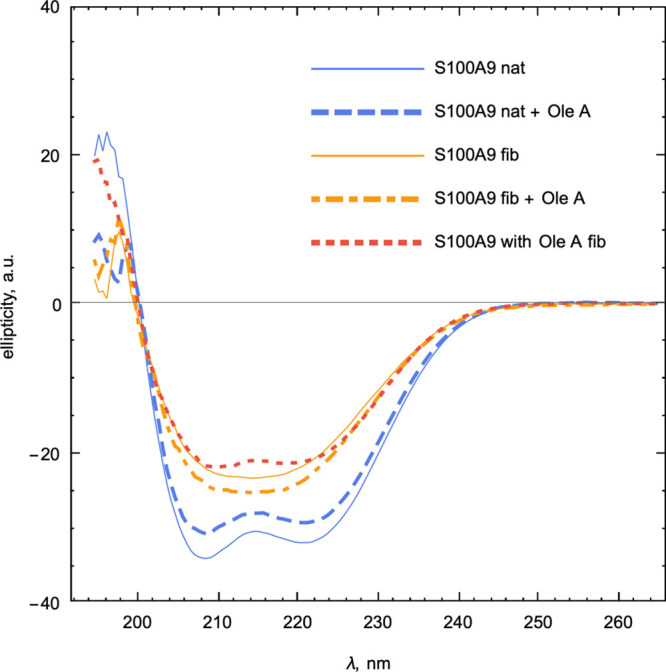
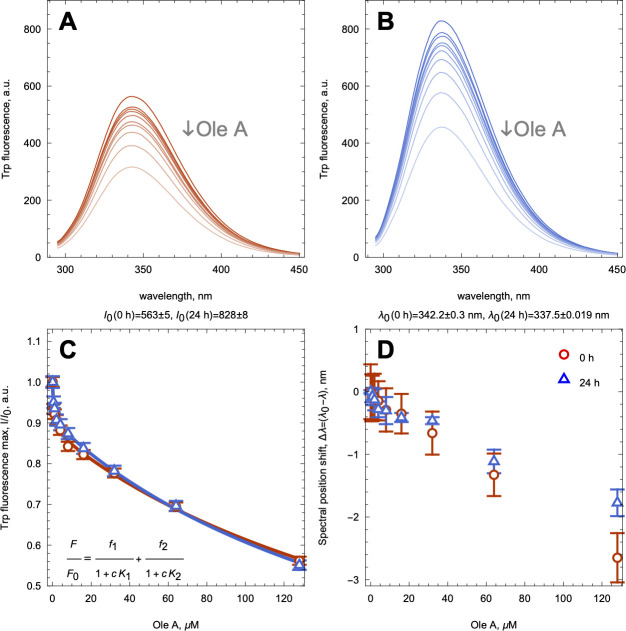
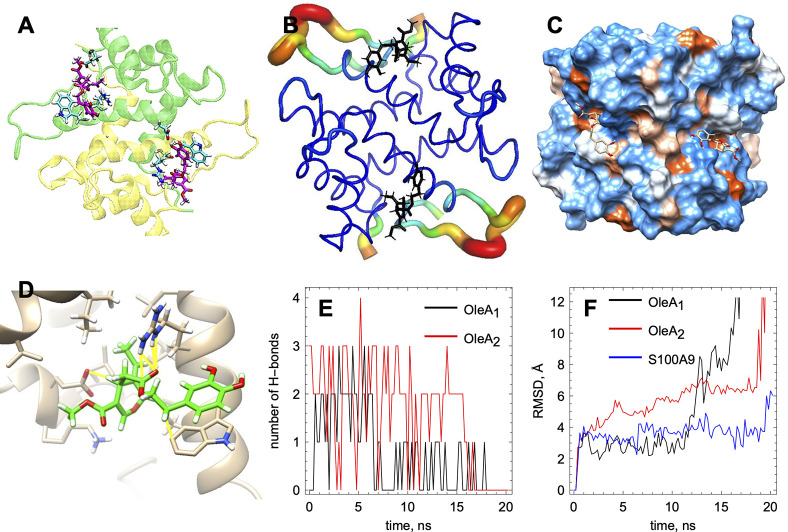
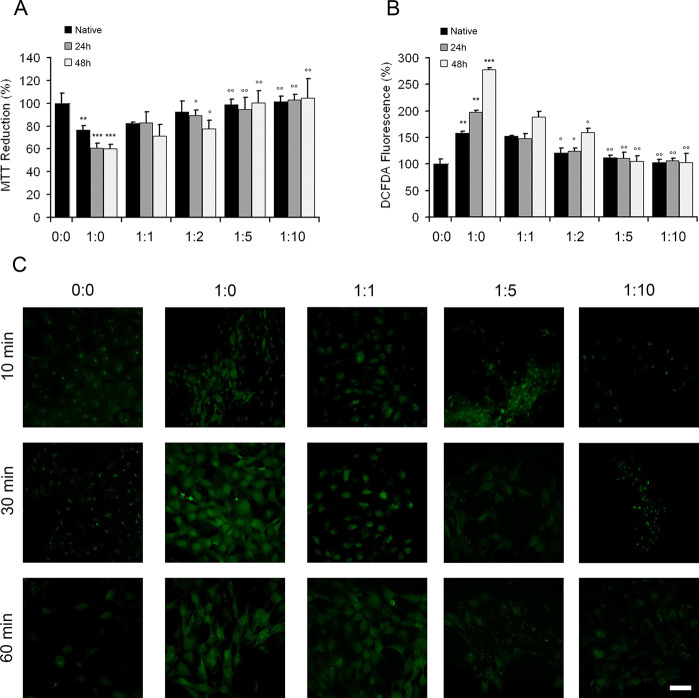
Polyphenolic compounds in the Mediterranean diet have received increasing attention due to their protective properties in amyloid neurodegenerative and many other diseases. Here, we have demonstrated for the first time that polyphenol oleuropein aglycone (OleA), which is the most abundant compound in olive oil, has multiple potencies for the inhibition of amyloid self-assembly of pro-inflammatory protein S100A9 and the mitigation of the damaging effect of its amyloids on neuroblastoma SH-SY5Y cells. OleA directly interacts with both native and fibrillar S100A9 as shown by intrinsic fluorescence and molecular dynamic simulation. OleA prevents S100A9 amyloid oligomerization as shown using amyloid oligomer-specific antibodies and cross-β-sheet formation detected by circular dichroism. It decreases the length of amyloid fibrils measured by atomic force microscopy (AFM) as well as reduces the effective rate of amyloid growth and the overall amyloid load as derived from the kinetic analysis of amyloid formation. OleA disintegrates already preformed fibrils of S100A9, converting them into nonfibrillar and nontoxic aggregates as revealed by amyloid thioflavin-T dye binding, AFM, and cytotoxicity assays. At the cellular level, OleA targets S100A9 amyloids already at the membranes as shown by immunofluorescence and fluorescence resonance energy transfer, significantly reducing the amyloid accumulation in GM1 ganglioside containing membrane rafts. OleA increases overall cell viability when neuroblastoma cells are subjected to the amyloid load and alleviates amyloid-induced intracellular rise of reactive oxidative species and free Ca. Since S100A9 is both a pro-inflammatory and amyloidogenic protein, OleA may effectively mitigate the pathological consequences of the S100A9-dependent amyloid-neuroinflammatory cascade as well as provide protection from neurodegeneration, if used within the Mediterranean diet as a potential preventive measure.
地中海饮食中的多酚化合物因其在淀粉样神经退行性变和许多其他疾病中的保护作用而受到越来越多的关注。在这里,我们首次证明,橄榄油中含量最丰富的化合物橄榄多酚苷(OleA)具有多种抑制促炎蛋白 S100A9 淀粉样自组装和减轻其淀粉样物对神经母细胞瘤 SH-SY5Y 细胞损伤作用的能力。如内源荧光和分子动力学模拟所示,OleA 直接与天然和纤维状 S100A9 相互作用。OleA 可阻止 S100A9 淀粉样寡聚体形成,如使用淀粉样寡聚体特异性抗体和圆二色性检测到的交叉-β 片层形成所示。它通过原子力显微镜(AFM)测量减少了淀粉样纤维的长度,并且通过动力学分析淀粉样形成降低了淀粉样生长的有效速率和总体淀粉样物负荷。OleA 使已经形成的 S100A9 纤维解体,将其转化为非纤维状和无毒的聚集体,如淀粉样硫黄素-T 染料结合、AFM 和细胞毒性测定所揭示的那样。在细胞水平上,OleA 如免疫荧光和荧光共振能量转移所示,在细胞膜筏中靶向 S100A9 淀粉样物,显著减少 GM1 神经节苷脂含量的膜筏中淀粉样物的积累。当神经母细胞瘤细胞受到淀粉样物负荷时,OleA 可提高总体细胞活力,并减轻淀粉样物诱导的细胞内活性氧化物质和游离 Ca 的增加。由于 S100A9 既是促炎蛋白又是淀粉样蛋白,因此,如果在富含地中海饮食的饮食中使用,OleA 可能有效地减轻 S100A9 依赖性淀粉样神经炎症级联反应的病理后果,并提供对神经退行性变的保护。