Department of Lung Cancer Surgery, Tianjin Medical University General Hospital, Tianjin, China.
Tianjin Key Laboratory of Lung Cancer Metastasis and Tumor Microenvironment, Lung Cancer Institute, Tianjin Medical University General Hospital, Tianjin, China.
Thorac Cancer. 2021 Jun;12(12):1890-1899. doi: 10.1111/1759-7714.13998. Epub 2021 May 12.
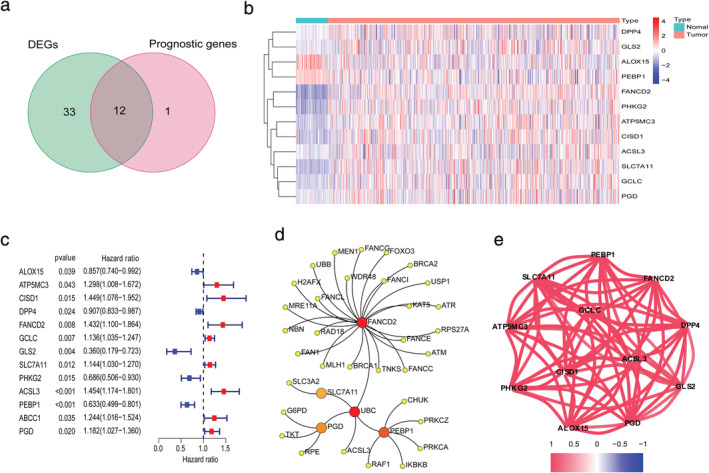
The prevalence of lung adenocarcinomas (LUADs) has dramatically increased in recent decades. Ferroptosis is a process of iron-dependent regulatory cell death. It is still unclear whether the expression of ferroptosis-related genes (FRGs) is involved in the pathogenesis and survival of patients with LUAD.
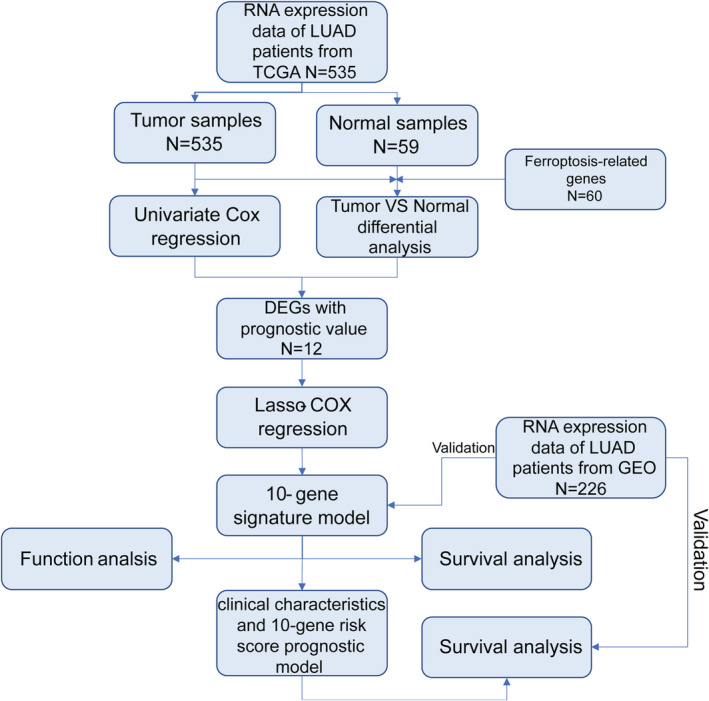
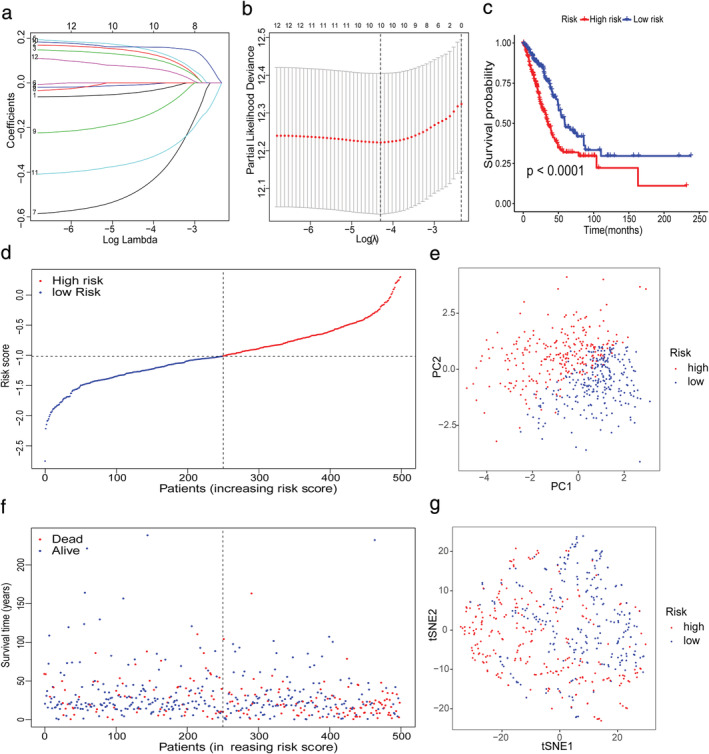
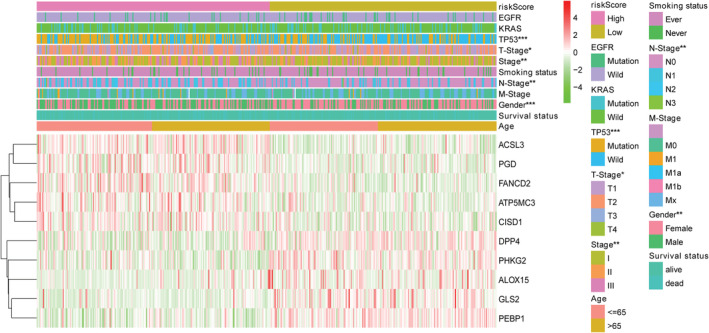
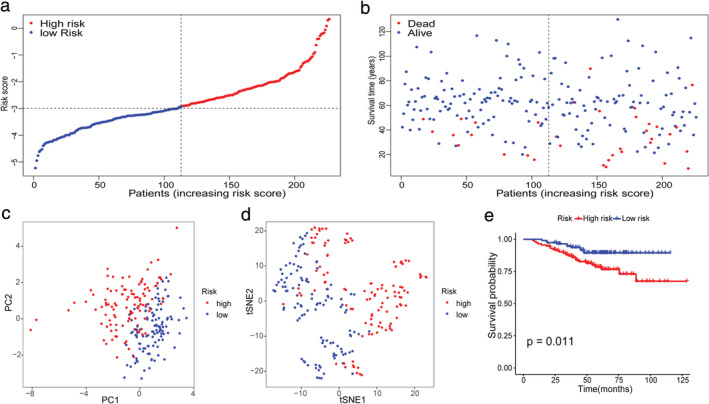
We retrieved LUAD data from The Cancer Genome Atlas (TCGA) and Gene Expression Omnibus (GEO) databases and used LASSO Cox regression analysis to select the gene signature suitable for modeling. The risk score was calculated according to the model, and the patients were divided into high- and low-risk groups according to the median risk score. Functional enrichment analysis was carried out by this group, and a model for predicting clinical prognosis was established by combining this group with clinical factors.
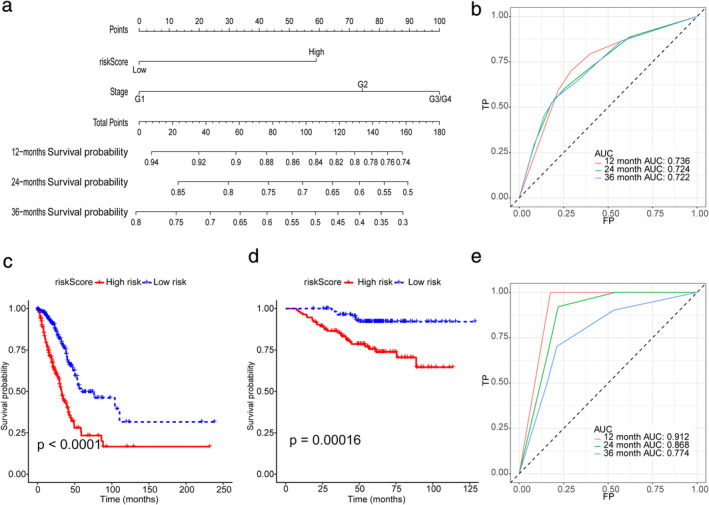
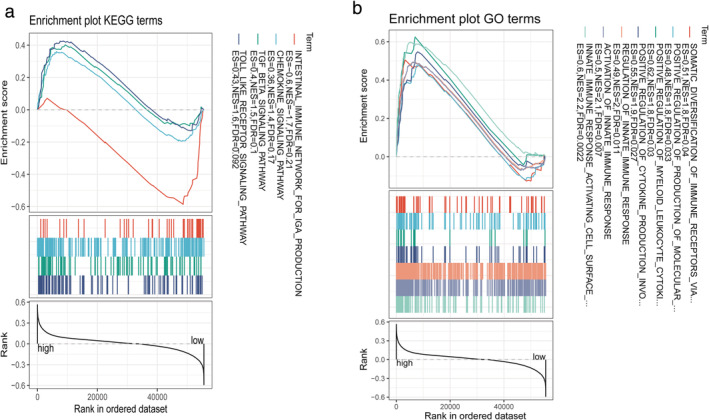
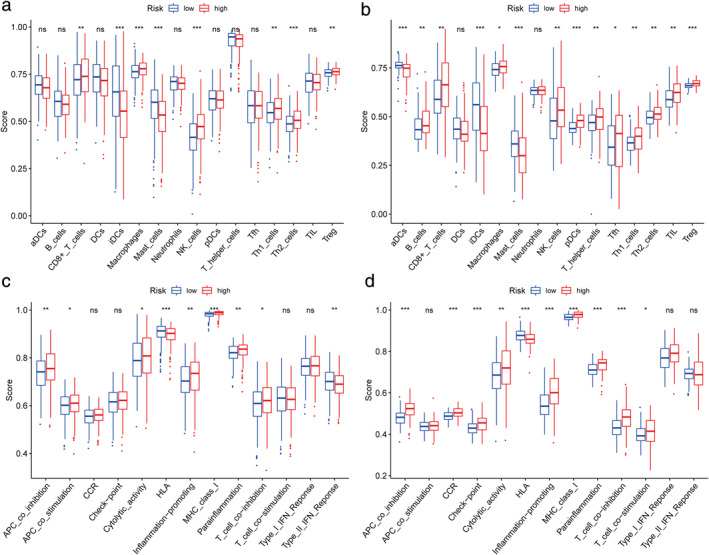
Gene set enrichment analysis (GSEA) and single-sample gene set enrichment analysis (ssGSEA) analysis showed that there were several immune-related pathways and immune infiltration differences between high- and low-risk groups. A prognostic model integrating 10 ferroptosis-related genes (FR-DEGs), and clinical factors were constructed and validated in an external cohort.
The FR-DEGs signature was related to immune infiltration, and a model based on FR-DEGs and clinical factors was established to predict the prognosis of patients with LUAD.
近几十年来,肺腺癌(LUAD)的患病率显著增加。铁死亡是一种铁依赖性的调节性细胞死亡过程。铁死亡相关基因(FRGs)的表达是否参与 LUAD 患者的发病机制和生存仍不清楚。
我们从癌症基因组图谱(TCGA)和基因表达综合数据库(GEO)中检索 LUAD 数据,并使用 LASSO Cox 回归分析选择适合建模的基因特征。根据模型计算风险评分,并根据中位数风险评分将患者分为高风险组和低风险组。通过该组进行功能富集分析,并通过将该组与临床因素相结合来建立预测临床预后的模型。
基因集富集分析(GSEA)和单样本基因集富集分析(ssGSEA)分析表明,高低风险组之间存在几种免疫相关途径和免疫浸润差异。在外部队列中构建并验证了一个整合 10 个铁死亡相关基因(FR-DEGs)和临床因素的预后模型。
FR-DEGs 特征与免疫浸润有关,建立了基于 FR-DEGs 和临床因素的模型来预测 LUAD 患者的预后。