The Ben May Department for Cancer Research, The University of Chicago, 929 East 57th Street, GCIS W421C, Chicago, IL, 60637, USA.
Department of Cancer Biology, Loyola University Chicago, Maywood, IL, USA.
Breast Cancer Res. 2021 May 12;23(1):54. doi: 10.1186/s13058-021-01431-w.
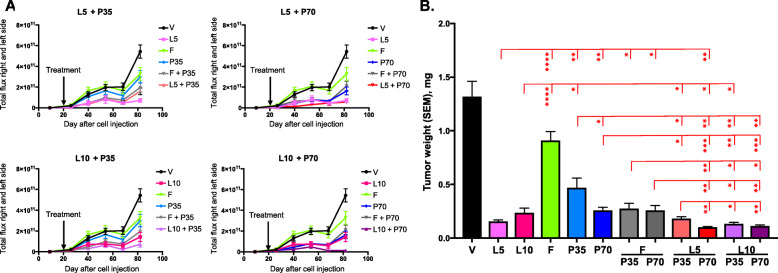
Endocrine therapy remains the mainstay of treatment for estrogen receptor-positive (ER+) breast cancer. Constitutively active mutations in the ligand binding domain of ERα render tumors resistant to endocrine agents. Breast cancers with the two most common ERα mutations, Y537S and D538G, have low sensitivity to fulvestrant inhibition, a typical second-line endocrine therapy. Lasofoxifene is a selective estrogen receptor modulator with benefits on bone health and breast cancer prevention potential. This study investigated the anti-tumor activity of lasofoxifene in breast cancer xenografts expressing Y537S and D538G ERα mutants. The combination of lasofoxifene with palbociclib, a CDK4/6 inhibitor, was also evaluated.
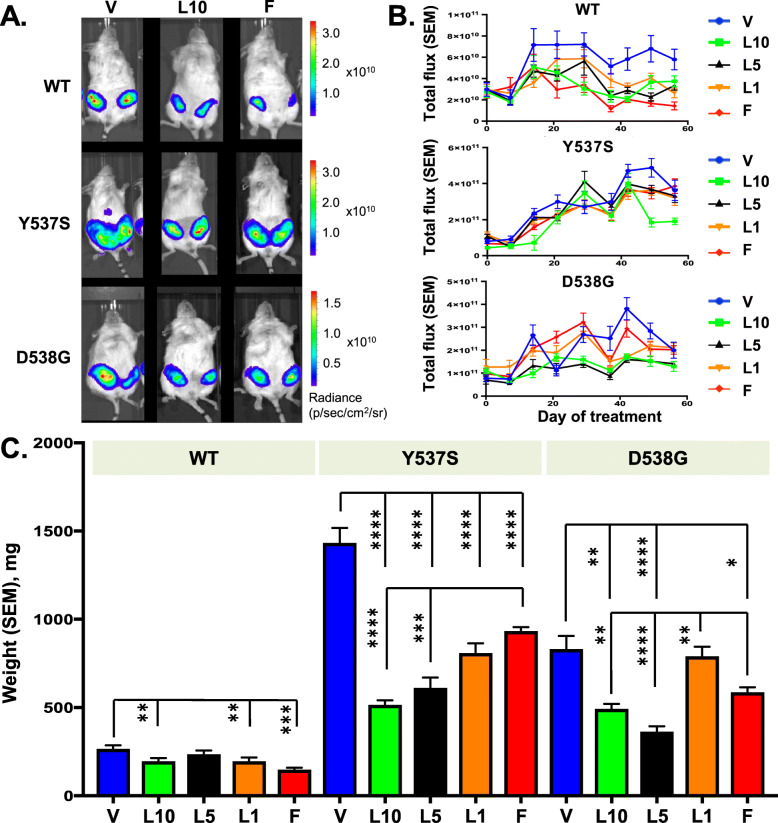
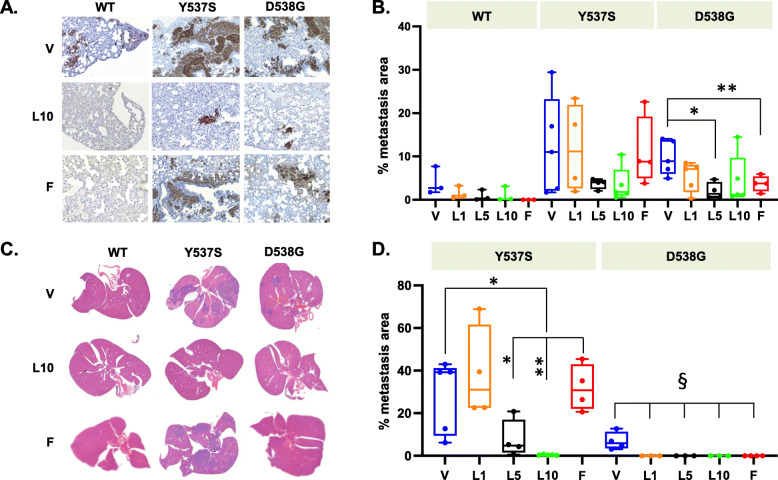
Luciferase-GFP tagged MCF7 cells bearing wild-type, Y537S, or D538G ERα were injected into the mammary ducts of NSG mice (MIND model), which were subsequently treated with lasofoxifene or fulvestrant as single agents or in combination with palbociclib. Tumor growth and metastasis were monitored with in vivo and ex vivo luminescence imaging, terminal tumor weight measurements, and histological analysis.
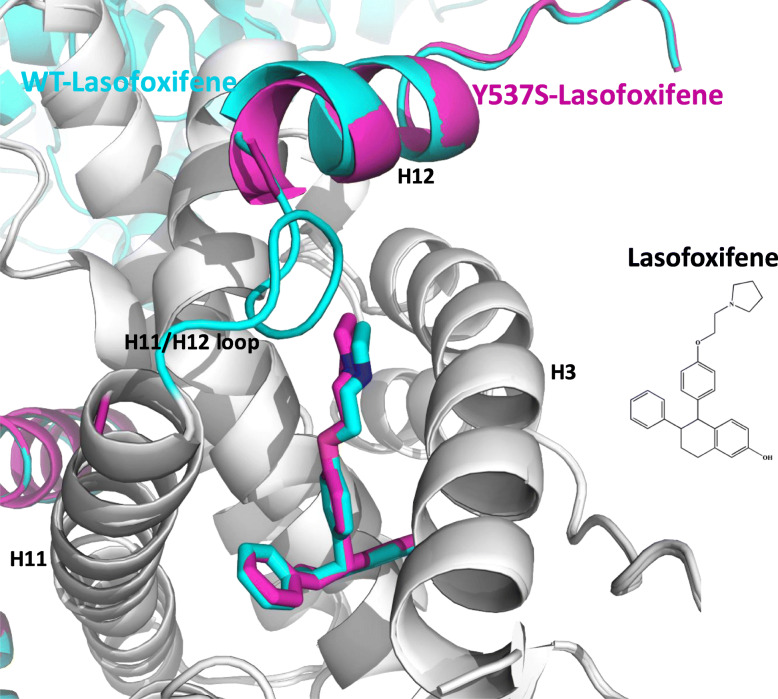
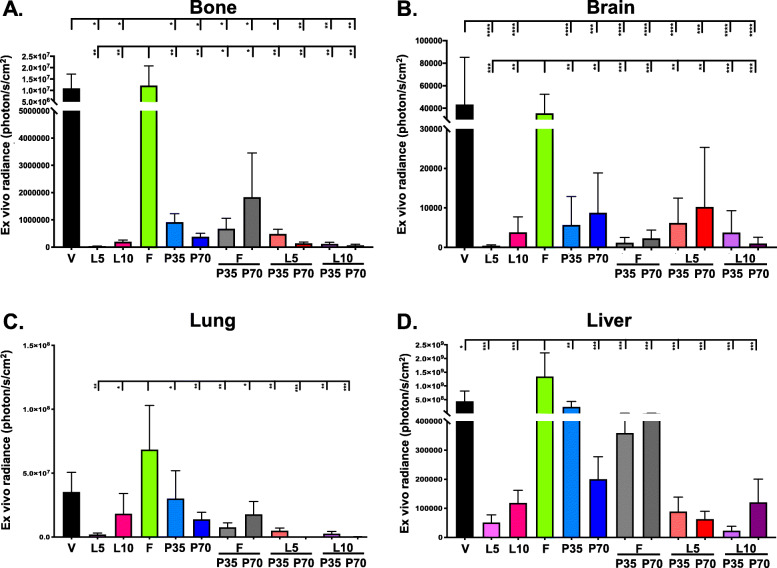
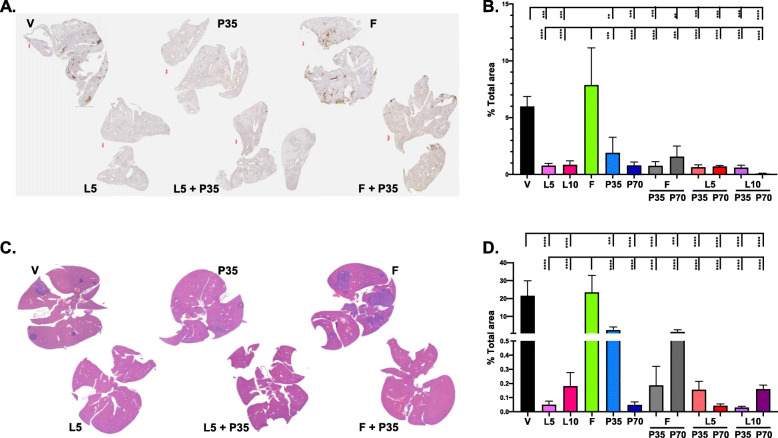
As a monotherapy, lasofoxifene was more effective than fulvestrant at inhibiting primary tumor growth and reducing metastases. Adding palbociclib improved the effectiveness of both lasofoxifene and fulvestrant for tumor suppression and metastasis prevention at four distal sites (lung, liver, bone, and brain), with the combination of lasofoxifene/palbociclib being generally more potent than that of fulvestrant/palbociclib. X-ray crystallography of the ERα ligand binding domain (LBD) shows that lasofoxifene stabilizes an antagonist conformation of both wild-type and Y537S LBD. The ability of lasofoxifene to promote an antagonist conformation of Y537S, combined with its long half-life and bioavailability, likely contributes to the observed potent inhibition of primary tumor growth and metastasis of MCF7 Y537S cells.
We report for the first time the anti-tumor activity of lasofoxifene in mouse models of endocrine therapy-resistant breast cancer. The results demonstrate the potential of using lasofoxifene as an effective therapy for women with advanced or metastatic ER+ breast cancers expressing the most common constitutively active ERα mutations.
内分泌治疗仍然是雌激素受体阳性(ER+)乳腺癌的主要治疗方法。ERα 配体结合域的组成性激活突变使肿瘤对内分泌药物产生耐药性。具有 ERα 两个最常见突变(Y537S 和 D538G)的乳腺癌对氟维司群抑制(典型的二线内分泌治疗)的敏感性较低。拉索昔芬是一种选择性雌激素受体调节剂,对骨骼健康有益,并具有预防乳腺癌的潜力。本研究调查了拉索昔芬在表达 Y537S 和 D538G ERα 突变体的乳腺癌异种移植中的抗肿瘤活性。还评估了拉索昔芬与 CDK4/6 抑制剂帕博西尼的联合用药。
携带野生型、Y537S 或 D538G ERα 的荧光素酶-GFP 标记 MCF7 细胞被注射到 NSG 小鼠的乳腺导管中(MIND 模型),随后单独用拉索昔芬或氟维司群治疗,或与帕博西尼联合治疗。通过体内和离体发光成像、终端肿瘤重量测量和组织学分析监测肿瘤生长和转移。
作为单一疗法,拉索昔芬比氟维司群更能有效抑制原发性肿瘤生长和减少转移。添加帕博西尼可提高拉索昔芬和氟维司群对肿瘤抑制和预防四个远端部位(肺、肝、骨和脑)转移的有效性,拉索昔芬/帕博西尼联合用药通常比氟维司群/帕博西尼联合用药更有效。ERα 配体结合域(LBD)的 X 射线晶体学显示,拉索昔芬稳定了野生型和 Y537S LBD 的拮抗剂构象。拉索昔芬促进 Y537S 拮抗剂构象的能力,加上其半衰期长和生物利用度高,可能有助于观察到对 MCF7 Y537S 细胞原发性肿瘤生长和转移的有效抑制。
我们首次报道了拉索昔芬在激素治疗耐药性乳腺癌小鼠模型中的抗肿瘤活性。结果表明,拉索昔芬作为治疗表达最常见组成性激活 ERα 突变的晚期或转移性 ER+乳腺癌的有效疗法具有潜力。