
立体选择性拉索昔芬衍生物揭示了雌激素受体α稳定性与突变型乳腺癌细胞中拮抗活性的相互作用。
Stereospecific lasofoxifene derivatives reveal the interplay between estrogen receptor alpha stability and antagonistic activity in mutant breast cancer cells.
机构信息
Ben May Department for Cancer Research, University of Chicago, Chicago, United States.
Institute for Research in Immunology and Cancer, Université de Montréal, Montréal, Canada.
出版信息
Elife. 2022 May 16;11:e72512. doi: 10.7554/eLife.72512.
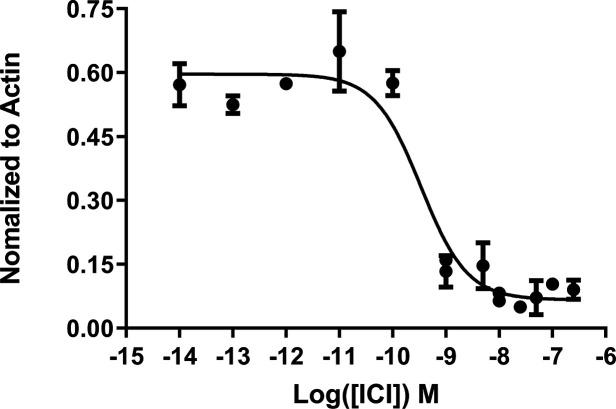
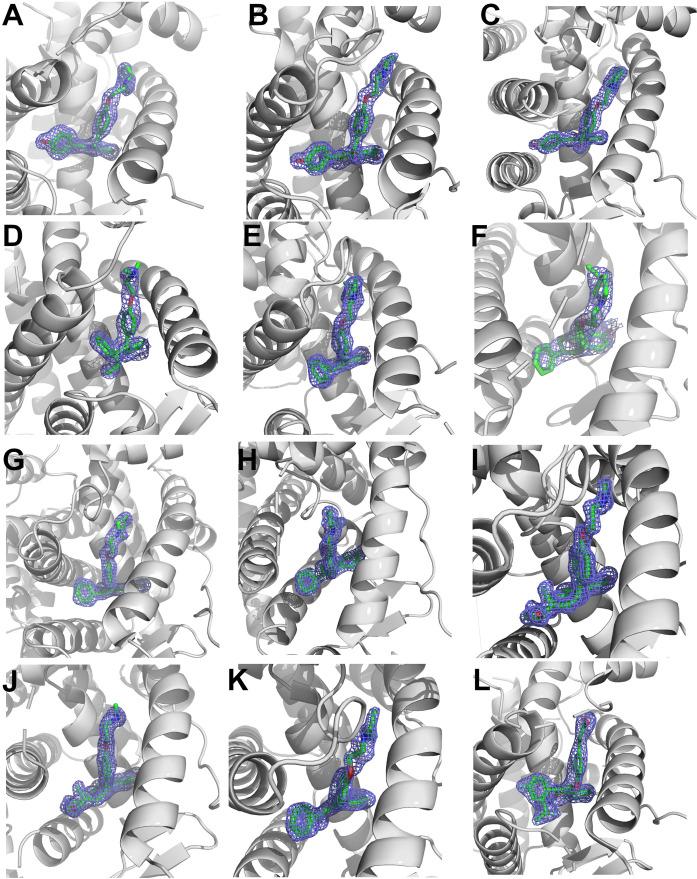
Chemical manipulation of estrogen receptor alpha ligand binding domain structural mobility tunes receptor lifetime and influences breast cancer therapeutic activities. Selective estrogen receptor modulators (SERMs) extend estrogen receptor alpha (ERα) cellular lifetime/accumulation. They are antagonists in the breast but agonists in the uterine epithelium and/or in bone. Selective estrogen receptor degraders/downregulators (SERDs) reduce ERα cellular lifetime/accumulation and are pure antagonists. Activating somatic mutations Y537S and D538G enable resistance to first-line endocrine therapies. SERDs have shown significant activities in mutant setting while few SERMs have been studied. To understand whether chemical manipulation of ERα cellular lifetime and accumulation influences antagonistic activity, we studied a series of methylpyrollidine lasofoxifene (Laso) derivatives that maintained the drug's antagonistic activities while uniquely tuning ERα cellular accumulation. These molecules were examined alongside a panel of antiestrogens in live cell assays of ERα cellular accumulation, lifetime, SUMOylation, and transcriptional antagonism. High-resolution x-ray crystal structures of WT and Y537S ERα ligand binding domain in complex with the methylated Laso derivatives or representative SERMs and SERDs show that molecules that favor a highly buried helix 12 antagonist conformation achieve the greatest transcriptional suppression activities in breast cancer cells harboring WT/Y537S . Together these results show that chemical reduction of ERα cellular lifetime is not necessarily the most crucial parameter for transcriptional antagonism in mutated breast cancer cells. Importantly, our studies show how small chemical differences within a scaffold series can provide compounds with similar antagonistic activities, but with greatly different effects of the cellular lifetime of the ERα, which is crucial for achieving desired SERM or SERD profiles.
化学操控雌激素受体 alpha 配体结合域结构的灵活性可调节受体寿命并影响乳腺癌治疗活性。选择性雌激素受体调节剂 (SERMs) 可延长雌激素受体 alpha (ERα) 细胞寿命/积累。它们在乳腺中是拮抗剂,但在子宫内膜和/或骨中是激动剂。选择性雌激素受体降解剂/下调剂 (SERDs) 可降低 ERα 细胞寿命/积累,是纯拮抗剂。激活的体细胞突变 Y537S 和 D538G 可导致对一线内分泌治疗的耐药性。SERDs 在突变背景下显示出显著的活性,而研究的 SERMs 较少。为了了解化学操控 ERα 细胞寿命和积累是否会影响拮抗活性,我们研究了一系列保持药物拮抗活性但独特调节 ERα 细胞积累的甲基吡咯烷拉索非尼 (Laso) 衍生物。这些分子与一组抗雌激素一起,在 ERα 细胞积累、寿命、SUMOylation 和转录拮抗的活细胞测定中进行了研究。WT 和 Y537S ERα 配体结合域与甲基化 Laso 衍生物或代表性 SERMs 和 SERDs 的高分辨率 X 射线晶体结构表明,有利于高度埋藏的螺旋 12 拮抗剂构象的分子在携带 WT/Y537S 的乳腺癌细胞中可实现最大的转录抑制活性。这些结果表明,化学降低 ERα 细胞寿命不一定是突变型乳腺癌细胞转录拮抗的最关键参数。重要的是,我们的研究表明,在支架系列内的微小化学差异如何能够提供具有相似拮抗活性但对 ERα 细胞寿命产生极大不同影响的化合物,这对于实现所需的 SERM 或 SERD 特征至关重要。






 Zotero 插件