Department of Experimental Biology, Faculty of Science, Masaryk University, Brno, Czech Republic.
Interfaculty Institute of Microbiology and Infection Medicine Tübingen, University of Tübingen, Tübingen, Germany.
mSphere. 2021 May 12;6(3):e00223-21. doi: 10.1128/mSphere.00223-21.
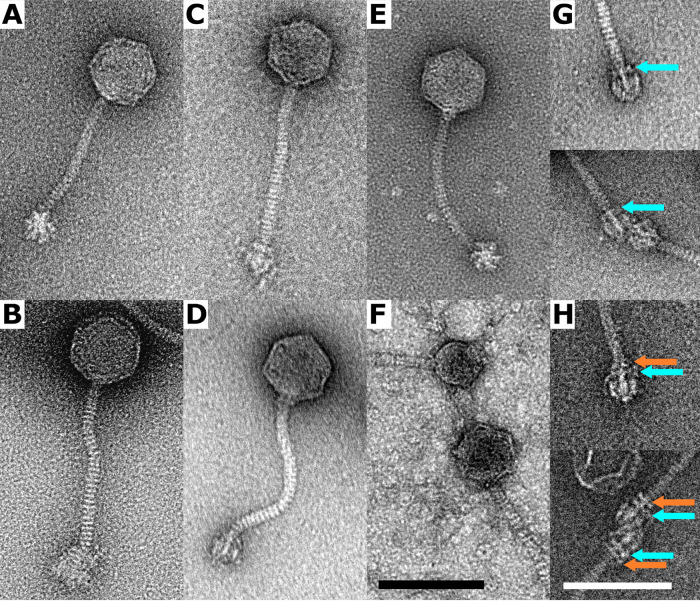
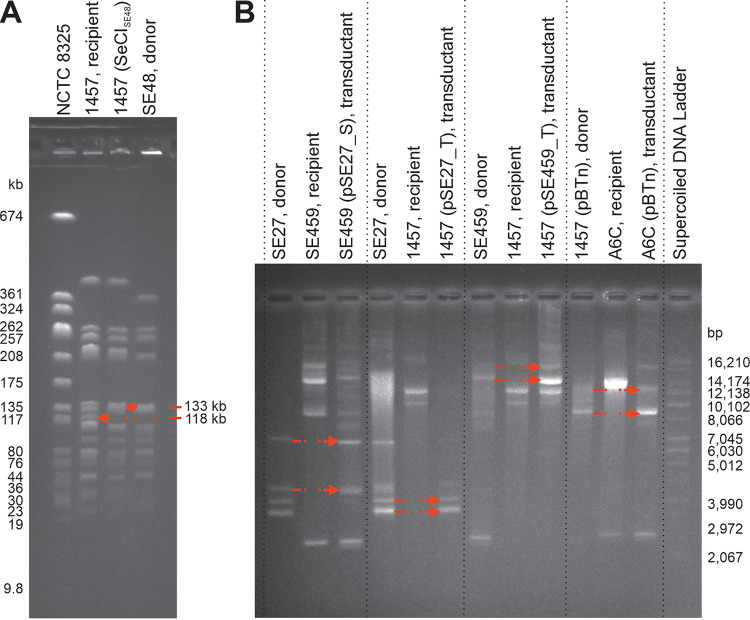
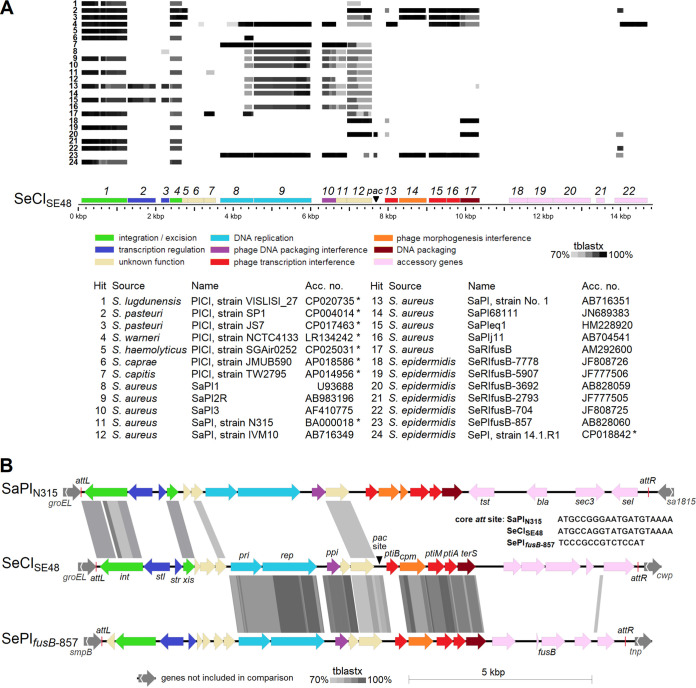
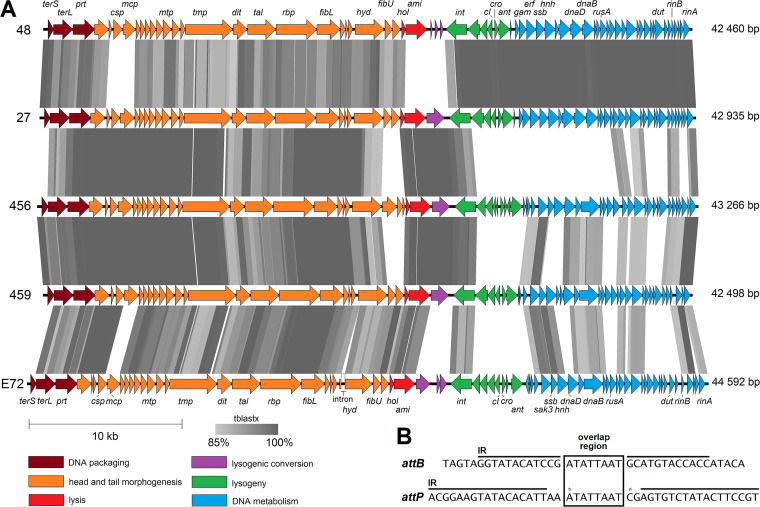
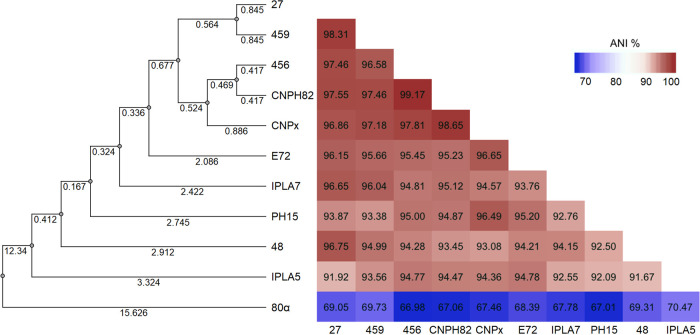
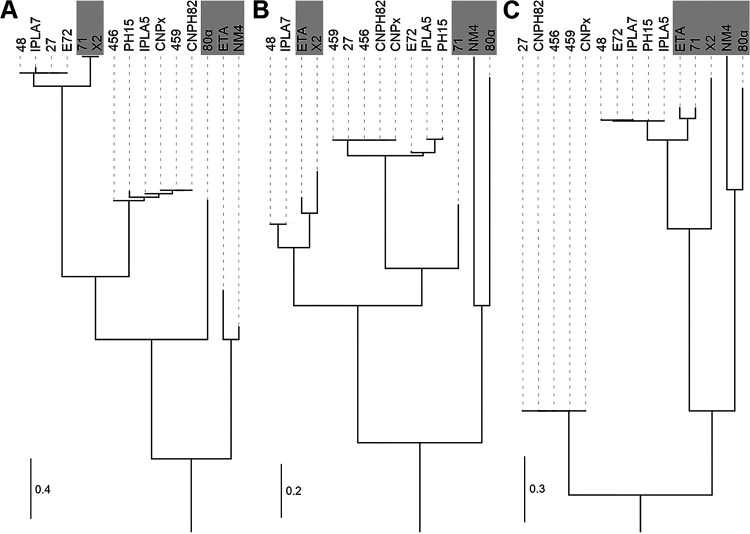
is a leading opportunistic pathogen causing nosocomial infections that is notable for its ability to form a biofilm and for its high rates of antibiotic resistance. It serves as a reservoir of multiple antimicrobial resistance genes that spread among the staphylococcal population by horizontal gene transfer such as transduction. While phage-mediated transduction is well studied in , transducing phages have not been described in detail yet. Here, we report the characteristics of four phages, 27, 48, 456, and 459, previously used for phage typing, and the newly isolated phage E72, from a clinical strain. The phages, classified in the family and genus , exhibited an -specific host range, and together they infected 49% of the 35 strains tested. A whole-genome comparison revealed evolutionary relatedness to transducing phietaviruses. In accordance with this, all the tested phages were capable of transduction with high frequencies up to 10 among strains from different clonal complexes. Plasmids with sizes from 4 to 19 kb encoding resistance to streptomycin, tetracycline, and chloramphenicol were transferred. We provide here the first evidence of a phage-inducible chromosomal island transfer in Similarly to pathogenicity islands, the transfer was accompanied by phage capsid remodeling; however, the interfering protein encoded by the island was distinct. Our findings underline the role of temperate phages in the evolution of strains by horizontal gene transfer, which can also be utilized for genetic studies. Multidrug-resistant strains of emerge in both nosocomial and livestock environments as the most important pathogens among coagulase-negative staphylococcal species. The study of transduction by phages is essential to understanding how virulence and antimicrobial resistance genes spread in originally commensal bacterial populations. In this work, we provide a detailed description of transducing phages. The high transduction frequencies of antimicrobial resistance plasmids and the first evidence of chromosomal island transfer emphasize the decisive role of phages in attaining a higher pathogenic potential of host strains. To date, such importance has been attributed only to phages, not to those of coagulase-negative staphylococci. This study also proved that the described transducing bacteriophages represent valuable genetic modification tools in strains where other methods for gene transfer fail.
是一种主要的机会性病原体,可引起医院获得性感染,其特点是能够形成生物膜,以及具有很高的抗生素耐药率。它是多种抗菌耐药基因的储库,这些基因通过水平基因转移(如转导)在葡萄球菌群体中传播。虽然噬菌体介导的转导在 中研究得很好,但在 中尚未详细描述转导噬菌体。在这里,我们报告了先前用于 噬菌体分型的四个噬菌体,即 27、48、456 和 459,以及从临床分离株中分离到的新噬菌体 E72 的特征。这些噬菌体属于 科和 属,表现出 -特异性宿主范围,它们共同感染了测试的 35 株菌株中的 49%。全基因组比较显示与转导噬菌体 具有进化相关性。与此一致,所有测试的噬菌体都能够以高达 10 的频率进行转导,从不同克隆复合体的菌株中进行转导。转导还伴随着噬菌体衣壳重塑;然而,被转移的质粒大小从 4 到 19kb,编码对链霉素、四环素和氯霉素的耐药性。我们在这里首次提供了 在 中诱导染色体岛转移的证据。与致病性岛一样,转移伴随着噬菌体衣壳重塑;然而,岛编码的干扰蛋白是不同的。我们的发现强调了温和噬菌体在通过水平基因转移进化 菌株中的作用,这也可用于 遗传研究。耐多药 菌株在医院和牲畜环境中都作为凝固酶阴性葡萄球菌种中最重要的病原体出现。噬菌体转导的研究对于理解毒力和抗生素耐药基因如何在原本共生的细菌群体中传播至关重要。在这项工作中,我们提供了转导 噬菌体的详细描述。高转导频率的抗生素耐药质粒和染色体岛转移的第一个证据强调了 噬菌体在获得宿主菌株更高致病潜力方面的决定性作用。迄今为止,这种重要性仅归因于 噬菌体,而不是凝固酶阴性葡萄球菌噬菌体。这项研究还证明,所描述的转导噬菌体代表了在其他基因转移方法失败的 菌株中进行遗传修饰的有价值的工具。