Gomes Julia do Amaral, Olstad Emilie Willoch, Kowalski Thayne Woycinck, Gervin Kristina, Vianna Fernanda Sales Luiz, Schüler-Faccini Lavínia, Nordeng Hedvig Marie Egeland
Programa de Pós-Graduação em Genética e Biologia Molecular (PPGBM), Departamento de Genética, Universidade Federal do Rio Grande do Sul (UFRGS), Porto Alegre, Brazil.
Sistema Nacional de Informação sobre Agentes Teratogênicos (SIAT), Serviço de Genética Médica, Hospital de Clínicas de Porto Alegre (HCPA), Porto Alegre, Brazil.
Front Genet. 2021 Apr 27;12:645555. doi: 10.3389/fgene.2021.645555. eCollection 2021.
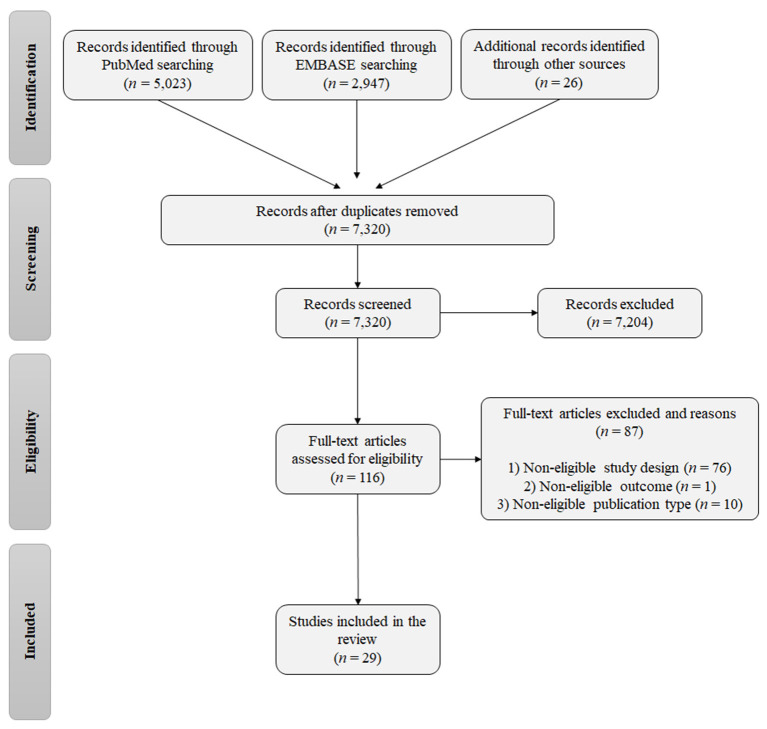
Since the 1960s, drugs have been known to cause teratogenic effects in humans. Such teratogenicity has been postulated to be influenced by genetics. The aim of this review was to provide an overview of the current knowledge on genetic susceptibility to drug teratogenicity in humans and reflect on future directions within the field of genetic teratology. We focused on 12 drugs and drug classes with evidence of teratogenic action, as well as 29 drugs and drug classes with conflicting evidence of fetal safety in humans. An extensive literature search was performed in the PubMed and EMBASE databases using terms related to the drugs of interest, congenital anomalies and fetal development abnormalities, and genetic variation and susceptibility. A total of 29 studies were included in the final data extraction. The eligible studies were published between 1999 and 2020 in 10 different countries, and comprised 28 candidate gene and 1 whole-exome sequencing studies. The sample sizes ranged from 20 to 9,774 individuals. Several drugs were investigated, including antidepressants (nine studies), thalidomide (seven studies), antiepileptic drugs (five studies), glucocorticoids (four studies), acetaminophen (two studies), and sex hormones (estrogens, one study; 17-alpha hydroxyprogesterone caproate, one study). The main neonatal phenotypic outcomes included perinatal complications, cardiovascular congenital anomalies, and neurodevelopmental outcomes. The review demonstrated that studies on genetic teratology are generally small, heterogeneous, and exhibit inconsistent results. The most convincing findings were genetic variants in , and , which were associated with drug teratogenicity by antidepressants, antiepileptics, and glucocorticoids, respectively. Notably, this review demonstrated the large knowledge gap regarding genetic susceptibility to drug teratogenicity, emphasizing the need for further efforts in the field. Future studies may be improved by increasing the sample size and applying genome-wide approaches to promote the interpretation of results. Such studies could support the clinical implementation of genetic screening to provide safer drug use in pregnant women in need of drugs.
自20世纪60年代以来,人们就知道药物会对人类产生致畸作用。这种致畸性被认为受遗传因素影响。本综述的目的是概述目前关于人类药物致畸性遗传易感性的知识,并思考遗传致畸学领域的未来发展方向。我们重点关注了12种有致畸作用证据的药物及药物类别,以及29种在人类胎儿安全性方面证据相互矛盾的药物及药物类别。在PubMed和EMBASE数据库中进行了广泛的文献检索,使用了与感兴趣的药物、先天性异常和胎儿发育异常以及基因变异和易感性相关的术语。最终的数据提取共纳入了29项研究。符合条件的研究于1999年至2020年在10个不同国家发表,包括28项候选基因研究和1项全外显子测序研究。样本量从20人到9774人不等。研究了几种药物,包括抗抑郁药(9项研究)、沙利度胺(7项研究)、抗癫痫药(5项研究)、糖皮质激素(4项研究)、对乙酰氨基酚(2项研究)和性激素(雌激素,1项研究;己酸17-α羟孕酮,1项研究)。主要的新生儿表型结局包括围产期并发症、心血管先天性异常和神经发育结局。该综述表明,遗传致畸学研究通常规模较小、异质性强且结果不一致。最有说服力的发现是分别与抗抑郁药、抗癫痫药和糖皮质激素的药物致畸性相关的基因变异。值得注意的是,本综述表明在药物致畸性遗传易感性方面存在巨大的知识差距,强调了该领域需要进一步努力。未来的研究可以通过增加样本量和应用全基因组方法来促进结果的解释而得到改进。此类研究可以支持遗传筛查的临床应用,以便为需要用药的孕妇提供更安全的药物使用。