Masuda Yasumitsu, Hasebe Ryo, Kuromi Yasushi, Kobayashi Masayoshi, Urataki Kanako, Hishinuma Mitsugu, Ohbayashi Tetsuya, Nishimura Ryo
Department of Animal Science, Tottori Livestock Research Center, Tottori, Japan.
SCREEN Holdings Co., Ltd., Kyoto, Japan.
Front Vet Sci. 2021 Apr 26;8:639249. doi: 10.3389/fvets.2021.639249. eCollection 2021.
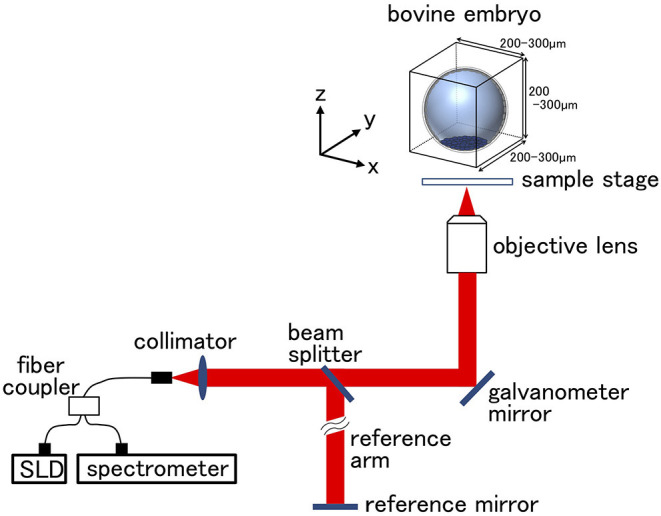
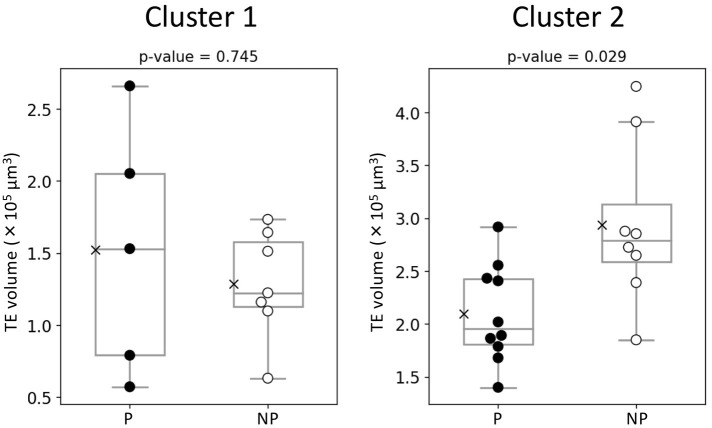
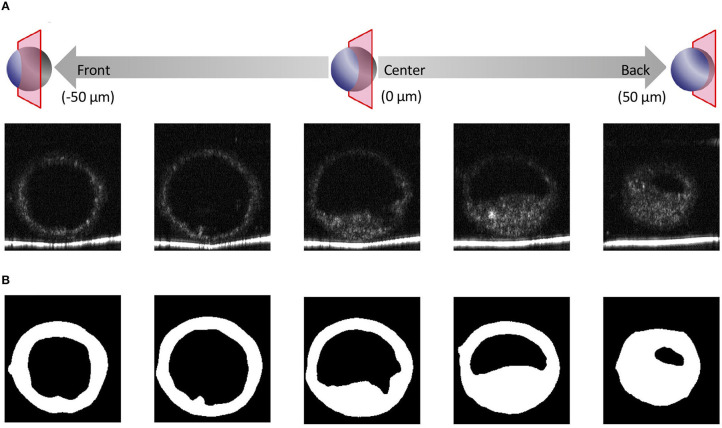
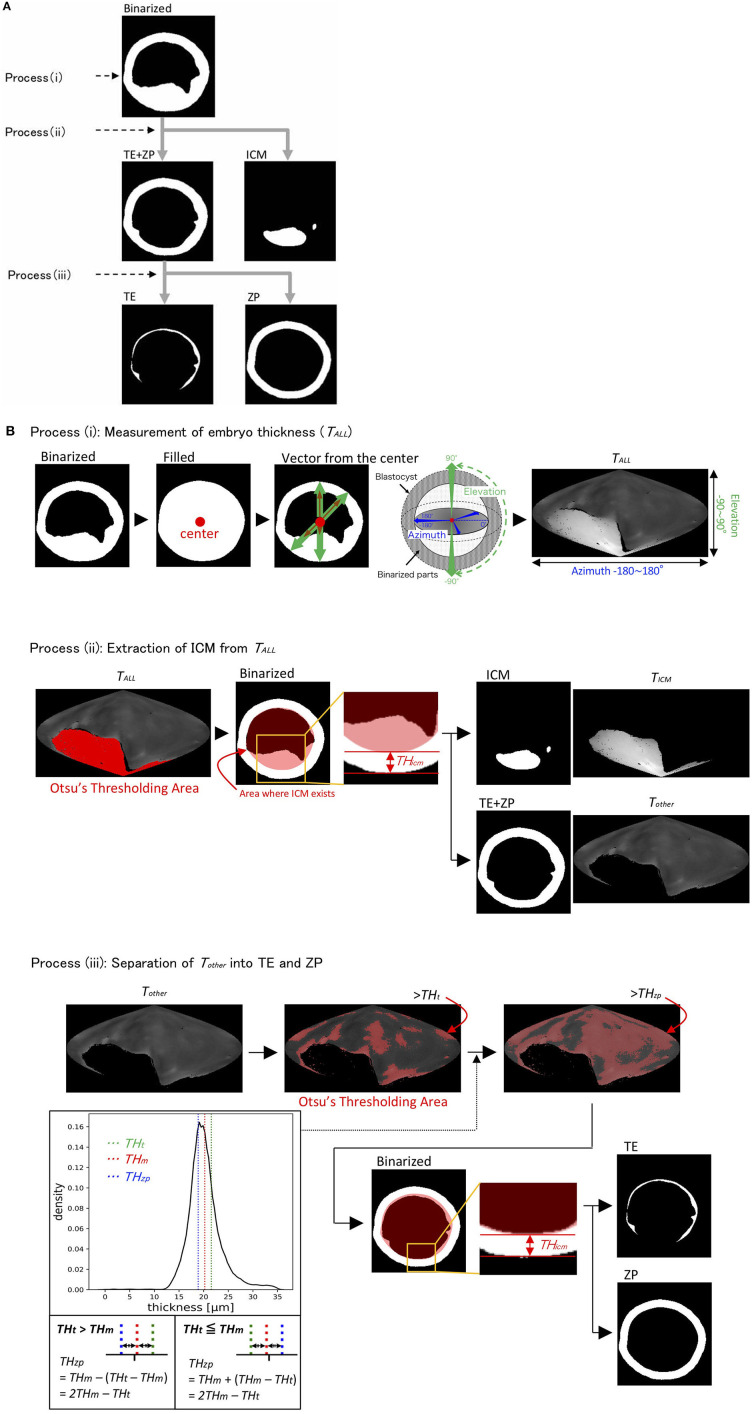
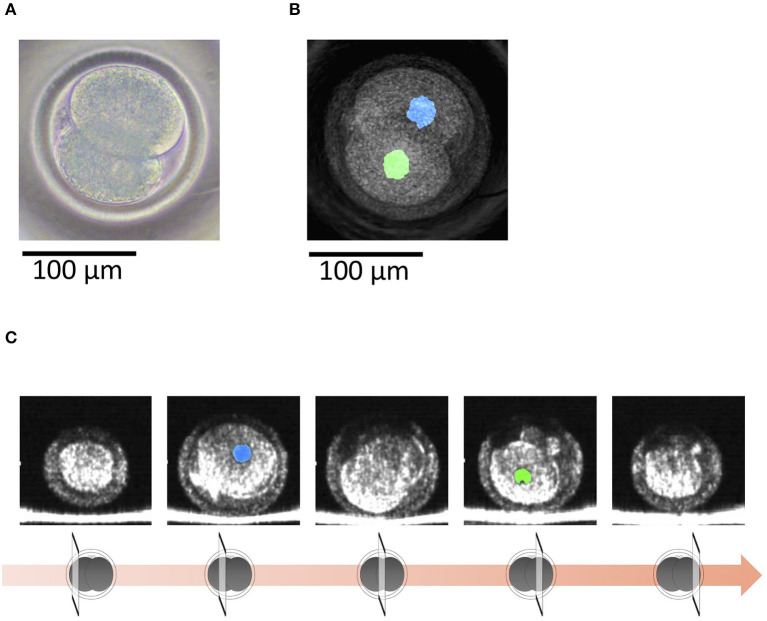
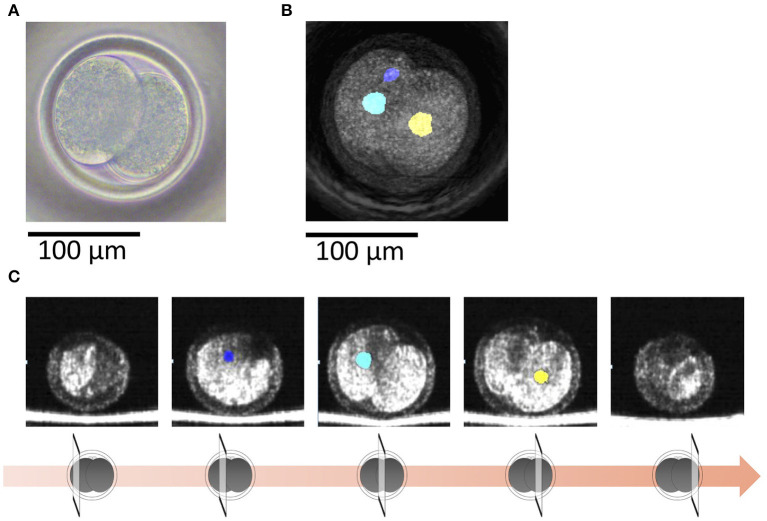
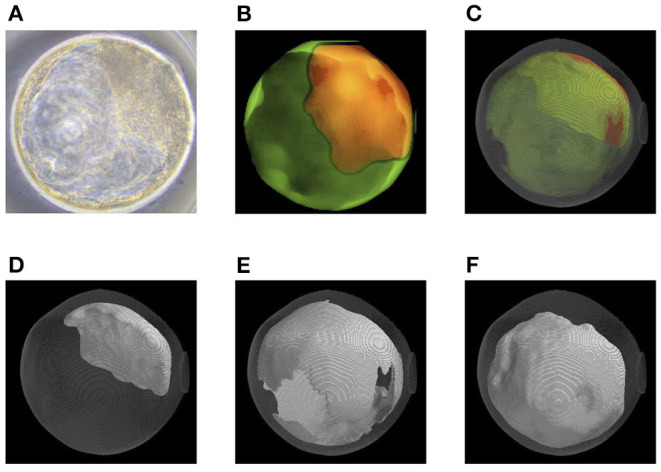
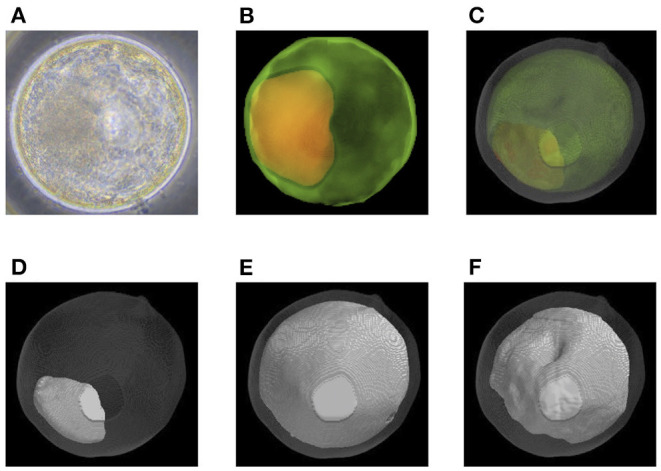
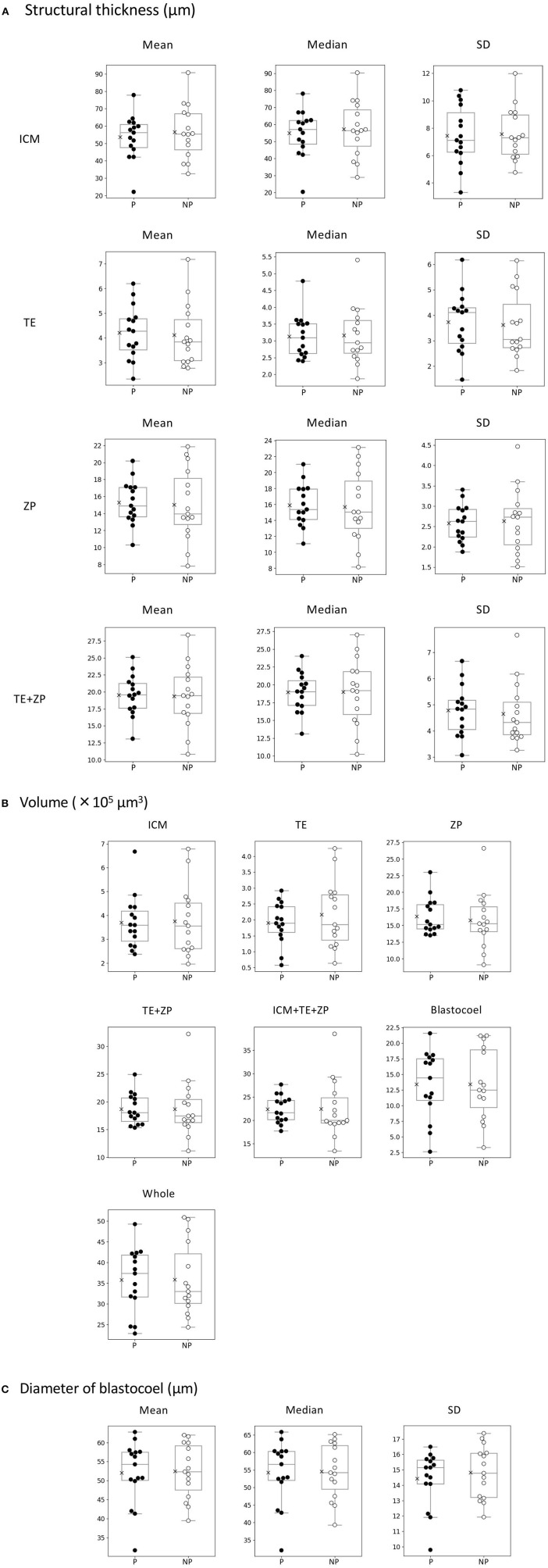
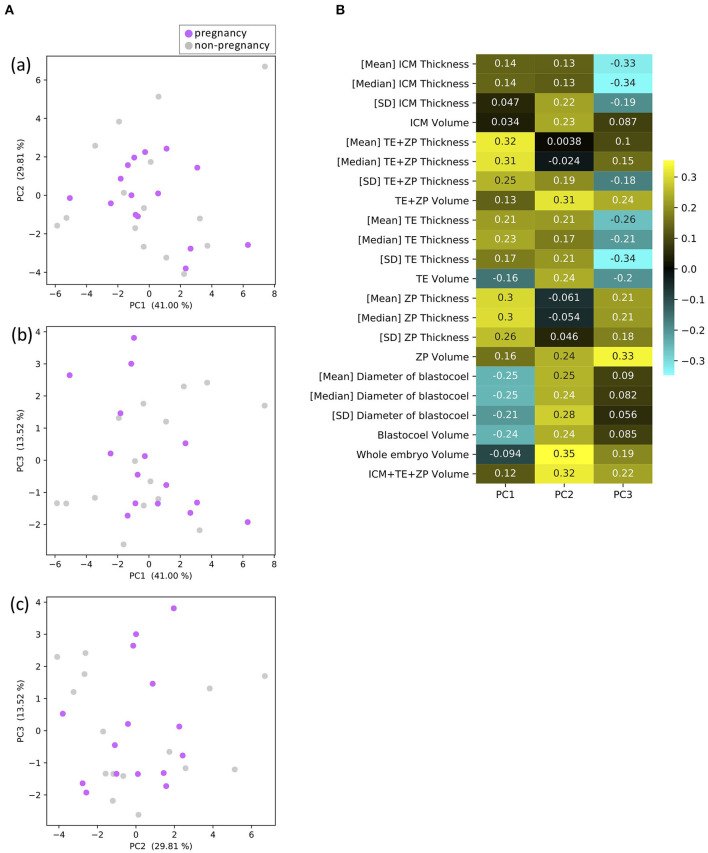
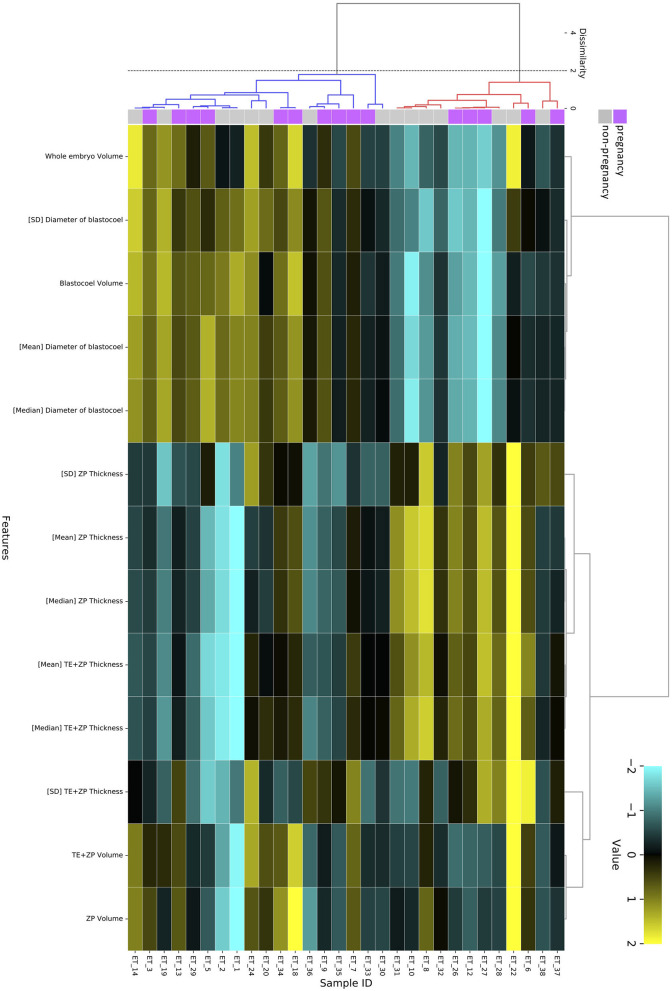
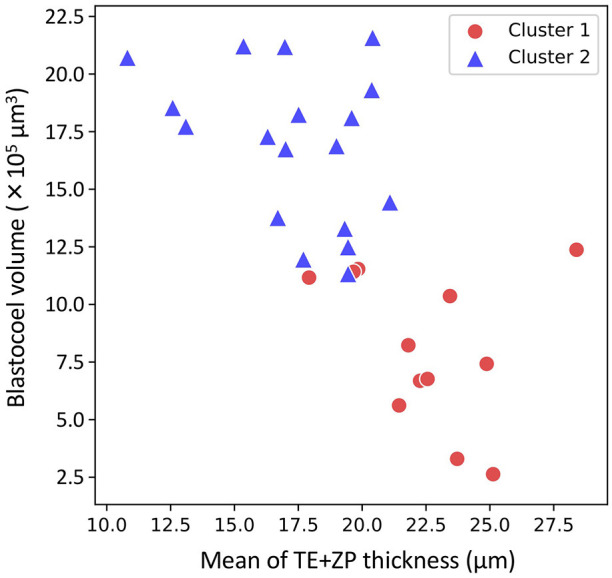
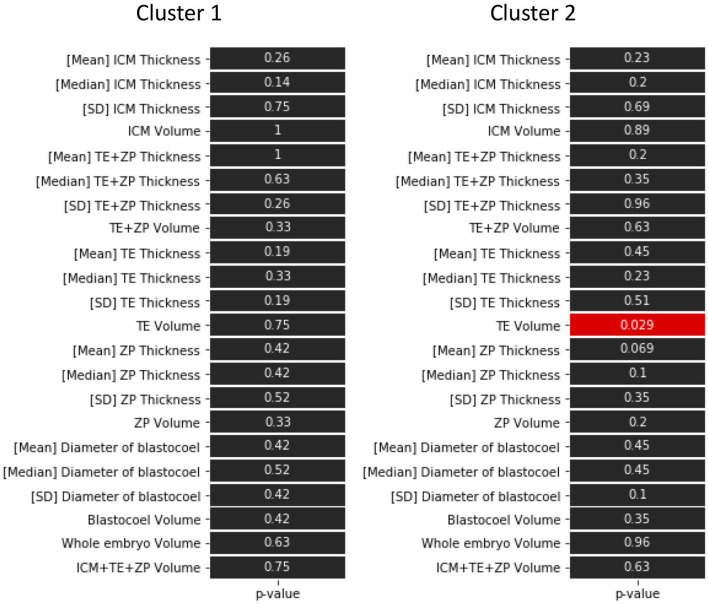
Conception rates for transferred bovine embryos are lower than those for artificial insemination. Embryo transfer (ET) is widely used in cattle but many of the transferred embryos fail to develop, thus, a more effective method for selecting bovine embryos suitable for ET is required. To evaluate the developmental potential of bovine preimplantation embryos (2-cell stage embryos and blastocysts), we have used the non-invasive method of optical coherence tomography (OCT) to obtain live images. The images were used to evaluate 22 parameters of blastocysts, such as the volume of the inner cell mass and the thicknesses of the trophectoderm (TE). Bovine embryos were obtained by fertilization (IVF) of the cumulus-oocyte complexes aspirated by ovum pick-up from Japanese Black cattle. The quality of the blastocysts was examined under an inverted microscope and all were confirmed to be Code1 according to the International Embryo Transfer Society standards for embryo evaluation. The OCT images of embryos were taken at the 2-cell and blastocyst stages prior to the transfer. In OCT, the embryos were irradiated with near-infrared light for a few minutes to capture three-dimensional images. Nuclei of the 2-cell stage embryos were clearly observed by OCT, and polynuclear cells at the 2-cell stage were also clearly found. With OCT, we were able to observe embryos at the blastocyst stage and evaluate their parameters. The conception rate following OCT (15/30; 50%) is typical for ETs and no newborn calves showed neonatal overgrowth or died, indicating that the OCT did not adversely affect the ET. A principal components analysis was unable to identify the parameters associated with successful pregnancy, while by using hierarchical clustering analysis, TE volume has been suggested to be one of the parameters for the evaluation of bovine embryo. The present results show that OCT imaging can be used to investigate time-dependent changes of IVF embryos. With further improvements, it should be useful for selecting high-quality embryos for transfer.
移植牛胚胎的受孕率低于人工授精的受孕率。胚胎移植(ET)在养牛业中被广泛应用,但许多移植的胚胎无法发育,因此,需要一种更有效的方法来选择适合胚胎移植的牛胚胎。为了评估牛植入前胚胎(2细胞期胚胎和囊胚)的发育潜力,我们使用了光学相干断层扫描(OCT)这种非侵入性方法来获取实时图像。这些图像用于评估囊胚的22个参数,如内细胞团的体积和滋养外胚层(TE)的厚度。通过从日本黑牛卵泡抽吸的卵丘-卵母细胞复合体进行体外受精(IVF)获得牛胚胎。在倒置显微镜下检查囊胚的质量,根据国际胚胎移植协会的胚胎评估标准,所有囊胚均被确认为1级。在移植前,在2细胞期和囊胚期拍摄胚胎的OCT图像。在OCT中,用近红外光照射胚胎几分钟以获取三维图像。通过OCT可以清晰地观察到2细胞期胚胎的细胞核,也能清楚地发现2细胞期的多核细胞。通过OCT,我们能够观察囊胚期的胚胎并评估其参数。OCT后的受孕率(15/30;50%)是胚胎移植的典型受孕率,没有新生犊牛出现新生儿过度生长或死亡的情况,这表明OCT对胚胎移植没有不利影响。主成分分析无法确定与成功妊娠相关的参数,而通过使用层次聚类分析,TE体积被认为是评估牛胚胎的参数之一。目前的结果表明,OCT成像可用于研究体外受精胚胎的时间依赖性变化。随着进一步改进,它应该有助于选择高质量的胚胎进行移植。