Department of Radiation Oncology, Mayo Clinic, Rochester, MN, USA.
J Appl Clin Med Phys. 2021 Jun;22(6):119-129. doi: 10.1002/acm2.13253. Epub 2021 May 13.
The purpose of this study was to provide guidance in developing and implementing a process for the accurate delivery of free breathing respiratory amplitude-gated treatments.
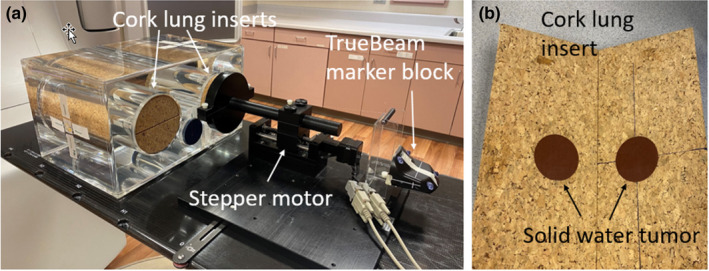
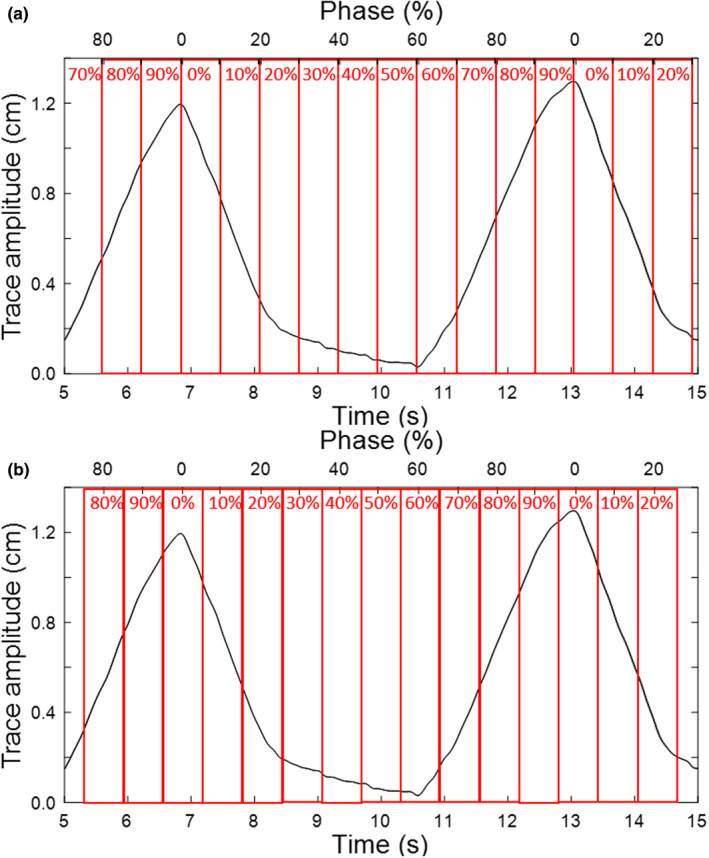
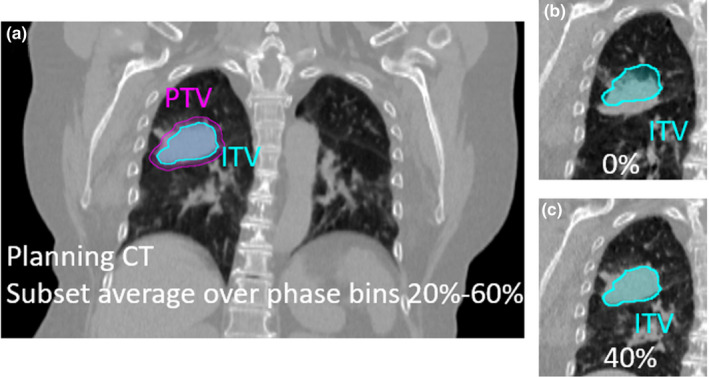
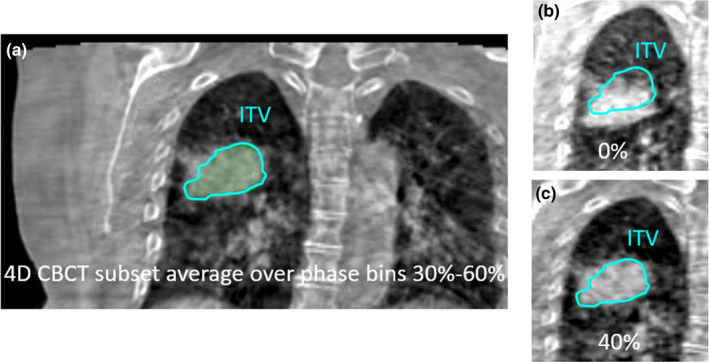
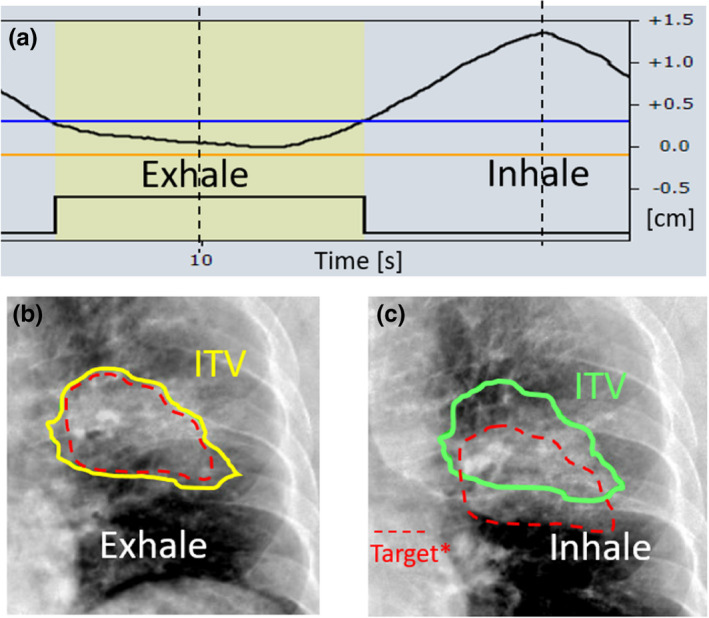
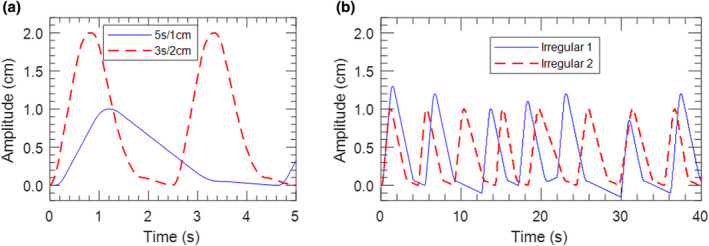
A phase-based 4DCT scan is acquired at time of simulation and motion is evaluated to determine the exhale phases that minimize respiratory motion to an acceptable level. A phase subset average CT is then generated for treatment planning and a tracking structure is contoured to indicate the location of the target or a suitable surrogate over the planning phases. Prior to treatment delivery, a 4DCBCT is acquired and a phase subset average is created to coincide with the planning phases for an initial match to the planning CT. Fluoroscopic imaging is then used to set amplitude gate thresholds corresponding to when the target or surrogate is in the tracking structure. The final imaging prior to treatment is an amplitude-gated CBCT to verify both the amplitude gate thresholds and patient positioning. An amplitude-gated treatment is then delivered. This technique was commissioned using an in-house lung motion phantom and film measurements of a simple two-field 3D plan.
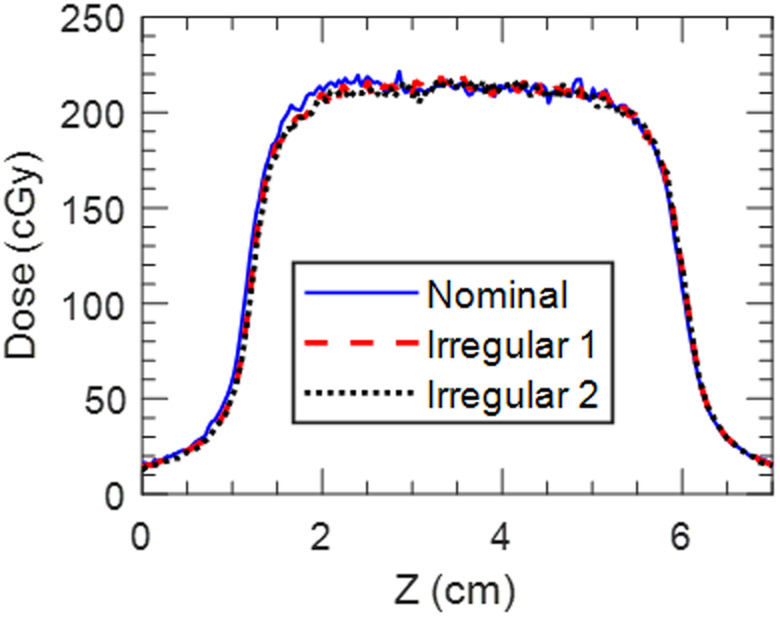
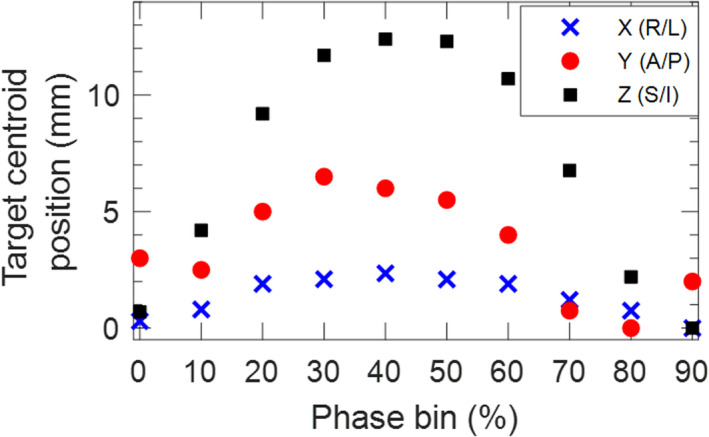
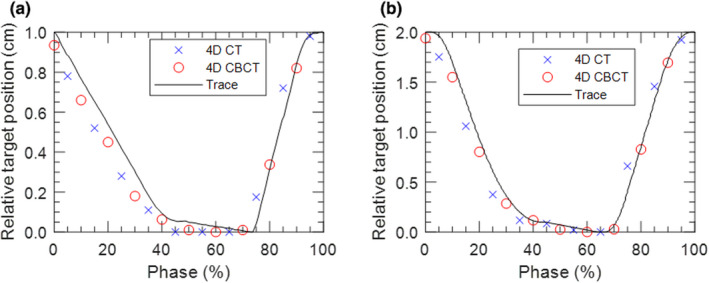
The accuracy of 4DCBCT motion and target position measurements were validated relative to 4DCT imaging. End to end testing showed strong agreement between planned and film measured dose distributions. Robustness to interuser variability and changes in respiratory motion were demonstrated through film measurements.
The developed workflow utilizes 4DCBCT, respiratory-correlated fluoroscopy, and gated CBCT imaging in an efficient and sequential process to ensure the accurate delivery of free breathing respiratory-gated treatments.
本研究旨在提供指导,以开发和实施准确提供自由呼吸呼吸幅度门控治疗的流程。
在模拟时采集基于相位的 4DCT 扫描,并评估运动,以确定将呼吸运动最小化至可接受水平的呼气相位。然后为治疗计划生成相位子集平均 CT,并勾勒出跟踪结构,以指示目标或合适替代物在计划相位中的位置。在治疗前,采集 4D-CBCT 并创建相位子集平均,以与计划相位匹配,以初始匹配计划 CT。然后使用透视成像设置与跟踪结构中的目标或替代物相对应的幅度门限。在治疗前的最后一次成像为幅度门控 CBCT,以验证幅度门限和患者定位。然后进行幅度门控治疗。该技术是使用内部肺部运动体模和简单的二维 3D 计划的胶片测量来委托开发的。
4DCBCT 运动和目标位置测量的准确性相对于 4DCT 成像进行了验证。端到端测试显示计划和胶片测量的剂量分布之间具有很强的一致性。通过胶片测量证明了对用户间变异性和呼吸运动变化的稳健性。
所开发的工作流程在一个高效和连续的过程中利用 4DCBCT、呼吸相关透视和门控 CBCT 成像,以确保自由呼吸呼吸门控治疗的准确提供。