Department of General Surgery, Xuanwu Hospital of Capital Medical University, Beijing, China.
Department of Thoracic Surgery, Xuanwu Hospital of Capital Medical University, Beijing, China.
Biosci Rep. 2021 May 28;41(5). doi: 10.1042/BSR20210583.
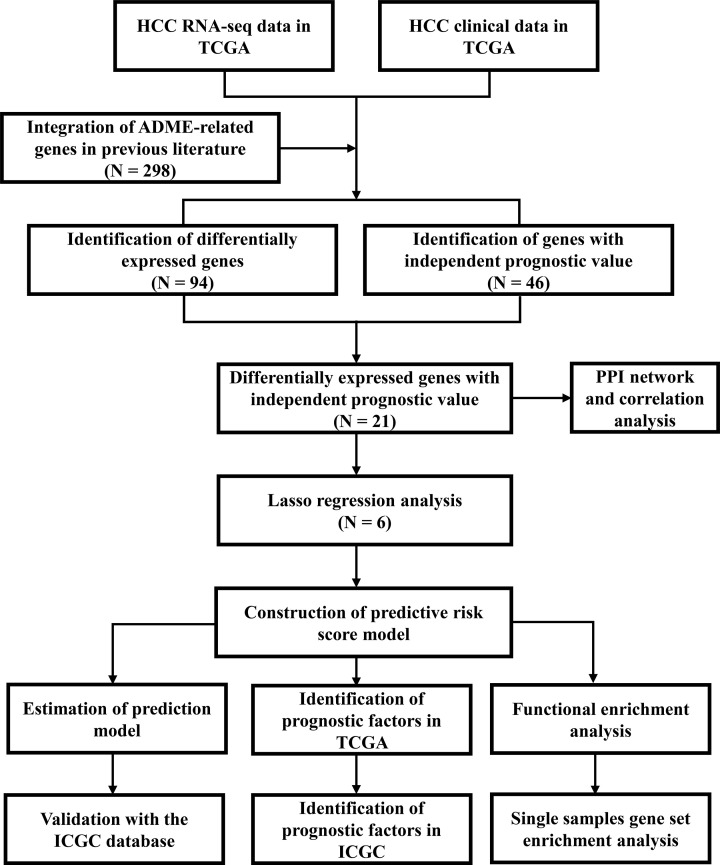
ADME genes are genes involved in drug absorption, distribution, metabolism, and excretion (ADME). Previous studies report that expression levels of ADME-related genes correlate with prognosis of hepatocellular carcinoma (HCC) patients. However, the role of ADME gene expression on HCC prognosis has not been fully explored. The present study sought to construct a prediction model using ADME-related genes for prognosis of HCC.
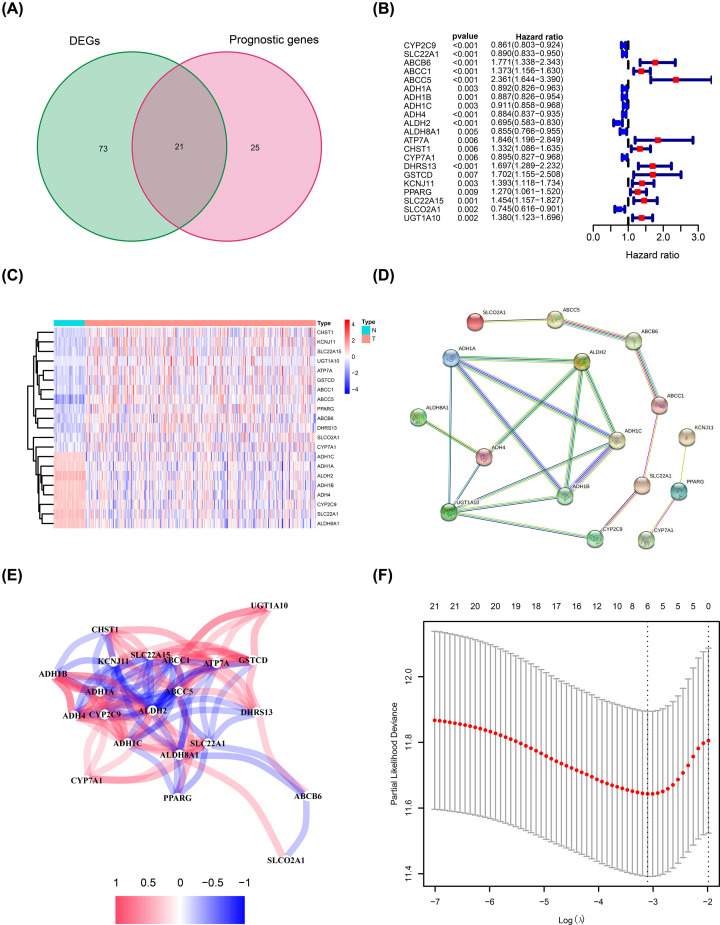
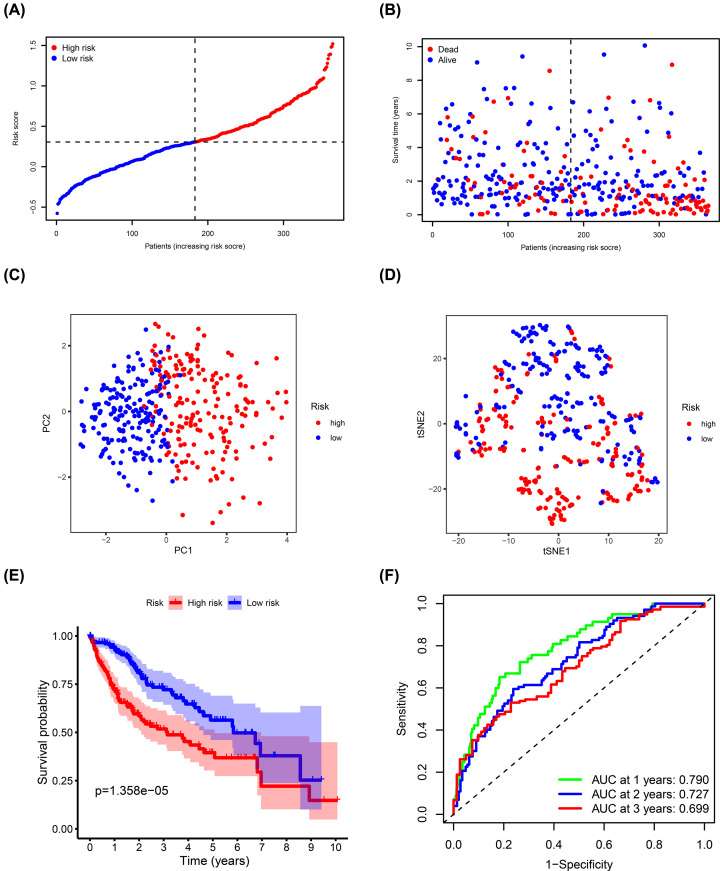
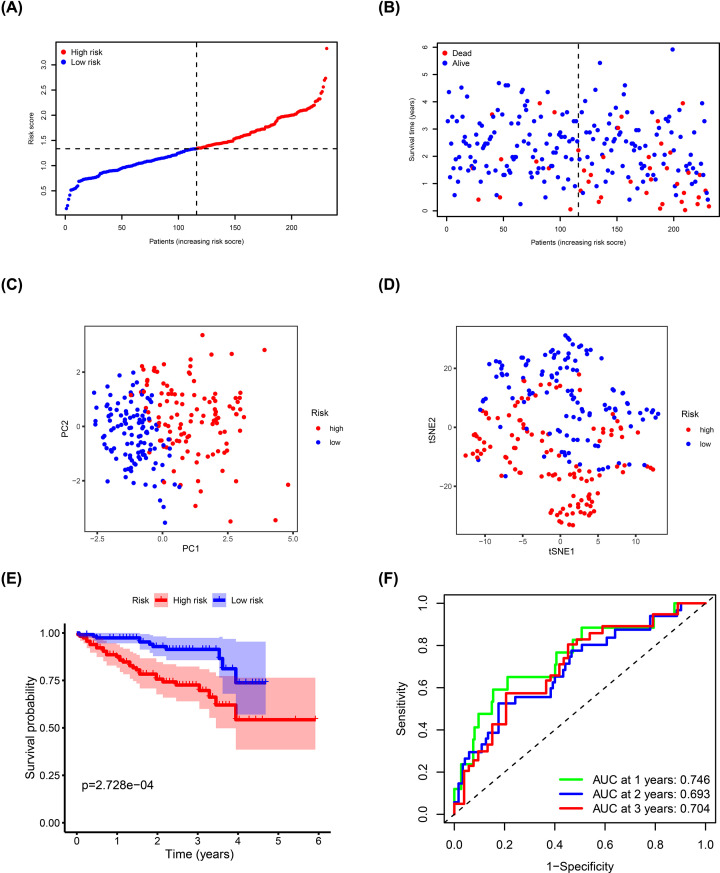
Transcriptome and clinical data were retrieved from The Cancer Genome Atlas (TCGA) and International Cancer Genome Consortium (ICGC), which were used as training and validation cohorts, respectively. A prediction model was constructed using univariate Cox regression and Least Absolute Shrinkage and Selection Operator (LASSO) analysis. Patients were divided into high- and low-risk groups based on the median risk score. The predictive ability of the risk signature was estimated through bioinformatics analyses.
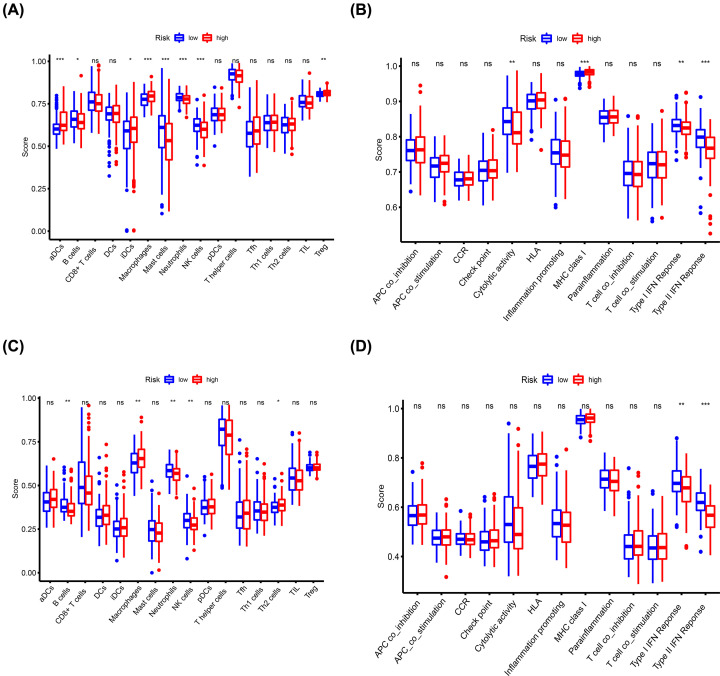
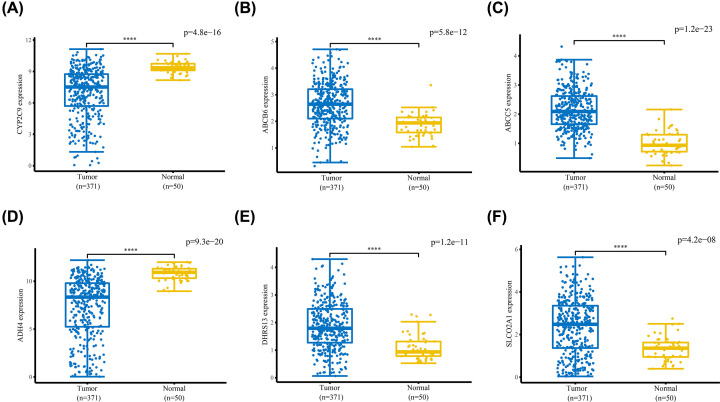
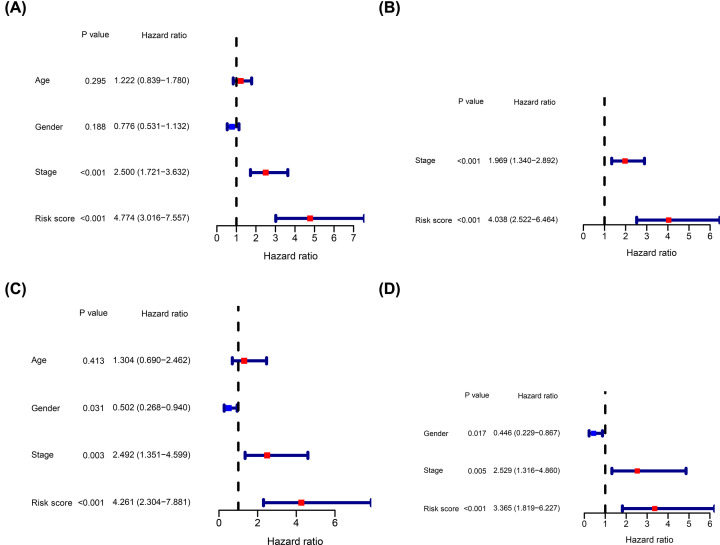
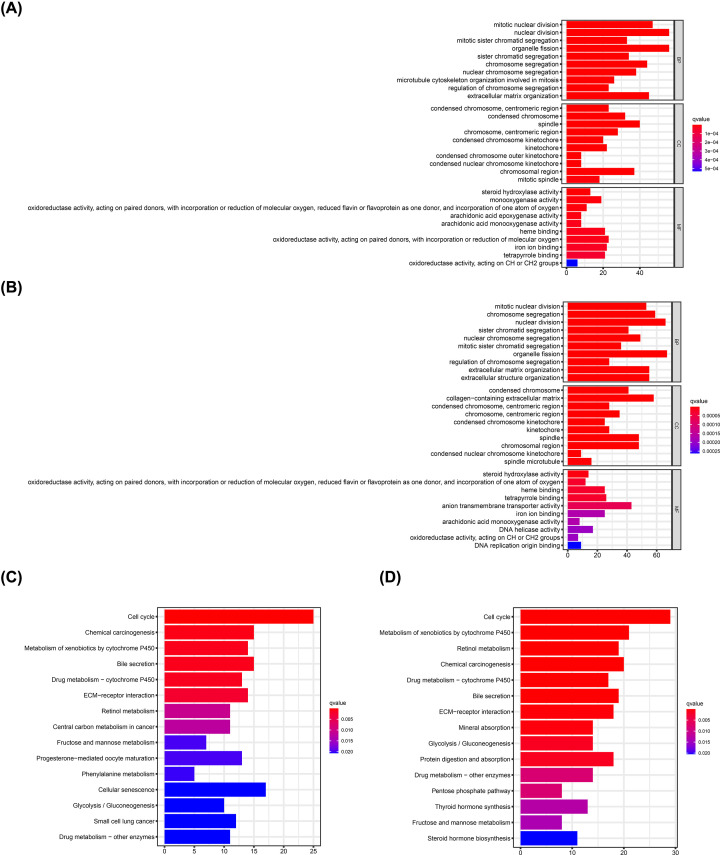
Six ADME-related genes (CYP2C9, ABCB6, ABCC5, ADH4, DHRS13, and SLCO2A1) were used to construct the prediction model with a good predictive ability. Univariate and multivariate Cox regression analyses showed the risk signature was an independent predictor of overall survival (OS). A single-sample gene set enrichment analysis (ssGSEA) strategy showed a significant relationship between risk signature and immune status. Gene Ontology (GO) and Kyoto Encyclopedia of Genes and Genomes (KEGG) enrichment analyses showed differentially expressed genes (DEGs) in the high- and low-risk groups were enriched in biological process (BP) associated with metabolic and cell cycle pathways.
A prediction model was constructed using six ADME-related genes for prediction of HCC prognosis. This signature can be used to improve HCC diagnosis, treatment, and prognosis in clinical use.
ADME 基因是参与药物吸收、分布、代谢和排泄(ADME)的基因。先前的研究报告称,ADME 相关基因的表达水平与肝细胞癌(HCC)患者的预后相关。然而,ADME 基因表达对 HCC 预后的作用尚未得到充分探讨。本研究旨在构建一个使用 ADME 相关基因预测 HCC 预后的模型。
从癌症基因组图谱(TCGA)和国际癌症基因组联盟(ICGC)中检索转录组和临床数据,分别作为训练和验证队列。使用单变量 Cox 回归和最小绝对值收缩和选择算子(LASSO)分析构建预测模型。根据中位风险评分将患者分为高风险组和低风险组。通过生物信息学分析评估风险特征的预测能力。
使用六个 ADME 相关基因(CYP2C9、ABCB6、ABCC5、ADH4、DHRS13 和 SLCO2A1)构建了具有良好预测能力的预测模型。单变量和多变量 Cox 回归分析表明,风险特征是总生存期(OS)的独立预测因子。单样本基因集富集分析(ssGSEA)策略表明,风险特征与免疫状态之间存在显著关系。基因本体论(GO)和京都基因与基因组百科全书(KEGG)富集分析显示,高风险和低风险组之间的差异表达基因(DEGs)在与代谢和细胞周期途径相关的生物学过程(BP)中富集。
构建了一个使用六个 ADME 相关基因预测 HCC 预后的预测模型。该特征可用于改善 HCC 的临床诊断、治疗和预后。