Department of Entomology, University of Georgia, Athens, Georgia, USA.
Department of Biology and Department of Entomology, Pennsylvania State University, University Park, Pennsylvania, USA.
Genome Biol Evol. 2021 Jul 6;13(7). doi: 10.1093/gbe/evab105.
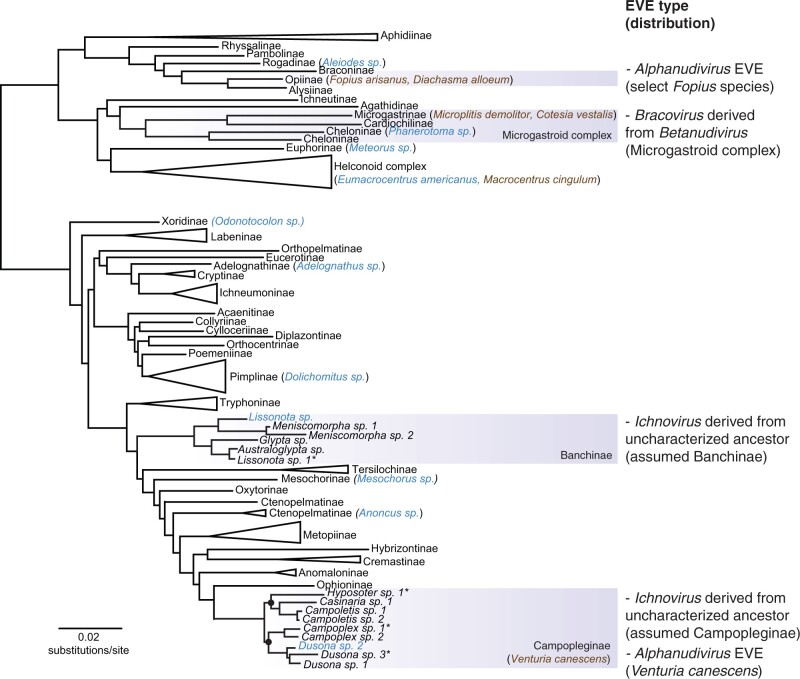
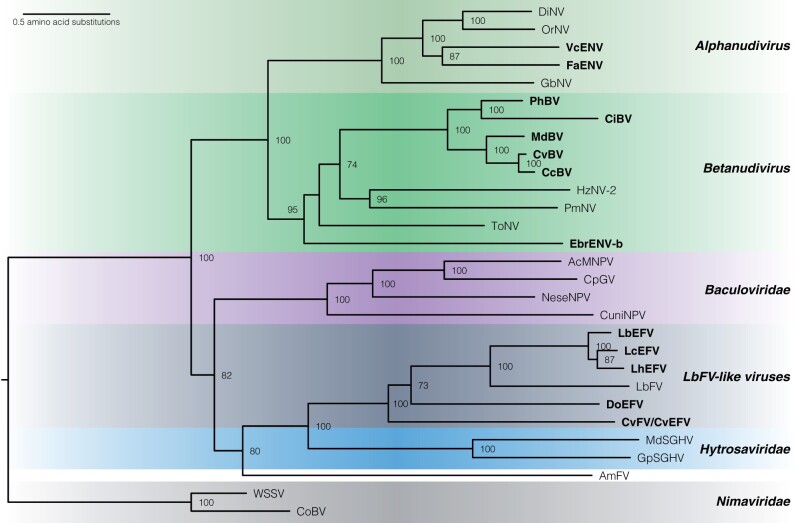
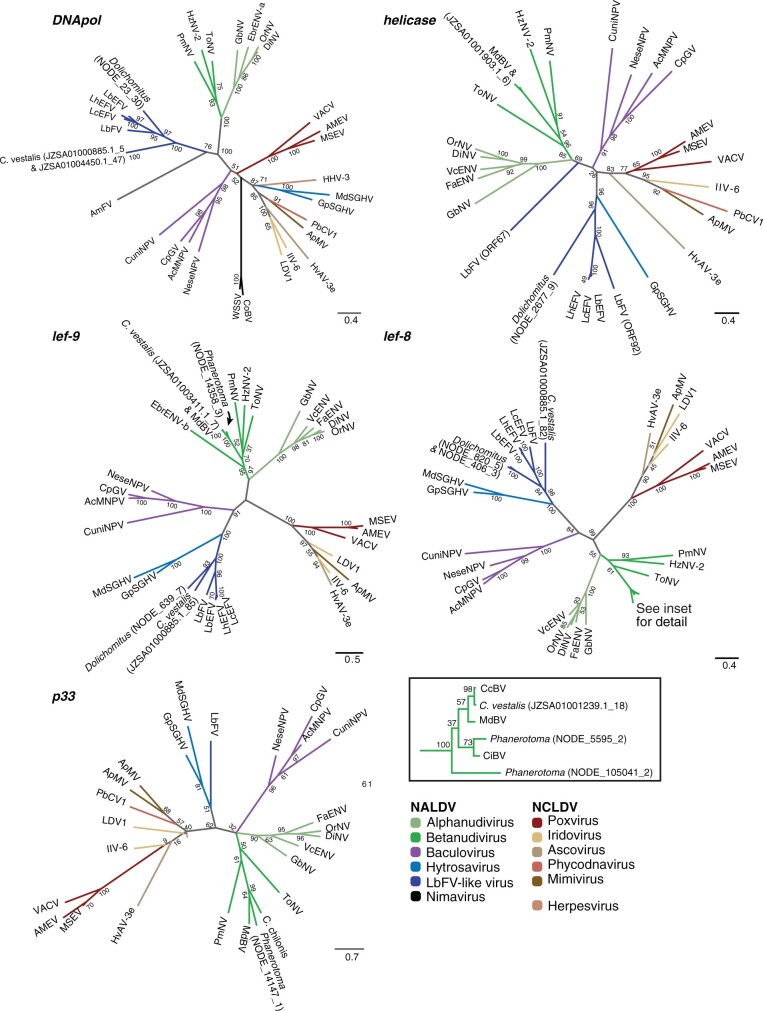
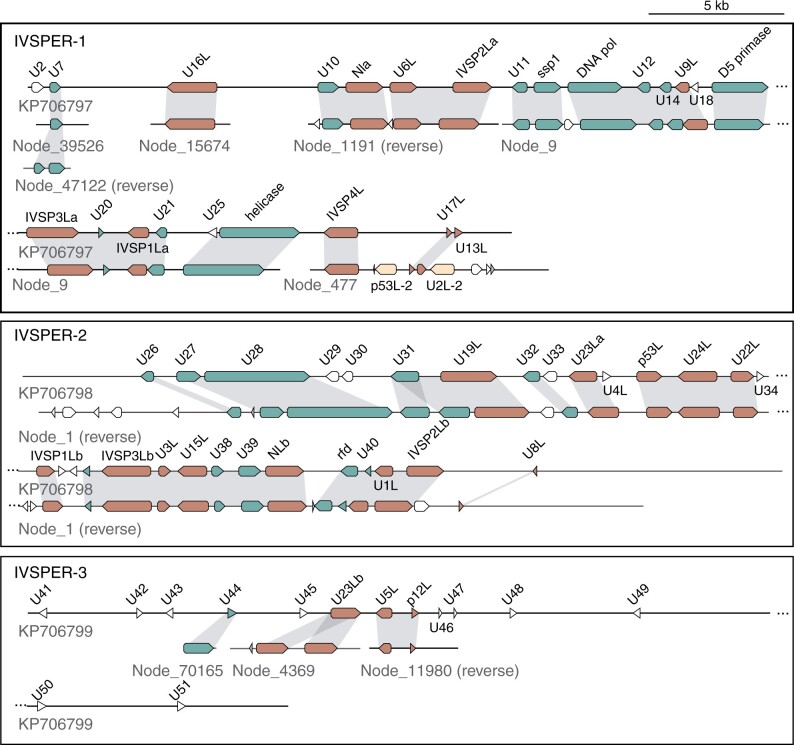
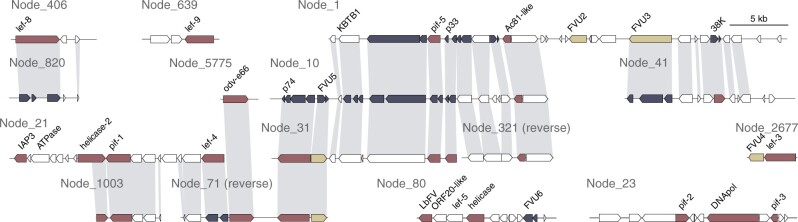
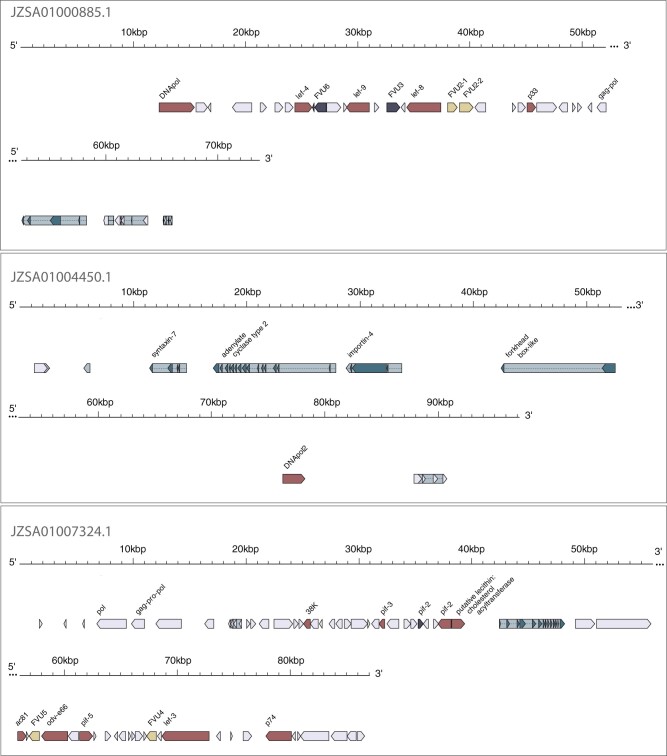
The Ichneumonoidea (Ichneumonidae and Braconidae) is an incredibly diverse superfamily of parasitoid wasps that includes species that produce virus-like entities in their reproductive tracts to promote successful parasitism of host insects. Research on these entities has traditionally focused upon two viral genera Bracovirus (in Braconidae) and Ichnovirus (in Ichneumonidae). These viruses are produced using genes known collectively as endogenous viral elements (EVEs) that represent historical, now heritable viral integration events in wasp genomes. Here, new genome sequence assemblies for 11 species and 6 publicly available genomes from the Ichneumonoidea were screened with the goal of identifying novel EVEs and characterizing the breadth of species in lineages with known EVEs. Exhaustive similarity searches combined with the identification of ancient core genes revealed sequences from both known and novel EVEs. One species harbored a novel, independently derived EVE related to a divergent large double-stranded DNA (dsDNA) virus that manipulates behavior in other hymenopteran species. Although bracovirus or ichnovirus EVEs were identified as expected in three species, the absence of ichnoviruses in several species suggests that they are independently derived and present in two younger, less widespread lineages than previously thought. Overall, this study presents a novel bioinformatic approach for EVE discovery in genomes and shows that three divergent virus families (nudiviruses, the ancestors of ichnoviruses, and Leptopilina boulardi Filamentous Virus-like viruses) are recurrently acquired as EVEs in parasitoid wasps. Virus acquisition in the parasitoid wasps is a common process that has occurred in many more than two lineages from a diverse range of arthropod-infecting dsDNA viruses.
膜翅目(姬蜂科和茧蜂科)是一种非常多样化的寄生蜂超级科,其中包括在生殖道中产生类似病毒的实体以促进成功寄生宿主昆虫的物种。对这些实体的研究传统上集中在两个病毒属 Bracovirus(在茧蜂科)和 Ichnovirus(在姬蜂科)上。这些病毒是使用被称为内源性病毒元件(EVEs)的基因产生的,这些基因代表了黄蜂基因组中历史上、现在可遗传的病毒整合事件。在这里,对 11 个物种和 6 个膜翅目动物的公共基因组进行了新的基因组序列组装,目的是鉴定新的 EVEs,并描述具有已知 EVEs 的物种的广度。穷尽的相似性搜索结合古老核心基因的鉴定揭示了来自已知和新 EVEs 的序列。一种物种携带有一种新型的、独立衍生的 EVE,与一种在其他膜翅目昆虫中操纵行为的、分化的大型双链 DNA(dsDNA)病毒有关。尽管在三个物种中预期鉴定到了 bracovirus 或 ichnovirus EVEs,但在几个物种中缺乏 ichnoviruses 表明它们是独立衍生的,并且存在于两个比以前认为的更年轻、分布范围更小的谱系中。总的来说,这项研究提出了一种新的基因组中 EVEs 发现的生物信息学方法,并表明三个不同的病毒家族( nudiviruses、ichnoviruses 的祖先和 Leptopilina boulardi Filamentous Virus-like viruses)作为 EVEs 经常在寄生蜂中被获得。寄生蜂中病毒的获得是一个常见的过程,它已经在许多比以前认为的更多的来自各种节肢动物感染的 dsDNA 病毒的谱系中发生。