Department of Biomedical Sciences, University of Veterinary Medicine Vienna, Vienna, Austria.
Ludwig Boltzmann Institute for Experimental and Clinical Traumatology in the AUVA Research Center, Vienna, Austria.
PLoS One. 2021 May 14;16(5):e0251317. doi: 10.1371/journal.pone.0251317. eCollection 2021.
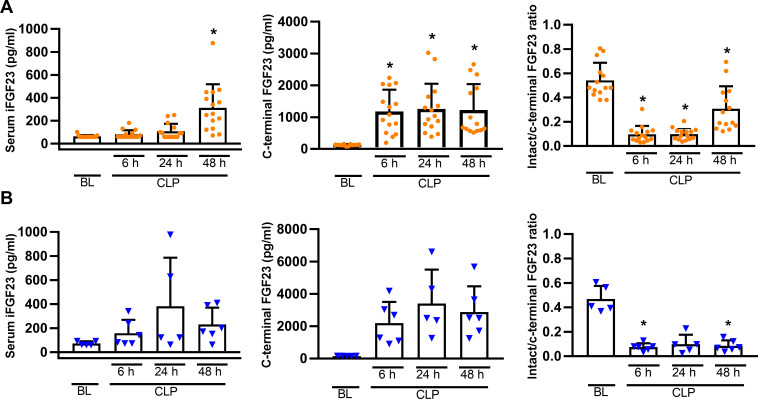
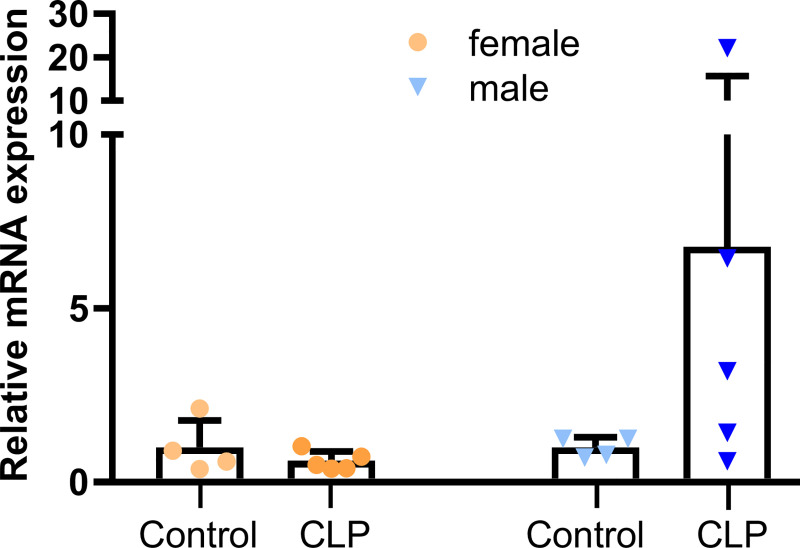
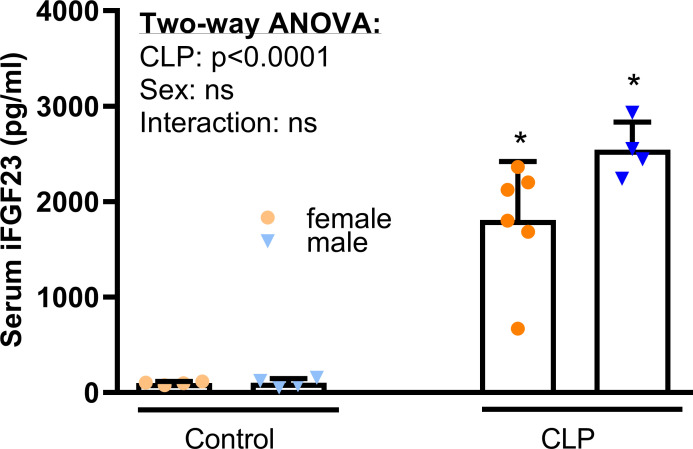
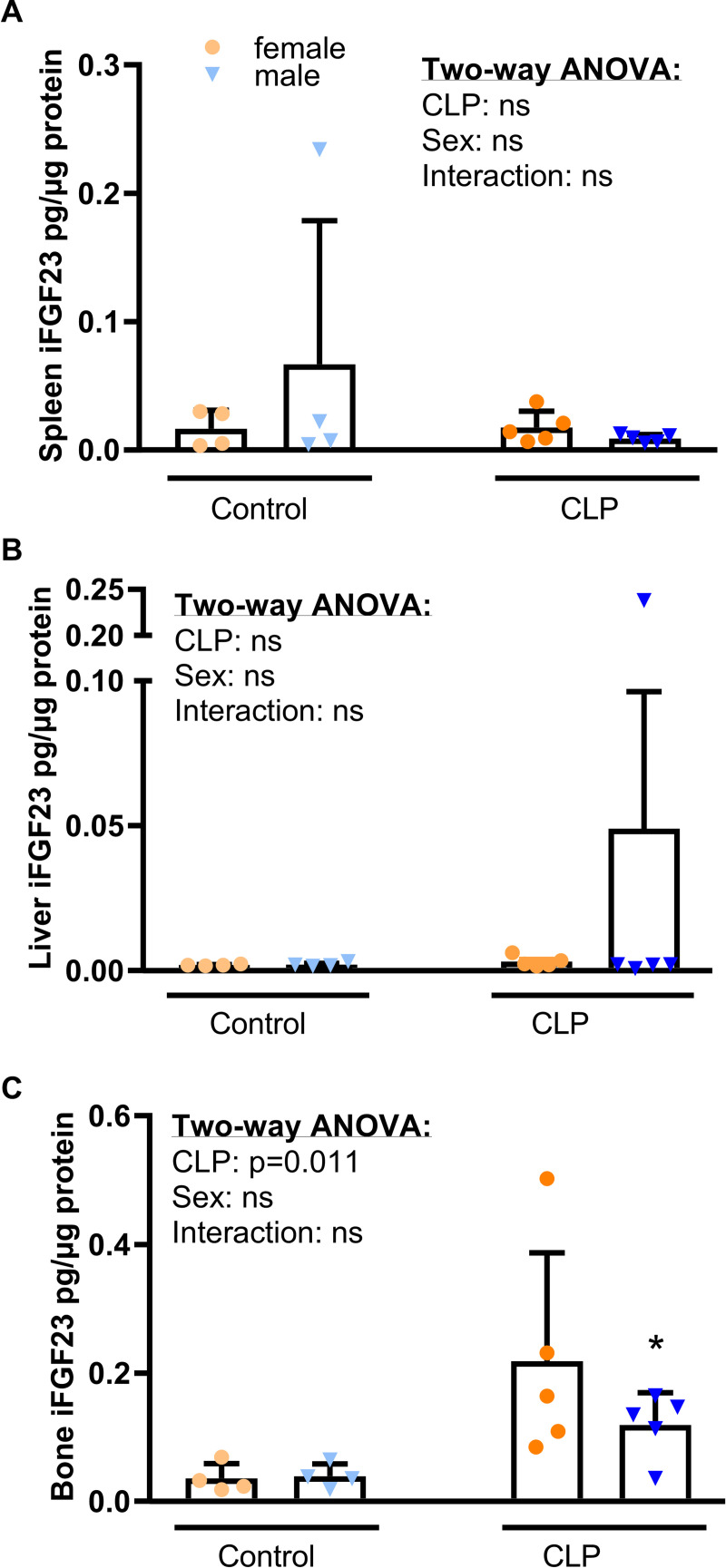
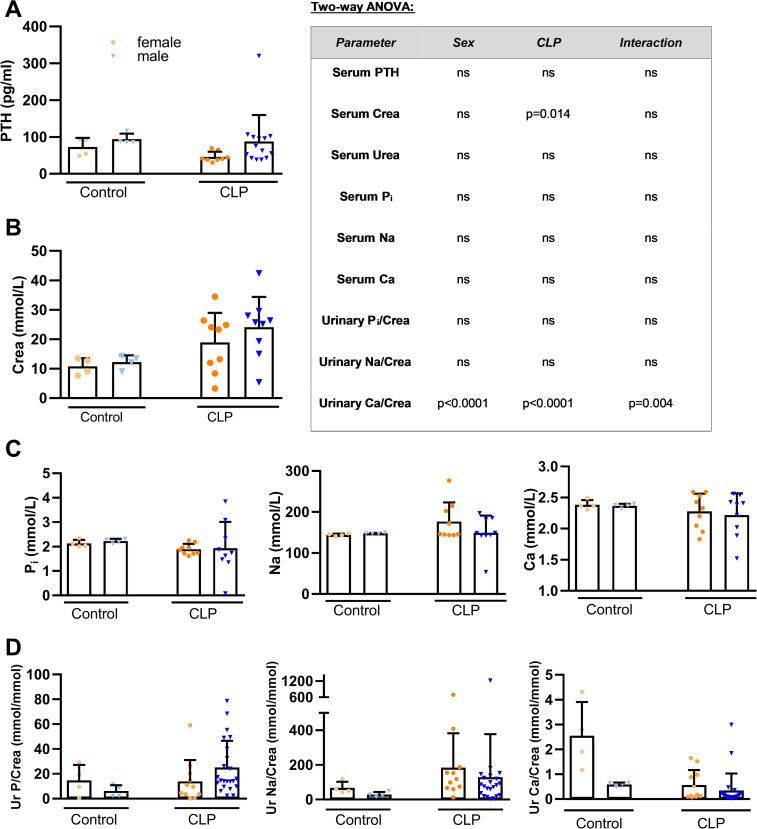
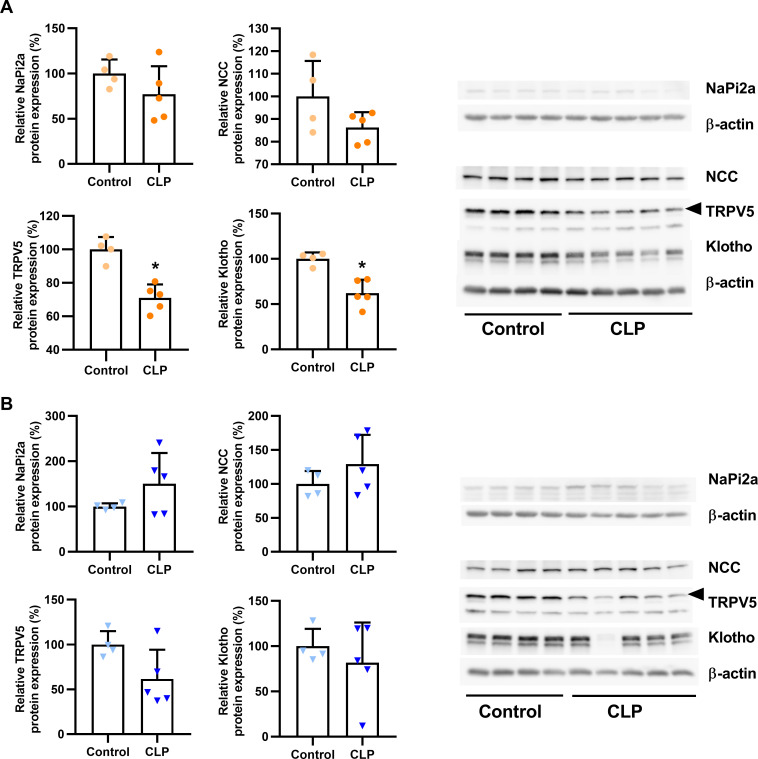
Fibroblast growth factor-23 (FGF23), a bone-produced hormone, plays a critical role in mineral homeostasis. Human diseases associated with excessive intact circulating FGF23 (iFGF23) result in hypophosphatemia and low vitamin D hormone in patients with normal kidney function. In addition, there is accumulating evidence linking FGF23 with inflammation. Based on these studies and the frequent observation of hypophosphatemia among septic patients, we sought to elucidate further the relationship between FGF23 and mineral homeostasis in a clinically relevant murine polymicrobial sepsis model. Medium-severity sepsis was induced by cecum ligation puncture (CLP) in adult CD-1 mice of both sexes. Healthy CD-1 mice (without CLP) were used as controls. Forty-eight hours post-CLP, spontaneous urine was collected, and serum, organs and bones were sampled at necropsy. Serum iFGF23 increased ~20-fold in CLP compared to control mice. FGF23 protein concentration was increased in the bones, but not in spleen or liver of CLP mice. Despite the ~20-fold iFGF23 increase, we did not observe any significant changes in mineral homeostasis or parathyroid hormone levels in the blood of CLP animals. Urinary excretion of phosphate, calcium, and sodium remained unchanged in male CLP mice, whereas female CLP mice exhibited lower urinary calcium excretion, relative to healthy controls. In line with renal FGF23 resistance, expression of phosphate-, calcium- and sodium-transporting proteins did not show consistent changes in the kidneys of male and female CLP mice. Renal expression of the co-receptor αKlotho was downregulated in female, but not in male CLP mice. In conclusion, our data demonstrate that the dramatic, sex-independent rise in serum iFGF23 post-CLP was mainly caused by an upregulation of FGF23 secretion in the bone. Surprisingly, the upsurge in circulating iFGF23 did not alter humoral mineral homeostasis in the acutely septic mice. Hence, the biological function of elevated FGF23 in sepsis remains unclear and warrants further studies.
成纤维细胞生长因子 23(FGF23)是一种由骨骼产生的激素,在矿物质稳态中起着关键作用。在肾功能正常的患者中,与循环中完整的 FGF23(iFGF23)过多相关的人类疾病会导致低磷血症和维生素 D 激素水平降低。此外,越来越多的证据表明 FGF23 与炎症有关。基于这些研究以及在脓毒症患者中经常观察到的低磷血症,我们试图在一种临床相关的多微生物脓毒症小鼠模型中进一步阐明 FGF23 与矿物质稳态之间的关系。通过盲肠结扎穿刺术(CLP)在成年 CD-1 雌雄小鼠中诱导中度脓毒症。健康的 CD-1 小鼠(未经 CLP)用作对照。CLP 后 48 小时,收集自发尿液,并在尸检时采集血清、器官和骨骼样本。与对照小鼠相比,CLP 小鼠的血清 iFGF23 增加了约 20 倍。CLP 小鼠的骨骼中 FGF23 蛋白浓度增加,但脾脏或肝脏中没有增加。尽管 iFGF23 增加了约 20 倍,但我们没有观察到 CLP 动物血液中矿物质稳态或甲状旁腺激素水平有任何显著变化。雄性 CLP 小鼠的尿磷酸盐、钙和钠排泄量保持不变,而雌性 CLP 小鼠的尿钙排泄量相对于健康对照组降低。与肾脏 FGF23 抵抗一致,雄性和雌性 CLP 小鼠肾脏中磷酸盐、钙和钠转运蛋白的表达没有一致变化。雌性 CLP 小鼠肾脏中的辅助受体 αKlotho 的表达下调,但雄性 CLP 小鼠没有。总之,我们的数据表明,CLP 后血清 iFGF23 的急剧、性别无关的升高主要是由骨骼中 FGF23 分泌的上调引起的。令人惊讶的是,循环中 iFGF23 的增加并没有改变急性脓毒症小鼠的体液矿物质稳态。因此,脓毒症中升高的 FGF23 的生物学功能仍不清楚,需要进一步研究。