Cellular and Molecular Pathology Training Program, University of Wisconsin-Madison, Madison, Wisconsin, United States of America.
Department of Pediatrics, University of Wisconsin-Madison, Madison, Wisconsin, United States of America.
PLoS Pathog. 2020 Oct 27;16(10):e1009020. doi: 10.1371/journal.ppat.1009020. eCollection 2020 Oct.
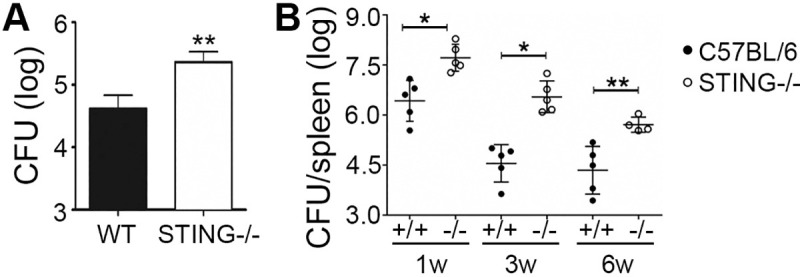
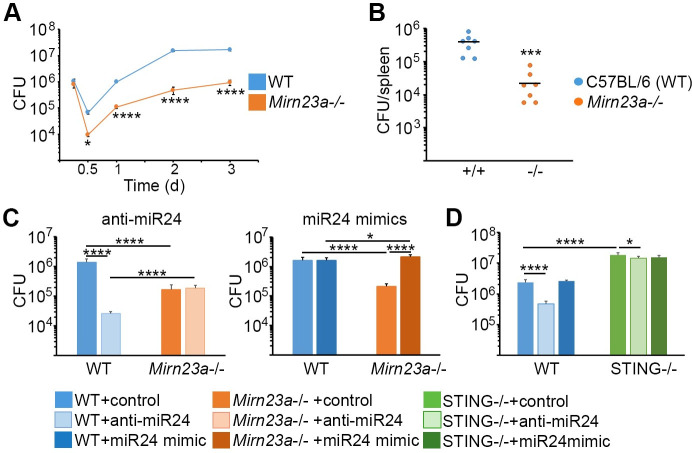
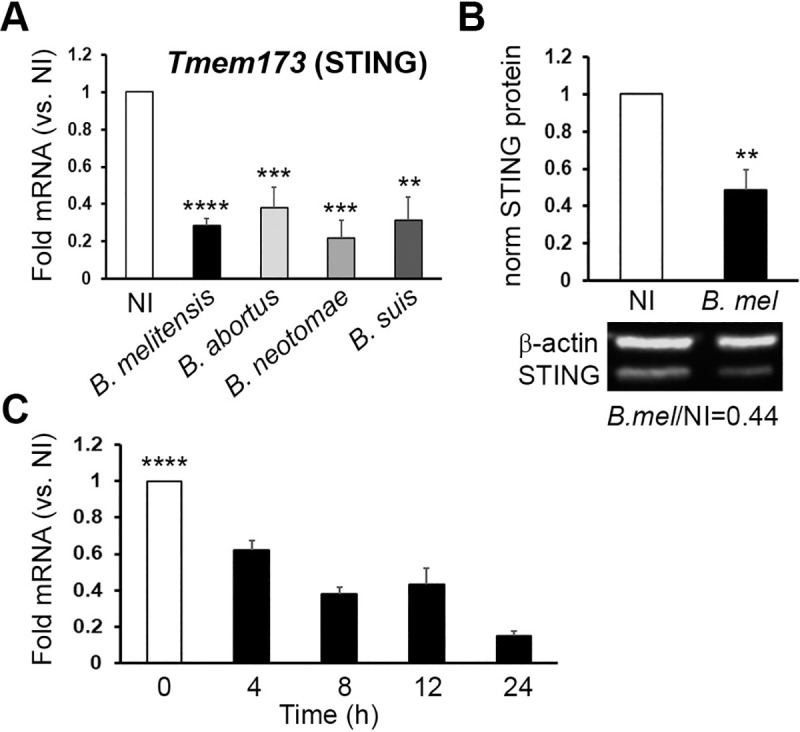
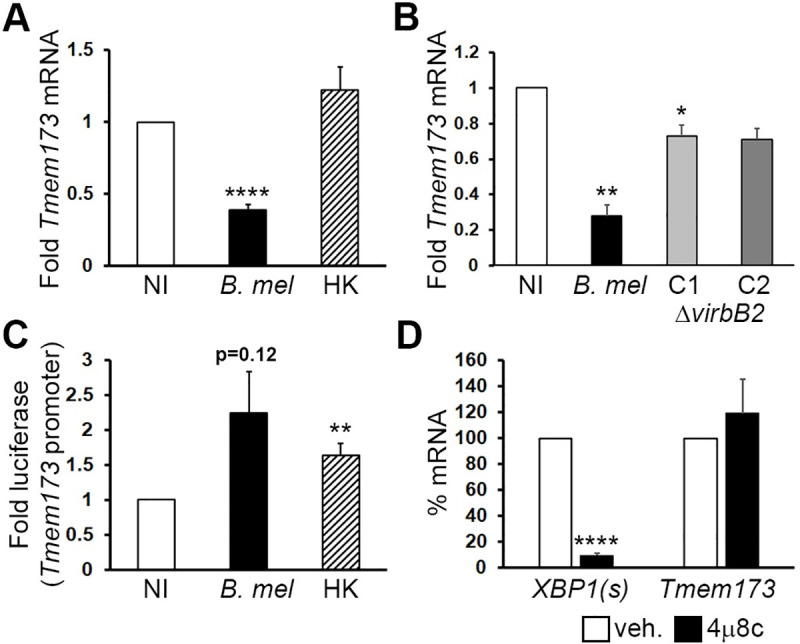
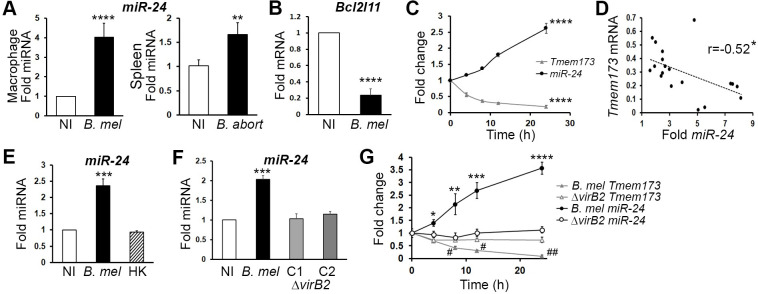
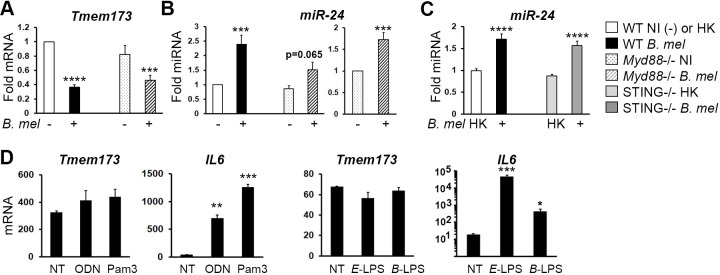
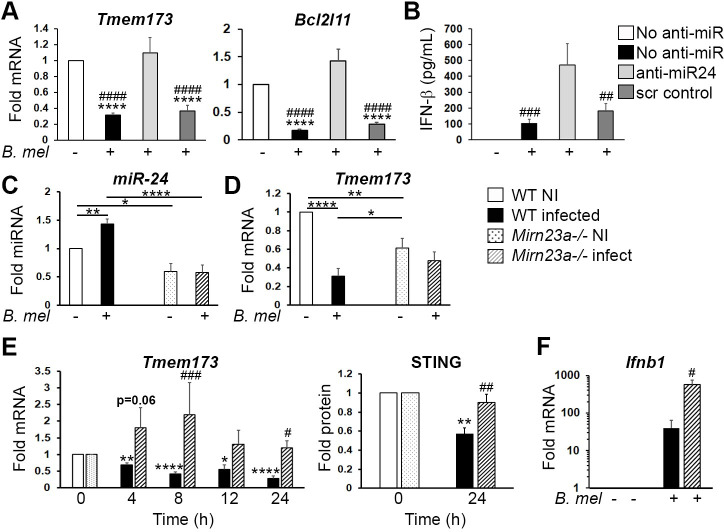
Brucellosis, caused by a number of Brucella species, remains the most prevalent zoonotic disease worldwide. Brucella establish chronic infections within host macrophages despite triggering cytosolic innate immune sensors, including Stimulator of Interferon Genes (STING), which potentially limit infection. In this study, STING was required for control of chronic Brucella infection in vivo. However, early during infection, Brucella down-regulated STING mRNA and protein. Down-regulation occurred post-transcriptionally, required live bacteria, the Brucella type IV secretion system, and was independent of host IRE1-RNase activity. STING suppression occurred in MyD88-/- macrophages and was not induced by Toll-like receptor agonists or purified Brucella lipopolysaccharide (LPS). Rather, Brucella induced a STING-targeting microRNA, miR-24-2, in a type IV secretion system-dependent manner. Furthermore, STING downregulation was inhibited by miR-24 anti-miRs and in Mirn23a locus-deficient macrophages. Failure to suppress STING expression in Mirn23a-/- macrophages correlated with diminished Brucella replication, and was rescued by exogenous miR-24. Mirn23a-/- mice were also more resistant to splenic colonization one week post infection. Anti-miR-24 potently suppressed replication in wild type, but much less in STING-/- macrophages, suggesting most of the impact of miR-24 induction on replication occurred via STING suppression. In summary, Brucella sabotages cytosolic surveillance by miR-24-dependent suppression of STING expression; post-STING activation "damage control" via targeted STING destruction may enable establishment of chronic infection.
布鲁氏菌病是由多种布鲁氏菌引起的,仍然是全球最普遍的人畜共患病。尽管布鲁氏菌能触发细胞质固有免疫传感器,包括干扰素基因刺激物(STING),但它们仍能在宿主巨噬细胞中建立慢性感染,而 STING 可能限制了感染。在这项研究中,STING 是控制体内慢性布鲁氏菌感染所必需的。然而,在感染早期,布鲁氏菌就下调了 STING mRNA 和蛋白。这种下调发生在转录后水平,需要活细菌、布鲁氏菌 IV 型分泌系统,并且不依赖于宿主 IRE1-RNase 活性。STING 抑制发生在 MyD88-/-巨噬细胞中,并且不会被 Toll 样受体激动剂或纯化的布鲁氏菌脂多糖(LPS)诱导。相反,布鲁氏菌以 IV 型分泌系统依赖的方式诱导了一种靶向 STING 的 microRNA,miR-24-2。此外,miR-24 反义寡核苷酸抑制了 STING 下调,并且在 Mirn23a 缺失的巨噬细胞中也不会诱导。Mirn23a-/-巨噬细胞中未能抑制 STING 表达与布鲁氏菌复制减少相关,并且可以通过外源性 miR-24 挽救。Mirn23a-/-小鼠在感染后一周脾脏定植也减少。miR-24 反义寡核苷酸在野生型巨噬细胞中强烈抑制了复制,但在 STING-/-巨噬细胞中抑制作用较小,这表明 miR-24 诱导对复制的大部分影响是通过抑制 STING 表达而产生的。总之,布鲁氏菌通过依赖 miR-24 的 STING 表达抑制来破坏细胞质监测;通过靶向 STING 破坏进行的 STING 激活后的“损害控制”可能使慢性感染得以建立。