Astbury Centre for Structural and Molecular Biology, School of Molecular and Cellular Biology, Faculty of Biological Sciences, University of Leeds, Leeds, UK.
Scientific Computing Department, Science and Technology Facilities Council, Research Complex at Harwell, Didcot, UK.
Nat Commun. 2021 May 14;12(1):2791. doi: 10.1038/s41467-021-23146-4.
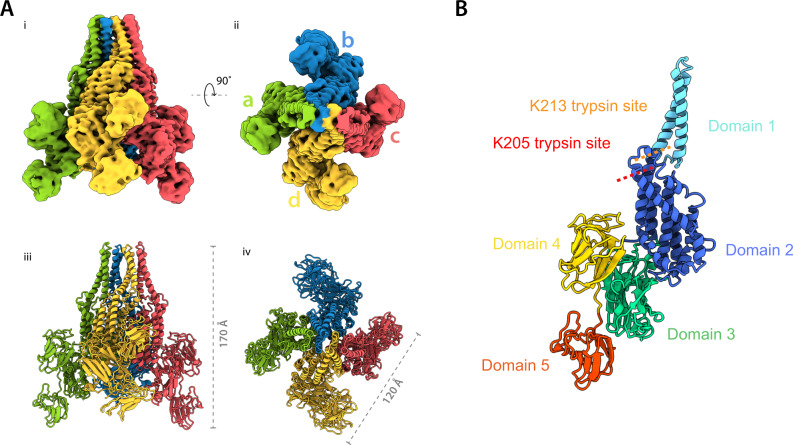
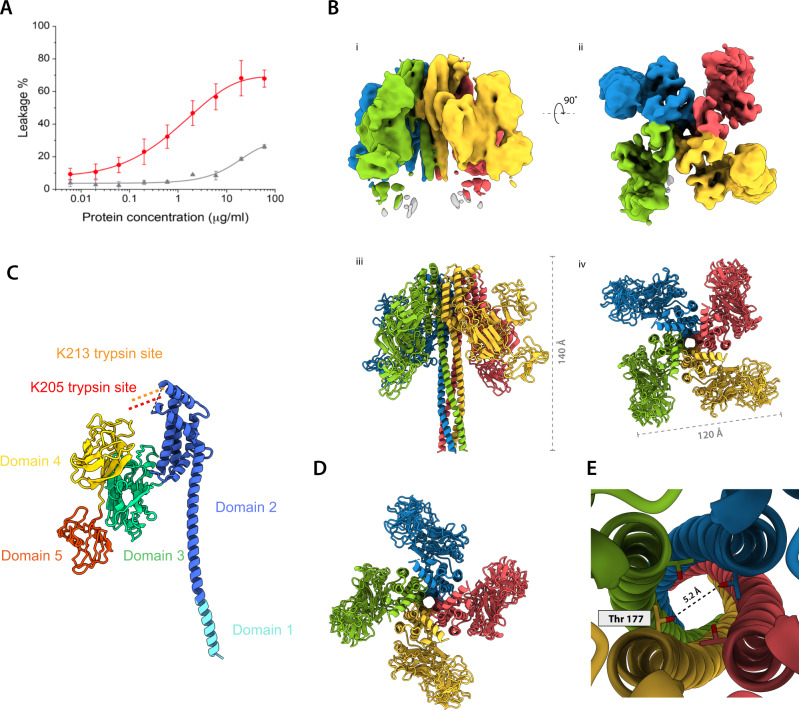
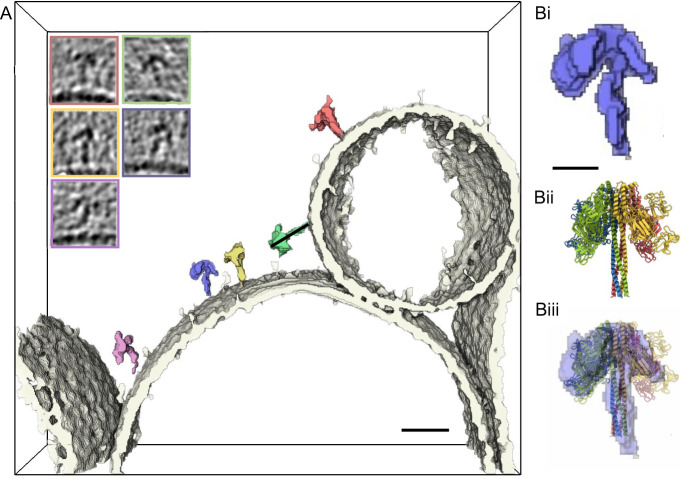
Insect pests are a major cause of crop losses worldwide, with an estimated economic cost of $470 billion annually. Biotechnological tools have been introduced to control such insects without the need for chemical pesticides; for instance, the development of transgenic plants harbouring genes encoding insecticidal proteins. The Vip3 (vegetative insecticidal protein 3) family proteins from Bacillus thuringiensis convey toxicity to species within the Lepidoptera, and have wide potential applications in commercial agriculture. Vip3 proteins are proposed to exert their insecticidal activity through pore formation, though to date there is no mechanistic description of how this occurs on the membrane. Here we present cryo-EM structures of a Vip3 family toxin in both inactive and activated forms in conjunction with structural and functional data on toxin-membrane interactions. Together these data demonstrate that activated Vip3Bc1 complex is able to insert into membranes in a highly efficient manner, indicating that receptor binding is the likely driver of Vip3 specificity.
害虫是全球作物减产的主要原因,每年造成的经济损失估计达 4700 亿美元。为了在不使用化学农药的情况下控制此类昆虫,人们已经引入了生物技术工具;例如,开发了携带编码杀虫蛋白的基因的转基因植物。苏云金芽孢杆菌的 VIP3(营养期杀虫蛋白 3)家族蛋白对鳞翅目内的物种具有毒性,在商业农业中有广泛的潜在应用。VIP3 蛋白被认为通过形成孔发挥其杀虫活性,尽管迄今为止还没有关于这种活性在膜上发生的机制描述。在这里,我们展示了 VIP3 家族毒素在非激活和激活两种形式下的冷冻电镜结构,以及关于毒素-膜相互作用的结构和功能数据。这些数据共同表明,激活的 Vip3Bc1 复合物能够以高效的方式插入膜中,表明受体结合可能是 VIP3 特异性的驱动因素。