Raha Animesh Alexander, Ghaffari Seyedeh Deniz, Henderson James, Chakraborty Subhojit, Allinson Kieren, Friedland Robert P, Holland Anthony, Zaman Shahid H, Mukaetova-Ladinska Elizabeta B, Raha-Chowdhury Ruma
John van Geest Centre for Brain Repair, Department of Clinical Neuroscience, University of Cambridge, Cambridge, United Kingdom.
Clinical Pathology, Addenbrooke's Hospital, Cambridge University Hospitals NHS Foundation Trust, Cambridge, United Kingdom.
Front Aging Neurosci. 2021 Apr 30;13:653591. doi: 10.3389/fnagi.2021.653591. eCollection 2021.
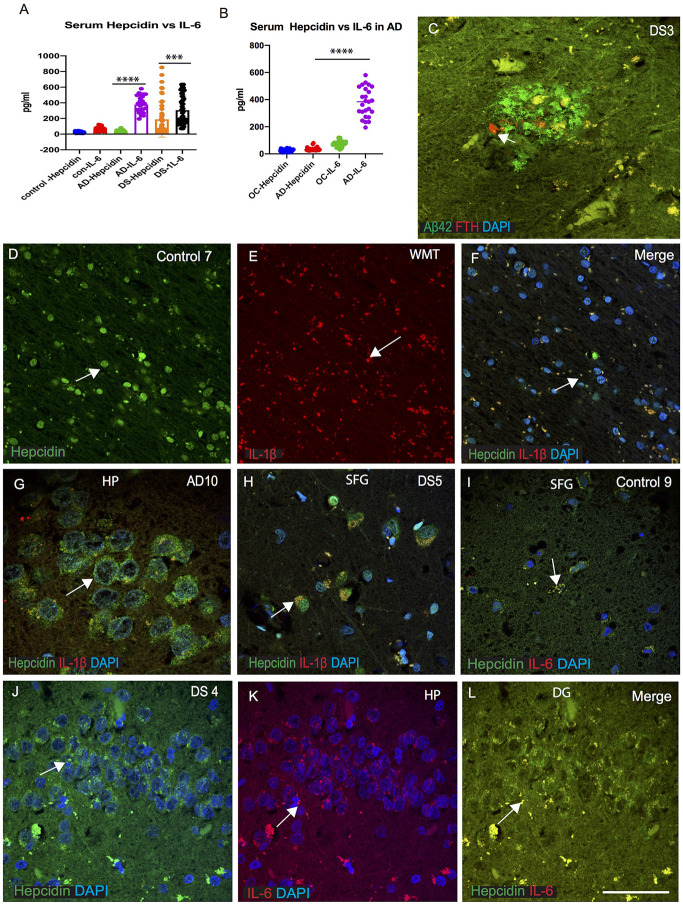
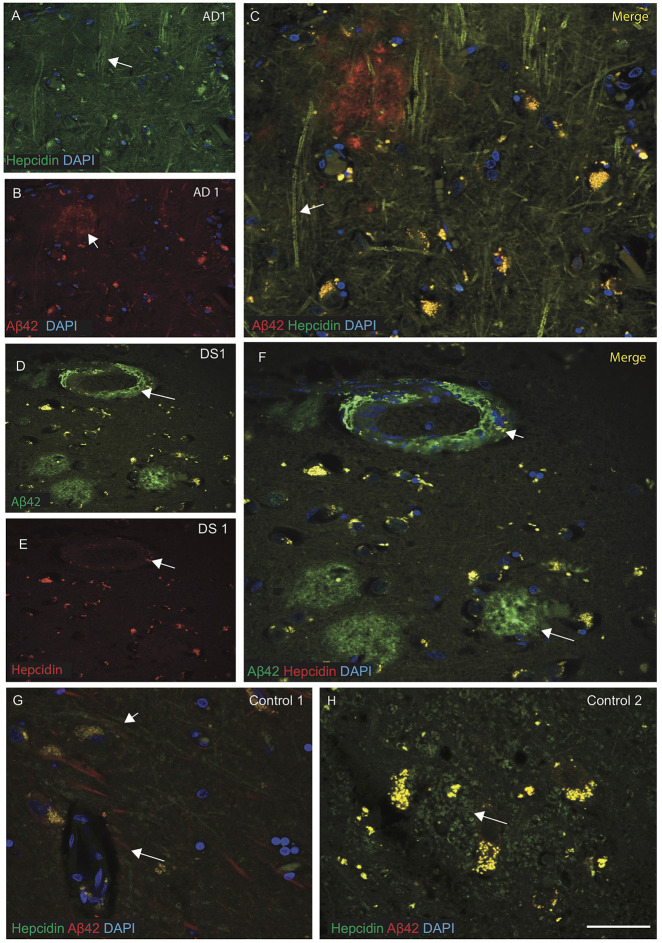
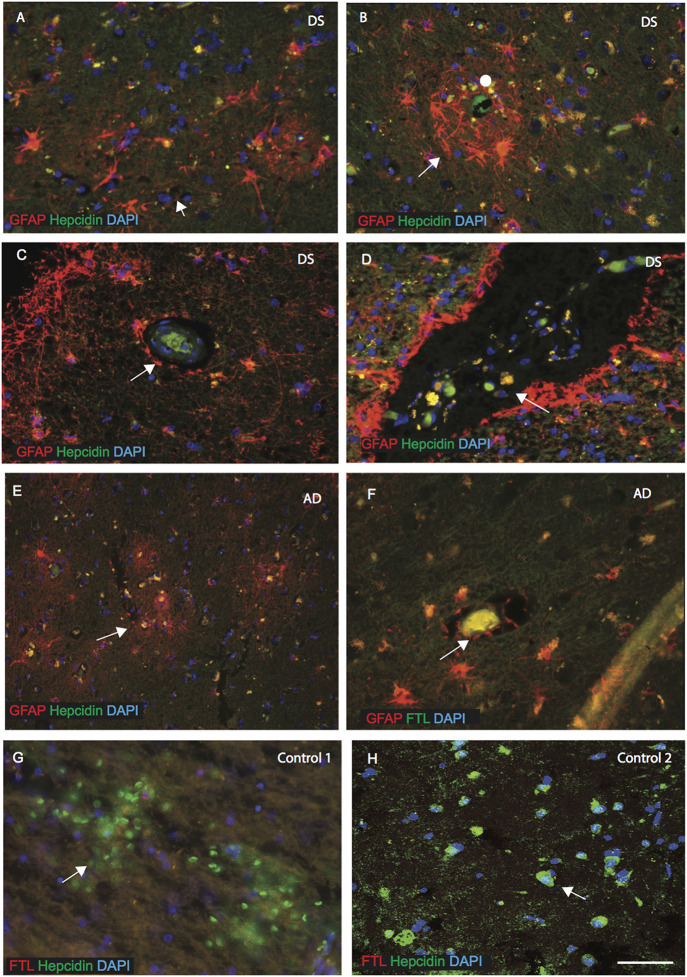
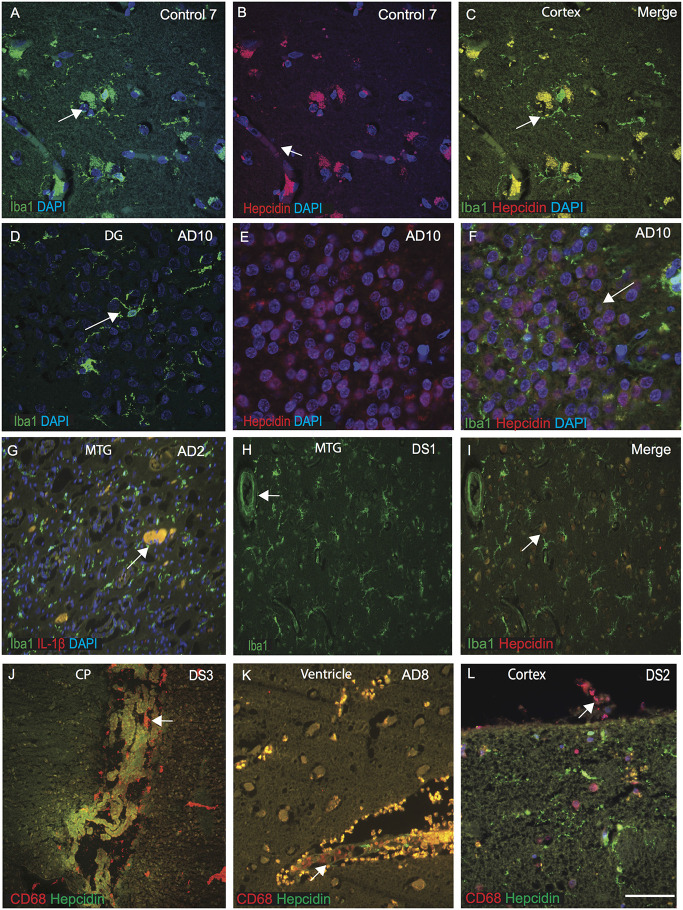
The liver-derived hormone hepcidin, a member of the defensin family of antimicrobial peptides, plays an important role in host defense and innate immunity due to its broad antibacterial and antiviral properties. Ferritin, an iron storage protein is often associated with iron deficiency, hypoferritinemia, hypoxia, and immune complications, which are all significant concerns for systemic infection in Alzheimer's disease (AD) and Down's syndrome (DS) dementia. Serum and post-mortem brain samples were collected from AD, DS and age-matched control subjects. Serum samples were analyzed with ELISA for ferritin, hepcidin and IL-6. Additionally, post-mortem brain sections were assessed by immunohistochemistry for iron-related and inflammatory proteins. A significant increase in serum hepcidin levels was found in DS, compared to controls and AD subjects ( < 0.0001). Hepcidin protein was visible in the epithelial cells of choroid plexus, meningeal macrophages and in the astrocytes close to the endothelium of blood vessels. Hepcidin co-localized with IL-6, indicating its anti-inflammatory properties. We found significant correlation between hypoferritinemia and elevated levels of serum hepcidin in AD and DS. Hepcidin can be transported macrophages and the majority of the vesicular hepcidin enters the brain a compromised blood brain barrier (BBB). Our findings provide further insight into the molecular implications of the altered iron metabolism in acute inflammation, and can aid towards the development of preventive strategies and novel treatments in the fight against neuroinflammation.
肝脏衍生的激素铁调素是抗菌肽防御素家族的成员,因其广泛的抗菌和抗病毒特性,在宿主防御和先天免疫中发挥重要作用。铁蛋白是一种铁储存蛋白,常与缺铁、低铁蛋白血症、缺氧及免疫并发症相关,而这些都是阿尔茨海默病(AD)和唐氏综合征(DS)痴呆患者全身感染的重要问题。从AD、DS患者及年龄匹配的对照受试者中采集血清和尸检脑样本。用酶联免疫吸附测定法(ELISA)分析血清样本中的铁蛋白、铁调素和白细胞介素-6(IL-6)。此外,通过免疫组织化学评估尸检脑切片中的铁相关蛋白和炎症蛋白。与对照组和AD受试者相比,DS患者血清铁调素水平显著升高(<0.0001)。脉络丛上皮细胞、脑膜巨噬细胞及靠近血管内皮的星形胶质细胞中可见铁调素蛋白。铁调素与IL-6共定位,表明其具有抗炎特性。我们发现AD和DS患者的低铁蛋白血症与血清铁调素水平升高之间存在显著相关性。铁调素可被巨噬细胞转运,并且大部分囊泡状铁调素通过受损的血脑屏障(BBB)进入大脑。我们的研究结果为深入了解急性炎症中铁代谢改变的分子机制提供了进一步的见解,并有助于制定预防策略和开发对抗神经炎症的新疗法。