Zhao Lina, Li Huanming, Gao Qian, Xu Jin, Zhu Yongjie, Zhai Meili, Zhang Peijun, Shen Na, Di Yanbo, Wang Jinhui, Chen Tie, Huang Meina, Sun Jinglai, Liu Chong
Department of Anaesthesiology, Tianjin Hospital, Tianjin, China.
Department of Cardiology, Tianjin 4th Centre Hospital, The Fourth Central Hospital Affiliated to Nankai University, The Fourth Center Clinical College of Tianjin Medical University, Tianjin, China.
Front Pharmacol. 2021 Apr 28;12:609693. doi: 10.3389/fphar.2021.609693. eCollection 2021.
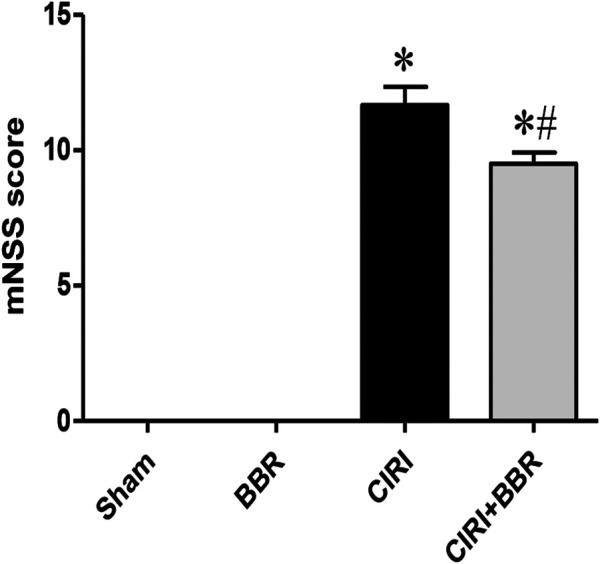
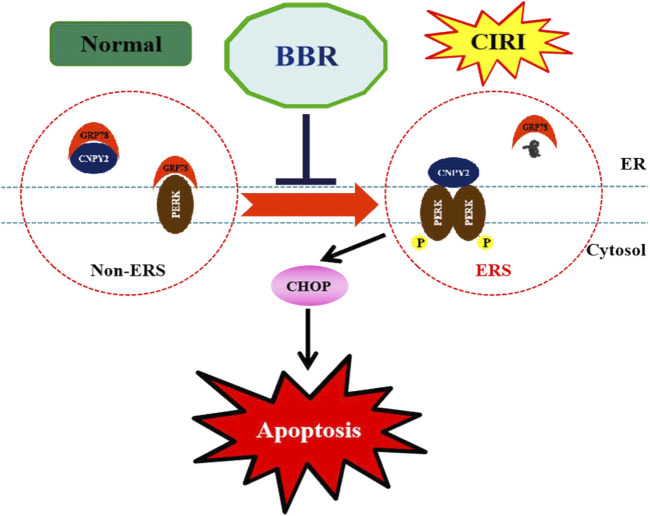
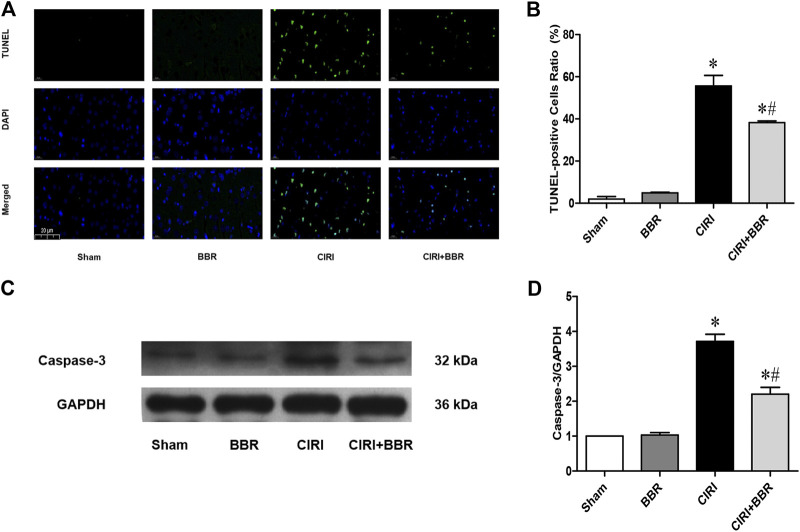
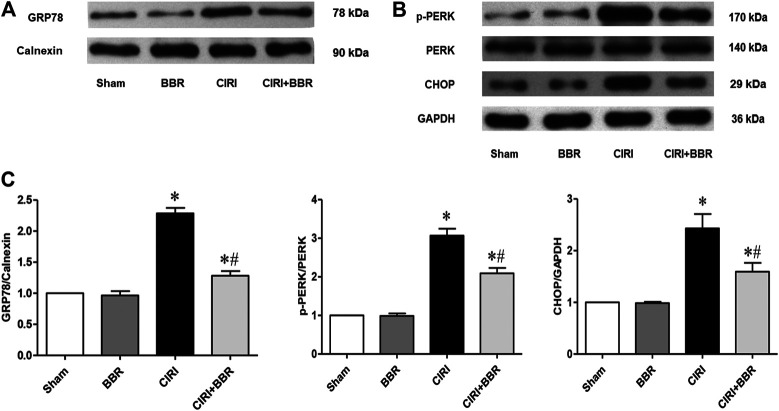
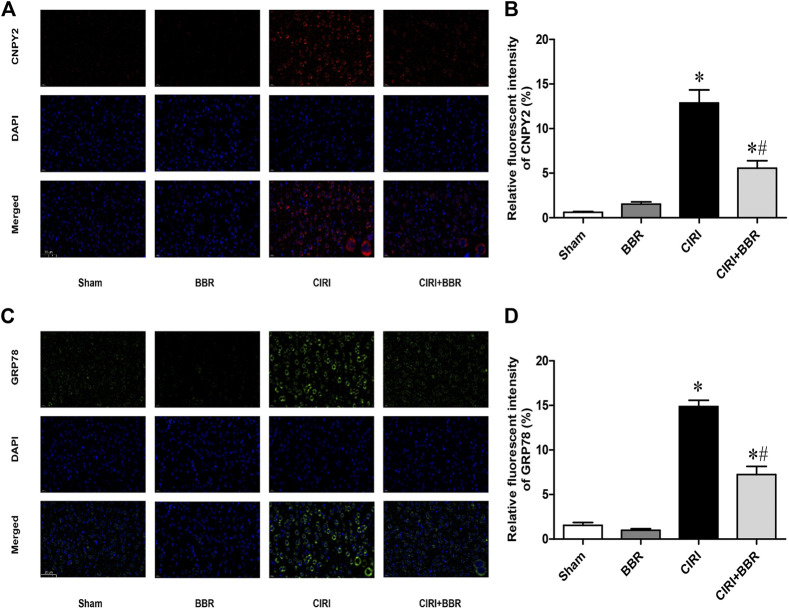
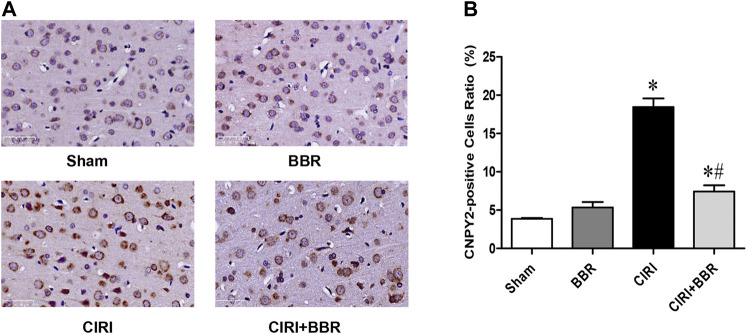
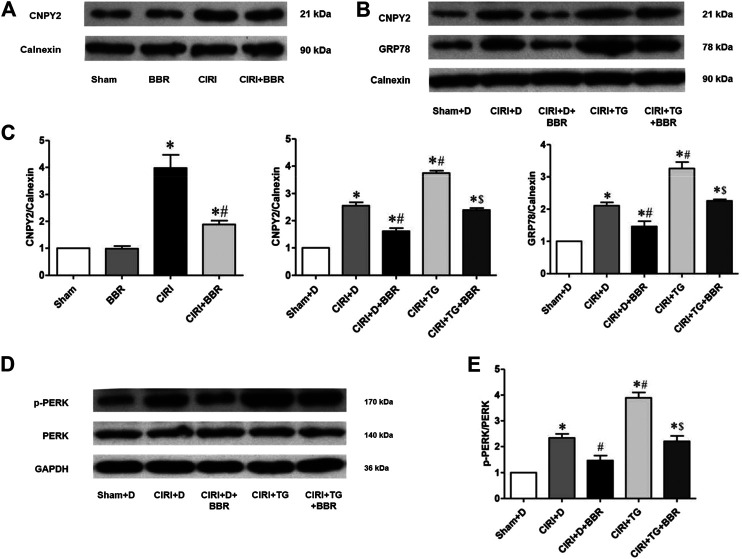
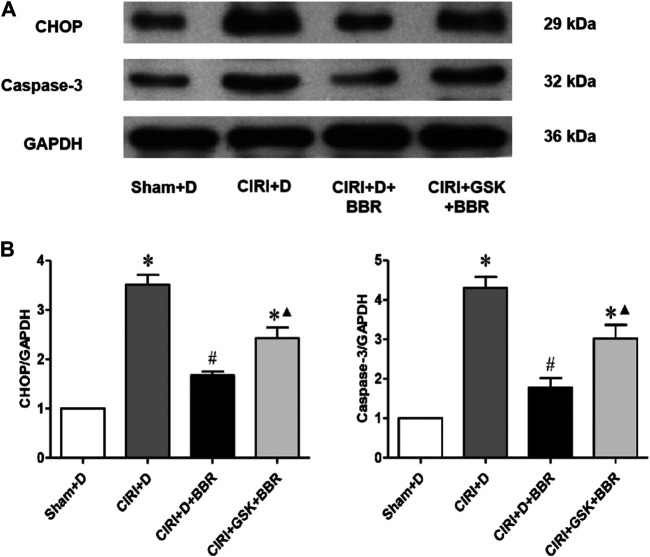
Berberine (BBR) has a neuroprotective effect against ischemic stroke, but its specific protective mechanism has not been clearly elaborated. This study explored the effect of BBR on the canopy FGF signaling regulator 2 (CNPY2) signaling pathway in the ischemic penumbra of rats. The model of cerebral ischemia-reperfusion injury (CIRI) was established by the thread embolization method, and BBR was gastrically perfused for 48 h or 24 h before operation and 6 h after operation. The rats were randomly divided into four groups: the Sham group, BBR group, CIRI group, and CIRI + BBR group. After 2 h of ischemia, followed by 24 h of reperfusion, we confirmed the neurologic dysfunction and apoptosis induced by CIRI in rats ( < 0.05). In the ischemic penumbra, the expression levels of CNPY2-regulated endoplasmic reticulum stress-induced apoptosis proteins (CNPY2, glucose-regulated protein 78 (GRP78), double-stranded RNA-activated protein kinase-like ER kinase (PERK), C/EBP homologous protein (CHOP), and Caspase-3) were significantly increased, but these levels were decreased after BBR treatment ( < 0.05). To further verify the inhibitory effect of BBR on CIRI-induced neuronal apoptosis, we added an endoplasmic reticulum-specific agonist and a PERK inhibitor to the treatment. BBR was shown to significantly inhibit the expression of apoptotic proteins induced by endoplasmic reticulum stress agonist, while the PERK inhibitor partially reversed the ability of BBR to inhibit apoptotic protein ( < 0.05). These results confirm that berberine may inhibit CIRI-induced neuronal apoptosis by downregulating the CNPY2 signaling pathway, thereby exerting a neuroprotective effect.
小檗碱(BBR)对缺血性中风具有神经保护作用,但其具体保护机制尚未明确阐述。本研究探讨了BBR对大鼠缺血半暗带中顶篷成纤维细胞生长因子信号调节因子2(CNPY2)信号通路的影响。采用线栓法建立脑缺血再灌注损伤(CIRI)模型,在手术前48小时或24小时以及手术后6小时进行BBR灌胃。将大鼠随机分为四组:假手术组、BBR组、CIRI组和CIRI + BBR组。缺血2小时后,再灌注24小时,我们证实了CIRI诱导的大鼠神经功能障碍和细胞凋亡(<0.05)。在缺血半暗带中,CNPY2调节的内质网应激诱导凋亡蛋白(CNPY2、葡萄糖调节蛋白78(GRP78)、双链RNA激活蛋白激酶样内质网激酶(PERK)、C/EBP同源蛋白(CHOP)和半胱天冬酶-3)的表达水平显著升高,但BBR治疗后这些水平降低(<0.05)。为了进一步验证BBR对CIRI诱导的神经元凋亡的抑制作用,我们在治疗中添加了内质网特异性激动剂和PERK抑制剂。结果显示,BBR可显著抑制内质网应激激动剂诱导的凋亡蛋白表达,而PERK抑制剂部分逆转了BBR抑制凋亡蛋白的能力(<0.05)。这些结果证实,小檗碱可能通过下调CNPY2信号通路抑制CIRI诱导的神经元凋亡,从而发挥神经保护作用。