Xu Ziying, Kang Qianjun, Yu Zihui, Tian Lichun, Zhang Jingxuan, Wang Ting
Beijing Research Institute of Chinese Medicine, Beijing University of Chinese Medicine, Beijing, China.
China National Center for Bioinformation, Beijing, China.
Front Pharmacol. 2021 Apr 23;12:647084. doi: 10.3389/fphar.2021.647084. eCollection 2021.
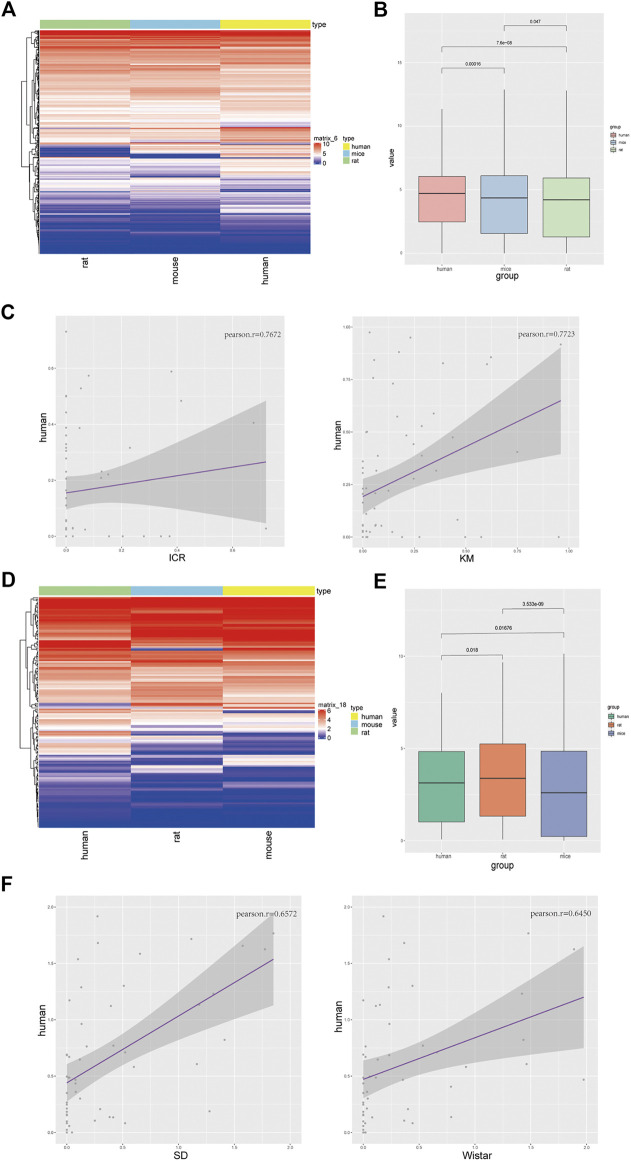
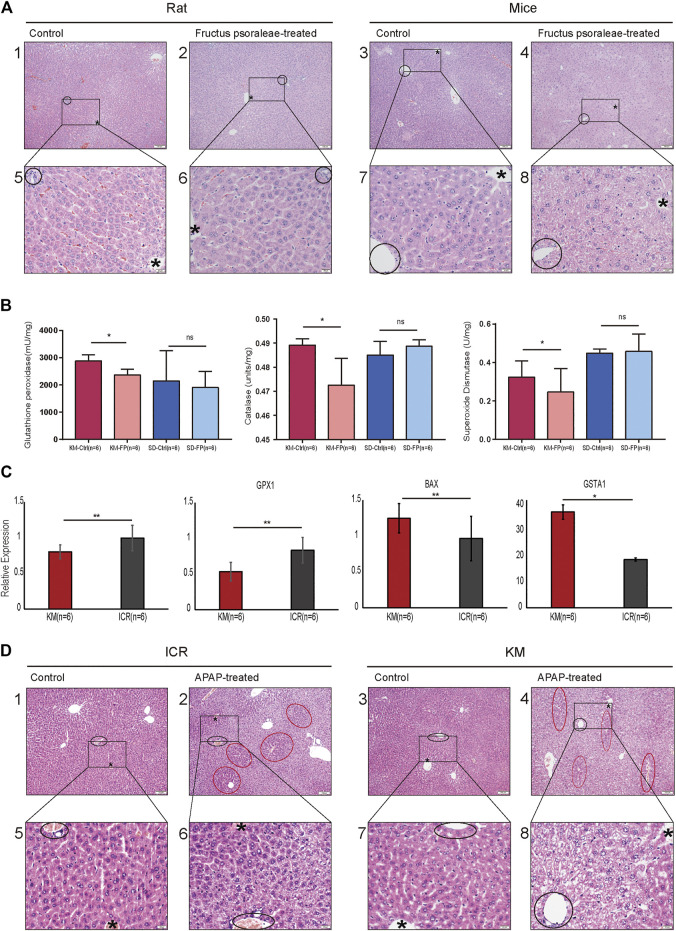
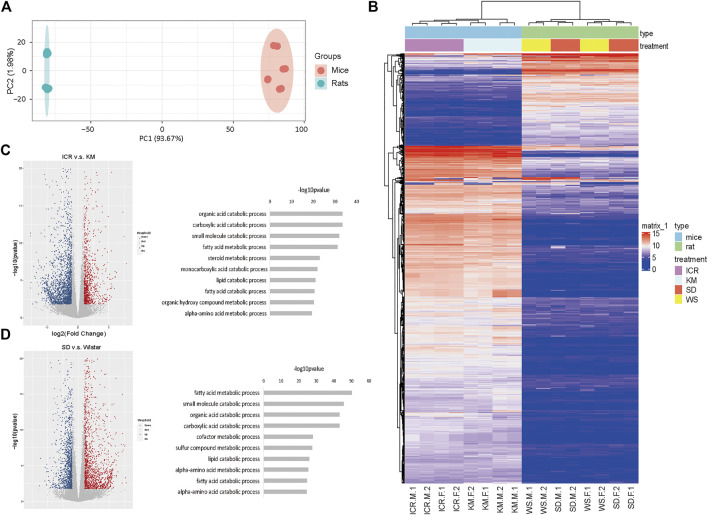
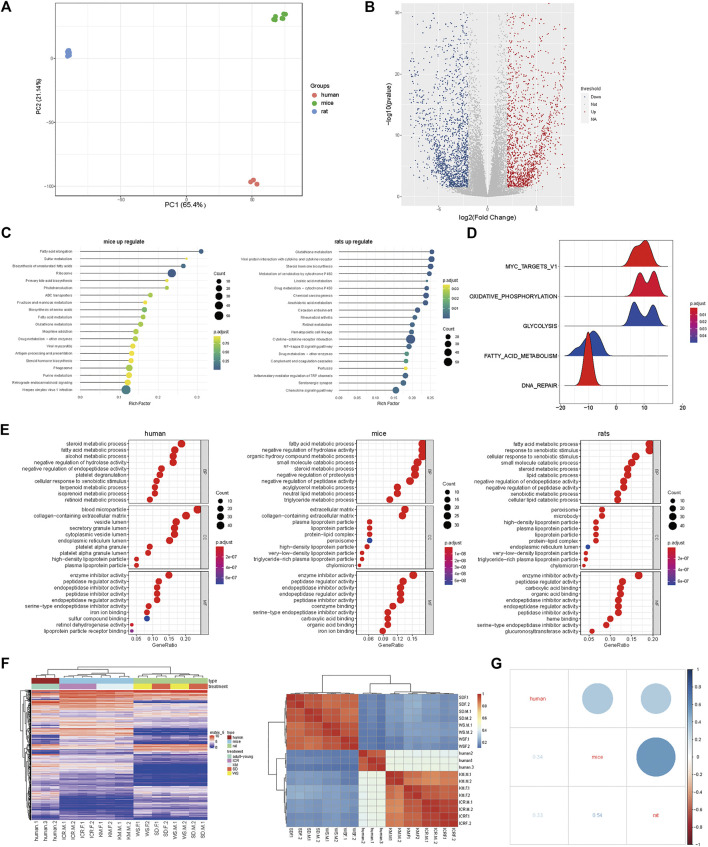
In recent years, several drugs have been withdrawn from use by regulatory bodies owing to hepatotoxicity; therefore, studies on drug-induced liver injury (DILI) are being actively pursued. Most studies evaluating DILI use rats or mice as animal models to determine drug toxicity; however, the toxicity of a drug can vary between rats or mice. These inconsistencies in studies among different animal models affect the extrapolation of experimental results to humans. Thus, it is particularly important to choose the most suitable animal model to determine drug hepatotoxicity owing to the genomic differences between rats and mice resulting from evolution. In this study, genome-wide transcriptome analysis was used to explore hepatotoxicity caused by differences in species. Our findings provide the preclinical basis to further study the mechanisms of drug hepatotoxicity and aid in the selection of animal models to determine drug safety. We used murine models (Sprague-Dawley and Wistar rats, ICR and Kunming mice) in this study and by using transcriptome sequencing with the differentially expressed genes in rat and mouse livers as the entry point, we explored the mechanism of oxidative stress and the difference in gene expression in the lipid-metabolism pathway between rats and mice. The clinically established hepatotoxic drugs, fructus psoraleae and acetaminophen were used to validate our study. Using pathological studies, we confirmed that oxidative stress in mice was more serious than that in rats, and that Kunming mice were more suited for the study of oxidative stress-related DILI. The validity of our findings was further verified based on gene expression. Thus, our study could serve as a valuable reference for the evaluation of potential preclinical hepatotoxicity. Moreover, it could be used in the prediction and early diagnosis of drug-induced liver injury caused by traditional Chinese medicine or synthetic drugs, thereby providing a new avenue for drug-toxicity studies.
近年来,由于肝毒性,几种药物已被监管机构停用;因此,关于药物性肝损伤(DILI)的研究正在积极开展。大多数评估DILI的研究使用大鼠或小鼠作为动物模型来确定药物毒性;然而,一种药物的毒性在大鼠和小鼠之间可能会有所不同。不同动物模型之间研究结果的这些不一致性影响了将实验结果外推至人类。因此,由于大鼠和小鼠之间因进化而产生的基因组差异,选择最合适的动物模型来确定药物肝毒性尤为重要。在本研究中,采用全基因组转录组分析来探究物种差异引起的肝毒性。我们的研究结果为进一步研究药物肝毒性机制提供了临床前依据,并有助于选择用于确定药物安全性的动物模型。在本研究中,我们使用了鼠类模型(Sprague-Dawley大鼠、Wistar大鼠、ICR小鼠和昆明小鼠),并以大鼠和小鼠肝脏中差异表达基因的转录组测序为切入点,探究了氧化应激机制以及大鼠和小鼠脂质代谢途径中基因表达的差异。使用临床已确定的肝毒性药物补骨脂和对乙酰氨基酚来验证我们的研究。通过病理学研究,我们证实小鼠的氧化应激比大鼠更严重,且昆明小鼠更适合用于研究氧化应激相关的DILI。基于基因表达进一步验证了我们研究结果的有效性。因此,我们的研究可为潜在临床前肝毒性评估提供有价值的参考。此外,它可用于预测和早期诊断由中药或合成药物引起的药物性肝损伤,从而为药物毒性研究提供新途径。