Shionoya Kaho, Yamasaki Masako, Iwanami Shoya, Ito Yusuke, Fukushi Shuetsu, Ohashi Hirofumi, Saso Wakana, Tanaka Tomohiro, Aoki Shin, Kuramochi Kouji, Iwami Shingo, Takahashi Yoshimasa, Suzuki Tadaki, Muramatsu Masamichi, Takeda Makoto, Wakita Takaji, Watashi Koichi
Department of Virology II, National Institute of Infectious Diseases, Tokyo, Japan.
Department of Applied Biological Science, Tokyo University of Science, Tokyo, Japan.
Front Microbiol. 2021 Apr 30;12:651403. doi: 10.3389/fmicb.2021.651403. eCollection 2021.
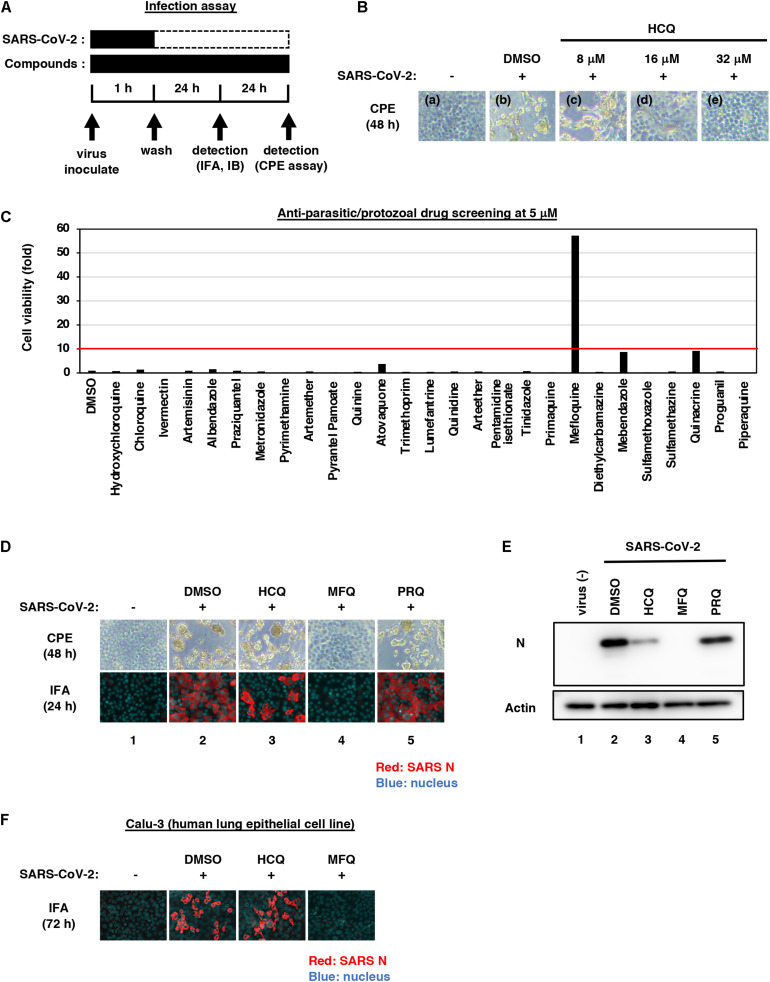
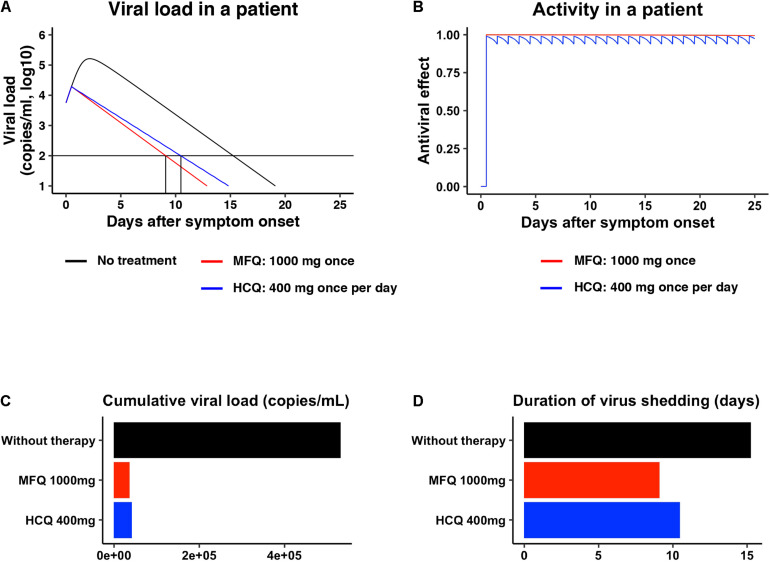
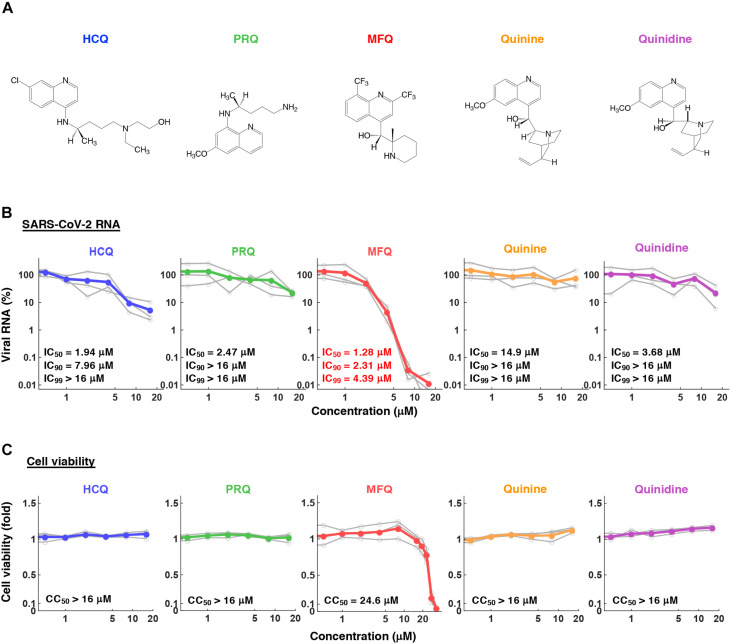
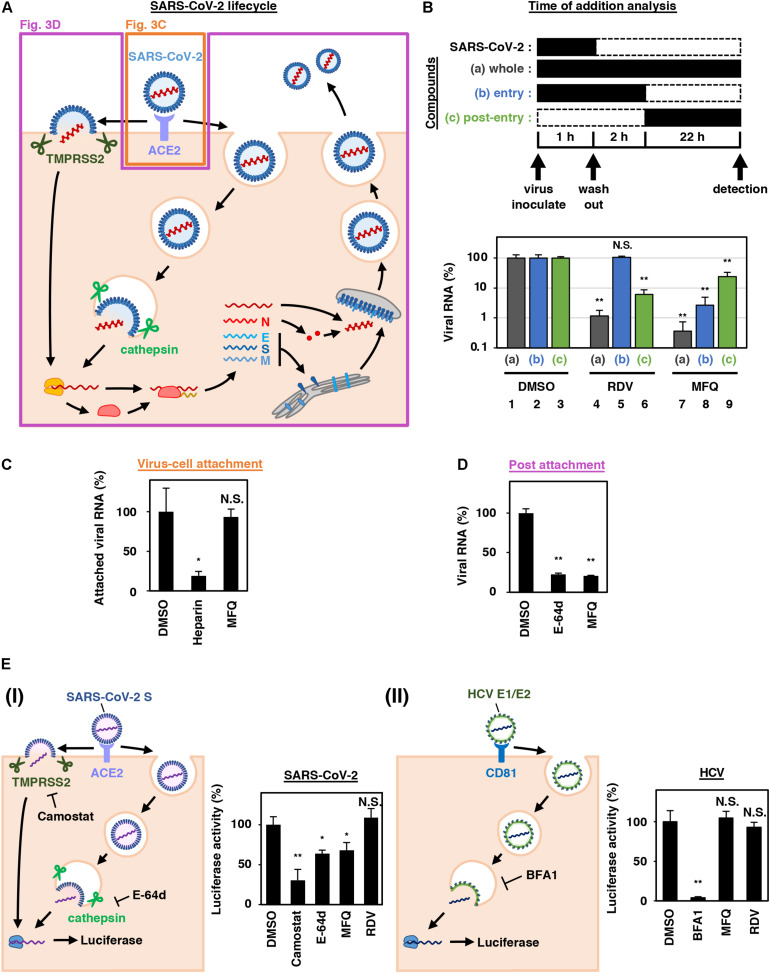
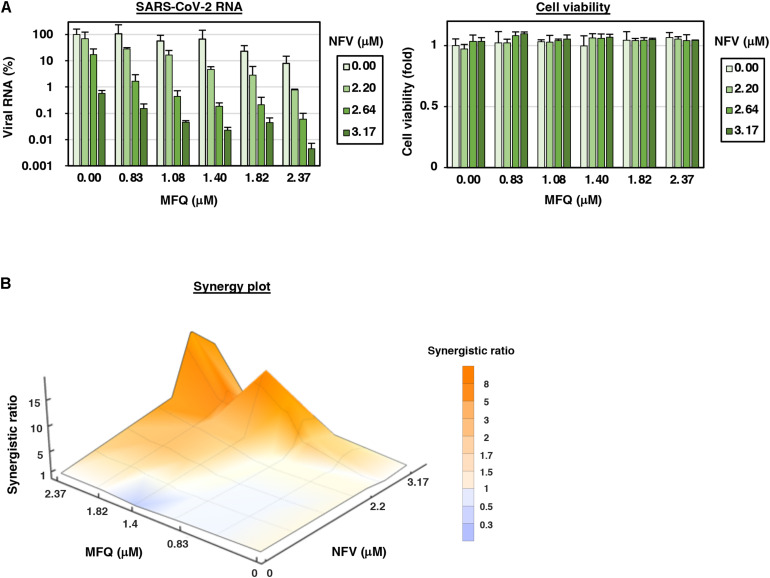
Coronavirus disease 2019 (COVID-19) has caused serious public health, social, and economic damage worldwide and effective drugs that prevent or cure COVID-19 are urgently needed. Approved drugs including Hydroxychloroquine, Remdesivir or Interferon were reported to inhibit the infection or propagation of severe acute respiratory syndrome-related coronavirus 2 (SARS-CoV-2), however, their clinical efficacies have not yet been well demonstrated. To identify drugs with higher antiviral potency, we screened approved anti-parasitic/anti-protozoal drugs and identified an anti-malarial drug, Mefloquine, which showed the highest anti-SARS-CoV-2 activity among the tested compounds. Mefloquine showed higher anti-SARS-CoV-2 activity than Hydroxychloroquine in VeroE6/TMPRSS2 and Calu-3 cells, with IC = 1.28 μM, IC = 2.31 μM, and IC = 4.39 μM in VeroE6/TMPRSS2 cells. Mefloquine inhibited viral entry after viral attachment to the target cell. Combined treatment with Mefloquine and Nelfinavir, a replication inhibitor, showed synergistic antiviral activity. Our mathematical modeling based on the drug concentration in the lung predicted that Mefloquine administration at a standard treatment dosage could decline viral dynamics in patients, reduce cumulative viral load to 7% and shorten the time until virus elimination by 6.1 days. These data cumulatively underscore Mefloquine as an anti-SARS-CoV-2 entry inhibitor.
2019年冠状病毒病(COVID-19)已在全球范围内造成严重的公共卫生、社会和经济损害,迫切需要预防或治愈COVID-19的有效药物。据报道,包括羟氯喹、瑞德西韦或干扰素在内的已批准药物可抑制严重急性呼吸综合征相关冠状病毒2(SARS-CoV-2)的感染或传播,然而,它们的临床疗效尚未得到充分证实。为了确定具有更高抗病毒效力的药物,我们筛选了已批准的抗寄生虫/抗原虫药物,并鉴定出一种抗疟药物甲氟喹,它在测试化合物中显示出最高的抗SARS-CoV-2活性。在VeroE6/TMPRSS2和Calu-3细胞中,甲氟喹显示出比羟氯喹更高的抗SARS-CoV-2活性,在VeroE6/TMPRSS2细胞中的IC50 = 1.28 μM、IC90 = 2.31 μM和CC50 = 4.39 μM。甲氟喹在病毒附着于靶细胞后抑制病毒进入。甲氟喹与复制抑制剂奈非那韦联合治疗显示出协同抗病毒活性。我们基于肺部药物浓度的数学模型预测,以标准治疗剂量给药甲氟喹可降低患者体内的病毒动态,将累积病毒载量降低至7%,并将病毒清除所需时间缩短6.1天。这些数据累积强调了甲氟喹作为一种抗SARS-CoV-2进入抑制剂的作用。