Department of Pharmacology, Northwestern University Feinberg School of Medicine, Chicago, IL, USA.
Department of Toxicology and Cancer Biology, University of Kentucky, Lexington, KY, USA.
Theranostics. 2021 Apr 30;11(13):6632-6643. doi: 10.7150/thno.57706. eCollection 2021.
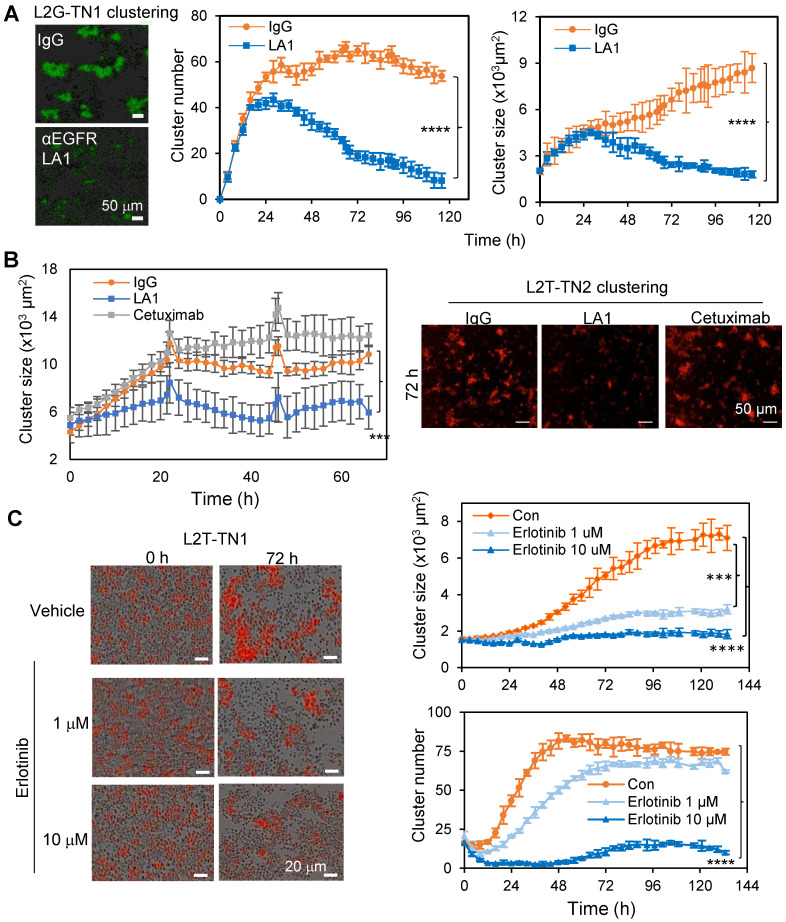
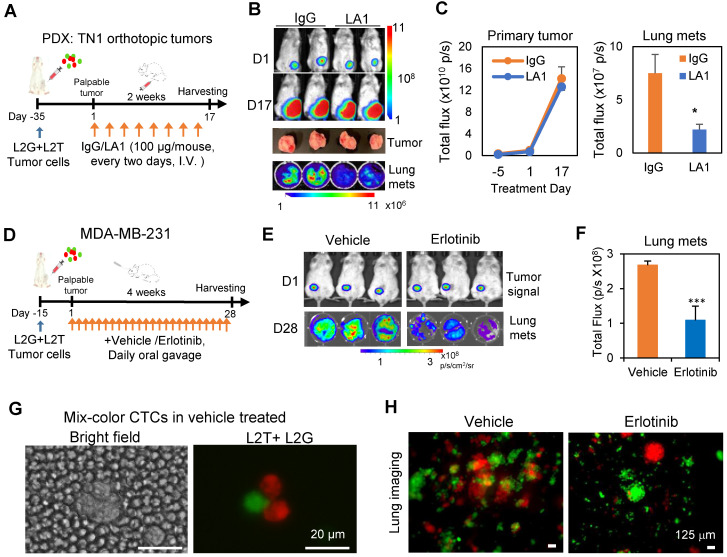
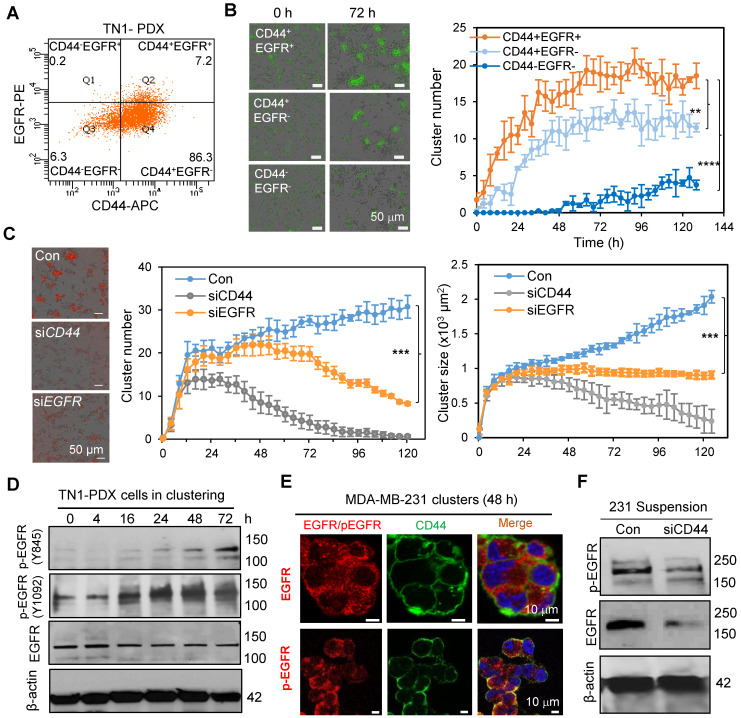
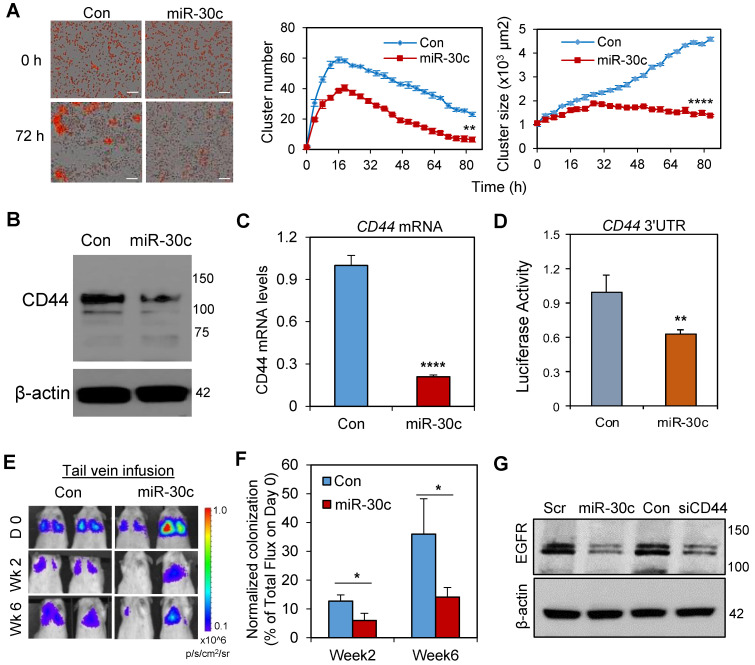
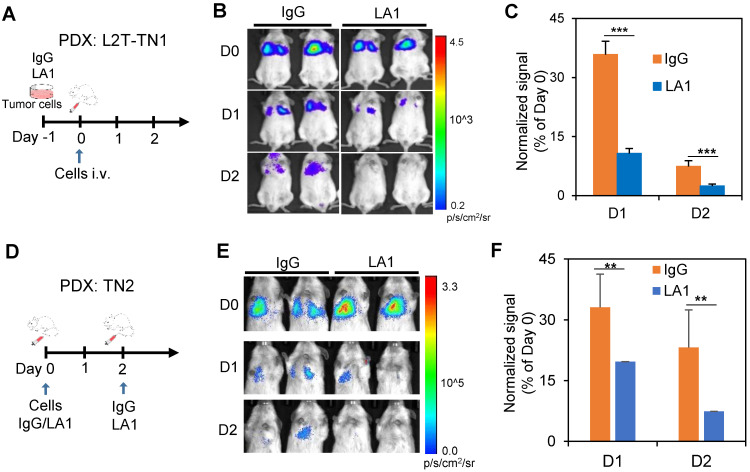
Triple-negative breast cancer (TNBC) is one of the most aggressive and metastatic breast cancer subtypes lacking targeted therapy. Our recent work demonstrated that circulating tumor cell (CTC) clusters and polyclonal metastasis of TNBC are driven by aggregation of CD44 cancer stem cells (CSC) and associated with an unfavorable prognosis, such as low overall survival. However, there is no existing therapeutic that can specifically block CTC or CSC cluster formation. Using patient-derived xenograft (PDX) models, we established an tumor cell clustering assay for a pilot screening of blockade antibodies. After identifying EGFR as a target candidate, we modulated the gene expression and inhibited its kinase activity to determine its functional importance in tumor cell clustering and therapeutic inhibition of lung metastasis. We also examined the molecular regulation network of EGFR and a potential connection to CSC marker CD44 and microRNAs, which regulate CTC clustering. We report here that EGFR inhibition successfully blocks circulating CSC (cCSC) clustering and lung metastasis of TNBC. EGFR enhances CD44-mediated tumor cell aggregation and CD44 stabilizes EGFR. Importantly, blocking EGFR by a novel anti-EGFR monoclonal antibody (clone LA1) effectively blocked cell aggregation and reduced lung metastasis . Furthermore, our data demonstrated that the tumor suppressor microRNA-30c serves as another negative regulator of cCSC clustering and lung metastasis by targeting CD44 as well as its downstream effector EGFR. Our studies identify a novel anti-EGFR therapeutic strategy to inhibit cCSC aggregation and therefore abolish cCSC cluster-mediated metastasis of TNBC.
三阴性乳腺癌(TNBC)是最具侵袭性和转移性的乳腺癌亚型之一,缺乏靶向治疗。我们最近的工作表明,循环肿瘤细胞(CTC)簇和 TNBC 的多克隆转移是由 CD44 癌症干细胞(CSC)的聚集驱动的,并且与预后不良相关,例如总生存率低。然而,目前没有可以特异性阻断 CTC 或 CSC 簇形成的治疗方法。
使用患者来源的异种移植(PDX)模型,我们建立了肿瘤细胞聚集测定法,用于先导筛选阻断抗体。在确定 EGFR 为靶候选物后,我们调节了基因表达并抑制其激酶活性,以确定其在肿瘤细胞聚集和治疗性抑制肺转移中的功能重要性。我们还检查了 EGFR 的分子调节网络及其与调节 CTC 聚集的 CSC 标志物 CD44 和 microRNAs 的潜在联系。
我们在这里报告,EGFR 抑制成功阻断了 TNBC 的循环 CSC(cCSC)聚集和肺转移。EGFR 增强了 CD44 介导的肿瘤细胞聚集,CD44 稳定了 EGFR。重要的是,新型抗 EGFR 单克隆抗体(克隆 LA1)通过阻断 EGFR 有效阻断了细胞聚集并减少了肺转移。此外,我们的数据表明,肿瘤抑制 microRNA-30c 通过靶向 CD44 及其下游效应因子 EGFR,作为另一种抑制 cCSC 聚集和因此消除 cCSC 簇介导的 TNBC 转移的负调节剂。
我们的研究确定了一种新型的抗 EGFR 治疗策略,以抑制 cCSC 聚集并因此消除 cCSC 簇介导的 TNBC 转移。