Division of Surgical Oncology, Department of Surgery and University of Southern California Norris Cancer Center, University of Southern California, Los Angeles, CA, USA.
Present Address: Department of Medical Oncology and Hematology, Universitätsspital Zürich, Rämistrasse 100, 8091, Zurich, Switzerland.
BMC Cancer. 2020 Nov 10;20(1):1076. doi: 10.1186/s12885-020-07573-y.
Triple negative breast cancer (TNBC) is an aggressive breast cancer subtype with basal features, lacking the expression of receptors targeted successfully in other breast cancer subtypes. Treatment response to adjuvant and neoadjuvant chemotherapy is often short-lived and metastatic spread occurs at higher rates than other subtypes within the first five years after diagnosis. TNBCs exhibit stem cell features and are enriched for cancer stem cell (CSC) populations. E1A Binding Protein P300 (EP300) is a large protein with multiple cellular functions, including as an effector in stem cell biology.
We used a genetic knockdown (KD) model of EP300 in TNBC cell lines to investigate the effect on CSC phenotype, tumor growth and metastasis. Side population assay and tumorsphere suspension culture were used in vitro. Xenograft mouse models were used for in vivo studies. We performed in silico analysis of publicly available gene expression data sets to investigate CSC gene expression and molecular pathways as well as survival outcomes associated with EP300 expression in patients with TNBC and basal-like BC.
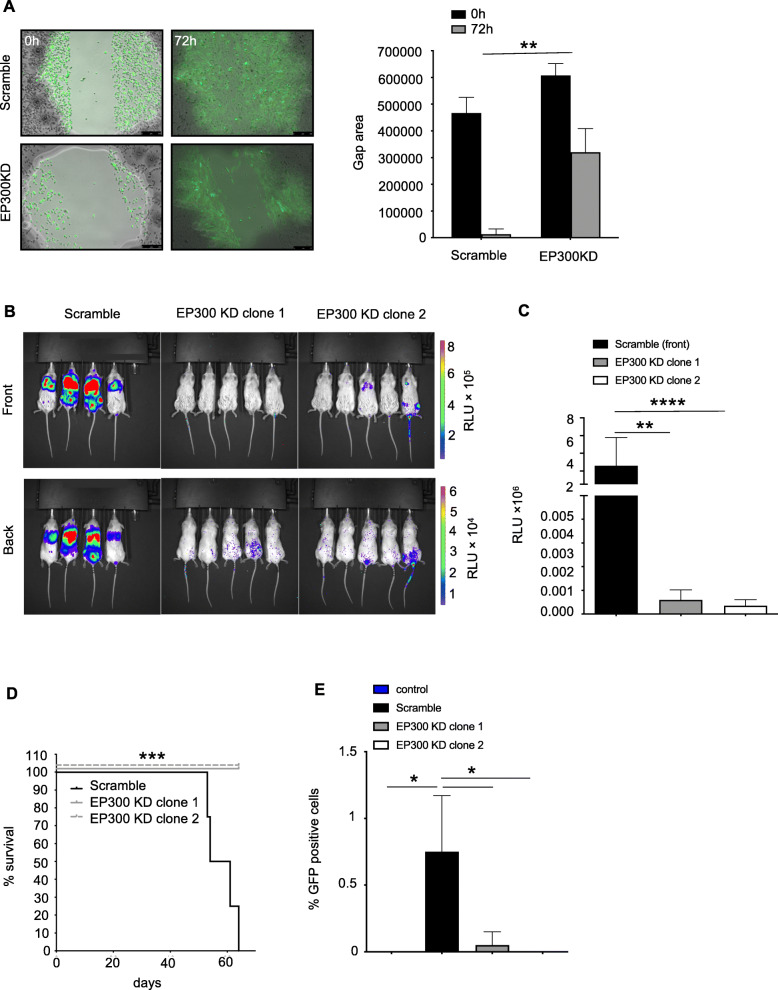
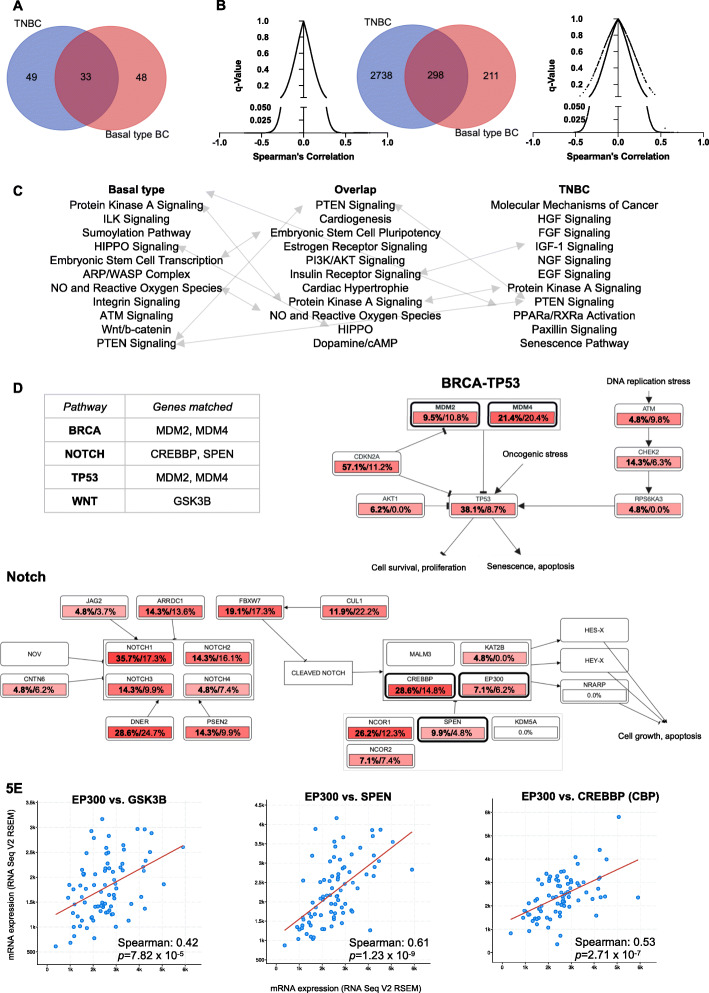
EP300 KD abolished the CSC phenotype by reducing ABCG2 expression, side population cells and tumorsphere formation capacity in vitro as well as tumor formation in a xenograft mouse model in vivo. Metastatic capacity was markedly reduced in EP300 KD cells in vivo, with no detection of circulating tumor cells. TCGA data analysis demonstrated that genes positively correlated with EP300 expression in TNBC and basal-like BC were associated with CSC biology. Survival analysis demonstrated that EP300 expression predicts poor recurrence free survival in TNBC and basal BC.
We report a novel oncogenic role for EP300 in driving CSC phenotype representing a potential target to address tumor initiation and metastatic spread in TNBC and basal-like BC. EP300 might serve as a prognostic marker and potential therapeutic target in TNBC.
三阴性乳腺癌(TNBC)是一种具有基底特征的侵袭性乳腺癌亚型,缺乏其他乳腺癌亚型中成功靶向的受体表达。辅助和新辅助化疗的治疗反应往往是短暂的,在诊断后的头五年内,转移扩散的发生率高于其他亚型。TNBC 表现出干细胞特征,并富含癌症干细胞(CSC)群体。E1A 结合蛋白 P300(EP300)是一种具有多种细胞功能的大型蛋白质,包括作为干细胞生物学中的效应物。
我们使用 TNBC 细胞系中的 EP300 基因敲低(KD)模型来研究其对 CSC 表型、肿瘤生长和转移的影响。体外使用侧群分析和肿瘤球体悬浮培养。体内使用异种移植小鼠模型进行研究。我们对公开的基因表达数据集进行了计算机分析,以研究与 TNBC 和基底样 BC 中 EP300 表达相关的 CSC 基因表达和分子途径以及生存结果。
EP300 KD 通过降低 ABCG2 表达、体外侧群细胞和肿瘤球体形成能力以及体内异种移植小鼠模型中的肿瘤形成,消除了 CSC 表型。在 EP300 KD 细胞中,转移能力明显降低,体内未检测到循环肿瘤细胞。TCGA 数据分析表明,与 TNBC 和基底样 BC 中 EP300 表达呈正相关的基因与 CSC 生物学相关。生存分析表明,EP300 表达预测 TNBC 和基底样 BC 复发无进展生存不良。
我们报告了 EP300 在驱动 CSC 表型方面的新的致癌作用,这代表了在 TNBC 和基底样 BC 中解决肿瘤起始和转移扩散的潜在靶点。EP300 可能作为 TNBC 的预后标志物和潜在治疗靶点。