
将耐受性树突状细胞用作1型糖尿病治疗替代疗法的当前进展。
Current advances in using tolerogenic dendritic cells as a therapeutic alternative in the treatment of type 1 diabetes.
作者信息
Ríos-Ríos William de Jesús, Sosa-Luis Sorely Adelina, Torres-Aguilar Honorio
机构信息
Department of Biochemical Sciences Faculty, Universidad Autónoma "Benito Juárez" de Oaxaca, Oaxaca 68120, Mexico.
Department of Molecular Biomedicine, Centro de Investigación y de Estudios Avanzados del Instituto Politécnico Nacional, Mexico City 07360, Mexico.
出版信息
World J Diabetes. 2021 May 15;12(5):603-615. doi: 10.4239/wjd.v12.i5.603.
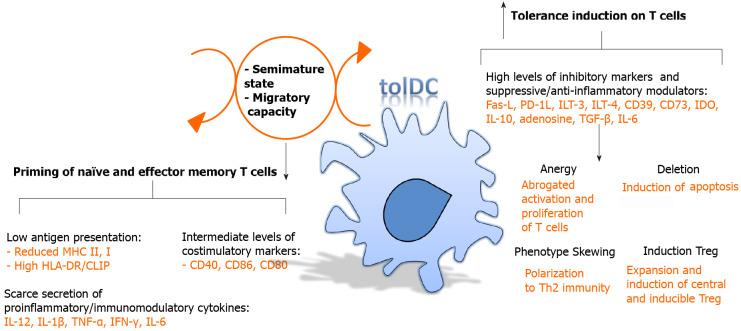
Type 1 diabetes (T1D) is an autoimmune disease characterized by the destruction of insulin-producing β-cells of the pancreatic islets by autoreactive T cells, leading to high blood glucose levels and severe long-term complications. The typical treatment indicated in T1D is exogenous insulin administration, which controls glucose levels; however, it does not stop the autoimmune process. Various strategies have been implemented aimed at stopping β-cell destruction, such as cellular therapy. Dendritic cells (DCs) as an alternative in cellular therapy have gained great interest for autoimmune disease therapy due to their plasticity to acquire immunoregulatory properties both and , performing functions such as anti-inflammatory cytokine secretion and suppression of autoreactive lymphocytes, which are dependent of their tolerogenic phenotype, displayed by features such as semimature phenotype, low surface expression of stimulatory molecules to prime T cells, as well as the elevated expression of inhibitory markers. DCs may be obtained and propagated easily in optimal amounts from peripheral blood or bone marrow precursors, such as monocytes or hematopoietic stem cells, respectively; therefore, various protocols have been established for tolerogenic (tol)DCs manufacturing for therapeutic research in the treatment of T1D. In this review, we address the current advances in the use of tolDCs for T1D therapy, encompassing protocols for their manufacturing, the data obtained from preclinical studies carried out, and the status of clinical research evaluating the safety, feasibility, and effectiveness of tolDCs.
1型糖尿病(T1D)是一种自身免疫性疾病,其特征是自身反应性T细胞破坏胰岛中产生胰岛素的β细胞,导致血糖水平升高和严重的长期并发症。T1D的典型治疗方法是外源性胰岛素给药,以控制血糖水平;然而,它并不能阻止自身免疫过程。已经实施了各种旨在阻止β细胞破坏的策略,如细胞疗法。树突状细胞(DCs)作为细胞疗法的一种替代方法,由于其具有可塑性,能够获得免疫调节特性,并执行诸如分泌抗炎细胞因子和抑制自身反应性淋巴细胞等功能,这些功能依赖于其耐受性表型,表现为半成熟表型、刺激T细胞的分子表面低表达以及抑制性标志物的高表达等特征,因此在自身免疫性疾病治疗中引起了极大的兴趣。DCs可以分别从外周血或骨髓前体细胞(如单核细胞或造血干细胞)中轻松获得并大量扩增;因此,已经建立了各种方案用于制备耐受性(tol)DCs,以用于T1D治疗的治疗性研究。在这篇综述中,我们阐述了使用tolDCs治疗T1D的当前进展,包括其制备方案、从临床前研究中获得的数据,以及评估tolDCs安全性、可行性和有效性的临床研究现状。

 Zotero 插件