Marsman M S, Wetterslev J, Keus F, van Aalst D, van Rooij F G, Heyligers J M M, Moll F L, Jahrome A Kh, Vriens P W H E, Koning G G
Department of Vascular Surgery, Rijnstate Hospital, Arnhem, the Netherlands.
Copenhagen Trial Unit, Center for Clinical Intervention Research, Rigshospitalet Copenhagen University Hospital, Copenhagen, Denmark.
Ann Med Surg (Lond). 2021 Apr 19;65:102327. doi: 10.1016/j.amsu.2021.102327. eCollection 2021 May.
Traditional carotid endarterectomy is considered to be the standard technique for prevention of a new stroke in patients with a symptomatic carotid stenosis. Use of plexus anesthesia or general anesthesia in traditional carotid endarterectomy is, to date, not unequivocally proven to be superior to one other. A systematic review was needed for evaluation of benefits and harms to determine which technique, plexus anesthesia or general anesthesia is more effective for traditional carotid endarterectomy in patients with symptomatic carotid stenosis.
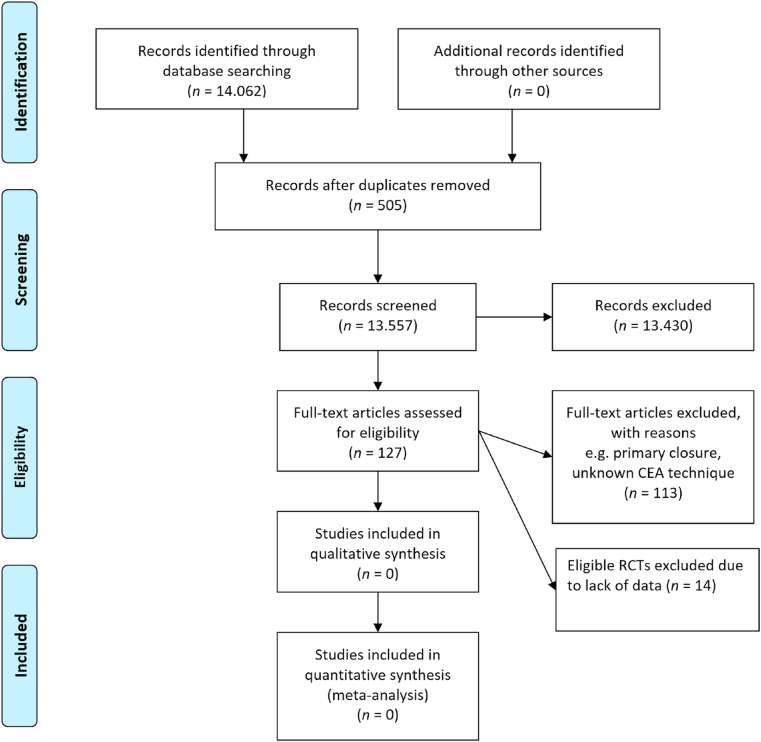
The review was conducted according to our protocol following the recommendations of Cochrane and reported according to the Preferred Reporting Items for Systematic Reviews and Meta-Analyses. Searches were updated on the October 1, 2020. We did not find any randomized clinical trial comparing plexus anesthesia and general anesthesia in carotid endarterectomy with patch angioplasty matching our protocol criteria in patients with a symptomatic and significant (≥50%) carotid stenosis.
Based on the current, high risk of bias evidence, we concluded there is a need for new randomized clinical trials with overall low risk of bias comparing plexus anesthesia with general anesthesia in carotid endarterectomy with patch closure of the arterial wall in patients with a symptomatic and significant (≥50%) stenosis of the internal carotid artery.Protocol unique identification number (UIN): CRD42019139913, (https://www.crd.york.ac.uk/prospero/display_record.php?RecordID=139913).
传统颈动脉内膜切除术被认为是预防有症状颈动脉狭窄患者发生新的中风的标准技术。迄今为止,在传统颈动脉内膜切除术中使用神经丛麻醉或全身麻醉,尚未明确证明哪一种优于另一种。需要进行系统评价以评估其益处和危害,以确定神经丛麻醉或全身麻醉这两种技术中哪一种对有症状颈动脉狭窄患者的传统颈动脉内膜切除术更有效。
本评价按照我们的方案,遵循Cochrane的建议进行,并根据系统评价和Meta分析的首选报告项目进行报告。检索于2020年10月1日更新。我们未找到任何将神经丛麻醉与全身麻醉用于颈动脉内膜切除术并进行补片血管成形术的随机临床试验,这些试验符合我们方案中关于有症状且严重(≥50%)颈动脉狭窄患者的标准。
基于当前存在高偏倚风险的证据,我们得出结论,需要开展新的随机临床试验,这些试验总体偏倚风险较低,将神经丛麻醉与全身麻醉用于有症状且严重(≥50%)颈内动脉狭窄患者的颈动脉内膜切除术,并采用动脉壁补片闭合术。方案唯一识别号(UIN):CRD42019139913,(https://www.crd.york.ac.uk/prospero/display_record.php?RecordID=139913)。