Lin Jiang, Wu Chunlei, Ma Dehua, Hu Quanteng
Department of Thoracic Surgery, Taizhou Hospital of Zhejiang Province, Affiliated to Wenzhou Medical University, Taizhou, Zhejiang, China.
PeerJ. 2021 May 5;9:e11319. doi: 10.7717/peerj.11319. eCollection 2021.
Lung adenocarcinoma (LUAD) is the leading histological subtype of non-small cell lung cancer (NSCLC).
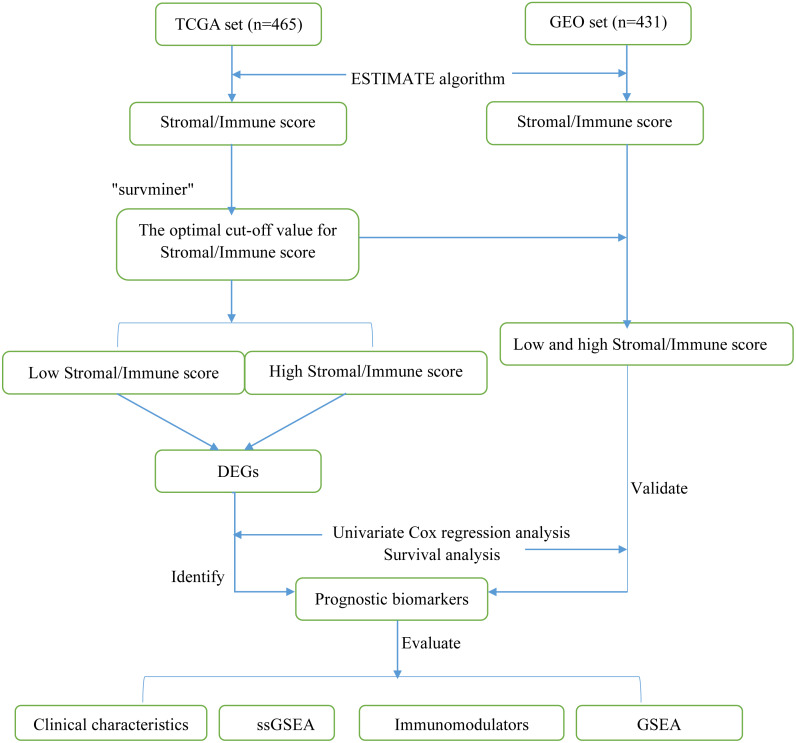
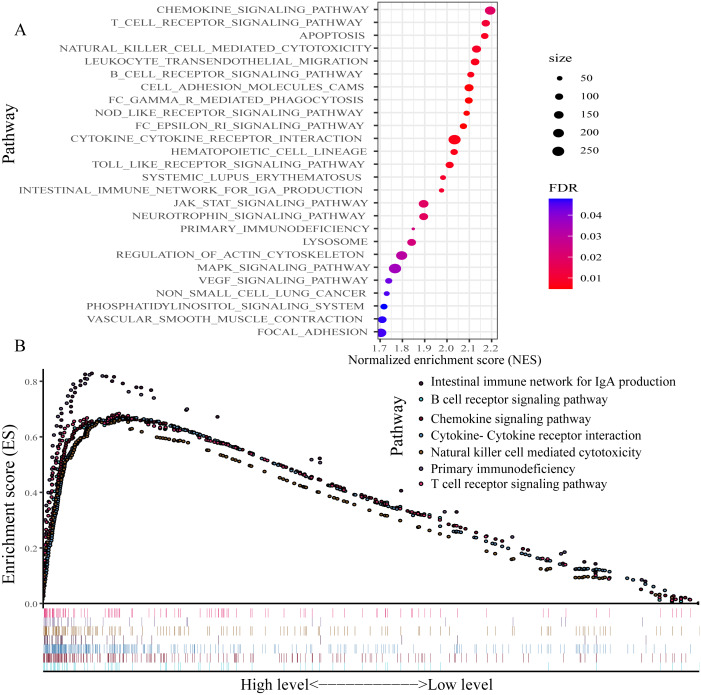
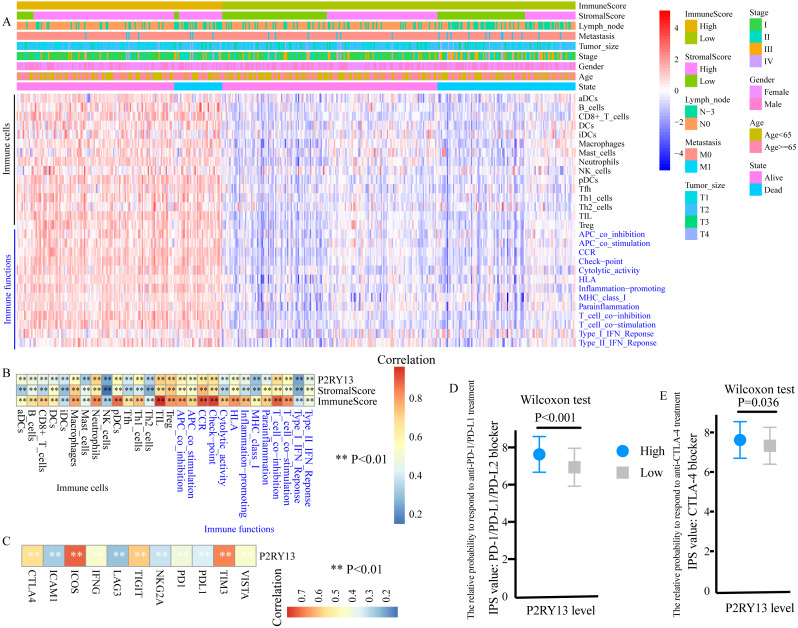
In the present study, the gene matrixes of LUAD were downloaded from The Cancer Genome Atlas to infer immune and stromal scores with the 'Estimation of Stromal and Immune cells in Malignant Tumor tissues using Expression data' (ESTIMATE) algorithm and identified immune-related differentially expressed genes (DEGs) between the high- and low-stromal/immune score groups. Next, all DEGs were subjected to univariate Cox regression and survival analyses to screen out prognostic biomarkers in the tumor microenvironment (TME), and were validated in the Gene Expression Omnibus database. Single-sample gene set enrichment analysis (ssGSEA) was performed to assess the level of tumor-infiltrating immune cells (TIICs) and immune functions, and GSEA was used to identified pathways altered by prognostic biomarkers.
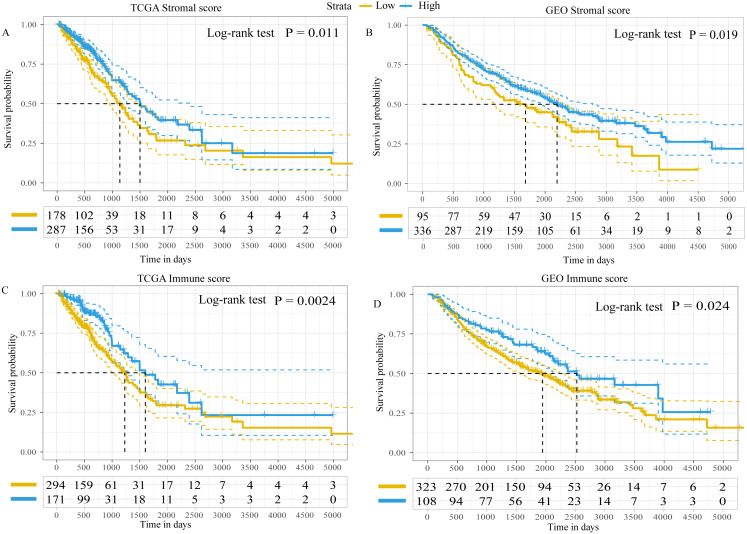
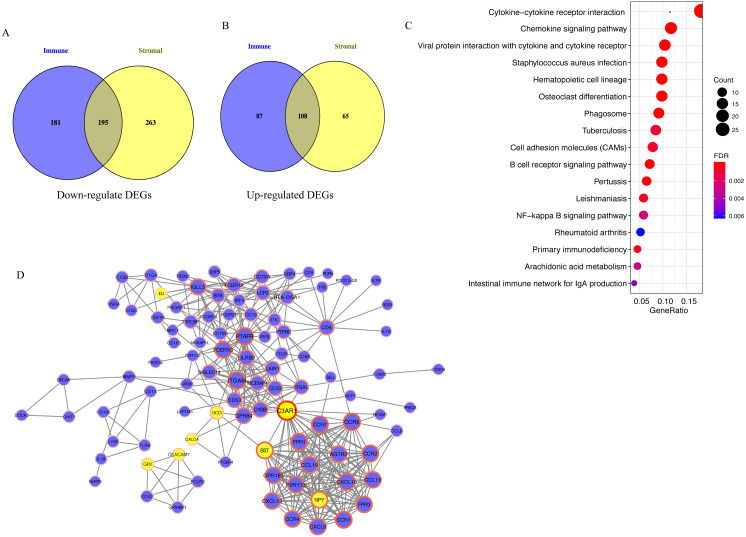
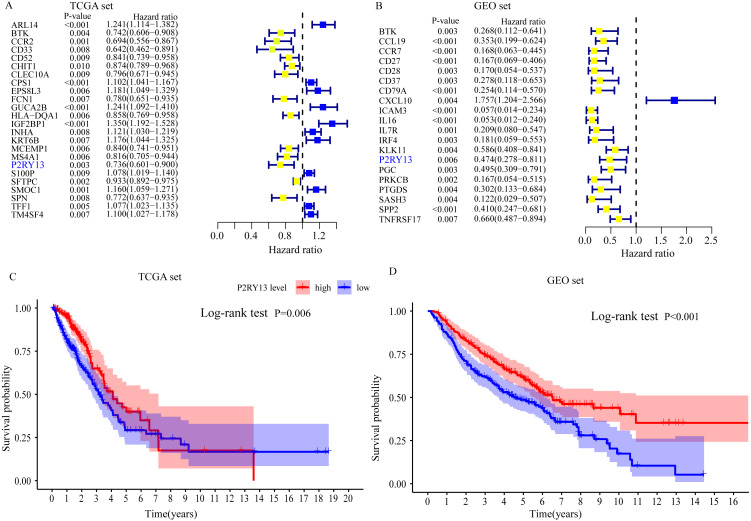
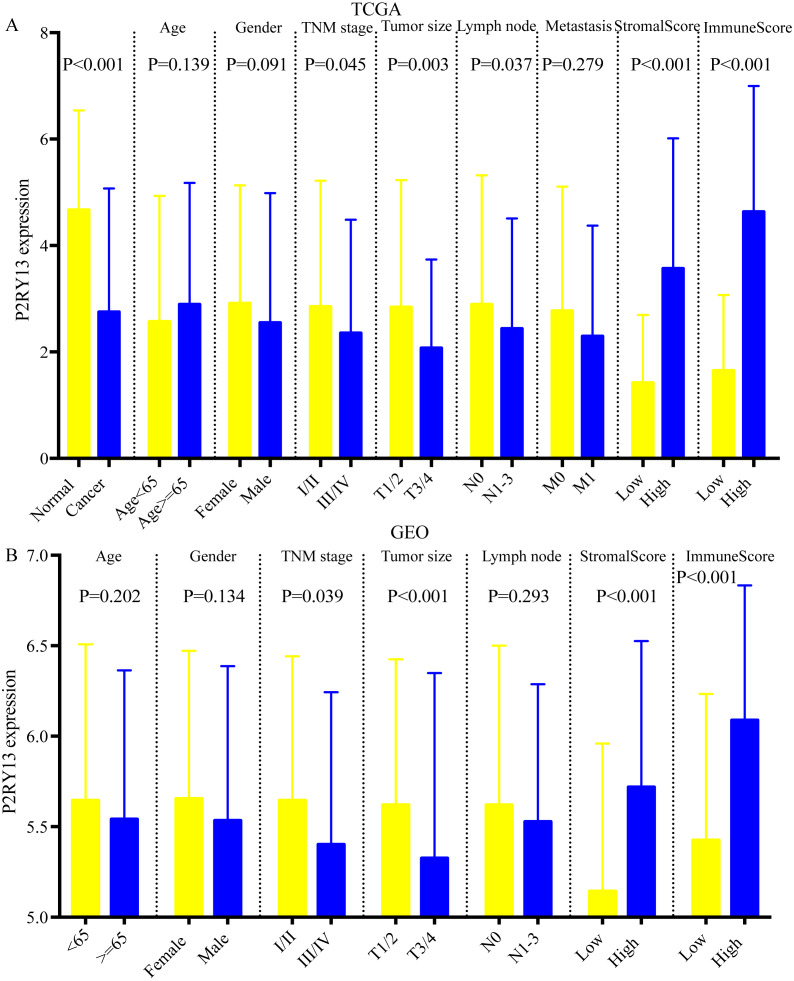
Survival analysis showed that LUAD in the high-immune and stromal score group had a better clinical prognosis. A total of 303 immune-related DEGs were detected. Univariate Cox regression and survival analyses revealed that P2Y purinoceptor 13 (P2RY13) was a favorable factor for the prognosis of LUAD. ssGSEA and Spearman correlation analysis demonstrated that P2RY13 was highly correlated with various TIICs and immune functions. Several immune-associated pathways were enriched between the high- and low-expression P2RY13 groups.
P2RY13 may be a potential prognostic indicator and is highly associated with the TME in LUAD. However, further experimental studies are required to validate the present findings.
肺腺癌(LUAD)是非小细胞肺癌(NSCLC)的主要组织学亚型。
在本研究中,从癌症基因组图谱下载LUAD的基因矩阵,使用“利用表达数据估计恶性肿瘤组织中的基质和免疫细胞”(ESTIMATE)算法推断免疫和基质评分,并鉴定高、低基质/免疫评分组之间的免疫相关差异表达基因(DEG)。接下来,对所有DEG进行单变量Cox回归和生存分析,以筛选肿瘤微环境(TME)中的预后生物标志物,并在基因表达综合数据库中进行验证。进行单样本基因集富集分析(ssGSEA)以评估肿瘤浸润免疫细胞(TIIC)水平和免疫功能,并使用基因集富集分析(GSEA)鉴定由预后生物标志物改变的通路。
生存分析表明,高免疫和基质评分组的LUAD具有更好的临床预后。共检测到303个免疫相关DEG。单变量Cox回归和生存分析显示,P2Y嘌呤能受体13(P2RY13)是LUAD预后的有利因素。ssGSEA和Spearman相关性分析表明,P2RY13与各种TIIC和免疫功能高度相关。高、低表达P2RY13组之间富集了几种免疫相关通路。
P2RY13可能是一种潜在的预后指标,并且与LUAD中的TME高度相关。然而,需要进一步的实验研究来验证本研究结果。