Qiu Yuan, Liu Liping, Yang Haihong, Chen Hanzhang, Deng Qiuhua, Xiao Dakai, Lin Yongping, Zhu Changbin, Li Weiwei, Shao Di, Jiang Wenxi, Wu Kui, He Jianxing
National Clinical Research Center of Respiratory Disease, The First Affiliated Hospital of Guangzhou Medical University, Guangzhou, China.
State Key Laboratory of Respiratory Diseases, The First Affiliated Hospital of Guangzhou Medical University, Guangzhou, China.
Front Oncol. 2021 Apr 30;10:608989. doi: 10.3389/fonc.2020.608989. eCollection 2020.
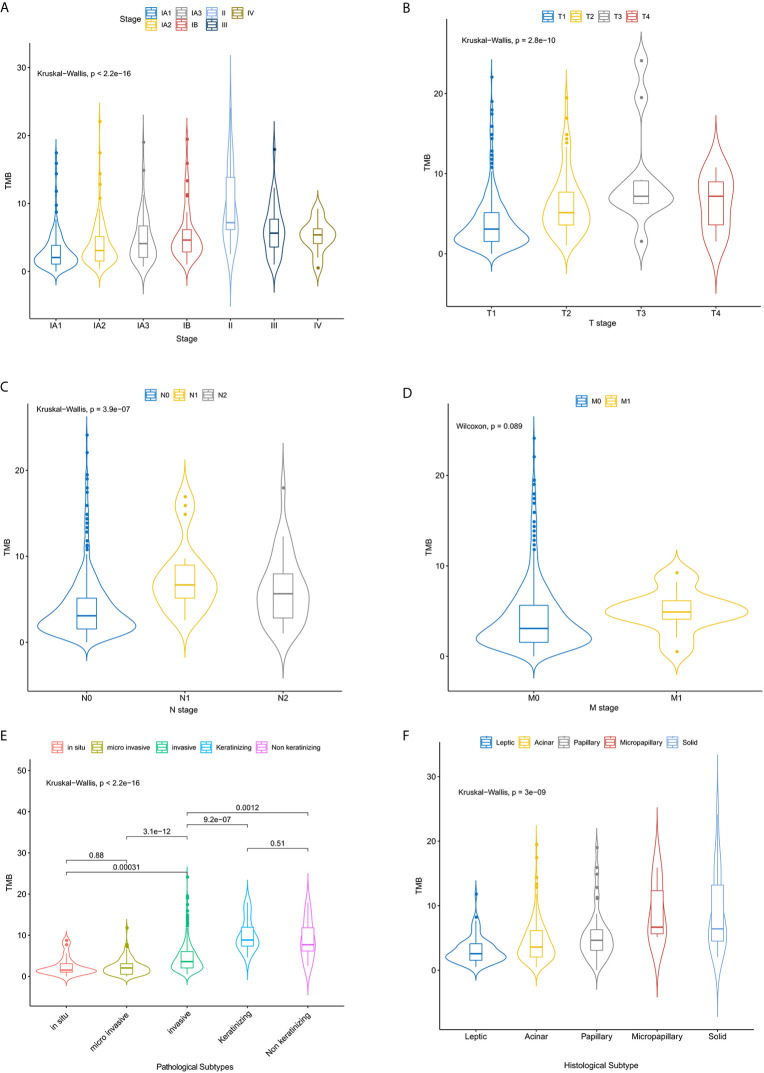
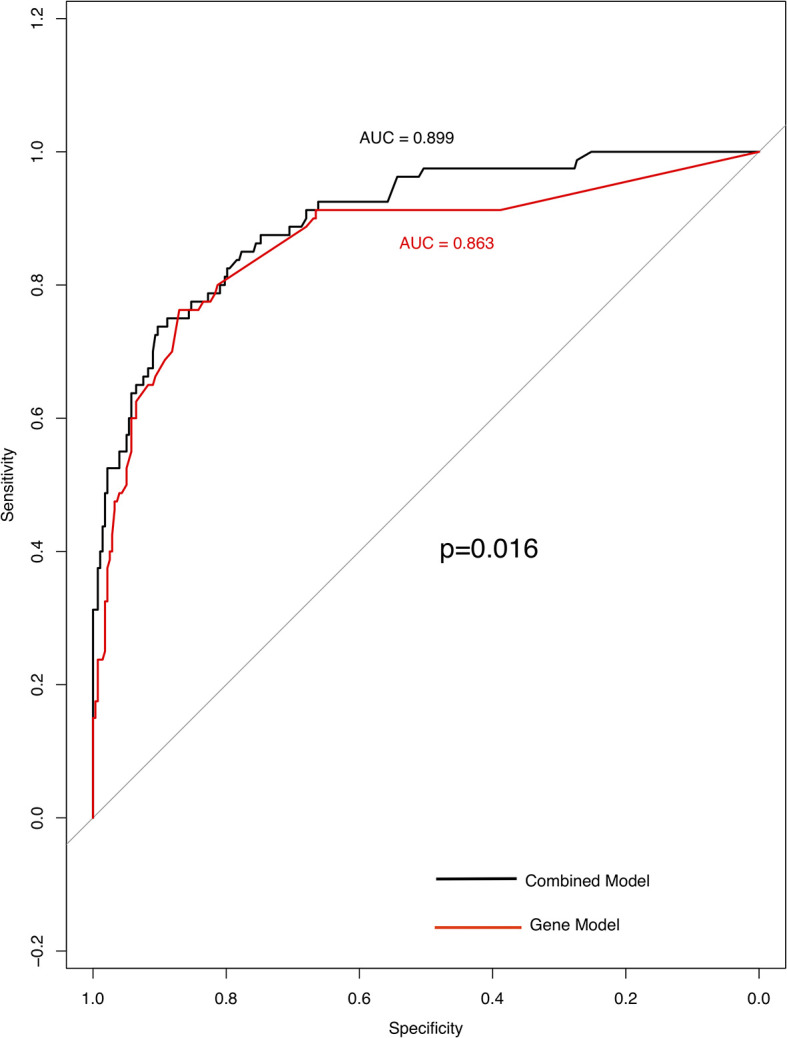
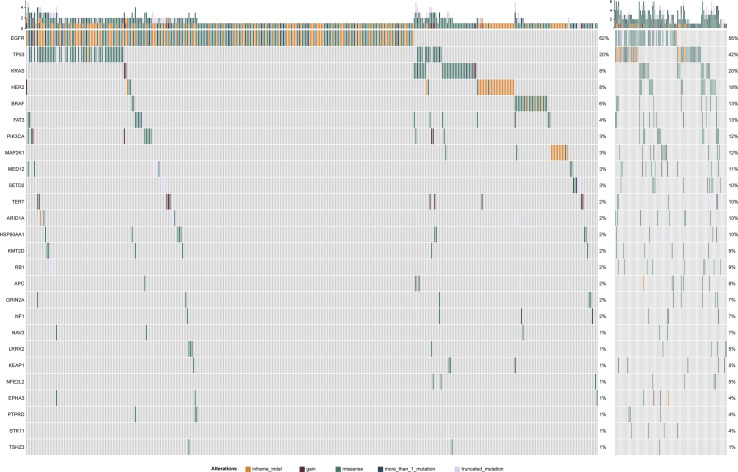
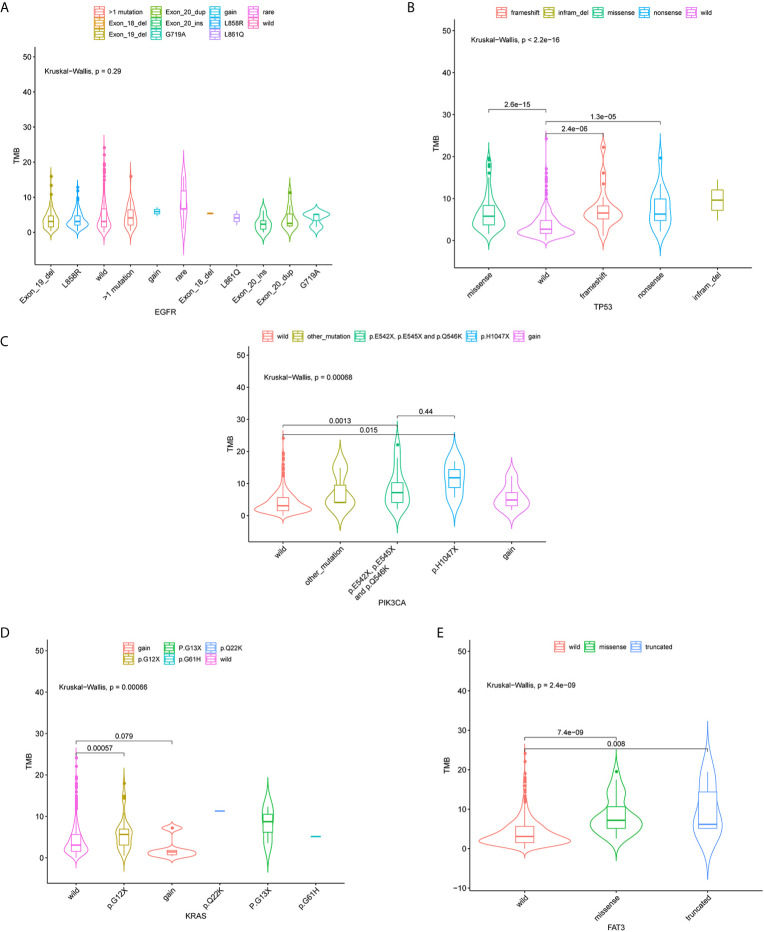
Tumor mutation burden (TMB) serves as an effective biomarker predicting efficacy of mono-immunotherapy for non-small cell lung cancer (NSCLC). Establishing a precise TMB predicting model is essential to select which populations are likely to respond to immunotherapy or prognosis and to maximize the benefits of treatment. In this study, available Formalin-fixed paraffin embedded tumor tissues were collected from 499 patients with NSCLC. Targeted sequencing of 636 cancer related genes was performed, and TMB was calculated. Distribution of TMB was significantly (p < 0.001) correlated with sex, clinical features (pathological/histological subtype, pathological stage, lymph node metastasis, and lympho-vascular invasion). It was also significantly (p < 0.001) associated with mutations in genes like , , , , , , , , , , , , , , , and . No significant correlations were found between TMB and age, neuro-invasion (p = 0.125), and tumor location (p = 0.696). Patients with p.G12 mutations and missense mutations were associated (p < 0.001) with TMB. mutations also influence TMB distribution (P < 0.001). TMB was reversely related to mutations (P < 0.001) but did not differ by mutation types. According to multivariate logistic regression model, genomic parameters could effectively construct model predicting TMB, which may be improved by introducing clinical information. Our study demonstrates that genomic together with clinical features yielded a better reliable model predicting TMB-high status. A simplified model consisting of less than 20 genes and couples of clinical parameters were sought to be useful to provide TMB status with less cost and waiting time.
肿瘤突变负荷(TMB)是预测非小细胞肺癌(NSCLC)单药免疫治疗疗效的有效生物标志物。建立精确的TMB预测模型对于选择可能对免疫治疗有反应或预后良好的人群以及最大化治疗益处至关重要。在本研究中,收集了499例NSCLC患者的福尔马林固定石蜡包埋肿瘤组织。对636个癌症相关基因进行靶向测序,并计算TMB。TMB的分布与性别、临床特征(病理/组织学亚型、病理分期、淋巴结转移和淋巴管浸润)显著相关(p<0.001)。它还与 、 、 、 、 、 、 、 、 、 、 、 、 、 、 等基因的突变显著相关(p<0.001)。未发现TMB与年龄、神经侵犯(p=0.125)和肿瘤位置(p=0.696)之间存在显著相关性。携带p.G12突变和错义突变的患者与TMB相关(p<0.001)。 突变也影响TMB分布(P<0.001)。TMB与 突变呈负相关(P<0.001),但在突变类型上无差异。根据多变量逻辑回归模型,基因组参数可以有效地构建预测TMB的模型,引入临床信息可能会改善该模型。我们的研究表明,基因组与临床特征相结合产生了一个更好的预测TMB高状态的可靠模型。寻求一个由少于20个基因和几个临床参数组成的简化模型,以低成本和短等待时间提供TMB状态。