Jiang Weiliang, Chen Congying, Huang Li, Shen Jie, Yang Lijuan
Department of Gastroenterology, Shanghai General Hospital, Shanghai Jiao Tong University School of Medicine, Shanghai, China.
Shanghai Key Laboratory of Pancreatic Disease, Institute of Pancreatic Disease, Shanghai Jiao Tong University School of Medicine, Shanghai, China.
Front Cell Dev Biol. 2021 Apr 29;9:640391. doi: 10.3389/fcell.2021.640391. eCollection 2021.
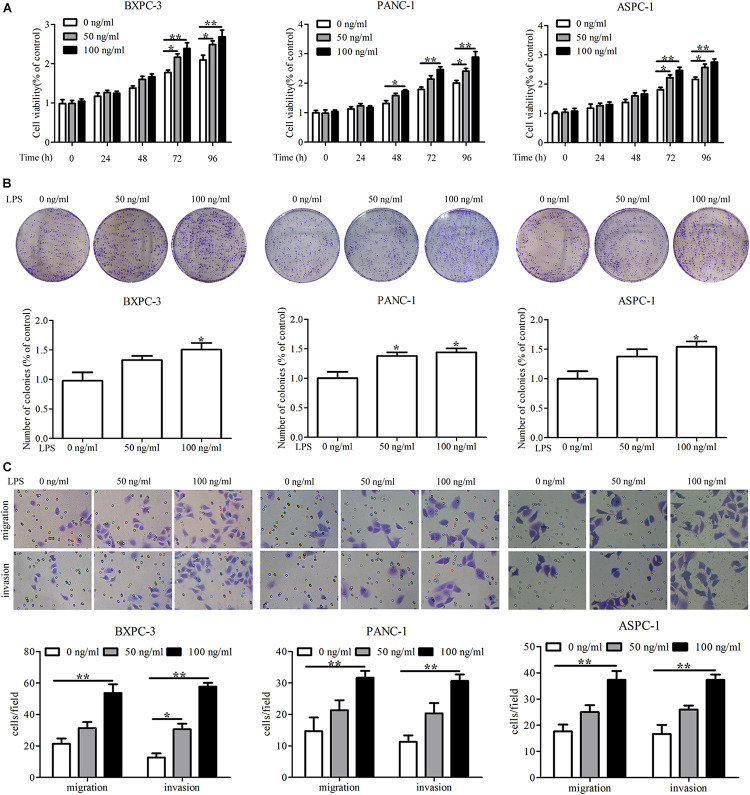
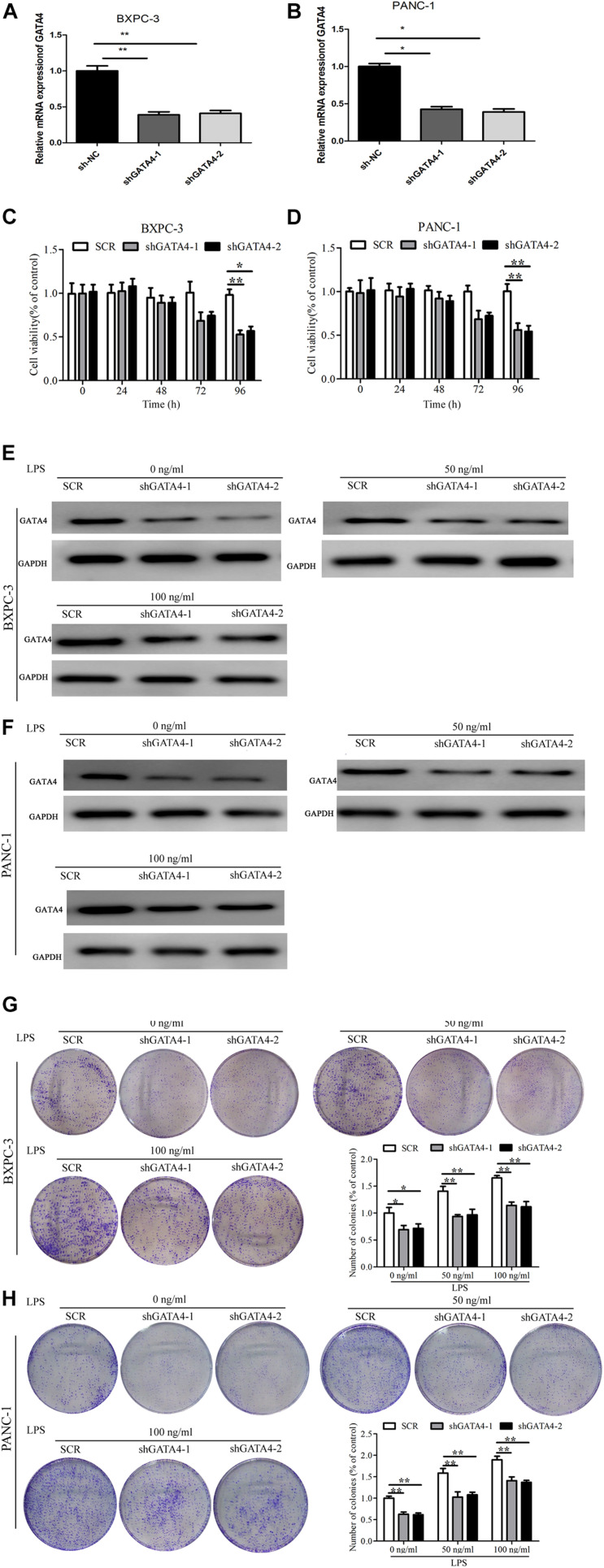
Cancer-associated inflammation is a key molecular feature in the progression of pancreatic ductal adenocarcinoma (PDAC). GATA4 is a transcription factor that participates in the regulation and normal development of several endoderm- and mesoderm-derived tissues such as the pancreas. However, it remains unclear whether GATA4 is involved in the inflammation-driven development of pancreatic cancer. Here, we employed quantitative reverse transcription PCR, immunohistochemistry, and differential expression analysis to investigate the association between GATA4 and inflammation-driven PDAC. We found that overexpression of GATA4 in pancreatic tumor tissue was accompanied by increased levels of inflammatory macrophages. We used macrophage-conditioned medium to validate inflammation models following treatment with varying concentrations of lipopolysaccharide and determined whether GATA4-dependent inflammatory stimuli affected pancreatic cancer cell invasion and growth . Nude mouse models of dibutyltin dichloride-induced chronic pancreatitis with orthotopic tumor xenografts were used to evaluate the effect of the inflammatory microenvironment on GATA4 expression . Our findings indicate that overexpression of GATA4 dramatically aggravated inflammatory stimuli-induced pancreatic cancer cell invasion and growth via NF-κB and STAT3 signaling, whereas silencing of GATA4 attenuated invasion and growth. Overall, our findings suggest that inflammation-driven cancer progression is dependent on GATA4 expression and is mediated through the STAT3 and NF-κB signaling pathways.
癌症相关炎症是胰腺导管腺癌(PDAC)进展中的关键分子特征。GATA4是一种转录因子,参与胰腺等几种内胚层和中胚层来源组织的调节和正常发育。然而,GATA4是否参与炎症驱动的胰腺癌发展仍不清楚。在此,我们采用定量逆转录PCR、免疫组织化学和差异表达分析来研究GATA4与炎症驱动的PDAC之间的关联。我们发现胰腺肿瘤组织中GATA4的过表达伴随着炎性巨噬细胞水平的升高。我们使用巨噬细胞条件培养基,在用不同浓度的脂多糖处理后验证炎症模型,并确定GATA4依赖性炎症刺激是否影响胰腺癌细胞的侵袭和生长。使用二丁基二氯化锡诱导的慢性胰腺炎原位肿瘤异种移植裸鼠模型来评估炎症微环境对GATA4表达的影响。我们的研究结果表明,GATA4的过表达通过NF-κB和STAT3信号通路显著加剧炎症刺激诱导的胰腺癌细胞侵袭和生长,而GATA4的沉默则减弱侵袭和生长。总体而言,我们的研究结果表明,炎症驱动的癌症进展依赖于GATA4的表达,并通过STAT3和NF-κB信号通路介导。