Cosenza Lucia Carmela, Gasparello Jessica, Romanini Nicola, Zurlo Matteo, Zuccato Cristina, Gambari Roberto, Finotti Alessia
Department of Life Sciences and Biotechnology, Section of Biochemistry and Molecular Biology, Ferrara University, Ferrara, Italy.
Interuniversity Consortium for Biotechnology (CIB), Trieste, Italy.
Mol Ther Methods Clin Dev. 2021 Apr 3;21:507-523. doi: 10.1016/j.omtm.2021.03.025. eCollection 2021 Jun 11.
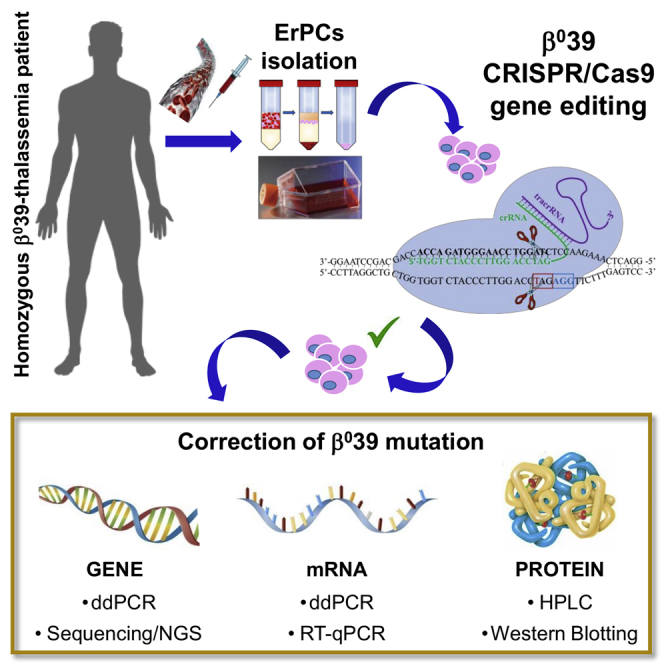
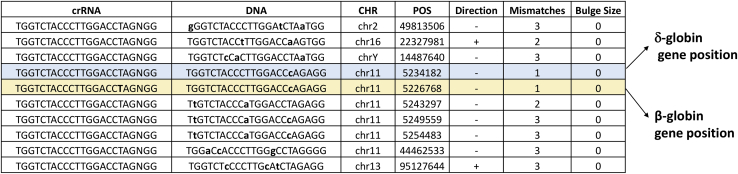
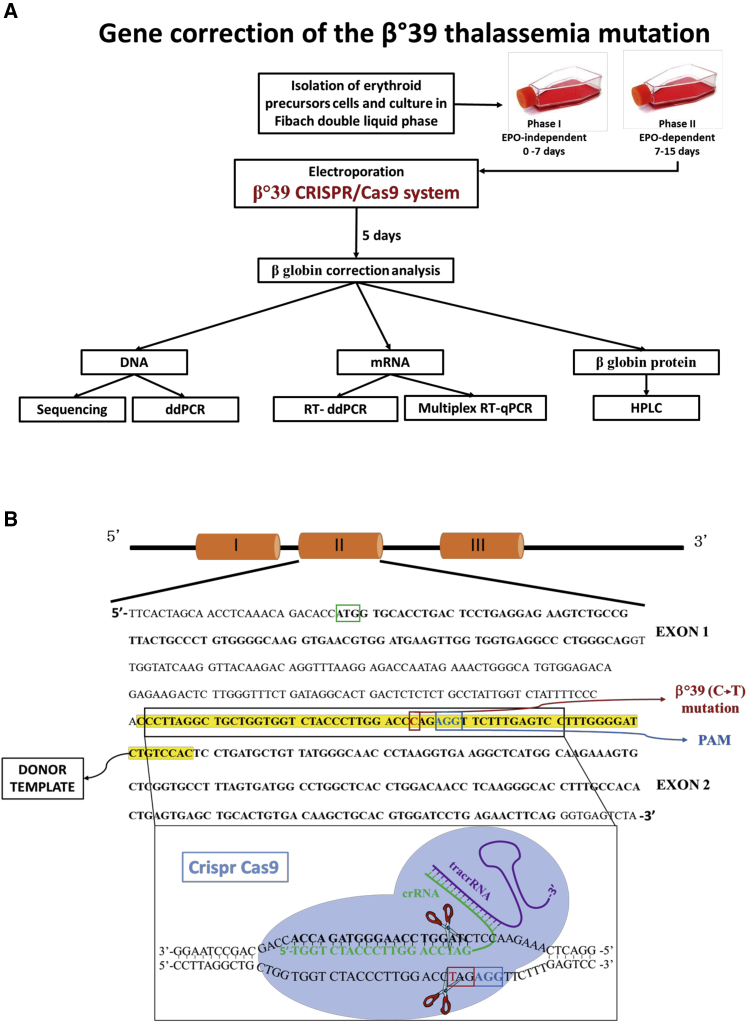
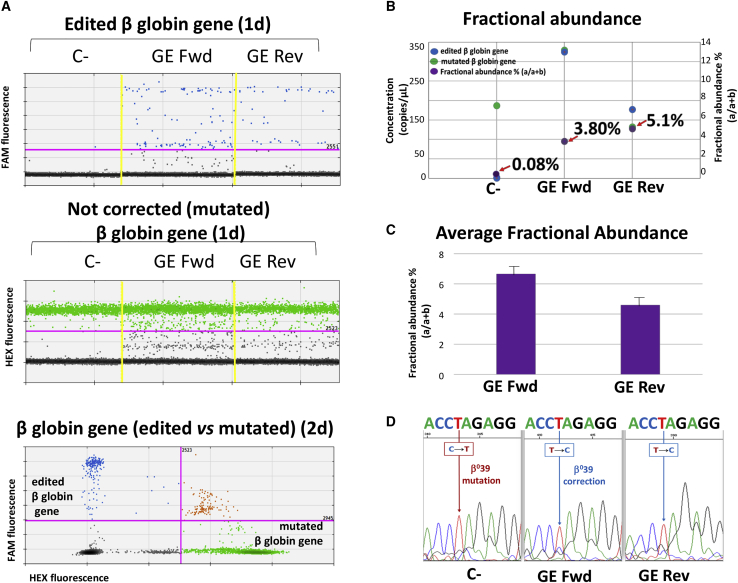
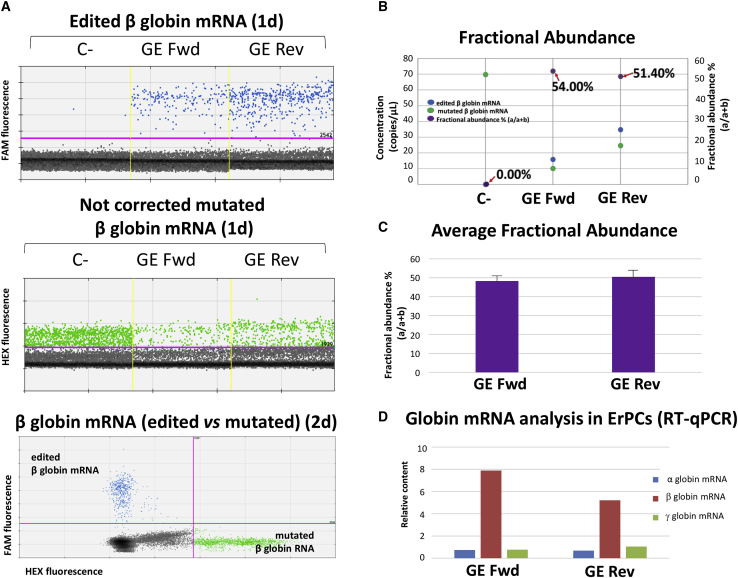
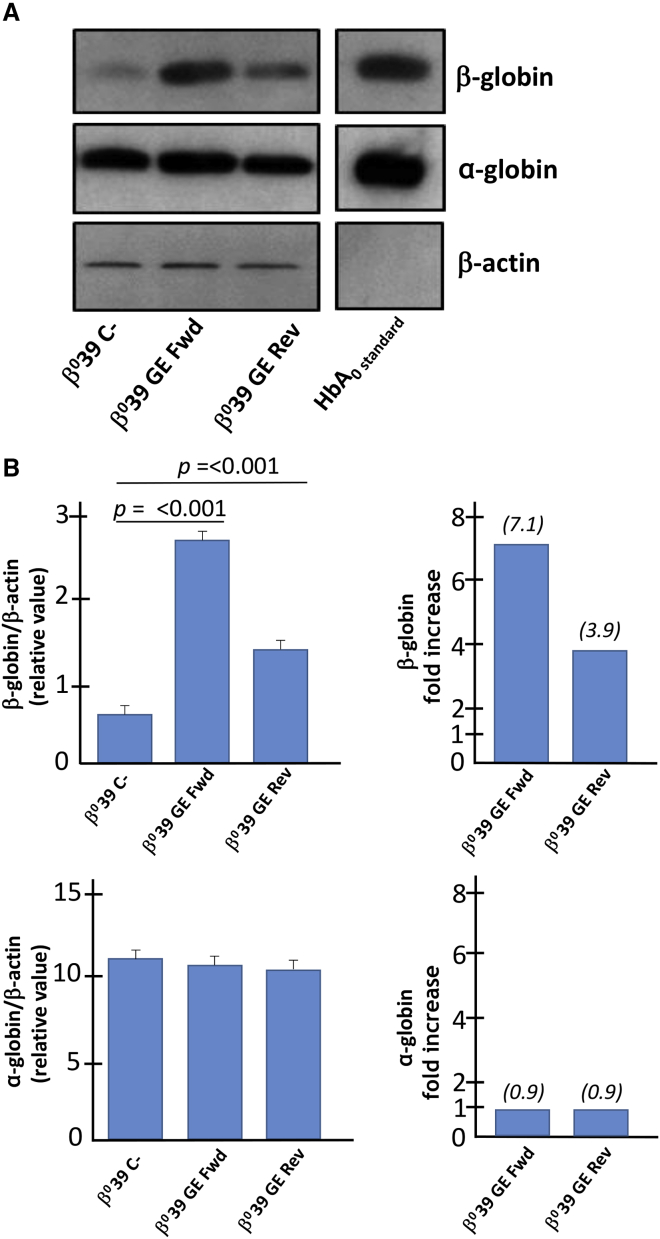
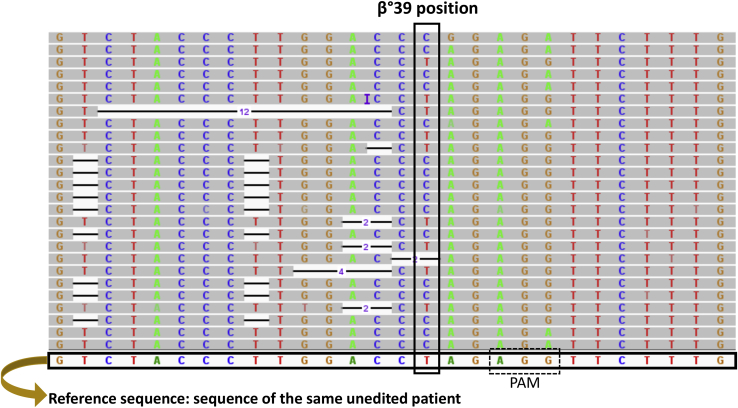
Gene editing by the CRISPR-Cas9 nuclease system technology can be considered among the most promising strategies to correct hereditary mutations in a variety of monogenic diseases. In this paper, we present for the first time the correction, by CRISPR-Cas9 gene editing, of the β39-thalassemia mutation, one of the most frequent in the Mediterranean area. The results obtained demonstrated the presence of normal β-globin genes after CRISPR-Cas9 correction of the β39-thalassemia mutation performed on erythroid precursor cells from homozygous β39-thalassemia patients. This was demonstrated by allele-specific PCR and sequencing. Accumulation of corrected β-globin mRNA and relevant "" production of β-globin and adult hemoglobin (HbA) were found with high efficiency. The CRISPR-Cas9-forced HbA production levels were associated with a significant reduction of the excess of free α-globin chains. Genomic toxicity of the editing procedure (low indels and no off-targeting) was analyzed. The protocol might be the starting point for the development of an efficient editing of CD34 cells derived from β39 patients and for the design of combined treatments using, together with the CRISPR-Cas9 editing of the β-globin gene, other therapeutic approaches, such as, for instance, induction of HbA and/or fetal hemoglobin (HbF) using chemical inducers.
CRISPR-Cas9核酸酶系统技术介导的基因编辑可被视为纠正多种单基因疾病中遗传突变的最具前景的策略之一。在本文中,我们首次展示了通过CRISPR-Cas9基因编辑纠正β39-地中海贫血突变,该突变是地中海地区最常见的突变之一。所获得的结果表明,对来自纯合β39-地中海贫血患者的红系前体细胞进行CRISPR-Cas9介导的β39-地中海贫血突变纠正后,存在正常的β-珠蛋白基因。这通过等位基因特异性PCR和测序得到证实。高效地发现了经纠正的β-珠蛋白mRNA的积累以及β-珠蛋白和成人血红蛋白(HbA)的相关生成。CRISPR-Cas9介导的HbA生成水平与游离α-珠蛋白链过量的显著降低相关。分析了编辑过程的基因组毒性(低插入缺失且无脱靶效应)。该方案可能是对来自β39患者的CD34细胞进行高效编辑以及设计联合治疗的起点,联合治疗是指将β-珠蛋白基因的CRISPR-Cas9编辑与其他治疗方法(例如使用化学诱导剂诱导HbA和/或胎儿血红蛋白(HbF))结合使用。