Yusupov Ziyoviddin, Deng Tao, Volis Sergei, Khassanov Furkat, Makhmudjanov Dilmurod, Tojibaev Komiljon, Sun Hang
CAS Key Laboratory for Plant Diversity and Biogeography of East Asia, Kunming Institute of Botany, Chinese Academy of Sciences, Kunming, 650201, China.
International Joint Lab for Molecular Phylogeny and Biogeography, Institute of Botany, Academy Sciences of Uzbekistan, Tashkent, 100125, Uzbekistan.
Plant Divers. 2020 Aug 11;43(2):102-110. doi: 10.1016/j.pld.2020.07.008. eCollection 2021 Apr.
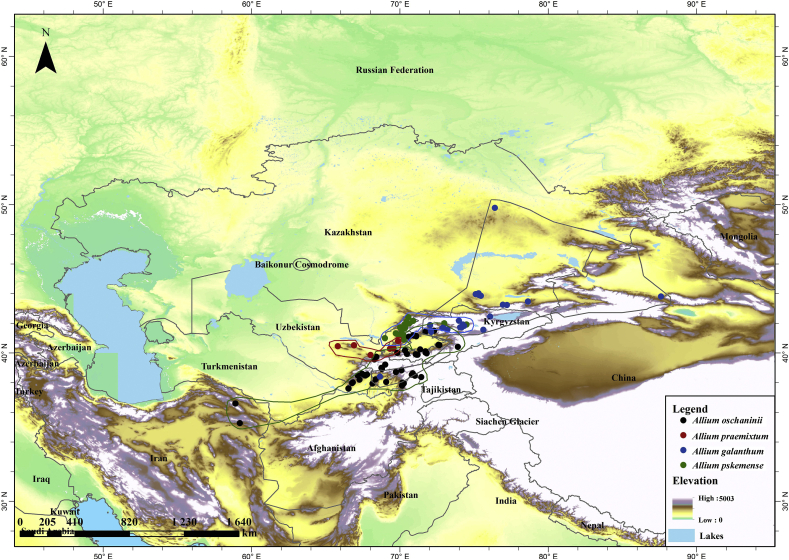
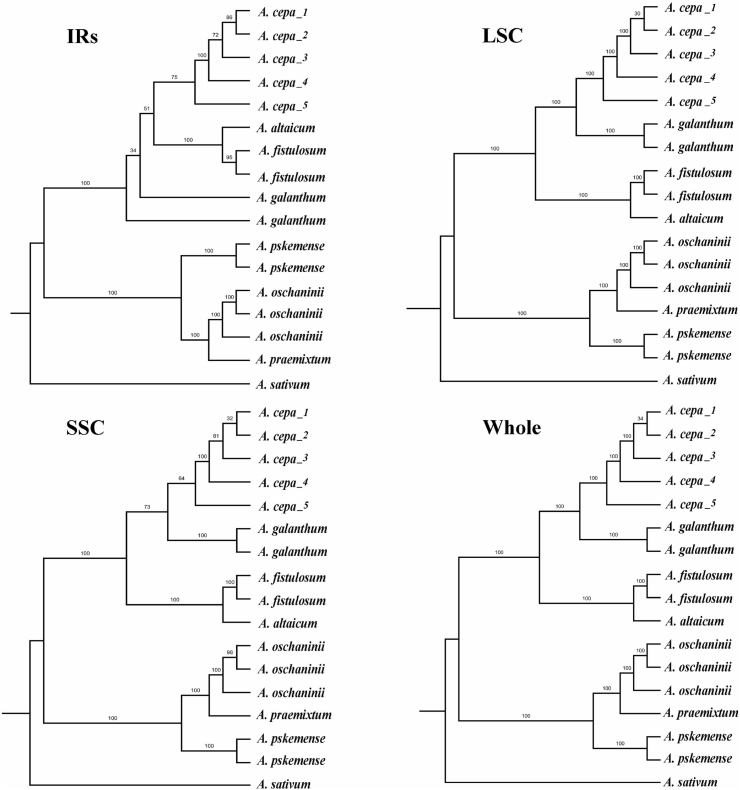
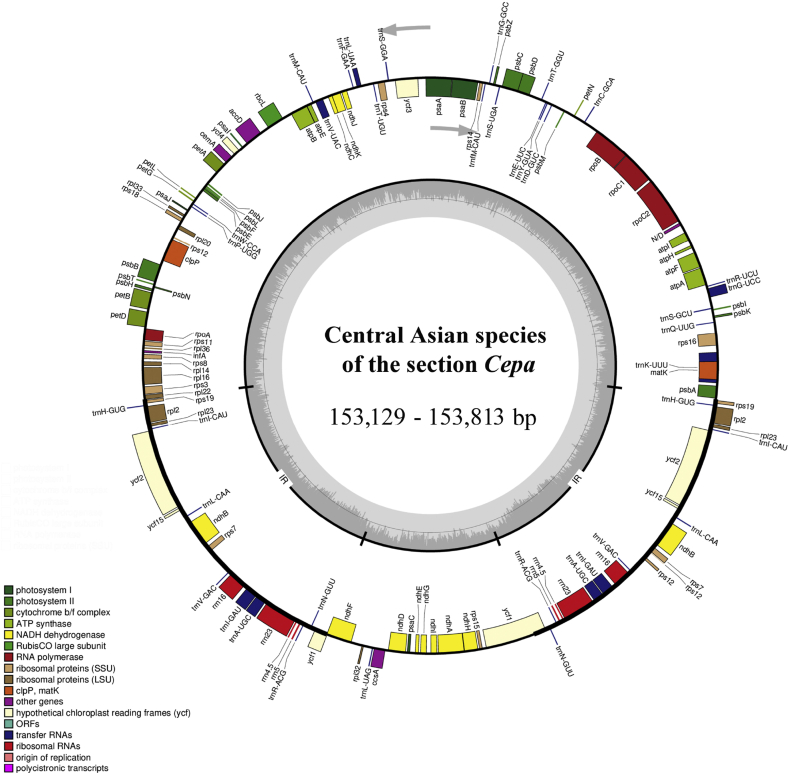
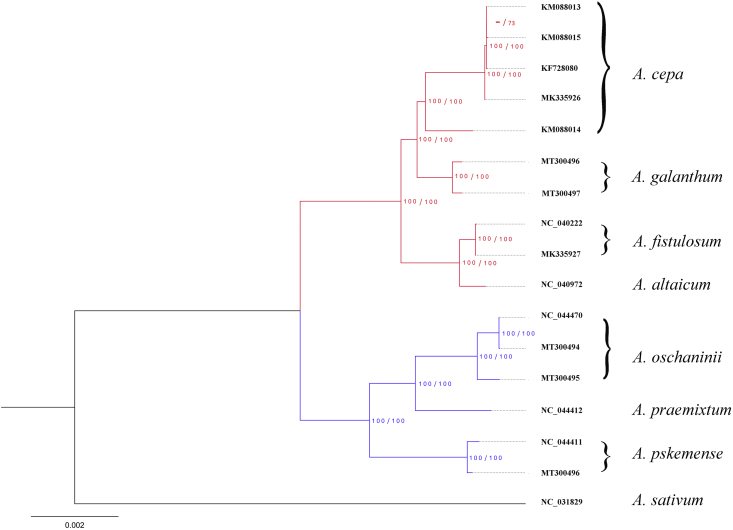
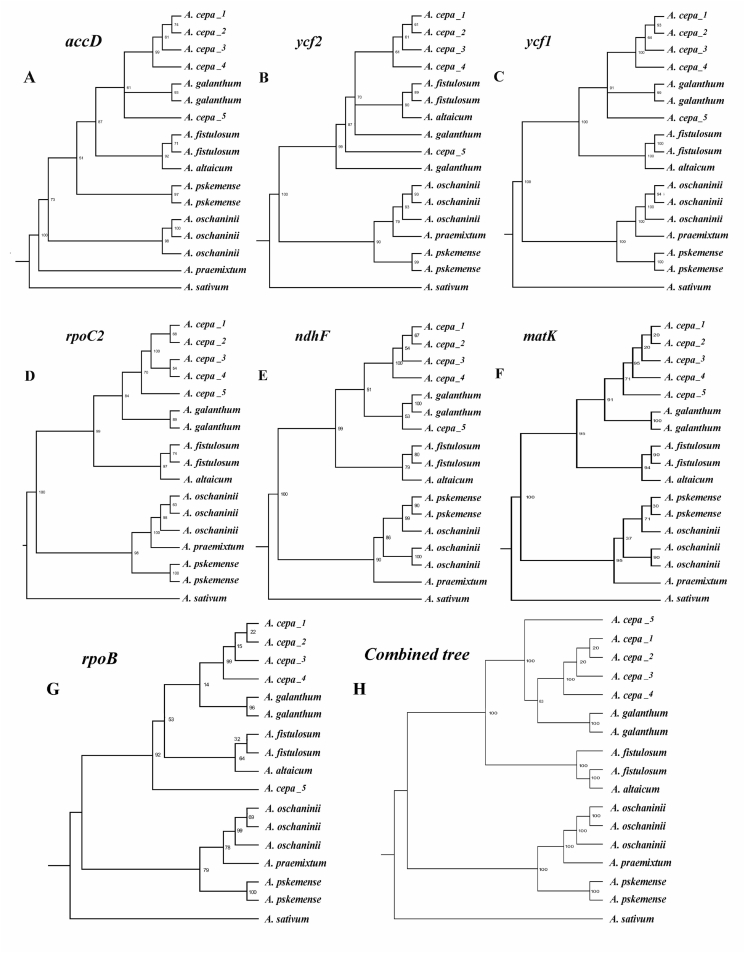
sect. (Amaryllidaceae) comprises economically important plants, yet resolving the phylogenetic relationships within the section has been difficult as nuclear and chloroplast-based phylogenetic trees have been incongruent. Until now, phylogenetic studies of the section have been based on a few genes. In this study, we sequenced the complete chloroplast genome (plastomes) of four central Asian species of sect. : , , and . Their chloroplast (cp) genomes included 114 unique genes of which 80 coded proteins. Seven protein-coding genes were highly variable and therefore promising for future phylogenetic and phylogeographic studies. Our plastome-based phylogenetic tree of sect. revealed two separate clades: one comprising the central Asian species , , and , and another comprising , , and two cultivated species, and . These findings contradict previously reported phylogenies that relied on ITS and morphology. Possible explanations for this discrepancy are related to interspecific hybridization of species ancestral to and followed by chloroplast capture; however, this is impossible to prove without additional data. Our results suggest that the central Asian species did not play a role in the domestication of the common onion. Among the chloroplast genes, was identified as a gene of choice in further phylogeographical studies of the genus
组(石蒜科)包含具有重要经济价值的植物,但由于基于核基因和叶绿体的系统发育树不一致,解决该组内的系统发育关系一直很困难。到目前为止,该组的系统发育研究一直基于少数几个基因。在本研究中,我们对组中四个中亚物种的完整叶绿体基因组(质体基因组)进行了测序: 、 、 和 。它们的叶绿体(cp)基因组包含114个独特基因,其中80个编码蛋白质。七个蛋白质编码基因高度可变,因此有望用于未来的系统发育和系统地理学研究。我们基于质体基因组的组系统发育树揭示了两个独立的分支:一个分支包含中亚物种 、 和 ,另一个分支包含 、 以及两个栽培种 和 。这些发现与先前报道的依赖于ITS和形态学的系统发育关系相矛盾。这种差异的可能解释与 和 的祖先物种之间的种间杂交以及随后的叶绿体捕获有关;然而,没有额外的数据这是无法证明的。我们的结果表明,中亚 物种在普通洋葱的驯化过程中没有发挥作用。在叶绿体基因中, 被确定为该属进一步系统地理学研究中的首选基因。