Scobeyeva Victoria A, Artyushin Ilya V, Krinitsina Anastasiya A, Nikitin Pavel A, Antipin Maxim I, Kuptsov Sergei V, Belenikin Maxim S, Omelchenko Denis O, Logacheva Maria D, Konorov Evgenii A, Samoilov Andrey E, Speranskaya Anna S
Department of Evolution, Faculty of Biology, Lomonosov Moscow State University, Moscow, Russia.
Department of Molecular and Biological Physics, Moscow Institute of Physics and Technology, Dolgoprudny, Russia.
Front Genet. 2021 Jul 8;12:674783. doi: 10.3389/fgene.2021.674783. eCollection 2021.
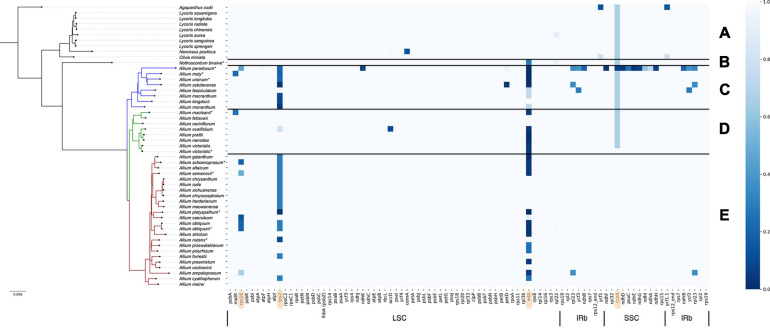
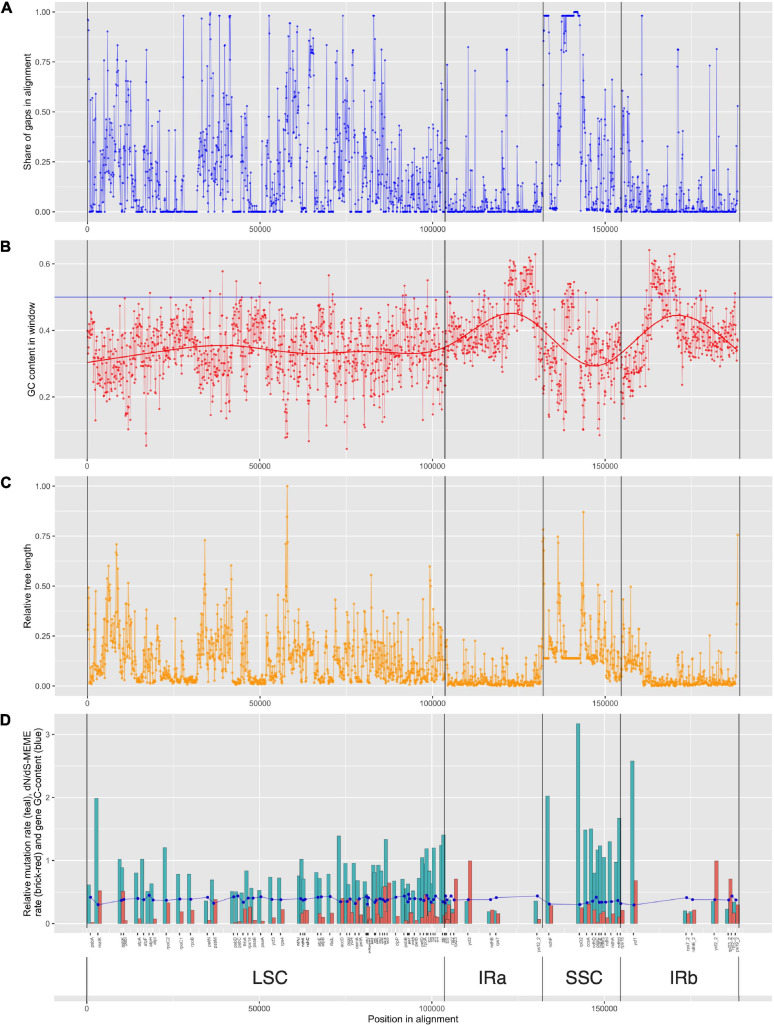
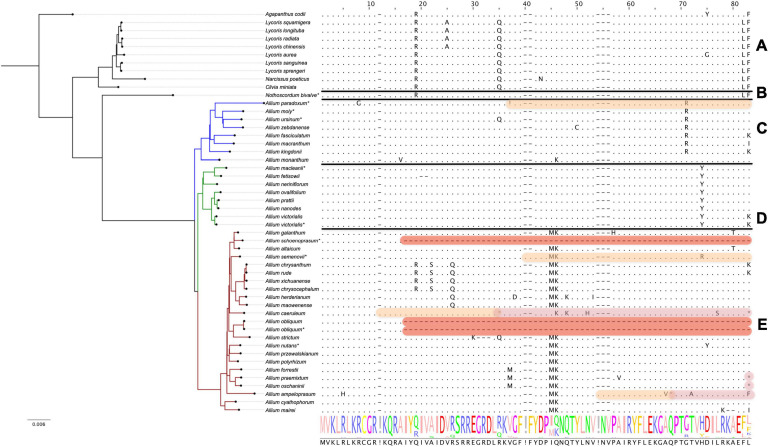
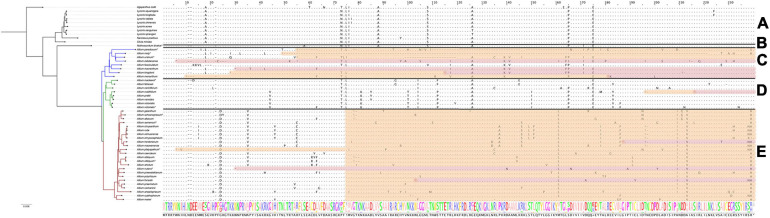
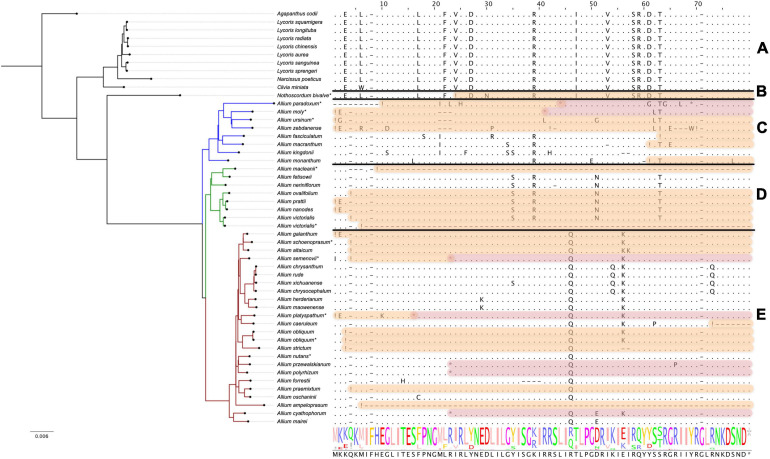
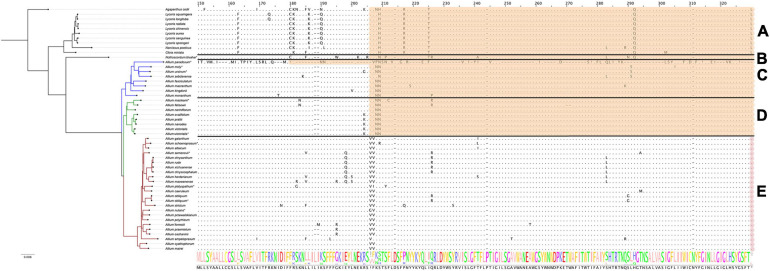
is a large family with more than 1,600 species, belonging to 75 genera. The largest genus--is vast, comprising about a thousand species. species (as well as other members of the ) are widespread and diversified, they are adapted to a wide range of habitats from shady forests to open habitats like meadows, steppes, and deserts. The genes present in chloroplast genomes (plastomes) play fundamental roles for the photosynthetic plants. Plastome traits could thus be associated with geophysical abiotic characteristics of habitats. Most chloroplast genes are highly conserved and are used as phylogenetic markers for many families of vascular plants. Nevertheless, some studies revealed signatures of positive selection in chloroplast genes of many plant families including . We have sequenced plastomes of the following nine (tribe of ) species: , , , , , , , , , , , and (tribe of ). We compared our data with previously published plastomes and provided our interpretation of plastome genes' annotations because we found some noteworthy inconsistencies with annotations previously reported. For species we estimated the integral evolutionary rate, counted SNPs and indels per nucleotide position as well as compared pseudogenization events in species of three main phylogenetic lines of genus to estimate whether they are potentially important for plant physiology or just follow the phylogenetic pattern. During examination of the 38 species of and the 11 of other species we found that , , , genes have lost their functionality multiple times in different species (regularly evolutionary events), while the pseudogenization of other genes was stochastic events. We found that the "normal" or "pseudo" state of , , , genes correlates well with the evolutionary line of genus the species belongs to. The positive selection in various NADH dehydrogenase () genes as well as in , , and some others were found. Taking into account known mechanisms of coping with excessive light by cyclic electron transport, we can hypothesize that adaptive evolution in genes, coding subunits of NADH-plastoquinone oxidoreductase could be driven by abiotic factors of alpine habitats, especially by intensive light and UV radiation.
是一个拥有1600多种物种的大家族,隶属于75个属。最大的属——分布广泛,包含约一千个物种。 物种(以及该属的其他成员)分布广泛且种类多样,它们适应从阴暗森林到开阔栖息地如草地、草原和沙漠等广泛的栖息地。叶绿体基因组(质体基因组)中存在的基因对光合植物起着基本作用。因此,质体基因组特征可能与栖息地的地球物理非生物特征相关。大多数叶绿体基因高度保守,并被用作许多维管植物科的系统发育标记。然而,一些研究揭示了包括 在内的许多植物科叶绿体基因中的正选择特征。我们对以下九个 ( 族)物种的质体基因组进行了测序: 、 、 、 、 、 、 、 、 、 、 以及 ( 族)。我们将我们的数据与先前发表的质体基因组进行了比较,并对 质体基因组基因的注释进行了解释,因为我们发现与先前报道的注释存在一些值得注意的不一致之处。对于 物种,我们估计了整体进化速率,计算了每个核苷酸位置的单核苷酸多态性(SNP)和插入缺失,并比较了 属三个主要系统发育谱系物种中的假基因化事件,以估计它们对植物生理学是否潜在重要,或者只是遵循系统发育模式。在对38种 和11种其他 物种的研究中,我们发现 、 、 、 基因在不同物种中多次丧失功能(通常是进化事件),而其他基因的假基因化是随机事件。我们发现 、 、 、 基因的“正常”或“假”状态与该物种所属的 属进化谱系密切相关。在各种NADH脱氢酶( )基因以及 、 等一些其他基因中发现了正选择。考虑到通过循环电子传递应对过量光照的已知机制,我们可以假设,编码NADH - 质体醌氧化还原酶亚基的基因中的适应性进化可能受高山栖息地的非生物因素驱动,特别是强烈的光照和紫外线辐射。