Yue Juan, Li Rong
CAS Key Laboratory for Plant Diversity and Biogeography of East Asia, Kunming Institute of Botany, Chinese Academy of Sciences, Kunming, 650201, China.
University of Chinese Academy of Sciences, Beijing, 100049, China.
Plant Divers. 2020 Sep 10;43(2):111-116. doi: 10.1016/j.pld.2020.08.003. eCollection 2021 Apr.
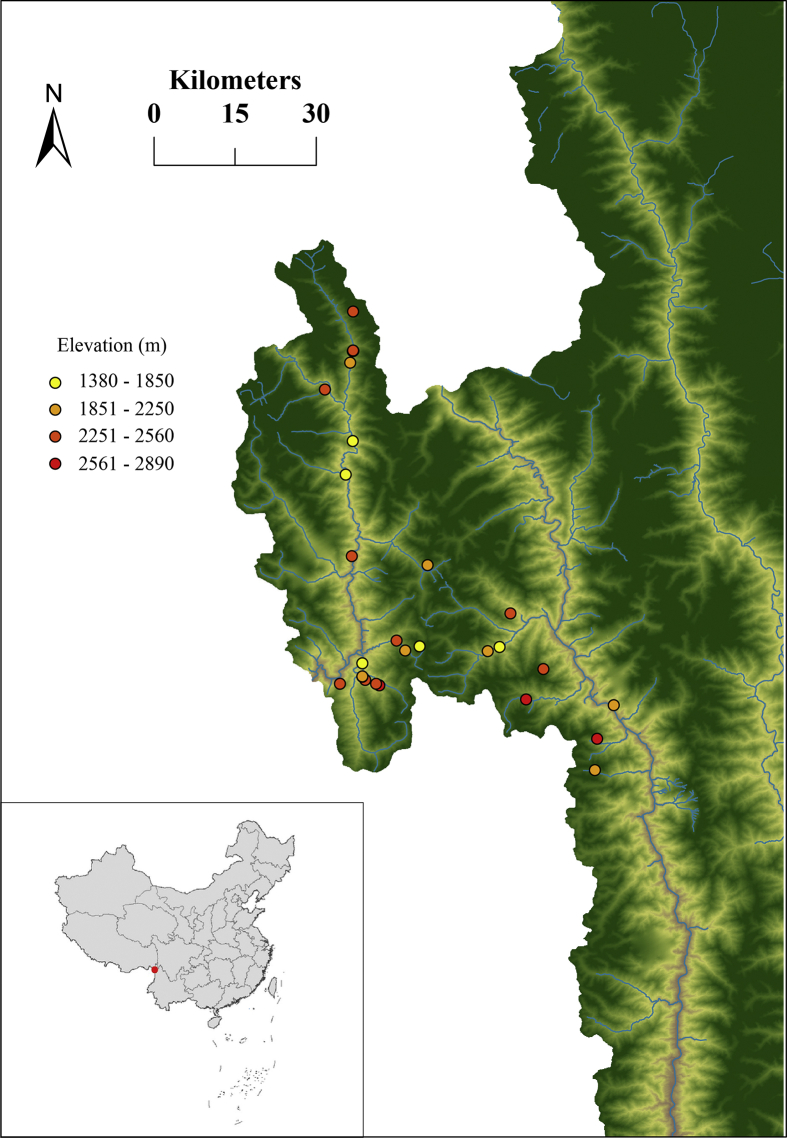
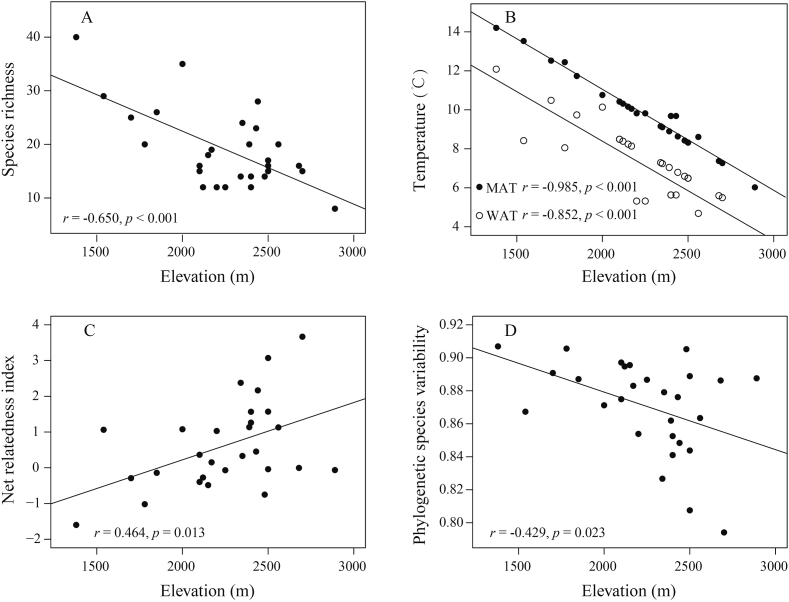
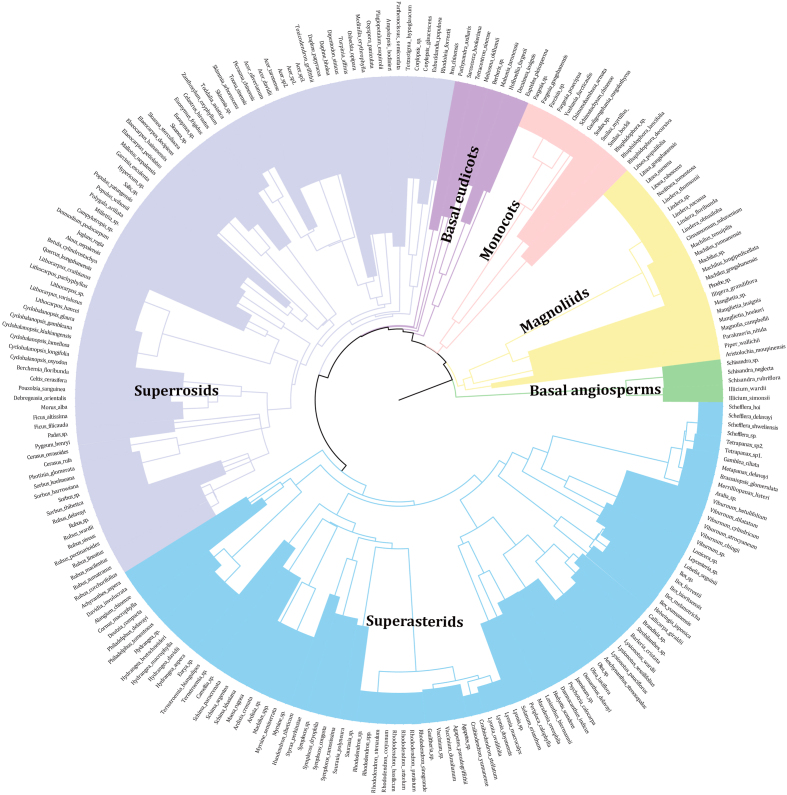
The species composition of plant communities is determined by a number of factors, including current environmental conditions as well as biogeographical and evolutionary history. Despite evidence that plant diversity decreases and species relatedness increases along latitudinal and environmental gradients (e.g., low temperatures), it remains unclear whether these same patterns occur along elevational gradients, especially in the subtropical mountainous areas harboring rich biodiversity. In this study, we explored the pattern of phylogenetic relatedness of woody angiosperm assemblages and examined the effects of temperature variables on the phylogenetic relatedness among angiosperm woody plants using generalized linear model in subtropical forest communities along a broad elevational gradient in the Dulong Valley of Yunnan Province, China. Our results showed that woody angiosperm species in local forest plots tend to be more phylogenetically related at higher elevations and in areas with lower temperatures. Additionally, winter average temperature, rather than mean annual temperature, is a major predictor of the pattern of increasing phylogenetic relatedness with increasing elevation. This finding is consistent with the prediction of 'Tropical Niche Conservatism' hypothesis, which highlights the role of niche constraints in driving phylogenetic community assembly along an elevational gradient.
植物群落的物种组成由多种因素决定,包括当前的环境条件以及生物地理和进化历史。尽管有证据表明植物多样性沿着纬度和环境梯度(如低温)降低,物种亲缘关系增加,但尚不清楚这些相同的模式是否沿着海拔梯度出现,尤其是在拥有丰富生物多样性的亚热带山区。在本研究中,我们在中国云南省独龙江流域沿广泛海拔梯度的亚热带森林群落中,利用广义线性模型探索了木本被子植物组合的系统发育亲缘关系模式,并研究了温度变量对被子植物木本植物系统发育亲缘关系的影响。我们的结果表明,当地森林样地中的木本被子植物物种在较高海拔和较低温度地区往往在系统发育上更具亲缘关系。此外,冬季平均温度而非年平均温度是系统发育亲缘关系随海拔升高而增加模式的主要预测因子。这一发现与“热带生态位保守主义”假说的预测一致,该假说强调了生态位限制在驱动沿海拔梯度的系统发育群落组装中的作用。