Lievevrouw Elisa, Marelli Luca, Van Hoyweghen Ine
Life Sciences & Society Lab, Centre for Sociological Research (CeSO), KU Leuven, Parkstraat 45, 3000 Leuven, Belgium.
Department of Experimental Oncology, IEO, European Institute of Oncology IRCCS, Milan, Italy.
Biosocieties. 2022;17(3):549-576. doi: 10.1057/s41292-021-00232-w. Epub 2021 May 13.
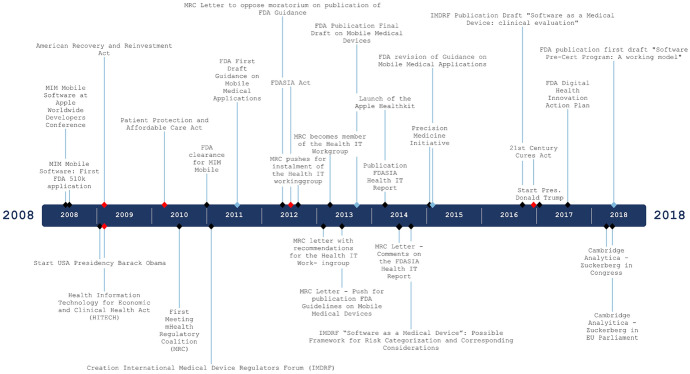
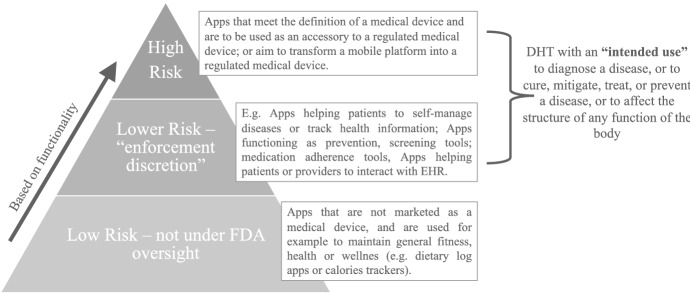
As digital health technologies (DHT) have been embraced as a 'panacea' for health care systems, they have evolved from a buzzword into a high priority objective for health policy across the globe. In the realm of quality and safety standards for medical devices, the US Food and Drug Administration (FDA) has been a frontrunner in adapting its regulatory framework to DHT. However, despite the utmost relevance of quality and safety standards and their role for sustaining the innovation pathway of DHT, their actual making has not yet been subjected to in-depth social-science scrutiny. Drawing on the conceptual repertoires of Science and Technology Studies (STS), this article investigates how digital health evolved from a buzzword into an 'object of government', or gained material meaning and transformed into a regulatable object, by charting the standard-making process of FDA's medical digital health policy between 2008 and 2018. From this, we reflect on the mutually sustaining dynamics between technological and organizational innovation, as the FDA's attempts to standardize medical DHT not only shaped the lifestyle/medical boundary for DHT. It also led to significant reconfigurations within the FDA itself, while fostering a broader shift toward the uptake of alternative forms of evidence in regulatory science.
随着数字健康技术(DHT)被视为医疗保健系统的“万灵药”,它们已从一个流行语演变成全球卫生政策的高度优先目标。在医疗设备的质量和安全标准领域,美国食品药品监督管理局(FDA)一直是调整其监管框架以适应DHT的领跑者。然而,尽管质量和安全标准至关重要,且对维持DHT的创新路径发挥着作用,但其实际制定过程尚未受到深入的社会科学审视。本文借鉴科学技术研究(STS)的概念体系,通过梳理2008年至2018年FDA医疗数字健康政策的标准制定过程,研究数字健康如何从一个流行语演变成一个“治理对象”,即获得物质意义并转变为一个可监管对象。据此,我们反思技术创新与组织创新之间相互支撑的动态关系,因为FDA对医疗DHT进行标准化的尝试不仅塑造了DHT的生活方式/医疗边界,还导致了FDA自身的重大重构,同时推动了监管科学向采用替代证据形式的更广泛转变。