Food and Drug Administration Office of Vaccine Research and Review, Global Virus Network Center of Excellence, Silver Spring, MD 20993.
Department of Anesthesiology, Washington University in St. Louis, St Louis, MO 63130.
Proc Natl Acad Sci U S A. 2021 May 25;118(21). doi: 10.1073/pnas.2101718118.
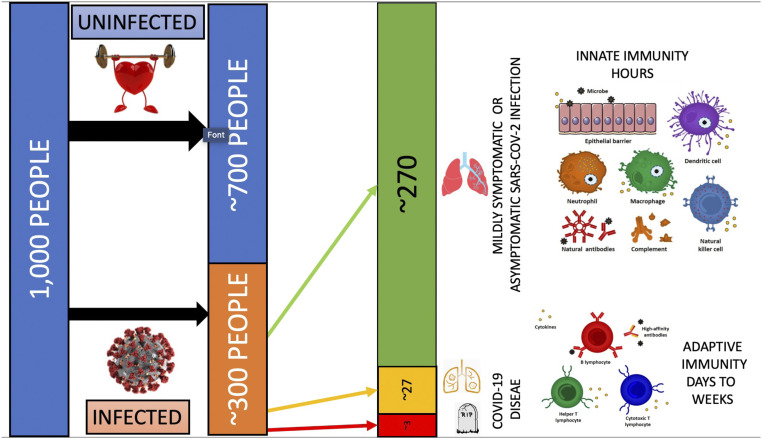
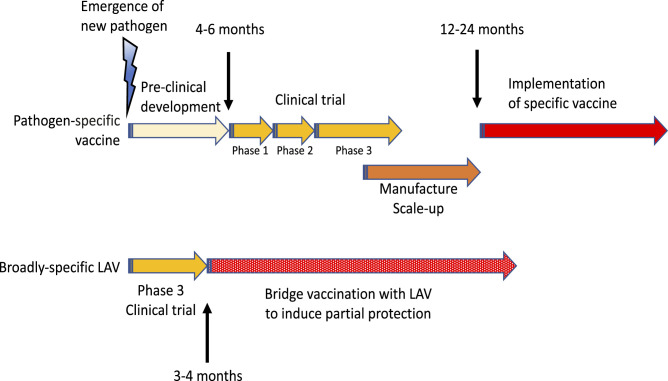
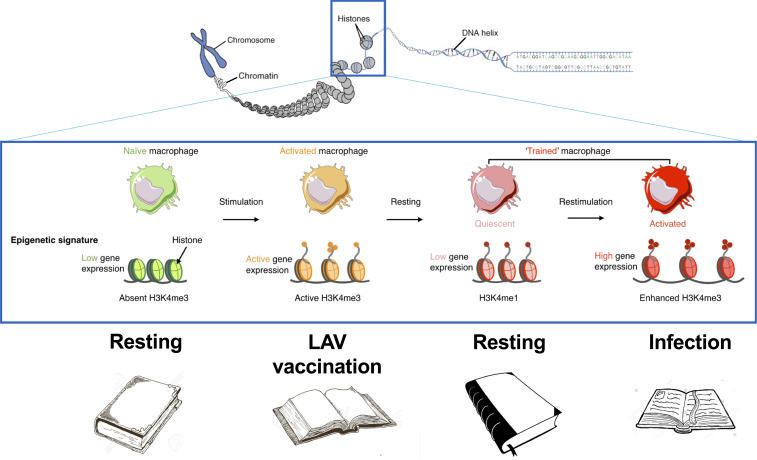
The COVID-19 pandemic triggered an unparalleled pursuit of vaccines to induce specific adaptive immunity, based on virus-neutralizing antibodies and T cell responses. Although several vaccines have been developed just a year after SARS-CoV-2 emerged in late 2019, global deployment will take months or even years. Meanwhile, the virus continues to take a severe toll on human life and exact substantial economic costs. Innate immunity is fundamental to mammalian host defense capacity to combat infections. Innate immune responses, triggered by a family of pattern recognition receptors, induce interferons and other cytokines and activate both myeloid and lymphoid immune cells to provide protection against a wide range of pathogens. Epidemiological and biological evidence suggests that the live-attenuated vaccines (LAV) targeting tuberculosis, measles, and polio induce protective innate immunity by a newly described form of immunological memory termed "trained immunity." An LAV designed to induce adaptive immunity targeting a particular pathogen may also induce innate immunity that mitigates other infectious diseases, including COVID-19, as well as future pandemic threats. Deployment of existing LAVs early in pandemics could complement the development of specific vaccines, bridging the protection gap until specific vaccines arrive. The broad protection induced by LAVs would not be compromised by potential antigenic drift (immune escape) that can render viruses resistant to specific vaccines. LAVs might offer an essential tool to "bend the pandemic curve," averting the exhaustion of public health resources and preventing needless deaths and may also have therapeutic benefits if used for postexposure prophylaxis of disease.
COVID-19 大流行引发了对疫苗的空前追求,旨在诱导针对病毒中和抗体和 T 细胞反应的特异性适应性免疫。尽管在 2019 年底 SARS-CoV-2 出现后的一年多时间里已经开发出了几种疫苗,但全球部署仍需要数月甚至数年的时间。与此同时,该病毒仍在严重威胁着人类生命并造成巨大的经济成本。先天免疫是哺乳动物宿主抵御感染的基本能力。先天免疫反应由一系列模式识别受体触发,诱导干扰素和其他细胞因子,并激活髓系和淋巴样免疫细胞,从而提供针对广泛病原体的保护。流行病学和生物学证据表明,针对结核病、麻疹和脊髓灰质炎的减毒活疫苗(LAV)通过一种新描述的称为“训练免疫”的免疫记忆形式诱导保护性先天免疫。旨在诱导针对特定病原体的适应性免疫的 LAV 也可能诱导先天免疫,从而减轻其他传染病(包括 COVID-19)以及未来的大流行威胁。在大流行早期部署现有的 LAV 可以补充特定疫苗的开发,在特定疫苗到来之前弥合保护差距。LAV 诱导的广泛保护不会受到潜在的抗原漂移(免疫逃逸)的影响,抗原漂移可能使病毒对特定疫苗产生抗性。LAV 可能是“弯曲大流行曲线”的重要工具,避免公共卫生资源的枯竭,并防止不必要的死亡,并且如果用于疾病的暴露后预防,也可能具有治疗益处。