Department of Neurology, Puren Hospital Affiliated to Wuhan University of Science and Technology, Wuhan, 430081, People's Republic of China.
Department of Pharmacy, General Hospital of Central Theater Command, Wuhan, 430010, People's Republic of China.
Int J Nanomedicine. 2021 May 10;16:3173-3183. doi: 10.2147/IJN.S300379. eCollection 2021.
Cerebral ischemic injury is one of the debilitating diseases showing that inflammation plays an important role in worsening ischemic damage. Therefore, studying the effects of some potential anti-inflammatory compounds can be very important in the treatment of cerebral ischemic injury.
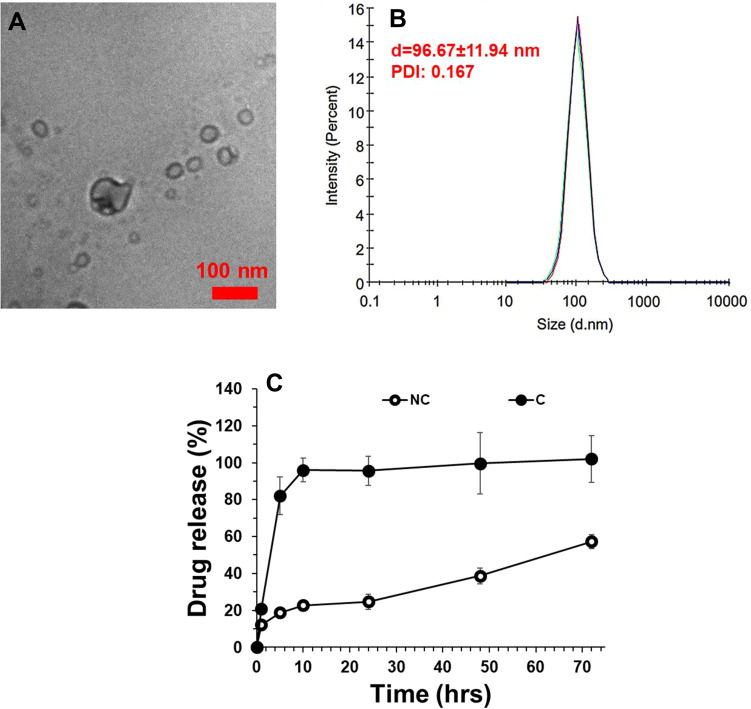
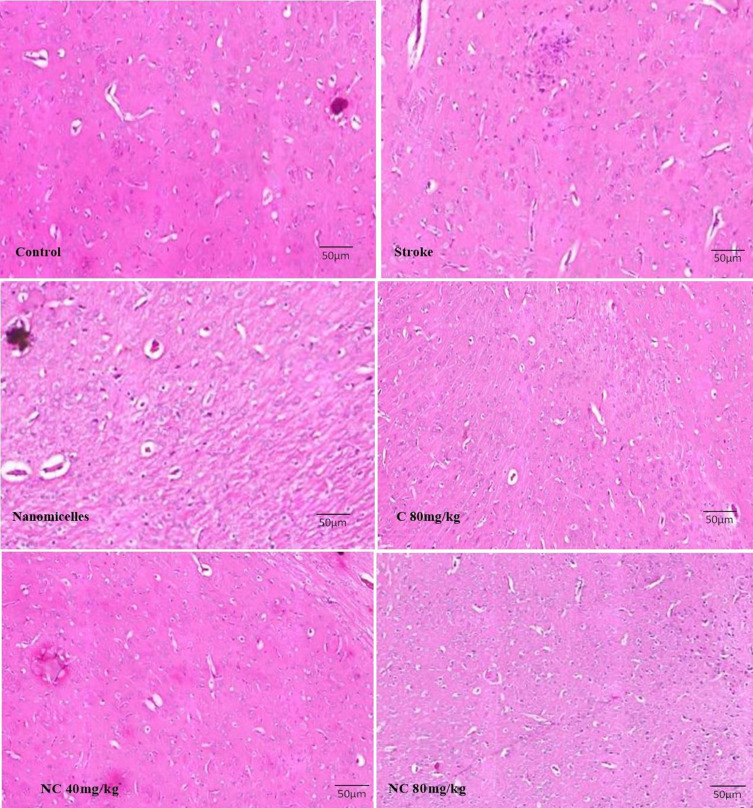
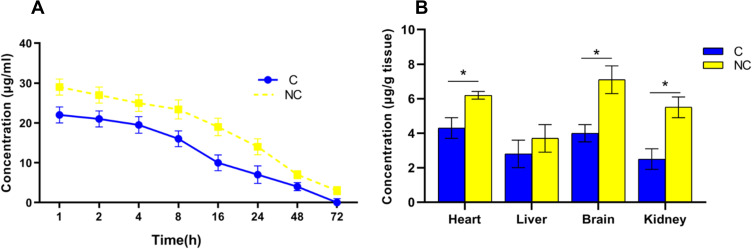
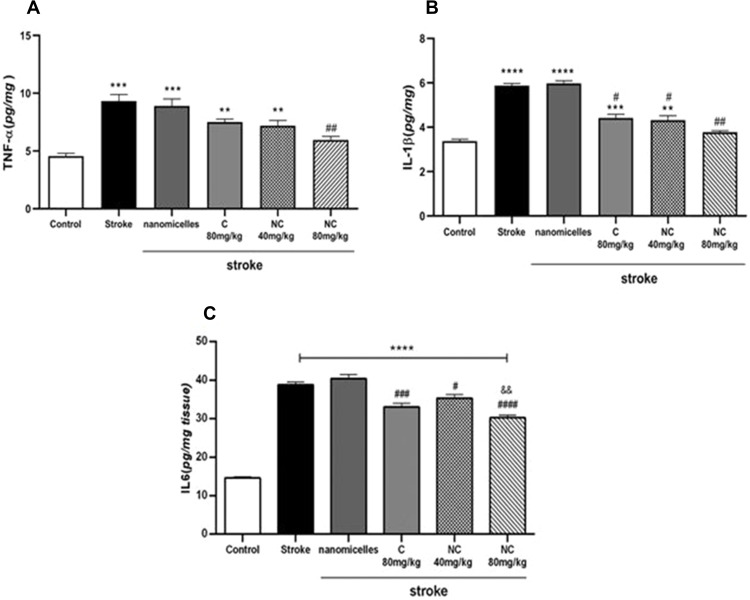
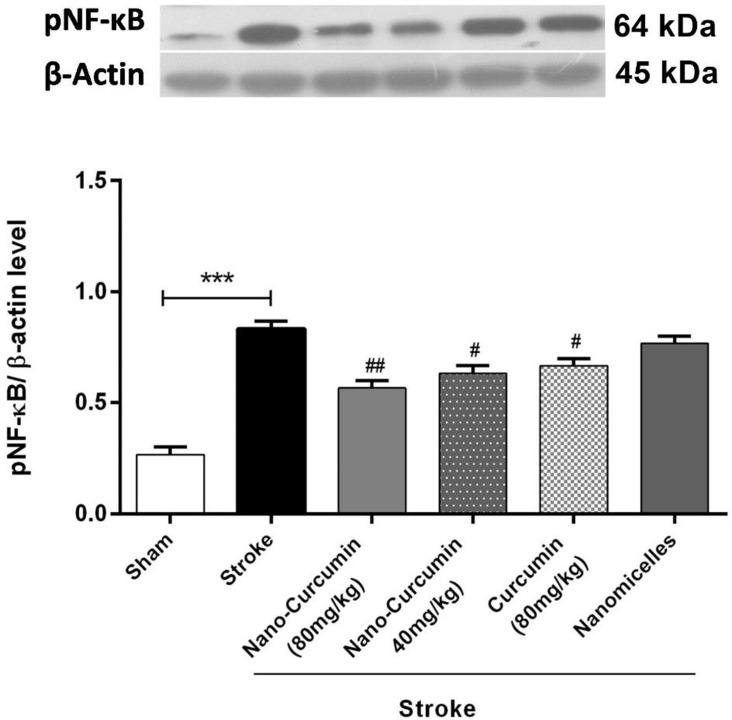
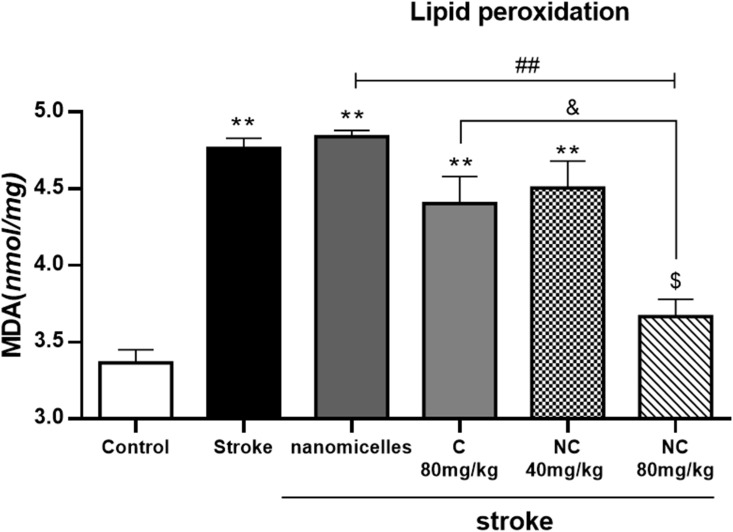
This study investigated anti-inflammatory effects of triblock copolymer nanomicelles loaded with curcumin (abbreviated as NC) in the brain of rats following transient cerebral ischemia/reperfusion (I/R) injury in stroke. After preparation of NC, their protective effects against bilateral common carotid artery occlusion (BCCAO) were explored by different techniques. Concentrations of free curcumin (C) and NC in liver, kidney, brain, and heart organs, as well as in plasma, were measured using a spectrofluorometer. Western blot analysis was then used to measure NF-κB-p65 protein expression levels. Also, ELISA assay was used to examine the level of cytokines IL-1β, IL-6, and TNF-α. Lipid peroxidation levels were assessed using MDA assay and H&E staining was used for histopathological examination of the hippocampus tissue sections.
The results showed a higher level of NC compared to C in plasma and organs including the brain, heart, and kidneys. Significant upregulation of NF-κB, IL-1β, IL-6, and TNF-α expressions compared to control was observed in rats after induction of I/R, which leads to an increase in inflammation. However, NC was able to downregulate significantly the level of these inflammatory cytokines compared to C. Also, the level of lipid peroxidation in pre-treated rats with 80mg/kg NC was significantly reduced.
Our findings in the current study demonstrate a therapeutic effect of NC in an animal model of cerebral ischemia/reperfusion (I/R) injury in stroke through the downregulation of NF-κB-p65 protein and inflammatory cytokines.
脑缺血损伤是一种使人虚弱的疾病,其表明炎症在加重缺血性损伤方面起着重要作用。因此,研究一些潜在的抗炎化合物的作用对于治疗脑缺血损伤可能非常重要。
本研究探讨了载姜黄素的三嵌段共聚物胶束(简称 NC)对脑缺血再灌注(I/R)损伤后大鼠脑内炎症的影响。在制备 NC 后,采用不同技术研究其对双侧颈总动脉闭塞(BCCAO)的保护作用。使用分光荧光计测量肝、肾、脑和心脏器官以及血浆中游离姜黄素(C)和 NC 的浓度。然后用 Western blot 分析测量 NF-κB-p65 蛋白表达水平。此外,还使用 ELISA 测定法测定细胞因子 IL-1β、IL-6 和 TNF-α的水平。使用 MDA 测定法评估脂质过氧化水平,并用 H&E 染色法对海马组织切片进行组织病理学检查。
结果表明,与 C 相比,NC 在血浆和包括脑、心脏和肾脏在内的器官中的水平更高。与对照组相比,I/R 诱导后的大鼠 NF-κB、IL-1β、IL-6 和 TNF-α的表达明显上调,导致炎症增加。然而,与 C 相比,NC 能够显著下调这些炎症细胞因子的水平。此外,用 80mg/kg NC 预处理的大鼠的脂质过氧化水平显著降低。
我们在当前的研究中发现,NC 对脑缺血再灌注(I/R)损伤的动物模型具有治疗作用,通过下调 NF-κB-p65 蛋白和炎症细胞因子。