Department of Pharmacology, Division of Clinical Pharmacology, and Vanderbilt Institute of Chemical Biology, Vanderbilt University Medical School, Nashville, TN, 37232, USA.
Department of Nutritional Sciences, University of Arizona, Tucson, AZ, 85719, USA.
Mol Nutr Food Res. 2020 Mar;64(6):e1901037. doi: 10.1002/mnfr.201901037. Epub 2020 Jan 29.
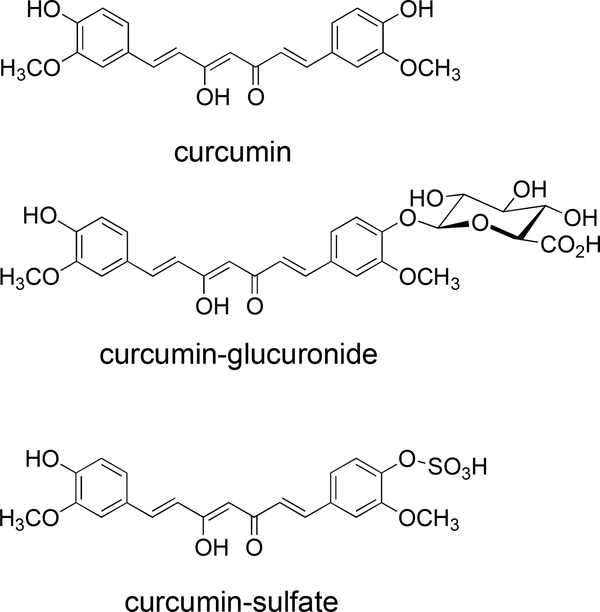
The diphenol curcumin from turmeric is rapidly metabolized into phase II conjugates following oral administration, resulting in negligible plasma concentration of the free compound, which is considered the bioactive form. Total plasma concentration of curcumin is often quantified after treatment with β-glucuronidase to hydrolyze curcumin-glucuronide, the most abundant conjugate in vivo. The efficiency of enzymatic hydrolysis has not been tested.
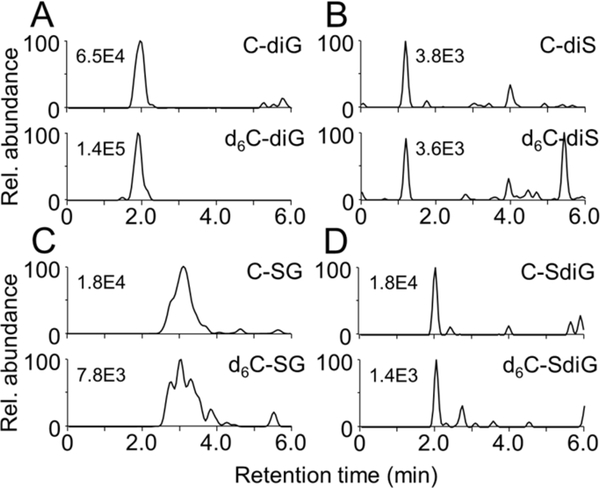
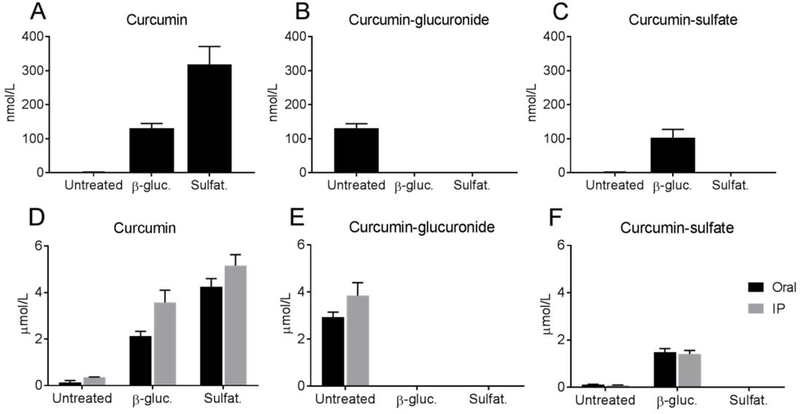
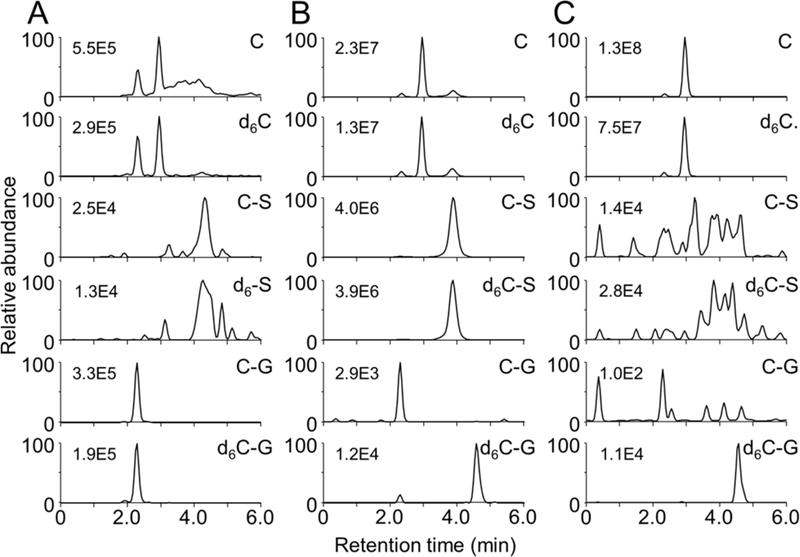
Using liquid chromatography-mass spectrometry (LC-MS) analyses the efficiency of β-glucuronidase and sulfatase from Helix pomatia is compared to hydrolyze curcumin conjugates in human and mouse plasma after oral administration of turmeric. Both β-glucuronidase and sulfatase completely hydrolyze curcumin-glucuronide. Unexpectedly, β-glucuronidase hydrolysis is incomplete, affording a large amount of curcumin-sulfate, whereas sulfatase hydrolyzed both glucuronide and sulfate conjugates. With sulfatase, the concentration of free curcumin is doubled in human and increased in mouse plasma compared to β-glucuronidase treatment. Incomplete hydrolysis by β-glucuronidase suggests the presence of mixed glucuronide-sulfate conjugates. LC-MS based searches detect diglucuronide, disulfate, and mixed sulfate-glucuronide and sulfate-diglucuronide conjugates in plasma that likely contribute to the increase of free curcumin upon sulfatase treatment.
β-Glucuronidase incompletely hydrolyzes complex sulfate-containing conjugates that appear to be major metabolites, resulting in an underestimation of the total plasma concentration of curcumin.
姜黄中的二酚姜黄素经口服给药后迅速代谢为 II 相共轭物,导致游离化合物(被认为是生物活性形式)的血浆浓度可忽略不计。姜黄素的总血浆浓度通常在用β-葡萄糖醛酸酶处理后进行量化,以水解体内最丰富的共轭物姜黄素葡萄糖醛酸苷。尚未测试酶水解的效率。
使用液相色谱-质谱(LC-MS)分析,比较了从 Helix pomatia 中提取的β-葡萄糖醛酸酶和磺基转移酶对口服姜黄后人体和小鼠血浆中姜黄素共轭物的水解效率。β-葡萄糖醛酸酶和磺基转移酶均可完全水解姜黄素葡萄糖醛酸苷。出乎意料的是,β-葡萄糖醛酸酶水解不完全,产生大量的姜黄素硫酸盐,而磺基转移酶则水解葡萄糖醛酸苷和硫酸盐共轭物。与β-葡萄糖醛酸酶处理相比,磺基转移酶使人体中游离姜黄素的浓度增加一倍,并增加了小鼠血浆中的浓度。β-葡萄糖醛酸酶水解不完全表明存在混合葡萄糖醛酸硫酸盐共轭物。基于 LC-MS 的搜索检测到二葡萄糖醛酸、二硫酸盐、混合硫酸盐葡萄糖醛酸和硫酸盐二葡萄糖醛酸共轭物在血浆中,这可能导致磺基转移酶处理后游离姜黄素增加。
β-葡萄糖醛酸酶不完全水解复杂的含硫酸盐共轭物,这些共轭物似乎是主要代谢物,导致对姜黄素总血浆浓度的低估。