Department of Biotechnology and Laboratory Science in Medicine, National Yang-Ming University, Taipei, 11221, Taiwan.
Department of Earth and Life Sciences, University of Taipei, Taipei, 11153, Taiwan.
BMC Complement Med Ther. 2020 Mar 3;20(1):68. doi: 10.1186/s12906-020-2857-1.
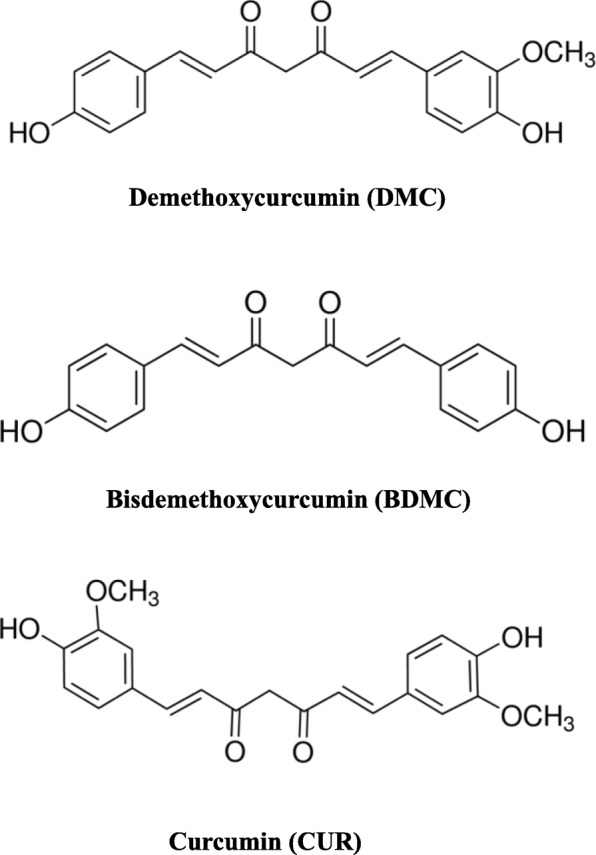
Osteosarcoma is the most common primary malignant bone tumor in children and adolescents and has also been associated with a high degree of malignancy and enhanced metastatic capacity. Curcumin (CUR) is well known for its anti-osteosarcoma activity. However, both demethoxycurcumin (DMC), and bisdemethoxycurcumin (BDMC) are natural curcumin analogues/congeners from turmeric whose role in osteosarcoma development remains unknown.
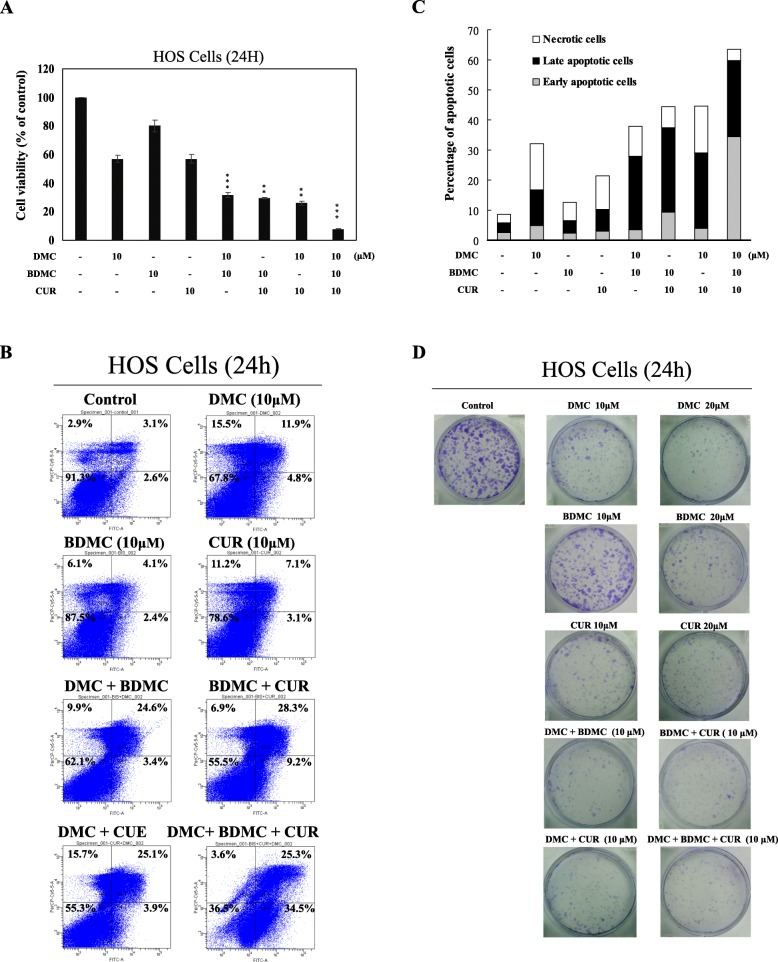
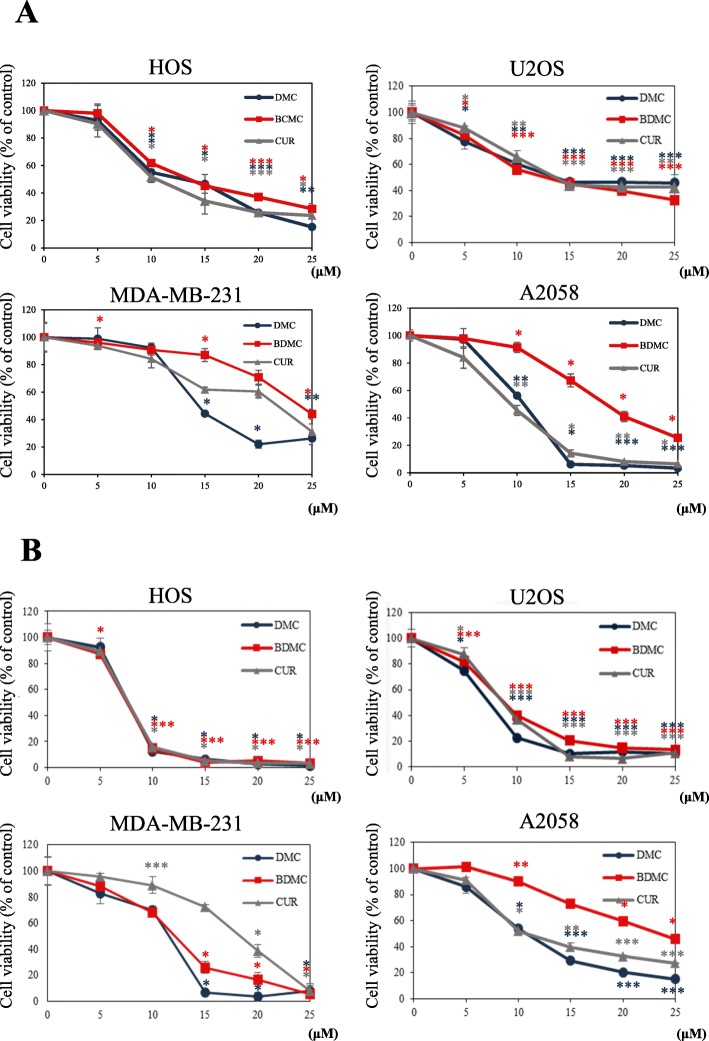
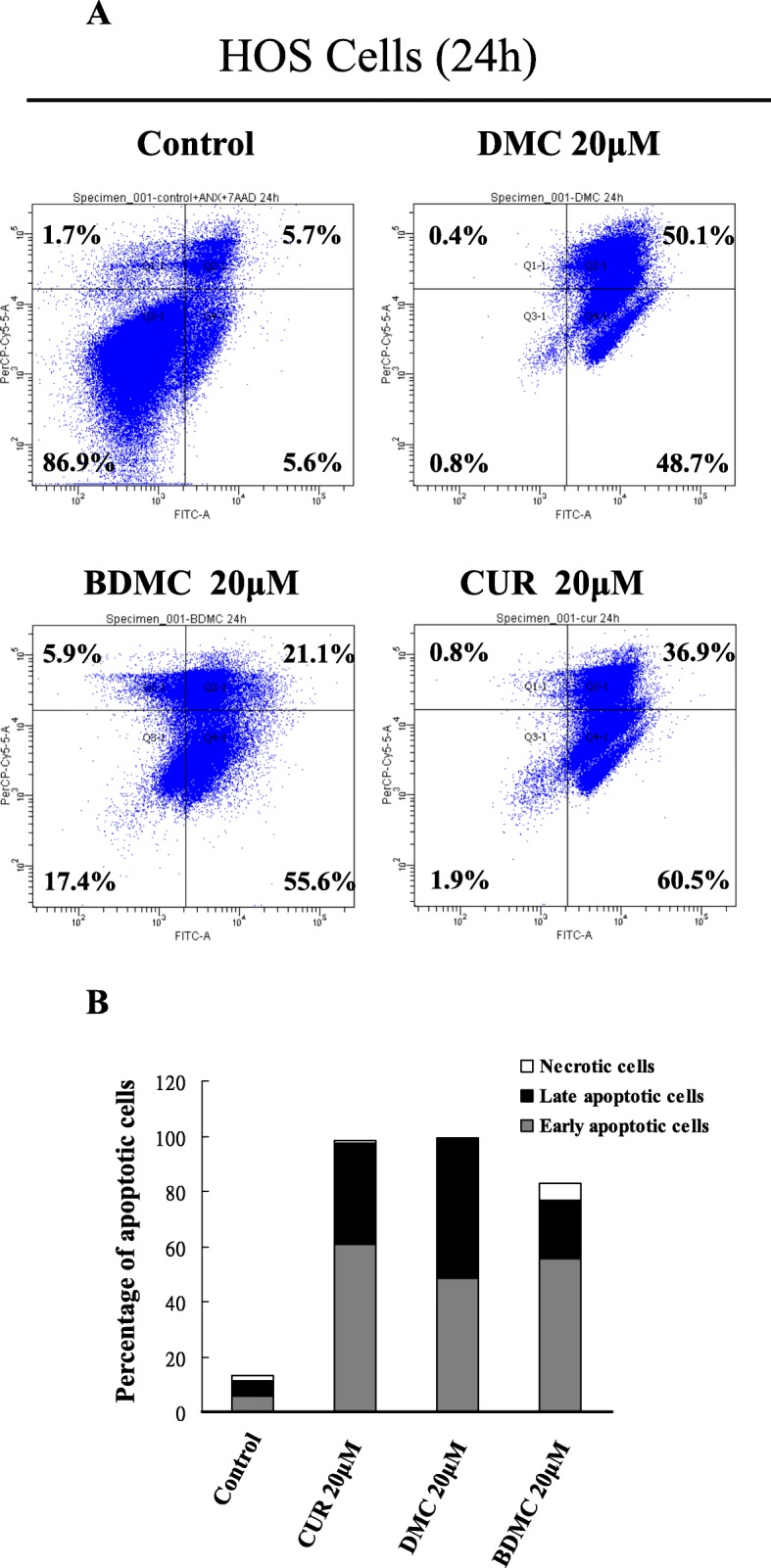
To evaluate the growth inhibitory effects of CUR, DMC and BDMC on osteosarcoma (HOS and U2OS), breast (MDA-MB-231), and melanoma (A2058) cancer cells, we employed the MTT assay, annexin V-FITC /7-AAD staining, and clonogenic assay.
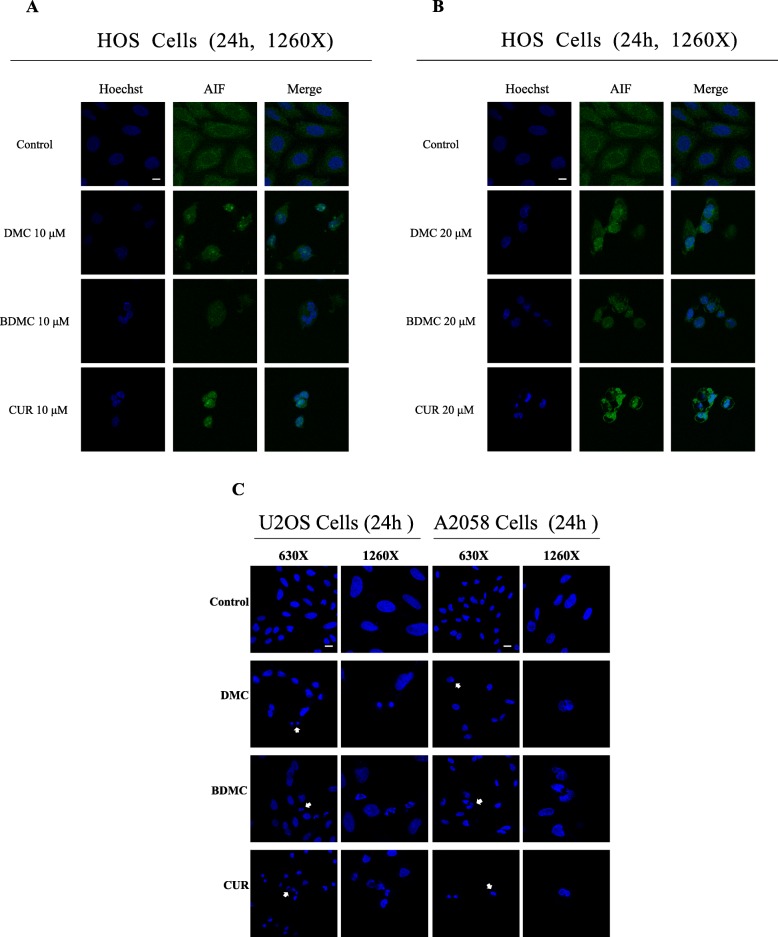
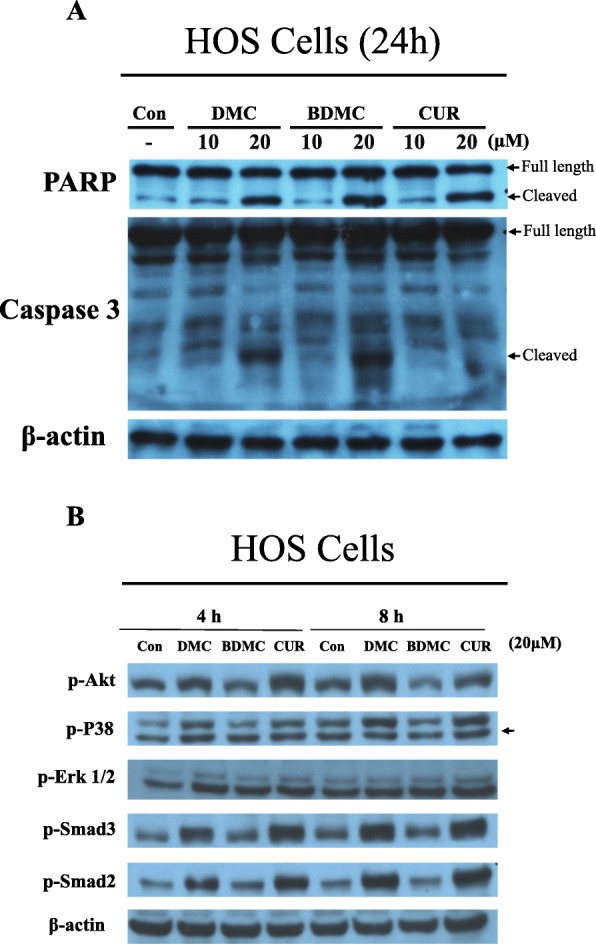
CUR,DMC, and BDMC all decreased the viability of HOS, U2OS, MDA-MB-231, and A2058 cancer cells. Additionally, CUR,DMC, and BDMC induced the apoptosis of HOS cells through activation of Smad 2/3 or repression of Akt signaling pathway. Furthermore, the combination of CUR,DMC, and BDMC synergistically reduced cell viability, colony formation and increased apoptosis than either two or a single agent in HOS cells.
The combination of these three compounds could be used as a novel target for the treatment of osteosarcoma.
骨肉瘤是儿童和青少年中最常见的原发性恶性骨肿瘤,也具有高度恶性和增强的转移能力。姜黄素(CUR)以其抗骨肉瘤活性而闻名。然而,脱甲氧基姜黄素(DMC)和双脱甲氧基姜黄素(BDMC)都是来自姜黄的天然姜黄素类似物/同系物,其在骨肉瘤发展中的作用尚不清楚。
为了评估 CUR、DMC 和 BDMC 对骨肉瘤(HOS 和 U2OS)、乳腺癌(MDA-MB-231)和黑色素瘤(A2058)癌细胞生长抑制作用,我们采用 MTT 法、Annexin V-FITC/7-AAD 染色和集落形成实验。
CUR、DMC 和 BDMC 均降低了 HOS、U2OS、MDA-MB-231 和 A2058 癌细胞的活力。此外,CUR、DMC 和 BDMC 通过激活 Smad 2/3 或抑制 Akt 信号通路诱导 HOS 细胞凋亡。此外,CUR、DMC 和 BDMC 的组合比 HOS 细胞中的任何两种或一种药物更能协同降低细胞活力、集落形成并增加细胞凋亡。
这三种化合物的组合可作为骨肉瘤治疗的新靶点。