Usman Abdilbar, Mohammed Said, Mamo Jermen
Department of Biology, College of Natural and Computational Science, Debre Berhan University, Debre Berhan, Ethiopia.
Int J Microbiol. 2021 Apr 29;2021:6685963. doi: 10.1155/2021/6685963. eCollection 2021.
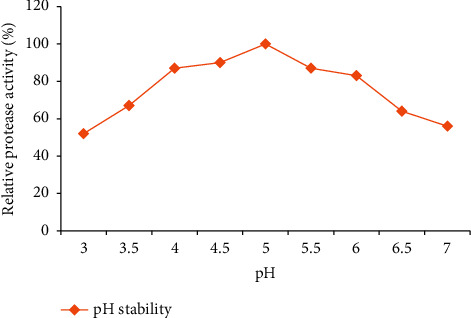
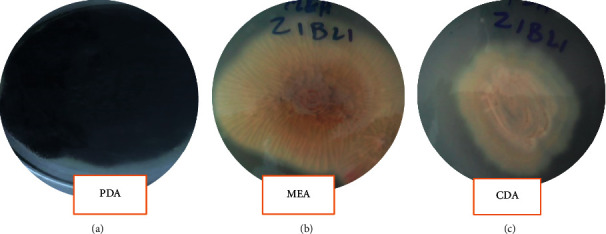
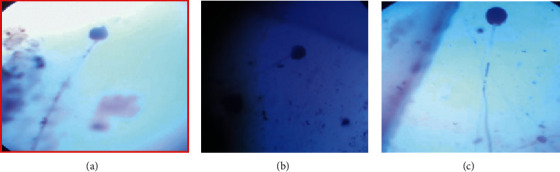
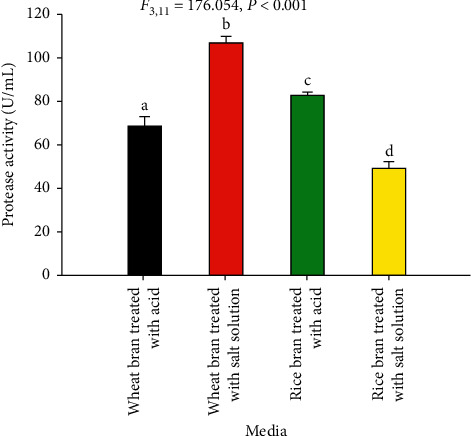
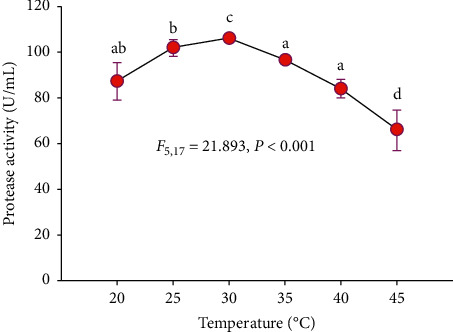
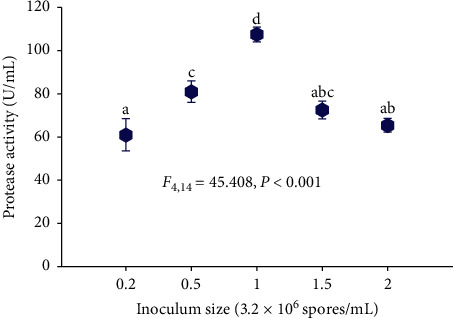
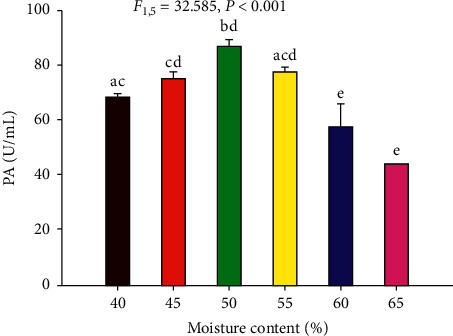
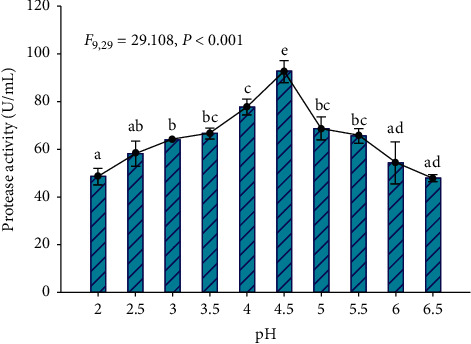
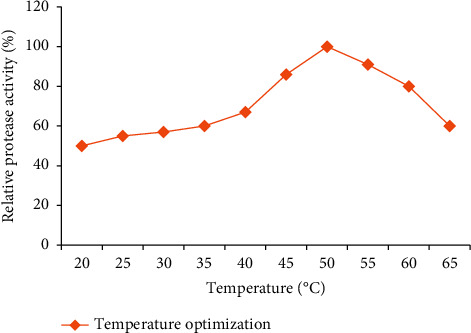
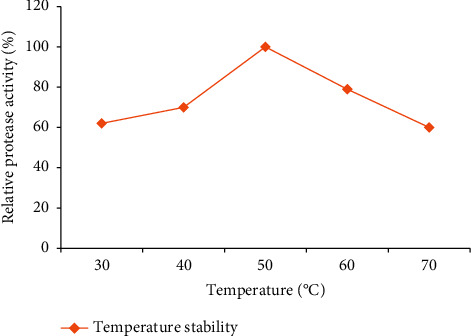
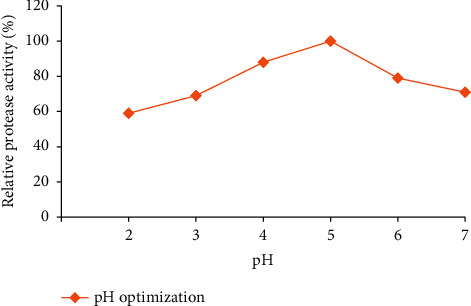
Acid proteases represent an important group of enzymes, extensively used in food and beverage industries. There is an increased demand for acid proteases adapting to the industrial extreme environment, especially lower pH. Thus, this necessitates the search for a better acid protease from fungi that best performs in industrial conditions. The fungal isolates were isolated from grape and dairy farm soil using potato dextrose agar and further screened for protease production based on the hydrolysis of clear zone on skim milk agar. The potential fungi were then subjected to secondary screening under solid-state fermentation (SSF). After the secondary screening, the potential fungus was identified to the genus level by the macroscopic and microscopic methods. The growth conditions and media composition for the potential fungus were further optimized under SSF. The crude enzyme produced by the potential isolate was characterized after partial purification by acetone and ammonium sulfate precipitation. A total of 9 fungal isolates showed protease production in primary and secondary screening; however, one potential isolate (Z1BL1) was selected for further study based on its protease activity. The isolate was identified to the genus based on their morphological features. The maximum acid protease from the isolate Z1BL1 was obtained using fermentation media containing wheat bran as a solid substrate, 1 mL of 3.2 10 inoculum size, 50% moisture content, and pH 4.5 upon 120-h incubation at 30°C. The acetone-precipitated enzyme exhibited the maximum activity at 50°C and pH 5 with stability at pH 4-6 and temperature 40-60°C. Thus, the acid protease produced from showed suitable enzyme characteristics required in the industry and could be a candidate for application in the food industry after further purification.
酸性蛋白酶是一类重要的酶,广泛应用于食品和饮料行业。对适应工业极端环境(尤其是较低pH值)的酸性蛋白酶的需求不断增加。因此,有必要从真菌中寻找一种在工业条件下表现最佳的优质酸性蛋白酶。使用马铃薯葡萄糖琼脂从葡萄和奶牛场土壤中分离真菌菌株,并基于脱脂乳琼脂上透明圈的水解情况进一步筛选蛋白酶的产生。然后将潜在真菌在固态发酵(SSF)条件下进行二次筛选。二次筛选后,通过宏观和微观方法将潜在真菌鉴定到属水平。在SSF条件下进一步优化潜在真菌的生长条件和培养基组成。通过丙酮和硫酸铵沉淀进行部分纯化后,对潜在分离株产生的粗酶进行表征。共有9株真菌菌株在初次和二次筛选中显示出蛋白酶产生;然而,基于其蛋白酶活性选择了一株潜在分离株(Z1BL1)进行进一步研究。根据其形态特征将该分离株鉴定到属。使用以麦麸为固体底物的发酵培养基、1 mL 3.2×10的接种量、50%的水分含量以及在30°C下培养120小时时pH为4.5的条件,从分离株Z1BL1中获得了最大量的酸性蛋白酶。丙酮沉淀的酶在50°C和pH 5时表现出最大活性,在pH 4 - 6和温度40 - 60°C下具有稳定性。因此,从……产生的酸性蛋白酶具有工业所需的合适酶特性,经过进一步纯化后可能成为食品工业应用的候选酶。 (注:原文中“1 mL of 3.2 10 inoculum size”表述似乎有误,可能影响准确理解,但按要求未做修改翻译。)