Piao Yihua, Jiang Jingzhi, Wang Zhiguang, Wang Chongyang, Jin Shan, Li Li, Li Liangchang, Piao Hongmei, Jin Zhehu, Zhu Lianhua, Yan Guanghai
Jilin Key Laboratory for Immune and Targeting Research on Common Allergic Diseases, Yanbian University, Yanji 133000, China.
Department of Intensive Care Unit, Affiliated Hospital of Yanbian University, Yanji, 133000, Jilin, China.
Evid Based Complement Alternat Med. 2021 Apr 30;2021:6644751. doi: 10.1155/2021/6644751. eCollection 2021.
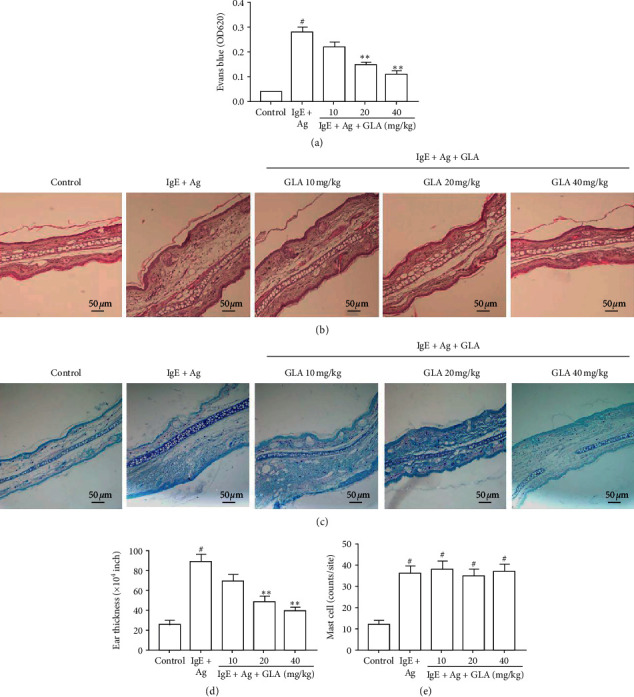
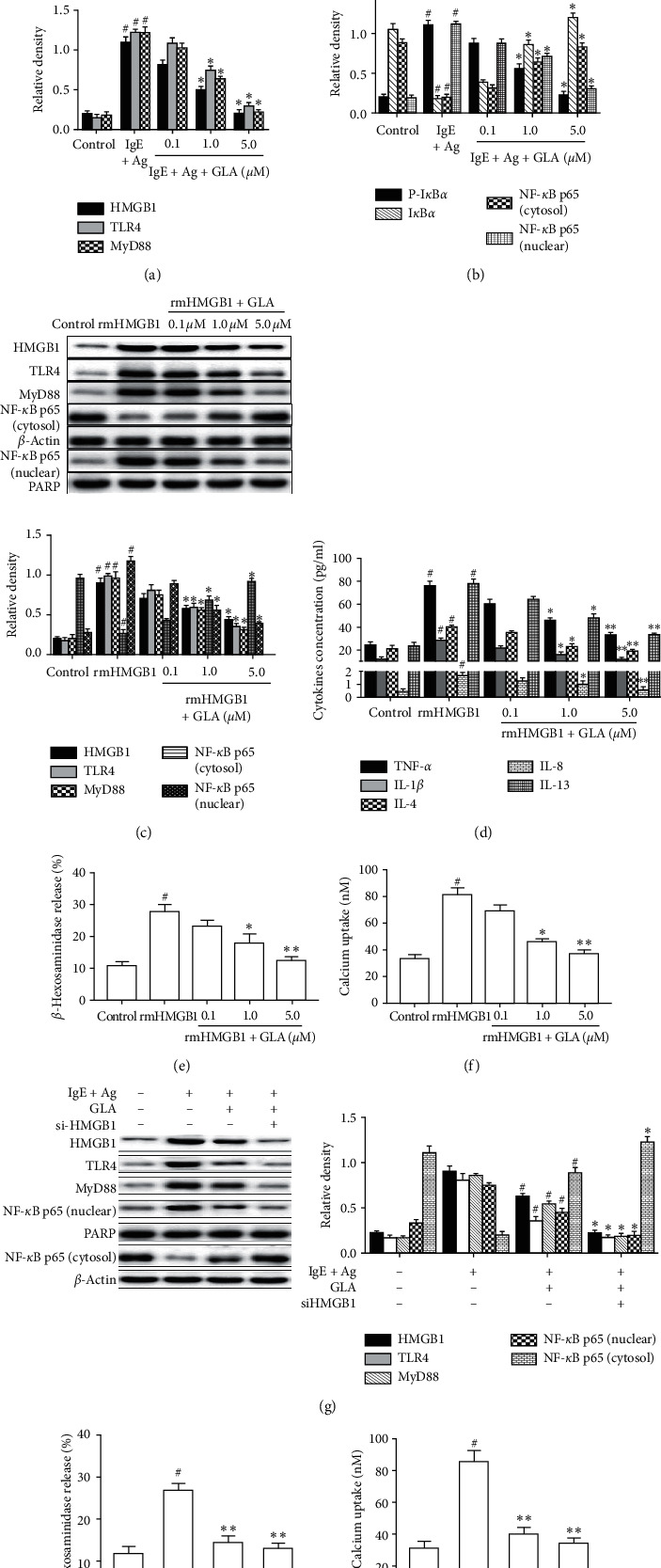
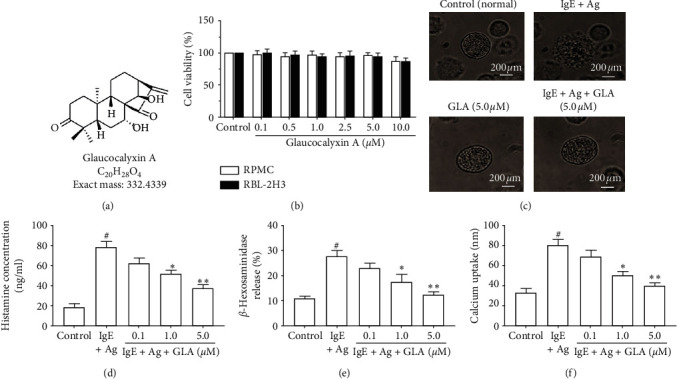
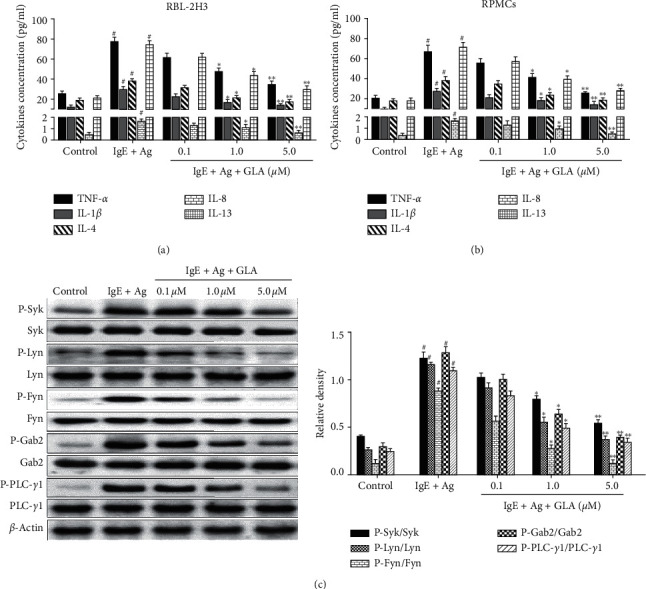
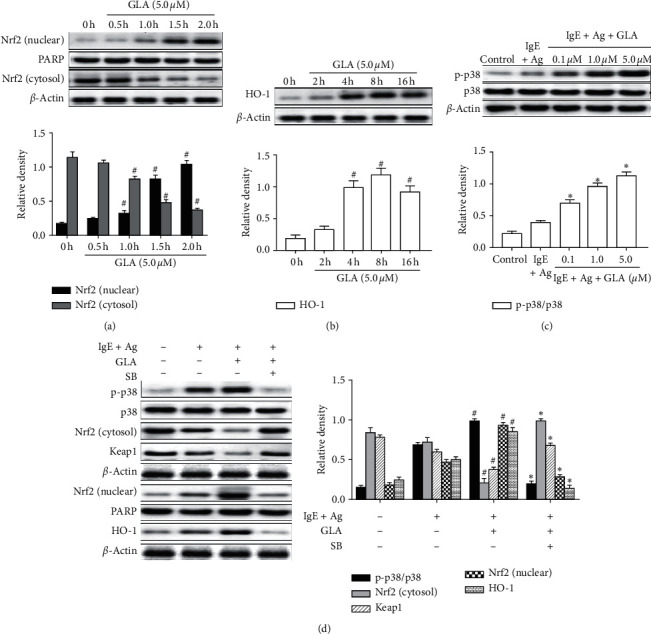
Glaucocalyxin A (GLA) has various pharmacological effects like antioxidation, immune regulation, and antiatherosclerosis. Here, in this study, the effect and mechanism of GLA on mast cell degranulation were studied. The results of the anti-DNP IgE-mediated passive cutaneous anaphylaxis (PCA) showed that GLA dramatically inhibited PCA in vivo, as evidenced by reduced Evans blue extravasation and decreased ear thickness. In addition, GLA significantly reduced the release of histamine and -hexosaminidase, calcium influx, cytokine (IL-4, TNF-, IL-1, IL-13, and IL-8) production in the RBL-2H3 (rat basophilic leukemia cells), and RPMCs (peritoneal mast cells) in vitro. Moreover, we further investigated the regulatory mechanism of GLA on antigen-induced mast cells by Western blot, which showed that GLA inhibited FcRI-mediated signal transduction and invalidated the phosphorylation of Syk, Fyn, Lyn, Gab2, and PLC-1. In addition, GLA inhibited the recombinant mouse high mobility group protein B1- (HMGB1-) induced mast cell degranulation through limiting nuclear translocation of NF-Bp65. Treatment of mast cells with siRNA-HMGB1 significantly inhibited HMGB1 levels, as well as MyD88 and TLR4, decreased intracellular calcium levels, and suppressed the release of -hexosaminidase. Meanwhile, GLA increased NrF2 and HO-1 levels by activating p38MAPK phosphorylation. Consequently, these data suggest that GLA regulates the NrF2/HO-1 signaling pathway through p38MAPK phosphorylation and inhibits HMGB1/TLR4/NF-B signaling pathway to reduce mast cell degranulation and allergic inflammation. Our findings could be used as a promising therapeutic drug against allergic inflammatory disease.
蓝萼甲素(GLA)具有多种药理作用,如抗氧化、免疫调节和抗动脉粥样硬化。在本研究中,我们对GLA对肥大细胞脱颗粒的作用及机制进行了研究。抗二硝基苯酚IgE介导的被动皮肤过敏反应(PCA)结果显示,GLA在体内显著抑制PCA,伊文思蓝外渗减少和耳厚度降低证明了这一点。此外,GLA在体外显著降低了RBL-2H3(大鼠嗜碱性白血病细胞)和RPMCs(腹腔肥大细胞)中组胺和β-己糖胺酶的释放、钙内流、细胞因子(IL-4、TNF-α、IL-1、IL-13和IL-8)的产生。此外,我们通过蛋白质印迹进一步研究了GLA对抗原诱导的肥大细胞的调节机制,结果表明GLA抑制FcRI介导的信号转导,并使Syk、Fyn、Lyn、Gab2和PLC-γ1的磷酸化无效。此外,GLA通过限制NF-κBp65的核转位抑制重组小鼠高迁移率族蛋白B1-(HMGB1-)诱导的肥大细胞脱颗粒。用siRNA-HMGB1处理肥大细胞可显著抑制HMGB1水平以及MyD88和TLR4,降低细胞内钙水平,并抑制β-己糖胺酶的释放。同时,GLA通过激活p38MAPK磷酸化增加NrF2和HO-1水平。因此,这些数据表明GLA通过p38MAPK磷酸化调节NrF2/HO-1信号通路,并抑制HMGB1/TLR4/NF-κB信号通路以减少肥大细胞脱颗粒和过敏性炎症。我们的研究结果可作为一种有前景的治疗过敏性炎症疾病的药物。