Integrative and Functional Biology Unit, CSIR-Institute of Genomics and Integrative Biology, New Delhi 110025, India; Academy of Scientific and Innovative Research (AcSIR), Ghaziabad 201002, India; CSIR-Institute of Genomics and Integrative Biology, New Delhi 110025, India.
Department of Microbiology, Oslo University Hospital, Oslo, Norway; Institute of Basic Medical Sciences, University of Oslo, Oslo, Norway.
Cell Rep. 2021 May 18;35(7):109154. doi: 10.1016/j.celrep.2021.109154.
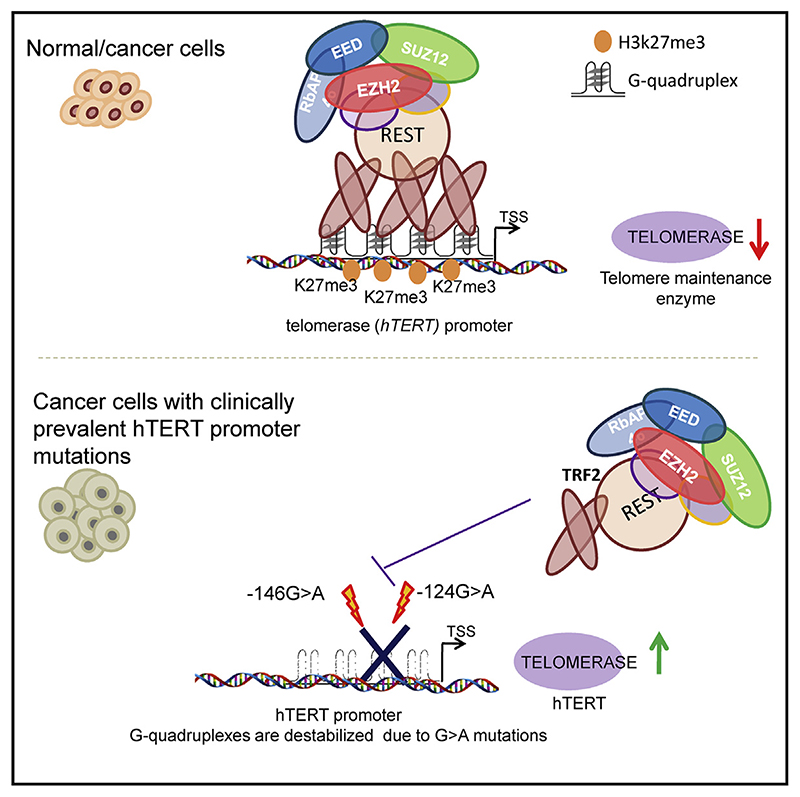
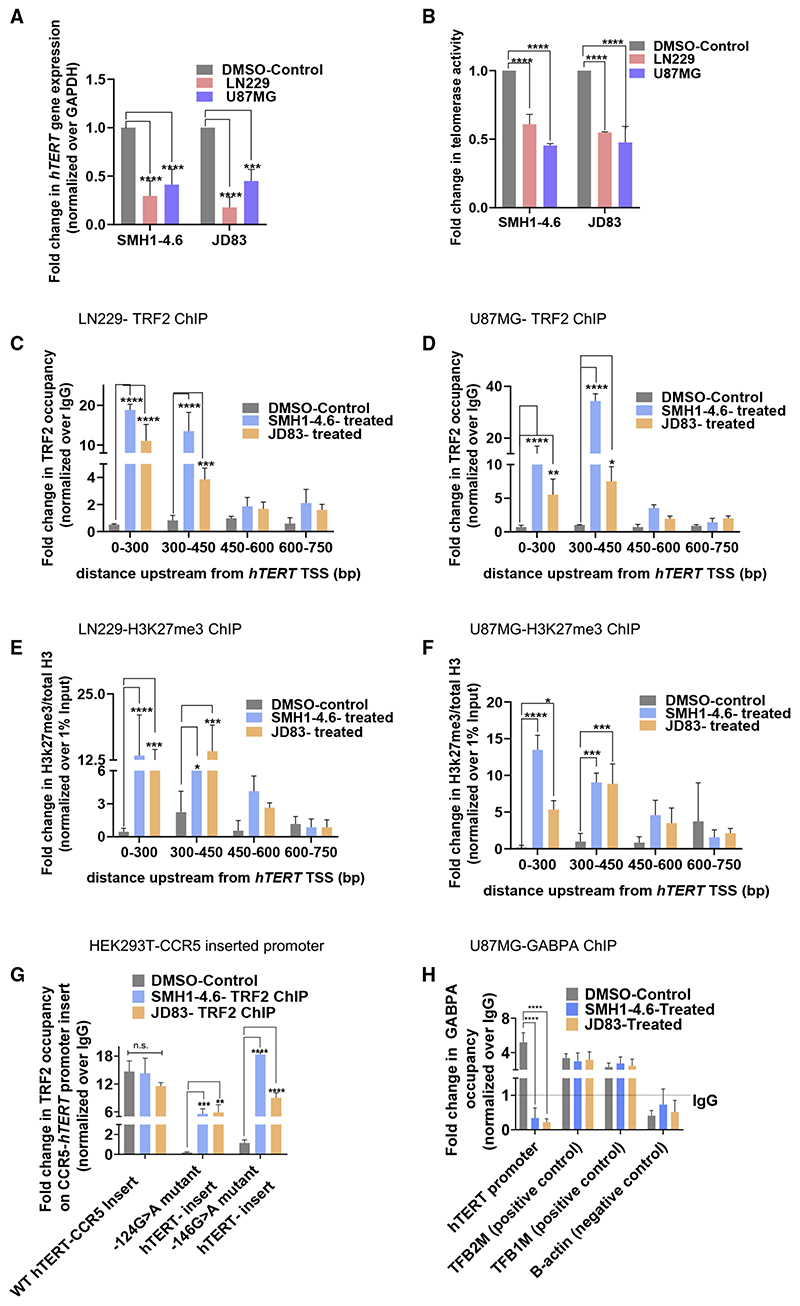
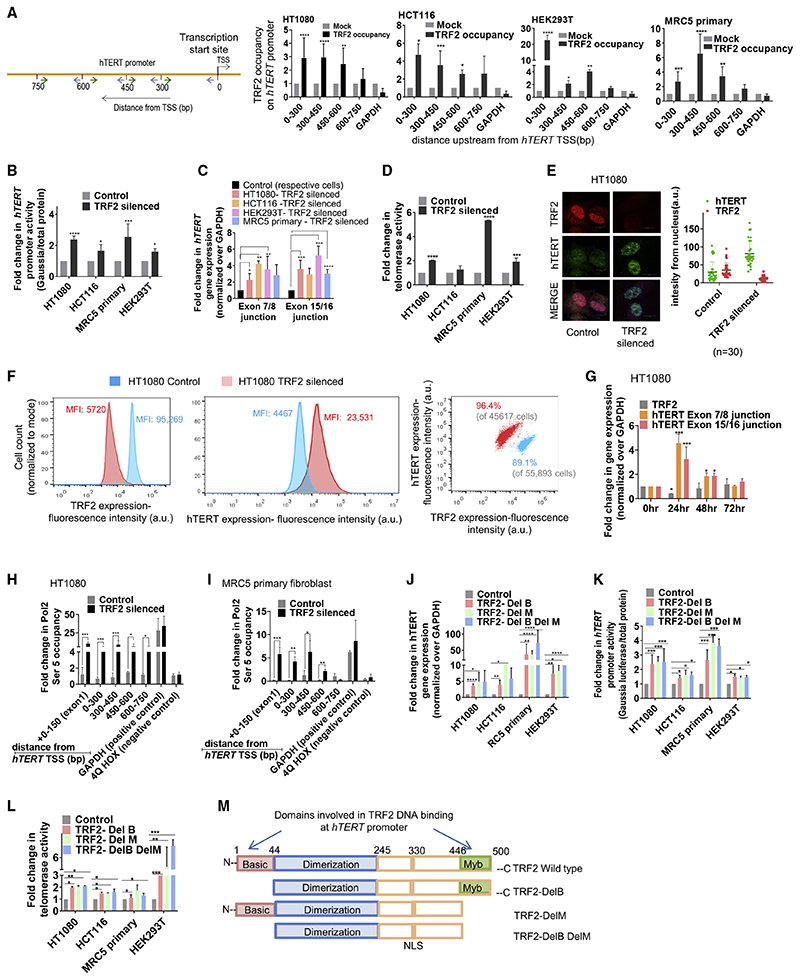
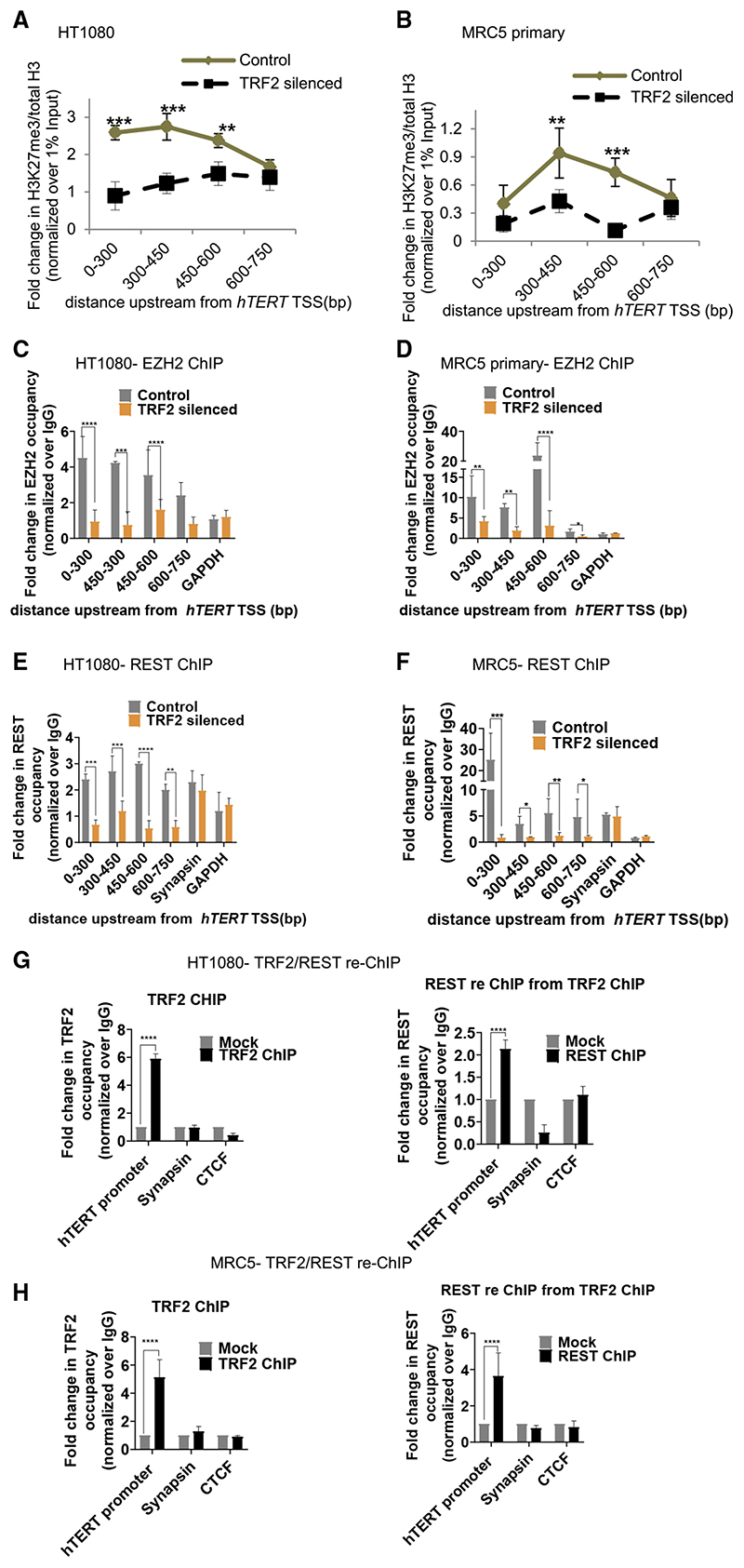
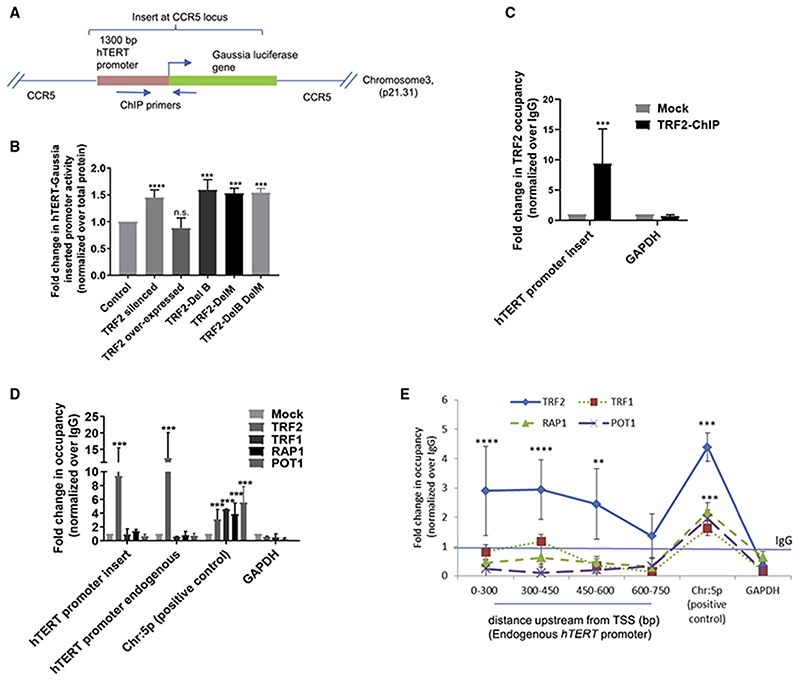
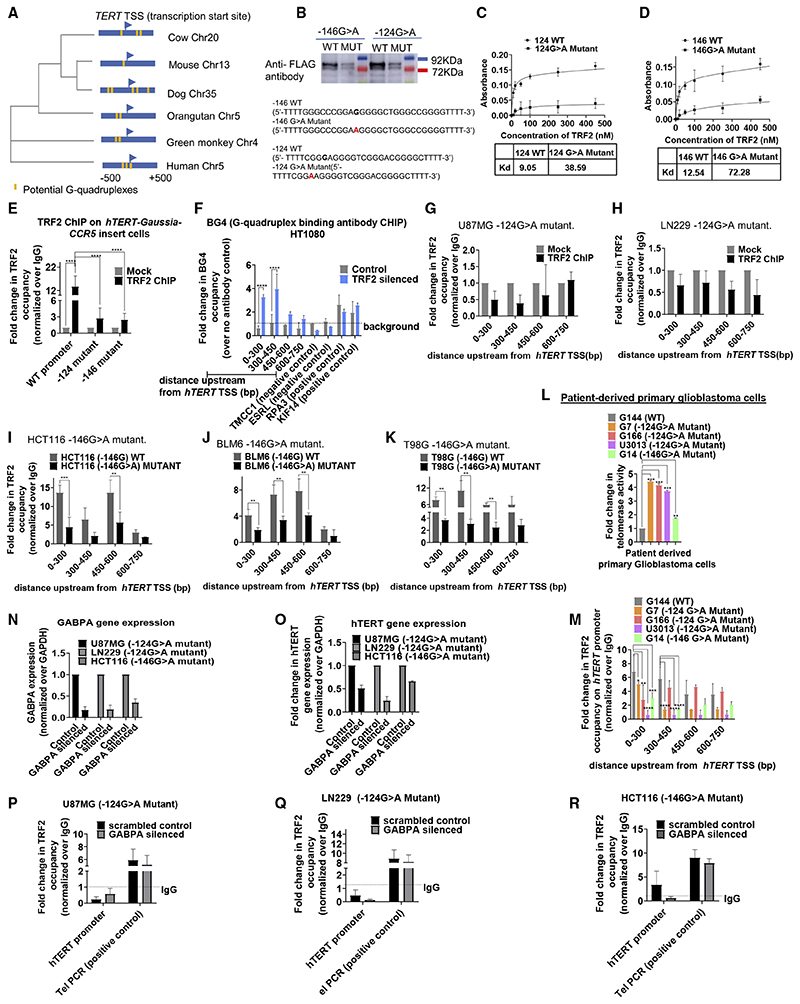
Human telomerase reverse transcriptase (hTERT) remains suppressed in most normal somatic cells. Resulting erosion of telomeres leads eventually to replicative senescence. Reactivation of hTERT maintains telomeres and triggers progression of >90% of cancers. However, any direct causal link between telomeres and telomerase regulation remains unclear. Here, we show that the telomere-repeat-binding-factor 2 (TRF2) binds hTERT promoter G-quadruplexes and recruits the polycomb-repressor EZH2/PRC2 complex. This is causal for H3K27 trimethylation at the hTERT promoter and represses hTERT in cancer as well as normal cells. Two highly recurrent hTERT promoter mutations found in many cancers, including ∼83% glioblastoma multiforme, that are known to destabilize hTERT promoter G-quadruplexes, showed loss of TRF2 binding in patient-derived primary glioblastoma multiforme cells. Ligand-induced G-quadruplex stabilization restored TRF2 binding, H3K27-trimethylation, and hTERT re-suppression. These results uncover a mechanism of hTERT regulation through a telomeric factor, implicating telomere-telomerase molecular links important in neoplastic transformation, aging, and regenerative therapy.
人端粒酶逆转录酶 (hTERT) 在大多数正常体细胞中仍受到抑制。由此导致的端粒侵蚀最终导致复制性衰老。hTERT 的重新激活维持端粒并引发超过 90%的癌症进展。然而,端粒和端粒酶调节之间的任何直接因果关系仍然不清楚。在这里,我们表明端粒重复结合因子 2 (TRF2) 结合 hTERT 启动子 G-四联体并招募多梳抑制因子 EZH2/PRC2 复合物。这是 hTERT 启动子处 H3K27 三甲基化的因果关系,并在癌症以及正常细胞中抑制 hTERT。在许多癌症中发现的两种高度复发的 hTERT 启动子突变,包括 83%左右的多形性胶质母细胞瘤,已知会破坏 hTERT 启动子 G-四联体,在患者来源的原发性多形性胶质母细胞瘤细胞中显示出 TRF2 结合的丧失。配体诱导的 G-四联体稳定化恢复了 TRF2 结合、H3K27 三甲基化和 hTERT 再抑制。这些结果揭示了一种通过端粒因子调节 hTERT 的机制,暗示端粒-端粒酶分子联系在肿瘤转化、衰老和再生治疗中很重要。