• 文献检索
  • 文档翻译
  • 深度研究
  • 学术资讯
  • Suppr Zotero 插件Zotero 插件
  • 邀请有礼
  • 套餐&价格
  • 历史记录
应用&插件
Suppr Zotero 插件Zotero 插件浏览器插件Mac 客户端Windows 客户端微信小程序
定价
高级版会员购买积分包购买API积分包
服务
文献检索文档翻译深度研究API 文档MCP 服务
关于我们
关于 Suppr公司介绍联系我们用户协议隐私条款
关注我们

Suppr 超能文献

核心技术专利:CN118964589B侵权必究
粤ICP备2023148730 号-1Suppr @ 2026

文献检索

告别复杂PubMed语法,用中文像聊天一样搜索,搜遍4000万医学文献。AI智能推荐,让科研检索更轻松。

立即免费搜索

文件翻译

保留排版,准确专业,支持PDF/Word/PPT等文件格式,支持 12+语言互译。

免费翻译文档

深度研究

AI帮你快速写综述,25分钟生成高质量综述,智能提取关键信息,辅助科研写作。

立即免费体验

曲面透明物体的颜色外观。

The color appearance of curved transparent objects.

机构信息

Justus-Liebig-Universitaet Giessen, Department of General Psychology, Giessen, Germany.

National Magnetic Resonance Research Center, Bilkent University, Ankara, Turkey.

出版信息

J Vis. 2021 May 3;21(5):20. doi: 10.1167/jov.21.5.20.

DOI:10.1167/jov.21.5.20
PMID:34010954
原文链接:https://pmc.ncbi.nlm.nih.gov/articles/PMC8142700/
Abstract

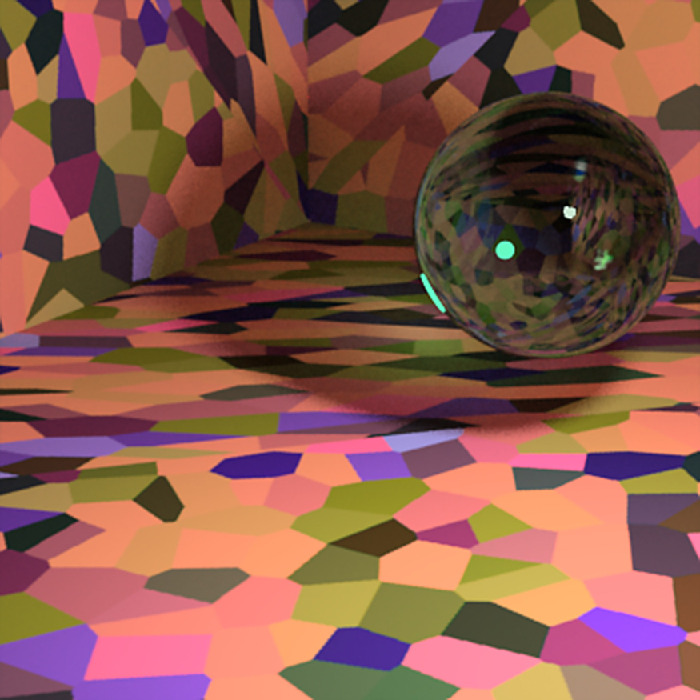
Studies on colored transparent objects have elucidated potential mechanisms, but these studies have mainly focused on flat filters overlaying flat backgrounds. While they have provided valuable insight, these studies have not captured all aspects of transparency, like caustics, specular reflections/highlights, and shadows. Here, we investigate color-matching experiments with curved transparent objects for different matching stimuli: a uniform patch and a flat filter. Two instructions were tested: simply match the color of the glass object and the test element (patch and flat filter) or match the color of the dye that was used to tint the transparent object (patch). Observers' matches differed from the mean, the most frequent, and the most saturated color of the transparent stimuli, whereas the brightest regions captured the chromaticity, but not the lightness, of patch matches. We applied four models from flat filter studies: the convergence model, the ratios of either the means (RMC) or standard deviations (RSD) of cone excitations, and a robust ratio model. The original convergence model does not fully generalize but does not perform poorly, and with modifications, we find that curved transparent objects cause a convergence of filtered colors toward a point in color space, similar to flat filters. Considering that, the RMC and robust ratio models generalized more than the RSD, with the RMC performing best across the stimuli we tested. We conclude that the RMC is probably the strongest factor for determining the color. The RSD seems instead to be related to the perceived "clarity" of glass objects.

摘要

对有色透明物体的研究已经阐明了潜在的机制,但这些研究主要集中在覆盖在平坦背景上的平面滤光片上。虽然它们提供了有价值的见解,但这些研究并没有捕捉到透明度的所有方面,例如焦散、镜面反射/高光和阴影。在这里,我们研究了具有不同匹配刺激的弯曲透明物体的颜色匹配实验:均匀补丁和平板滤光片。测试了两种指令:简单地匹配玻璃物体和测试元素(补丁和平板滤光片)的颜色,或者匹配用于给透明物体染色的染料的颜色(补丁)。观察者的匹配与透明刺激的平均值、最常见颜色和最饱和颜色不同,而最亮区域则捕获了色匹配的色度,但没有捕获亮度。我们应用了来自平面滤光片研究的四个模型:会聚模型、锥体激发的平均值(RMC)或标准偏差(RSD)的比值,以及稳健的比值模型。原始会聚模型不能完全推广,但表现不差,并且经过修改,我们发现弯曲的透明物体导致过滤颜色会聚到颜色空间中的一个点,类似于平面滤光片。考虑到这一点,RMC 和稳健的比值模型比 RSD 更具通用性,在我们测试的刺激中,RMC 的表现最好。我们得出的结论是,RMC 可能是确定颜色的最强因素。RSD 似乎与玻璃物体的“清晰度”有关。

https://cdn.ncbi.nlm.nih.gov/pmc/blobs/f9ef/8142700/c71d12827889/jovi-21-5-20-f027.jpg
https://cdn.ncbi.nlm.nih.gov/pmc/blobs/f9ef/8142700/b1adf75829ba/jovi-21-5-20-f001.jpg
https://cdn.ncbi.nlm.nih.gov/pmc/blobs/f9ef/8142700/367af758f6eb/jovi-21-5-20-f002.jpg
https://cdn.ncbi.nlm.nih.gov/pmc/blobs/f9ef/8142700/d9f66e4b3566/jovi-21-5-20-f003.jpg
https://cdn.ncbi.nlm.nih.gov/pmc/blobs/f9ef/8142700/3d7b65ea2474/jovi-21-5-20-f004.jpg
https://cdn.ncbi.nlm.nih.gov/pmc/blobs/f9ef/8142700/f24701934ac9/jovi-21-5-20-f005.jpg
https://cdn.ncbi.nlm.nih.gov/pmc/blobs/f9ef/8142700/1cd9907c9430/jovi-21-5-20-f006.jpg
https://cdn.ncbi.nlm.nih.gov/pmc/blobs/f9ef/8142700/3c2a0cc95605/jovi-21-5-20-f007.jpg
https://cdn.ncbi.nlm.nih.gov/pmc/blobs/f9ef/8142700/17ad1a01ba64/jovi-21-5-20-f008.jpg
https://cdn.ncbi.nlm.nih.gov/pmc/blobs/f9ef/8142700/7fb3ec462cd0/jovi-21-5-20-f009.jpg
https://cdn.ncbi.nlm.nih.gov/pmc/blobs/f9ef/8142700/a812a63bfc4e/jovi-21-5-20-f010.jpg
https://cdn.ncbi.nlm.nih.gov/pmc/blobs/f9ef/8142700/ab30eccccdde/jovi-21-5-20-f011.jpg
https://cdn.ncbi.nlm.nih.gov/pmc/blobs/f9ef/8142700/b726f65b1e99/jovi-21-5-20-f012.jpg
https://cdn.ncbi.nlm.nih.gov/pmc/blobs/f9ef/8142700/00b5747fe127/jovi-21-5-20-f013.jpg
https://cdn.ncbi.nlm.nih.gov/pmc/blobs/f9ef/8142700/f9f57f548044/jovi-21-5-20-f014.jpg
https://cdn.ncbi.nlm.nih.gov/pmc/blobs/f9ef/8142700/56b68af8b11a/jovi-21-5-20-f015.jpg
https://cdn.ncbi.nlm.nih.gov/pmc/blobs/f9ef/8142700/2f9d87131a28/jovi-21-5-20-f016.jpg
https://cdn.ncbi.nlm.nih.gov/pmc/blobs/f9ef/8142700/b588f616194a/jovi-21-5-20-f017.jpg
https://cdn.ncbi.nlm.nih.gov/pmc/blobs/f9ef/8142700/c94cebea7bec/jovi-21-5-20-f018.jpg
https://cdn.ncbi.nlm.nih.gov/pmc/blobs/f9ef/8142700/9c450184f351/jovi-21-5-20-f019.jpg
https://cdn.ncbi.nlm.nih.gov/pmc/blobs/f9ef/8142700/b21f500aafac/jovi-21-5-20-f020.jpg
https://cdn.ncbi.nlm.nih.gov/pmc/blobs/f9ef/8142700/4ffbf07eb438/jovi-21-5-20-f021.jpg
https://cdn.ncbi.nlm.nih.gov/pmc/blobs/f9ef/8142700/be3d3aa40072/jovi-21-5-20-f022.jpg
https://cdn.ncbi.nlm.nih.gov/pmc/blobs/f9ef/8142700/7d532f0fcd43/jovi-21-5-20-f023.jpg
https://cdn.ncbi.nlm.nih.gov/pmc/blobs/f9ef/8142700/8da9bf0ec824/jovi-21-5-20-f024.jpg
https://cdn.ncbi.nlm.nih.gov/pmc/blobs/f9ef/8142700/eb8a91db17fa/jovi-21-5-20-f025.jpg
https://cdn.ncbi.nlm.nih.gov/pmc/blobs/f9ef/8142700/f01c9a50060a/jovi-21-5-20-f026.jpg
https://cdn.ncbi.nlm.nih.gov/pmc/blobs/f9ef/8142700/c71d12827889/jovi-21-5-20-f027.jpg
https://cdn.ncbi.nlm.nih.gov/pmc/blobs/f9ef/8142700/b1adf75829ba/jovi-21-5-20-f001.jpg
https://cdn.ncbi.nlm.nih.gov/pmc/blobs/f9ef/8142700/367af758f6eb/jovi-21-5-20-f002.jpg
https://cdn.ncbi.nlm.nih.gov/pmc/blobs/f9ef/8142700/d9f66e4b3566/jovi-21-5-20-f003.jpg
https://cdn.ncbi.nlm.nih.gov/pmc/blobs/f9ef/8142700/3d7b65ea2474/jovi-21-5-20-f004.jpg
https://cdn.ncbi.nlm.nih.gov/pmc/blobs/f9ef/8142700/f24701934ac9/jovi-21-5-20-f005.jpg
https://cdn.ncbi.nlm.nih.gov/pmc/blobs/f9ef/8142700/1cd9907c9430/jovi-21-5-20-f006.jpg
https://cdn.ncbi.nlm.nih.gov/pmc/blobs/f9ef/8142700/3c2a0cc95605/jovi-21-5-20-f007.jpg
https://cdn.ncbi.nlm.nih.gov/pmc/blobs/f9ef/8142700/17ad1a01ba64/jovi-21-5-20-f008.jpg
https://cdn.ncbi.nlm.nih.gov/pmc/blobs/f9ef/8142700/7fb3ec462cd0/jovi-21-5-20-f009.jpg
https://cdn.ncbi.nlm.nih.gov/pmc/blobs/f9ef/8142700/a812a63bfc4e/jovi-21-5-20-f010.jpg
https://cdn.ncbi.nlm.nih.gov/pmc/blobs/f9ef/8142700/ab30eccccdde/jovi-21-5-20-f011.jpg
https://cdn.ncbi.nlm.nih.gov/pmc/blobs/f9ef/8142700/b726f65b1e99/jovi-21-5-20-f012.jpg
https://cdn.ncbi.nlm.nih.gov/pmc/blobs/f9ef/8142700/00b5747fe127/jovi-21-5-20-f013.jpg
https://cdn.ncbi.nlm.nih.gov/pmc/blobs/f9ef/8142700/f9f57f548044/jovi-21-5-20-f014.jpg
https://cdn.ncbi.nlm.nih.gov/pmc/blobs/f9ef/8142700/56b68af8b11a/jovi-21-5-20-f015.jpg
https://cdn.ncbi.nlm.nih.gov/pmc/blobs/f9ef/8142700/2f9d87131a28/jovi-21-5-20-f016.jpg
https://cdn.ncbi.nlm.nih.gov/pmc/blobs/f9ef/8142700/b588f616194a/jovi-21-5-20-f017.jpg
https://cdn.ncbi.nlm.nih.gov/pmc/blobs/f9ef/8142700/c94cebea7bec/jovi-21-5-20-f018.jpg
https://cdn.ncbi.nlm.nih.gov/pmc/blobs/f9ef/8142700/9c450184f351/jovi-21-5-20-f019.jpg
https://cdn.ncbi.nlm.nih.gov/pmc/blobs/f9ef/8142700/b21f500aafac/jovi-21-5-20-f020.jpg
https://cdn.ncbi.nlm.nih.gov/pmc/blobs/f9ef/8142700/4ffbf07eb438/jovi-21-5-20-f021.jpg
https://cdn.ncbi.nlm.nih.gov/pmc/blobs/f9ef/8142700/be3d3aa40072/jovi-21-5-20-f022.jpg
https://cdn.ncbi.nlm.nih.gov/pmc/blobs/f9ef/8142700/7d532f0fcd43/jovi-21-5-20-f023.jpg
https://cdn.ncbi.nlm.nih.gov/pmc/blobs/f9ef/8142700/8da9bf0ec824/jovi-21-5-20-f024.jpg
https://cdn.ncbi.nlm.nih.gov/pmc/blobs/f9ef/8142700/eb8a91db17fa/jovi-21-5-20-f025.jpg
https://cdn.ncbi.nlm.nih.gov/pmc/blobs/f9ef/8142700/f01c9a50060a/jovi-21-5-20-f026.jpg
https://cdn.ncbi.nlm.nih.gov/pmc/blobs/f9ef/8142700/c71d12827889/jovi-21-5-20-f027.jpg

相似文献

1
The color appearance of curved transparent objects.曲面透明物体的颜色外观。
J Vis. 2021 May 3;21(5):20. doi: 10.1167/jov.21.5.20.
2
Accuracy of color scission for spectral transparencies.光谱透明片颜色分割的准确性。
J Vis. 2002;2(6):451-66. doi: 10.1167/2.6.3.
3
Color appearance of real objects varying in material, hue, and shape.真实物体的颜色外观因材质、色调和形状而异。
J Vis. 2010 Sep 30;10(9):10. doi: 10.1167/10.9.10.
4
Perceptual scale for transparency: Common fate overrides geometrical and color cues.透明度感知量表:共同命运压倒几何和颜色线索。
J Vis. 2022 May 3;22(6):6. doi: 10.1167/jov.22.6.6.
5
The colors seen behind transparent filters.透过透明滤光器看到的颜色。
Perception. 2000;29(8):911-26. doi: 10.1068/p2988.
6
Minimum-variance cone-excitation ratios and the limits of relational color constancy.最小方差锥激发比率与关系性颜色恒常性的极限
Vis Neurosci. 2004 May-Jun;21(3):337-40. doi: 10.1017/s095252380421327x.
7
Surface gloss and color perception of 3D objects.3D物体的表面光泽和颜色感知。
Vis Neurosci. 2008 May-Jun;25(3):371-85. doi: 10.1017/S0952523808080267.
8
Associating color appearance with the cone chromaticity space.将颜色外观与视锥细胞色度空间相关联。
Vision Res. 2005 Jul;45(15):1929-34. doi: 10.1016/j.visres.2005.01.033.
9
Appearance of colored patterns: pattern-color separability.彩色图案的外观:图案与颜色的可分离性。
J Opt Soc Am A Opt Image Sci Vis. 1993 Dec;10(12):2458-70. doi: 10.1364/josaa.10.002458.
10
Test of a convergence model for color transparency perception.颜色透明度感知收敛模型的测试
Perception. 1998;27(5):595-608. doi: 10.1068/p270595.

引用本文的文献

1
A tutorial on the physics of light and image shading.关于光的物理和图像阴影的教程。
Iperception. 2024 Sep 30;15(5):20416695241279929. doi: 10.1177/20416695241279929. eCollection 2024 Sep-Oct.
2
Perceptual scale for transparency: Common fate overrides geometrical and color cues.透明度感知量表:共同命运压倒几何和颜色线索。
J Vis. 2022 May 3;22(6):6. doi: 10.1167/jov.22.6.6.
3
Crystal or jelly? Effect of color on the perception of translucent materials with photographs of real-world objects.水晶还是果冻?颜色对真实物体照片中半透明材料感知的影响。

本文引用的文献

1
OSIEshort: A small stimulus set can reliably estimate individual differences in semantic salience.OSIEshort:一个小的刺激集可以可靠地估计语义显著性的个体差异。
J Vis. 2020 Sep 2;20(9):13. doi: 10.1167/jov.20.9.13.
2
Art through the Colors of Graffiti: From the Perspective of the Chromatic Structure.涂鸦艺术的色彩:从色彩结构的角度看。
Sensors (Basel). 2020 Apr 29;20(9):2531. doi: 10.3390/s20092531.
3
Geometrical structure of perceptual color space: Mental representations and adaptation invariance.感知颜色空间的几何结构:心理表征与适应性不变性。
J Vis. 2022 Feb 1;22(2):6. doi: 10.1167/jov.22.2.6.
J Vis. 2019 Oct 1;19(12):1. doi: 10.1167/19.12.1.
4
Individual differences in visual salience vary along semantic dimensions.个体间在视觉显著性上的差异会沿着语义维度发生变化。
Proc Natl Acad Sci U S A. 2019 Jun 11;116(24):11687-11692. doi: 10.1073/pnas.1820553116. Epub 2019 May 28.
5
Disentangling simultaneous changes of surface and illumination.解析表面和光照的同步变化。
Vision Res. 2019 May;158:173-188. doi: 10.1016/j.visres.2019.02.004. Epub 2019 Mar 21.
6
Seeing through transparent layers.透过透明层观察。
J Vis. 2018 Sep 4;18(9):25. doi: 10.1167/18.9.25.
7
Categorizing natural color distributions.对自然颜色分布进行分类。
Vision Res. 2018 Oct;151:18-30. doi: 10.1016/j.visres.2018.01.008. Epub 2018 Mar 23.
8
Eidolons: Novel stimuli for vision research.幻像:视觉研究的新型刺激因素
J Vis. 2017 Feb 1;17(2):7. doi: 10.1167/17.2.7.
9
Differences in illumination estimation in #thedress.《那条裙子》中光照估计的差异。
J Vis. 2017 Jan 1;17(1):22. doi: 10.1167/17.1.22.
10
Perception of saturation in natural scenes.自然场景中的饱和度感知。
J Opt Soc Am A Opt Image Sci Vis. 2016 Mar;33(3):A194-206. doi: 10.1364/JOSAA.33.00A194.