Sohn Suk Ho, Kang Yoonjin, Kim Ji Seong, Choi Jae Woong, Jang Myoung-Jin, Hwang Ho Young
Department of Thoracic and Cardiovascular Surgery, Seoul National University Hospital, Seoul National University College of Medicine, Seoul, Korea.
Medical Research Collaborating Center, Seoul National University Hospital, Seoul National University College of Medicine, Seoul, Korea.
J Thorac Dis. 2021 Apr;13(4):2203-2215. doi: 10.21037/jtd-20-3548.
This meta-analysis was conducted to compare the procedural and early outcomes of aortic valve replacement (AVR) using rapid deployment valve (RD group) versus sutureless valve (SU group).
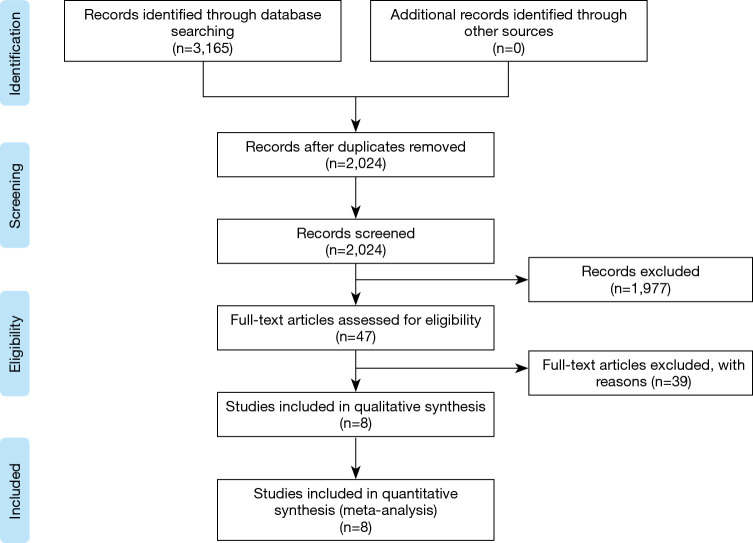
A literature search of 5 online databases was conducted. The primary outcomes were mean transvalvular pressure gradient (MPG) after AVR, the incidence of paravalvular leak (PVL) and the need for a permanent pacemaker implantation (PPI). The secondary outcomes included aortic cross-clamp (ACC) and cardiopulmonary bypass (CPB) times, early mortality and other postoperative complications, such as atrial fibrillation, bleeding reoperation and stroke.
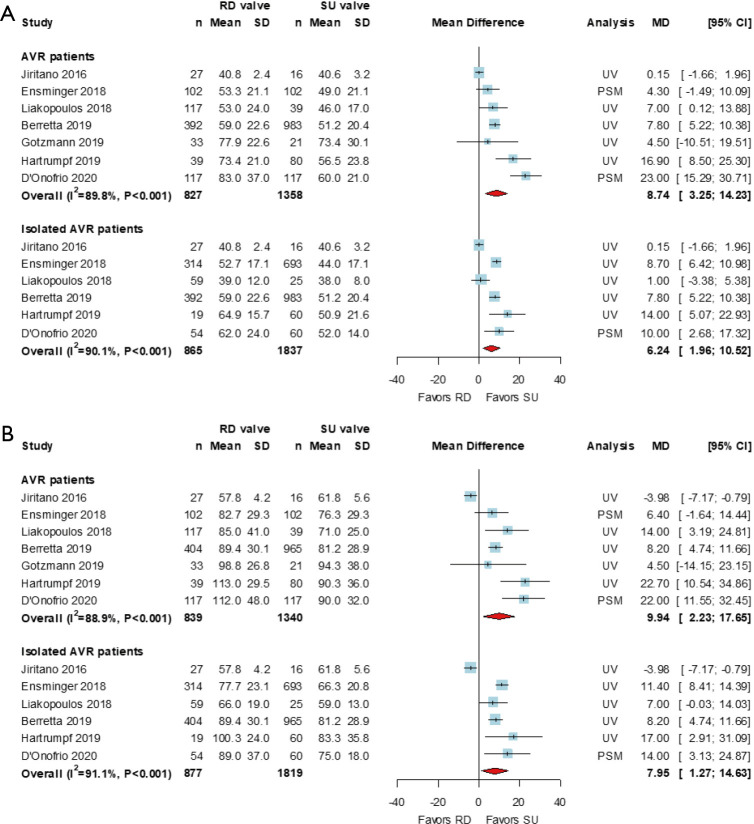
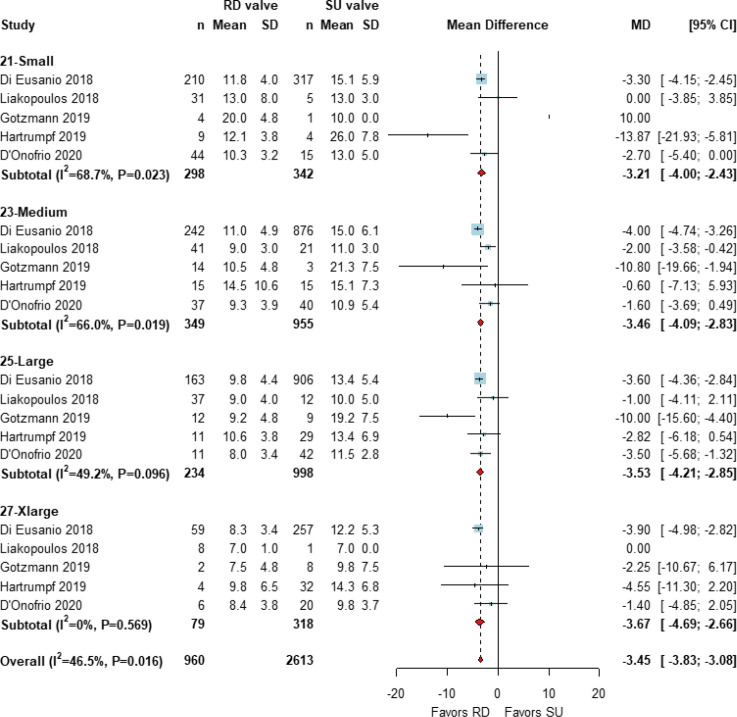
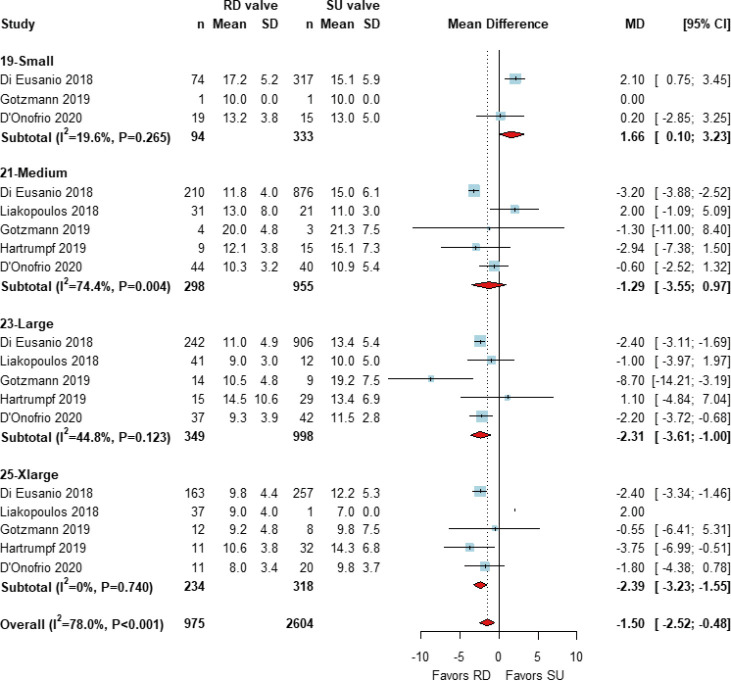
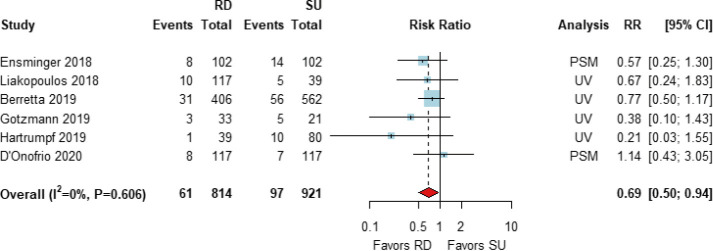
Eight articles were included, and all outcomes except MPG after AVR in matched valve sizes were extracted from 7 studies (RD group =842 patients and SU group =1,386 patients). The pooled analysis demonstrated a lower MPG in the RD group than in the SU group, with mean difference (MD) of 2.64 mmHg. The pooled risk ratios of any PVL and grade ≥2 (or moderate) PVL were not significantly different between the groups; however, the incidence of PPI was significantly lower in the RD group than in the SU group, with a risk ratio of 0.69. The pooled analyses showed that the ACC and CPB times were significantly longer in the RD group than in the SU group, with weighted MDs of 8.74 (P<0.001) and 9.94 (P<0.001) minutes, respectively. The risks of early mortality and other postoperative complications were not significantly different between the groups.
AVR using RD valve was associated with better valve hemodynamics in terms of the MPG than AVR using SU valve, and better outcomes were observed in the RD group regarding PPI. Procedural times were longer in AVR using RD valve than SU valve. Early clinical outcomes showed no difference between RD and SU valve.
本荟萃分析旨在比较使用快速部署瓣膜(RD组)与无缝合瓣膜(SU组)进行主动脉瓣置换术(AVR)的手术过程及早期结果。
对5个在线数据库进行文献检索。主要结局指标为AVR术后平均跨瓣压差(MPG)、瓣周漏(PVL)发生率及永久起搏器植入(PPI)需求。次要结局指标包括主动脉阻断(ACC)和体外循环(CPB)时间、早期死亡率及其他术后并发症,如房颤、出血再手术和卒中。
纳入8篇文章,除匹配瓣膜尺寸的AVR术后MPG外,所有结局指标均从7项研究中提取(RD组=842例患者,SU组=1386例患者)。汇总分析显示,RD组的MPG低于SU组,平均差值(MD)为2.64 mmHg。两组间任何PVL及≥2级(或中度)PVL的汇总风险比无显著差异;然而,RD组的PPI发生率显著低于SU组,风险比为0.69。汇总分析表明,RD组的ACC和CPB时间显著长于SU组,加权MD分别为8.74(P<0.001)和9.94(P<0.001)分钟。两组间早期死亡率及其他术后并发症风险无显著差异。
与使用SU瓣膜的AVR相比,使用RD瓣膜的AVR在MPG方面瓣膜血流动力学更佳,且RD组在PPI方面观察到更好的结果。使用RD瓣膜的AVR手术时间比SU瓣膜长。RD和SU瓣膜的早期临床结果无差异。