Lin Zhe-Zhen, Jiao Yan-Qing, Ye Zhang-Yan, Wang Ge-Ge, Ding Xi
Department of Stomatology, The First Affiliated Hospital of Wenzhou Medical University, Nanbaixiang Ouhai District, Wenzhou, 325000, Zhejiang, People's Republic of China.
Int J Implant Dent. 2021 May 20;7(1):41. doi: 10.1186/s40729-021-00325-y.
Currently, insufficient bone volume always occurs in the posterior maxilla which makes implantation difficult. Short implants combined with transcrestal sinus floor elevation (TSFE) may be an option to address insufficient bone volume.
The clinical performance of short implants combined with TSFE was compared with that of conventional implants combined with TSFE according to the survival rate.
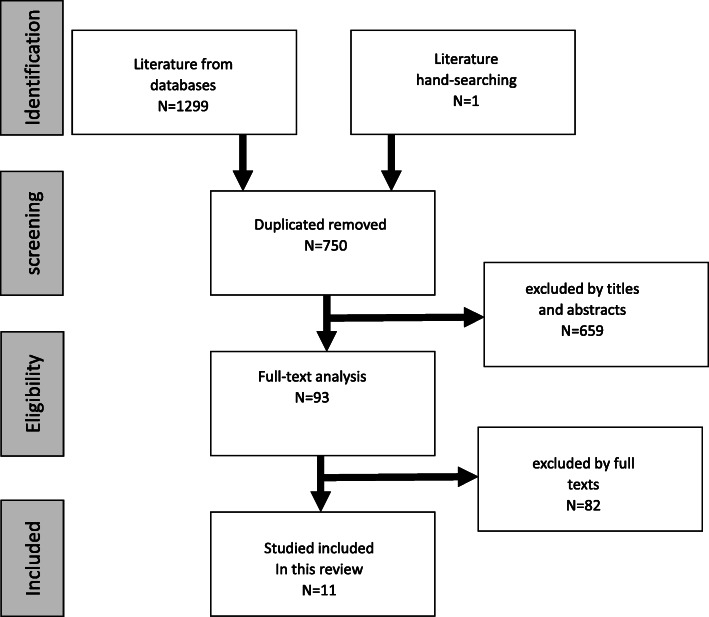
In this systematic review and meta-analysis, we followed the Meta-Analysis of Observational Studies in Epidemiology (MOOSE) guidelines. Articles were identified through PubMed, Embase, the Cochrane Library, and manual searching. Eligibility criteria included clinical human studies. The quality assessment was performed according to the Strengthening the Reporting of Observational Studies in Epidemiology (STROBE) guidelines. The odds ratio (OR) with its confidence interval (CI) was considered the essential outcome for estimating the effect of short implants combined with TSFE.
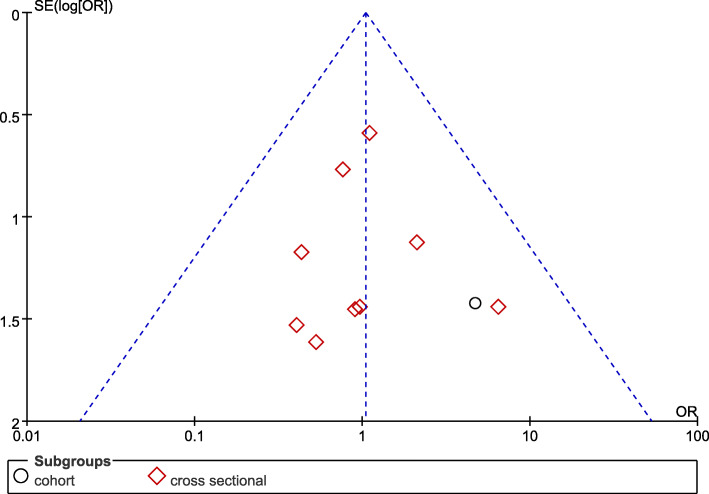
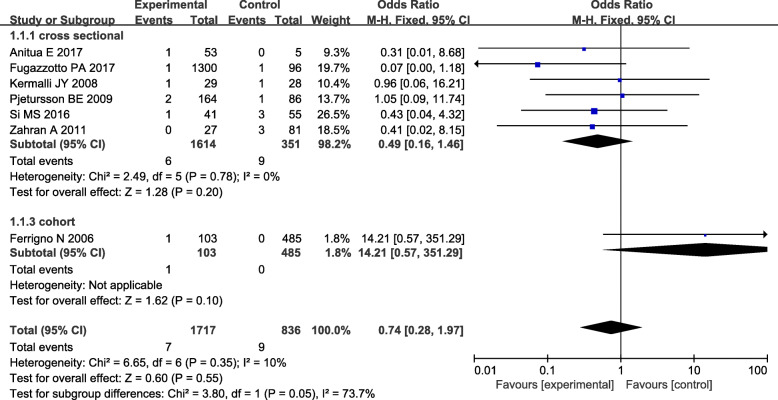
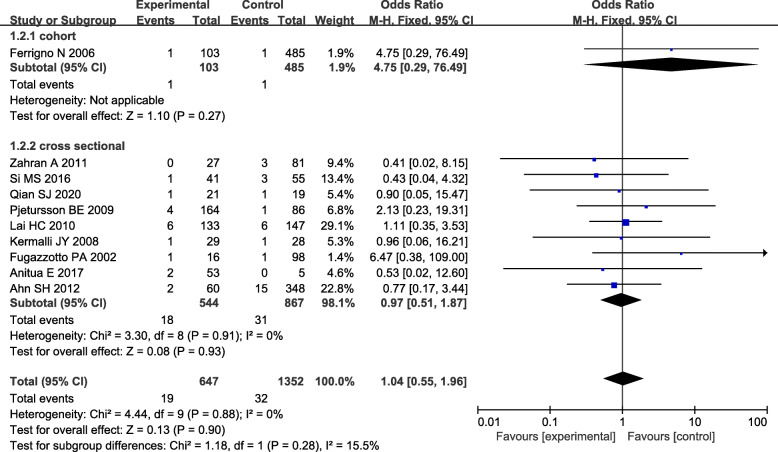
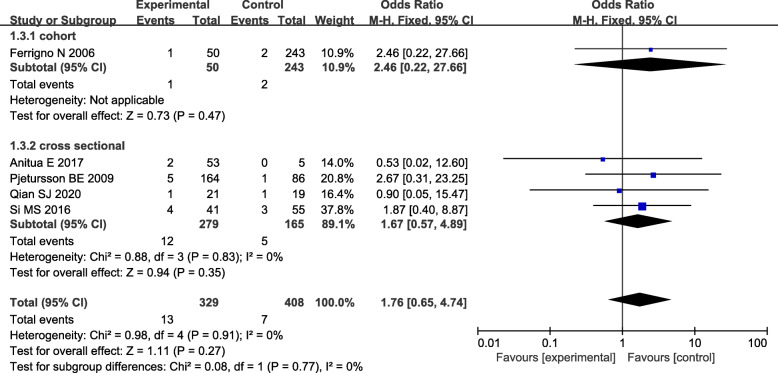
The registration number is INPLASY202050092. Eleven studies met the inclusion criteria, including 1 cohort study and 10 cross-sectional studies. With respect to the 1-year survival rate, no significant effect was observed between short implants (length ≤ 8 mm) and conventional implants combined with TSFE (I=0%, OR=1.04, 95% CI: 0.55-1.96). Similarly, no difference was seen between the two groups regarding the survival rate during the healing period (I=10%, OR=0.74, 95% CI: 0.28-1.97) and 3-year loading (OR=1.76, 95% CI: 0.65-4.74).
There was no evidence that the survival rate of short implants combined with TSFE was lower or higher than that of conventional implants combined with TSFE when the residual bone height was poor and the implant protrusion length of short implants was less than or similar to conventional implants. Nevertheless, the results should be interpreted cautiously due to the lack of random controlled trials in our meta-analysis.
目前,上颌后牙区骨量不足的情况较为常见,这给种植带来了困难。短种植体联合穿颧窦底提升术(TSFE)可能是解决骨量不足的一种选择。
根据生存率比较短种植体联合TSFE与传统种植体联合TSFE的临床性能。
在本系统评价和荟萃分析中,我们遵循了流行病学观察性研究的荟萃分析(MOOSE)指南。通过PubMed、Embase、Cochrane图书馆和手工检索来识别文章。纳入标准包括临床人体研究。根据加强流行病学观察性研究报告(STROBE)指南进行质量评估。优势比(OR)及其置信区间(CI)被视为评估短种植体联合TSFE效果的主要结果。
注册号为INPLASY202050092。11项研究符合纳入标准,包括1项队列研究和10项横断面研究。关于1年生存率,短种植体(长度≤8mm)与传统种植体联合TSFE之间未观察到显著差异(I=0%,OR=1.04,95%CI:0.55-1.96)。同样,两组在愈合期生存率(I=10%,OR=0.74,95%CI:0.28-1.97)和3年负重期(OR=1.76,95%CI:0.65-4.74)方面也没有差异。
当剩余骨高度较差且短种植体的种植体突出长度小于或类似于传统种植体时,没有证据表明短种植体联合TSFE的生存率低于或高于传统种植体联合TSFE。然而,由于我们的荟萃分析中缺乏随机对照试验,这些结果应谨慎解读。