Department of Biological and Marine Sciences, University of Hull, Hull, HU6 7RX, UK.
Energy and Environment Institute, University of Hull, Hull, HU6 7RX, UK.
J Chem Ecol. 2021 Nov;47(10-11):859-876. doi: 10.1007/s10886-021-01276-9. Epub 2021 May 20.
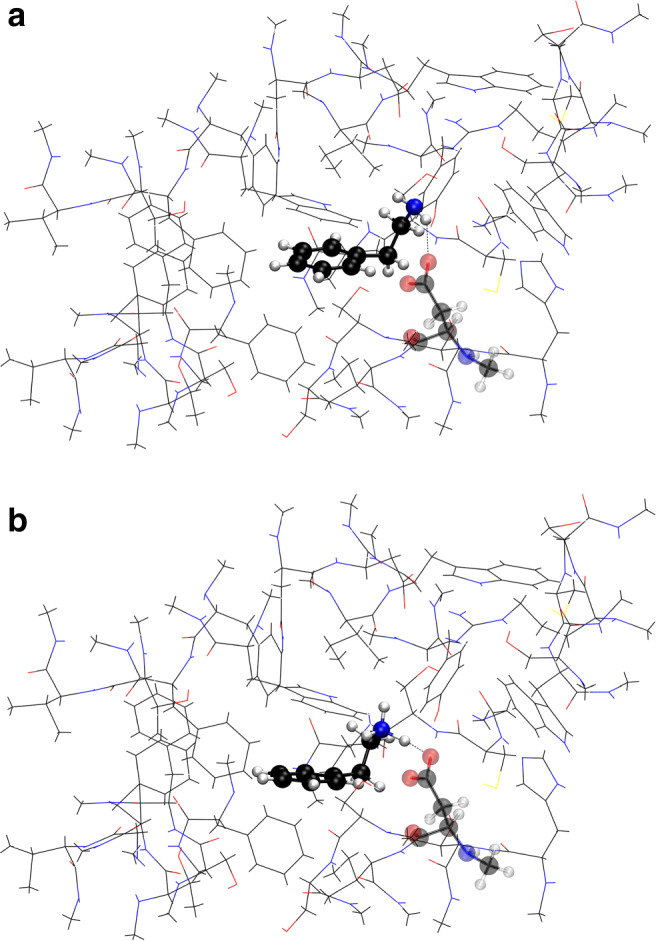
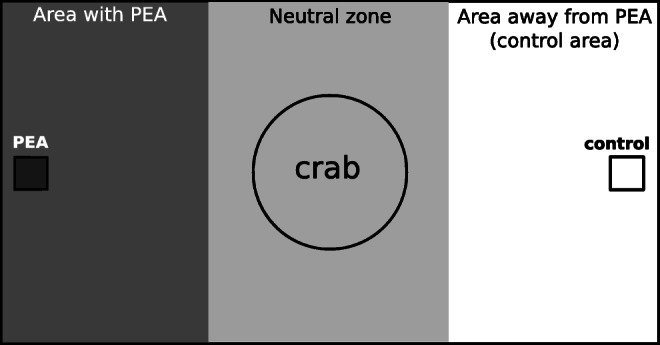
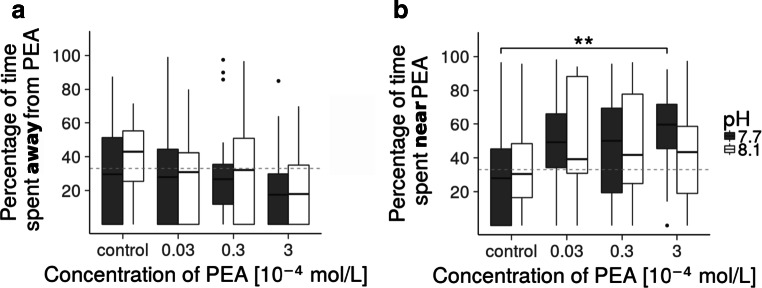
With carbon dioxide (CO) levels rising dramatically, climate change threatens marine environments. Due to increasing CO concentrations in the ocean, pH levels are expected to drop by 0.4 units by the end of the century. There is an urgent need to understand the impact of ocean acidification on chemical-ecological processes. To date, the extent and mechanisms by which the decreasing ocean pH influences chemical communication are unclear. Combining behaviour assays with computational chemistry, we explore the function of the predator related cue 2-phenylethylamine (PEA) for hermit crabs (Pagurus bernhardus) in current and end-of-the-century oceanic pH. Living in intertidal environments, hermit crabs face large pH fluctuations in their current habitat in addition to climate-change related ocean acidification. We demonstrate that the dietary predator cue PEA for mammals and sea lampreys is an attractant for hermit crabs, with the potency of the cue increasing with decreasing pH levels. In order to explain this increased potency, we assess changes to PEA's conformational and charge-related properties as one potential mechanistic pathway. Using quantum chemical calculations validated by NMR spectroscopy, we characterise the different protonation states of PEA in water. We show how protonation of PEA could affect receptor-ligand binding, using a possible model receptor for PEA (human TAAR1). Investigating potential mechanisms of pH-dependent effects on olfactory perception of PEA and the respective behavioural response, our study advances the understanding of how ocean acidification interferes with the sense of smell and thereby might impact essential ecological interactions in marine ecosystems.
随着二氧化碳(CO)水平的急剧上升,气候变化威胁着海洋环境。由于海洋中 CO 浓度的增加,预计到本世纪末 pH 值将下降 0.4 个单位。迫切需要了解海洋酸化对化学-生态过程的影响。迄今为止,海洋 pH 值降低如何影响化学通讯的程度和机制尚不清楚。我们结合行为测定和计算化学,探索了与捕食者相关的信号 2-苯乙胺(PEA)在当前和本世纪末海洋 pH 值下对寄居蟹(Pagurus bernhardus)的作用。生活在潮间带环境中的寄居蟹,除了面临与气候变化相关的海洋酸化之外,其当前栖息地还面临着巨大的 pH 波动。我们证明,哺乳动物和海七鳃鳗的饮食捕食者信号 PEA 是寄居蟹的引诱剂,随着 pH 值的降低,信号的效力增加。为了解释这种增强的效力,我们评估了 PEA 的构象和电荷相关特性的变化作为一种潜在的机制途径。我们使用通过 NMR 光谱验证的量子化学计算,对 PEA 在水中的不同质子化状态进行了表征。我们展示了 PEA 的质子化如何影响受体-配体结合,使用 PEA 的可能模型受体(人 TAAR1)。研究 pH 依赖性效应对 PEA 嗅觉感知和相应行为反应的潜在机制,我们的研究增进了对海洋酸化如何干扰嗅觉以及可能如何影响海洋生态系统中重要生态相互作用的理解。