Department of Pharmacology, School of Pharmacy, Qingdao University, Qingdao, China.
School of Basic Medicine, Qingdao University, Qingdao, China.
Transl Vis Sci Technol. 2021 May 3;10(6):27. doi: 10.1167/tvst.10.6.27.
Stem cell-based therapy has the potential to become one approach to regenerate the damaged trabecular meshwork (TM) in glaucoma. Co-culture of induced pluripotent stem cells (iPSCs) with human TM cells has been a successful approach to generate autologous TM resembling cells. However, the differentiated cells generated using this approach are still problematic for clinical usage. This study aimed to develop a clinically applicable strategy for generating TM-like cells from iPSCs.
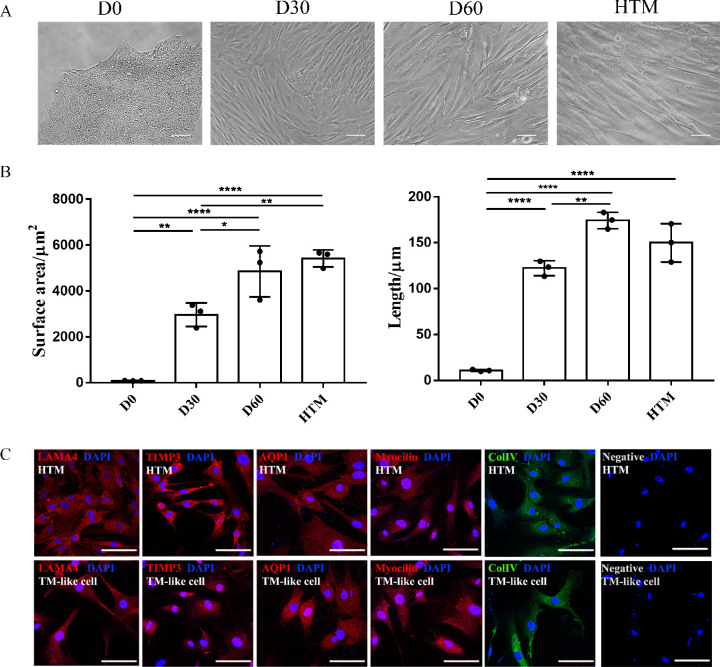
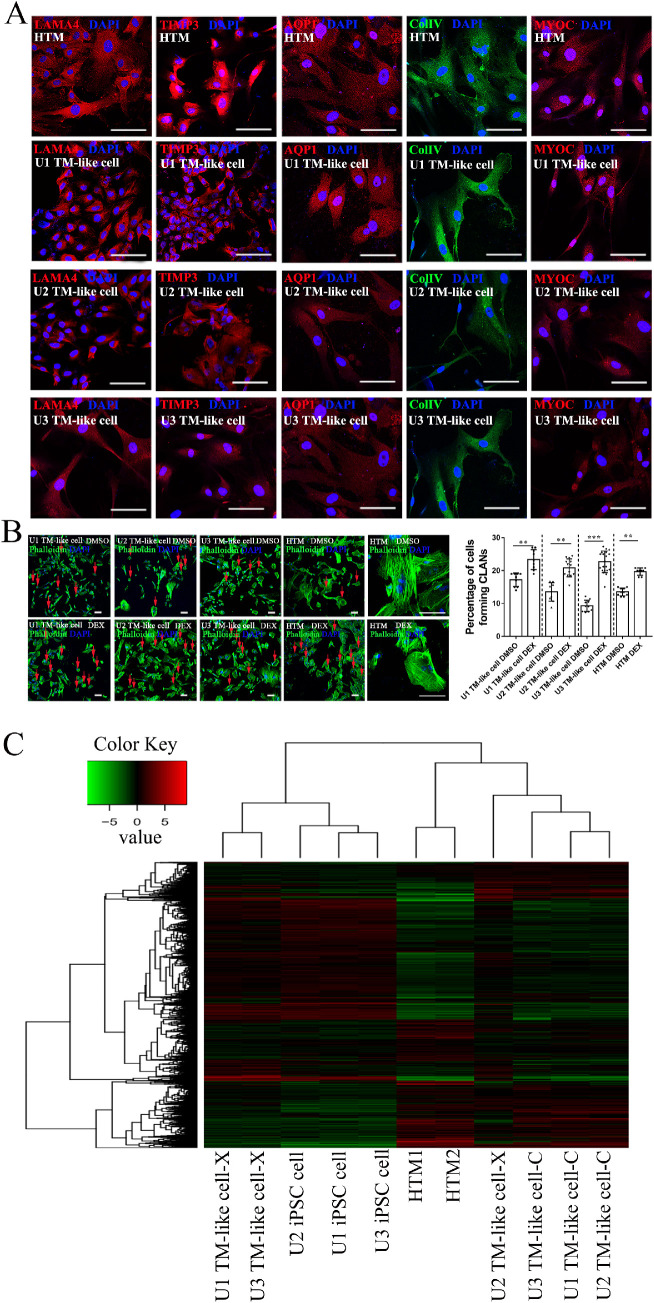
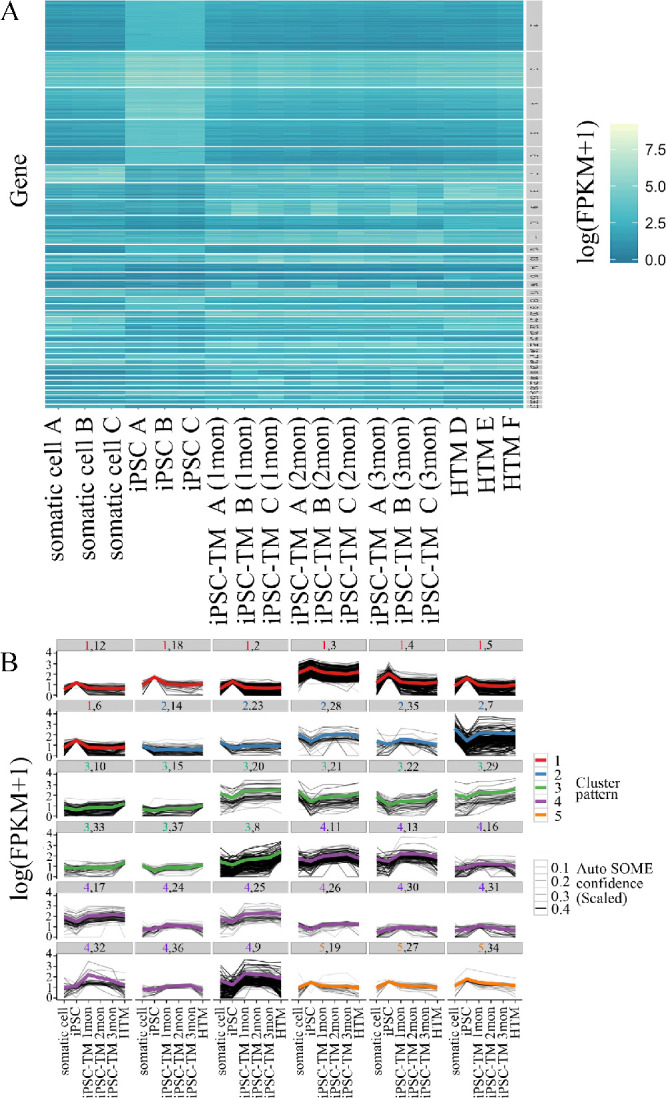
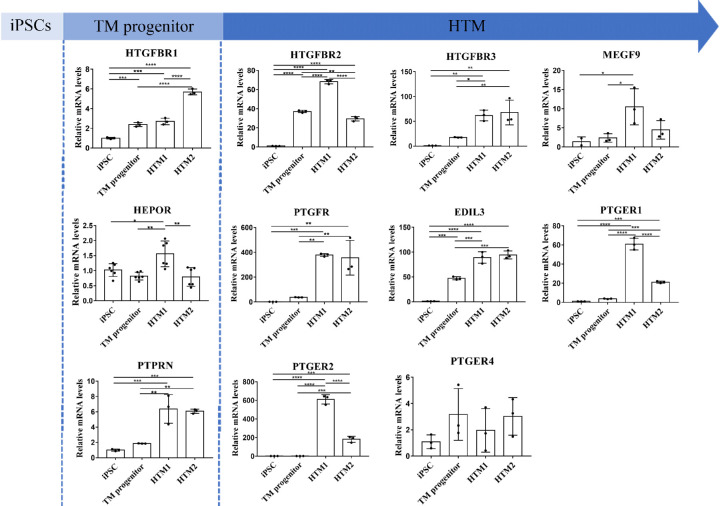
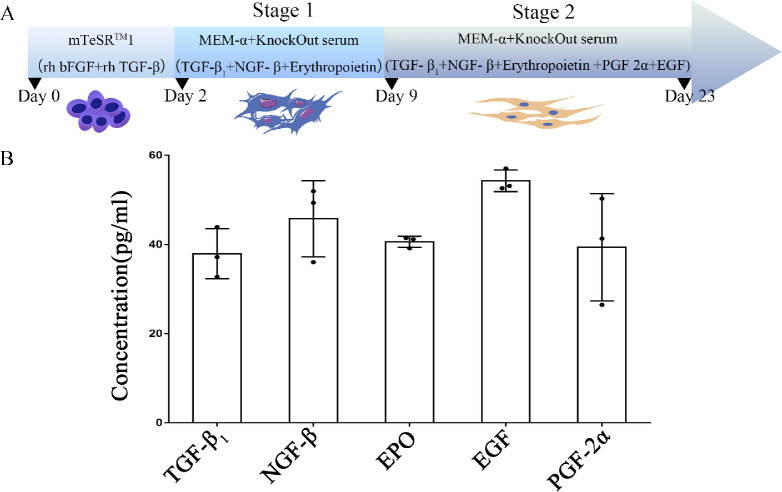
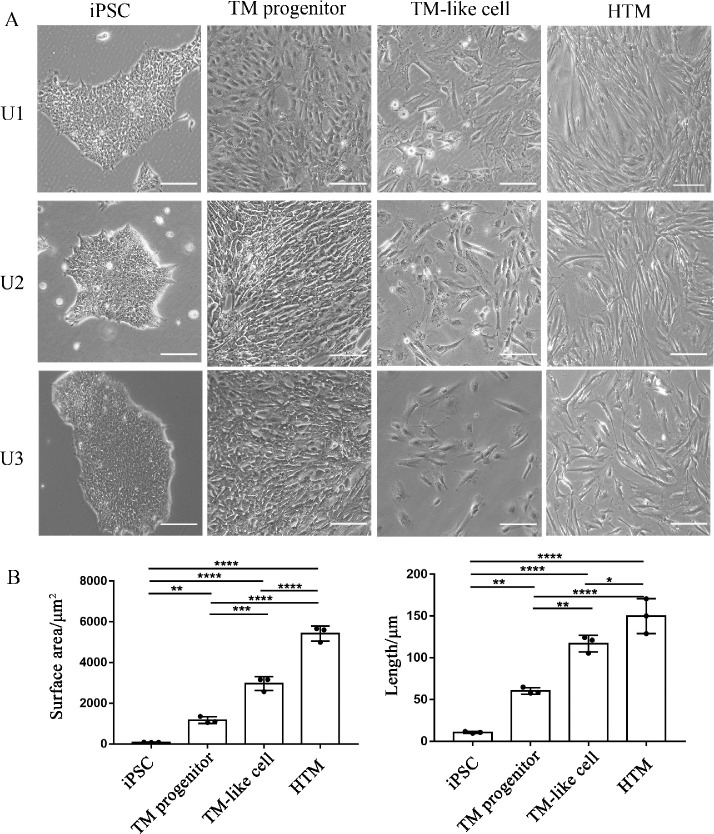
Highly expressed receptors during iPSC differentiation were identified by AutoSOME, Gene Ontology, and reverse transcription polymerase chain reaction (RT-PCR) analysis. The recombinant cytokines that bind to these receptors were used to generate a new differentiation protocol. The resultant TM-like cells were characterized morphologically, immunohistochemically, and transcriptionally.
We first determined two stages of iPSC differentiation and identified highly expressed receptors associated with the differentiation at each stage. The expression of these receptors was further confirmed by RT-PCR analysis. Exposure to the recombinant cytokines that bind to these receptors, including transforming growth factor beta 1, nerve growth factor beta, erythropoietin, prostaglandin F2 alpha, and epidermal growth factor, can efficiently differentiate iPSCs into TM-like cells, which express TM biomarkers and can form dexamethasone-inducible CLANs.
We successfully generated a xeno- and feeder-free differentiation protocol with recombinant cytokines to generate the TM progenitor and TM-like cells from human iPSCs.
The new approach minimizes the risks from contamination and also improves the differentiation efficiency and consistency, which are particularly crucial for clinical use of stem cells in glaucoma treatment.
基于干细胞的治疗方法有可能成为一种再生青光眼受损小梁网(TM)的方法。诱导多能干细胞(iPSCs)与人 TM 细胞的共培养已经成为生成类似于自体 TM 细胞的成功方法。然而,使用这种方法生成的分化细胞在临床应用中仍然存在问题。本研究旨在开发一种从 iPSCs 生成 TM 样细胞的临床适用策略。
通过 AutoSOME、基因本体论和逆转录聚合酶链反应(RT-PCR)分析,鉴定 iPSC 分化过程中高表达的受体。与这些受体结合的重组细胞因子用于生成新的分化方案。通过形态学、免疫组织化学和转录分析对生成的 TM 样细胞进行了表征。
我们首先确定了 iPSC 分化的两个阶段,并确定了与每个阶段分化相关的高表达受体。通过 RT-PCR 分析进一步证实了这些受体的表达。暴露于与这些受体结合的重组细胞因子,包括转化生长因子-β1、神经生长因子-β、促红细胞生成素、前列腺素 F2α和表皮生长因子,可有效地将 iPSCs 分化为 TM 样细胞,这些细胞表达 TM 生物标志物,并能形成地塞米松诱导的 CLANs。
我们成功地生成了一种无动物成分和无饲养层的分化方案,使用重组细胞因子从人 iPSCs 中生成 TM 祖细胞和 TM 样细胞。
这种新方法最大限度地降低了污染风险,同时提高了分化效率和一致性,这对于将干细胞应用于青光眼治疗的临床应用尤为关键。