From the Department of Clinical Neurosciences (E.E.S.), Hotchkiss Brain Institute, University of Calgary, Canada; Hemorrhagic Stroke Research Program (A.C., S.M.G.), Department of Neurology, Massachusetts General Hospital Stroke Research Center, Harvard Medical School; Stroke Service and Neurovascular Research Lab (C.A.), Department of Neurology, Massachusetts General Hospital, Boston; and Stroke Research Centre (D.J.W.), University College London Queen Square Institute of Neurology, UK.
Neurology. 2021 Aug 3;97(5):231-238. doi: 10.1212/WNL.0000000000012234. Epub 2021 May 20.
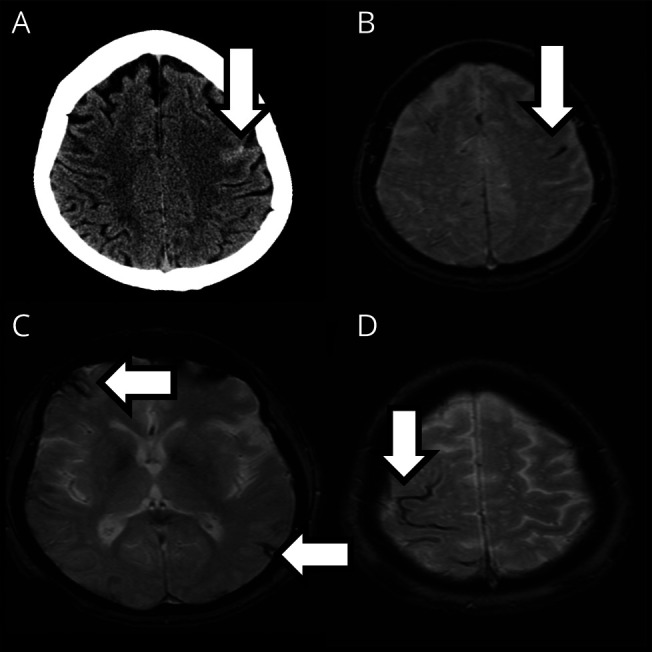
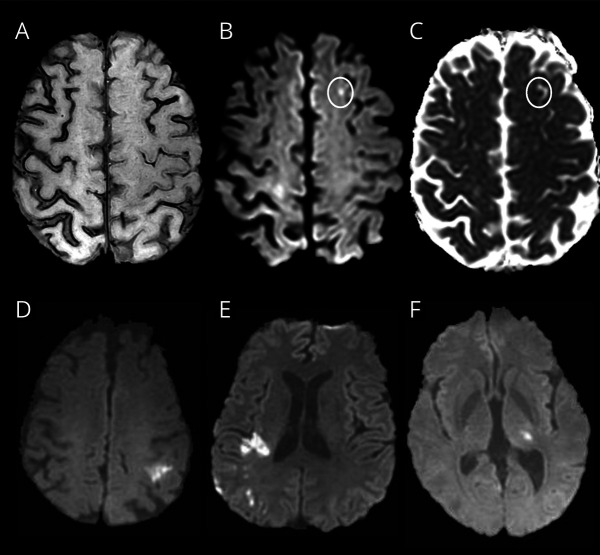
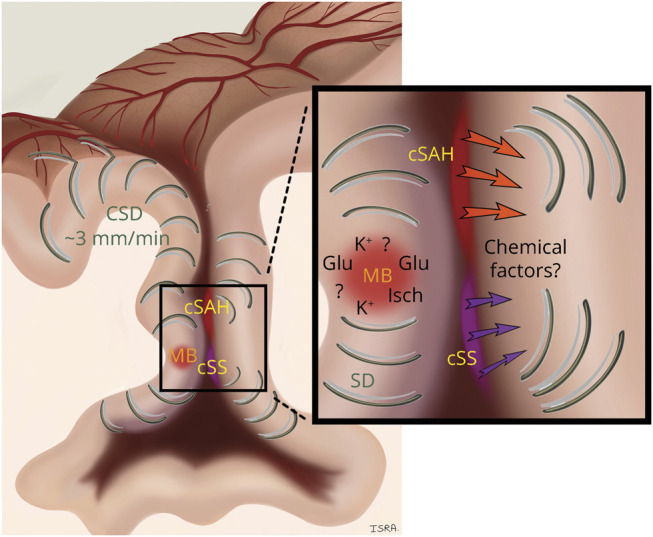
Transient focal neurologic episodes (TFNEs) are brief disturbances in motor, somatosensory, visual, or language functions that can occur in patients with cerebral amyloid angiopathy (CAA) and may be difficult to distinguish from TIAs or other transient neurologic syndromes. They herald a high rate of future lobar intracerebral hemorrhage, making it imperative to differentiate them from TIAs to avoid potentially dangerous use of antithrombotic drugs. Cortical spreading depression or depolarization triggered by acute or chronic superficial brain bleeding, a contributor to brain injury in other neurologic diseases, may be the underlying mechanism. This review discusses diagnosis, pathophysiology, and management of CAA-related TFNEs.
短暂性局灶性神经发作(TFNEs)是短暂的运动、感觉、视觉或语言功能障碍,可发生在脑淀粉样血管病(CAA)患者中,可能难以与 TIA 或其他短暂性神经综合征区分。它们预示着未来脑叶颅内出血的发生率很高,因此必须将其与 TIA 区分开来,以避免潜在危险的抗血栓药物的使用。急性或慢性浅表性脑出血引起的皮质扩散抑制或去极化,可能是其他神经疾病中脑损伤的潜在机制。这篇综述讨论了与 CAA 相关的 TFNEs 的诊断、病理生理学和治疗。