Li Yong, Ren Mihong, Wang Jiajun, Ma Rong, Chen Hai, Xie Qian, Li Hongyan, Li Jinxiu, Wang Jian
College of Pharmacy, Chengdu University of Traditional Chinese Medicine, Chengdu, China.
Front Pharmacol. 2021 May 4;12:606682. doi: 10.3389/fphar.2021.606682. eCollection 2021.
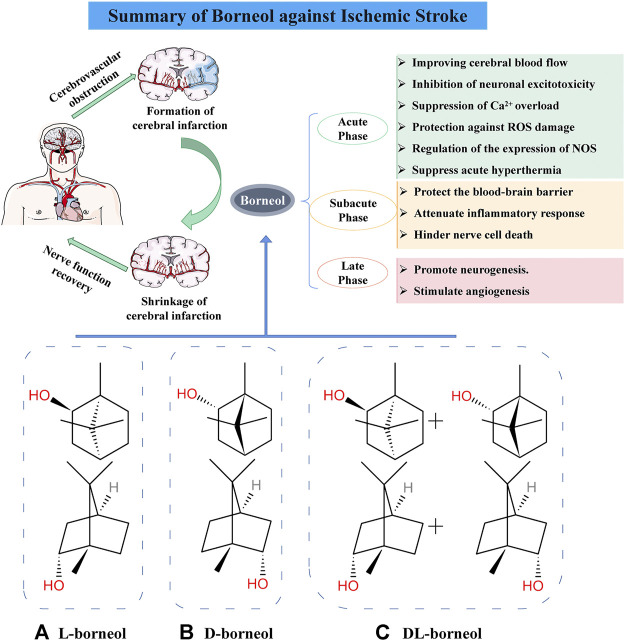
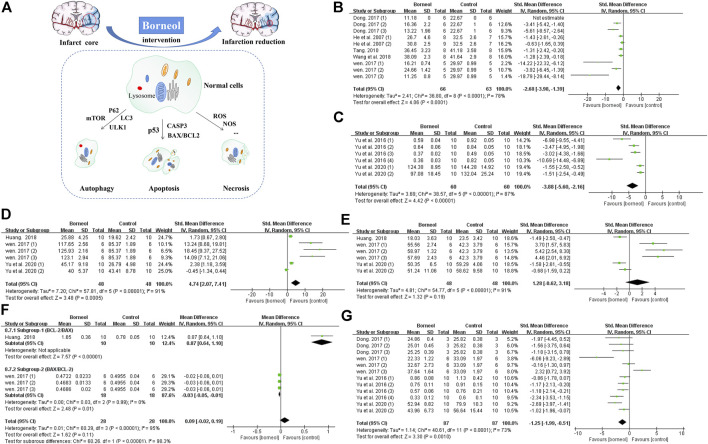
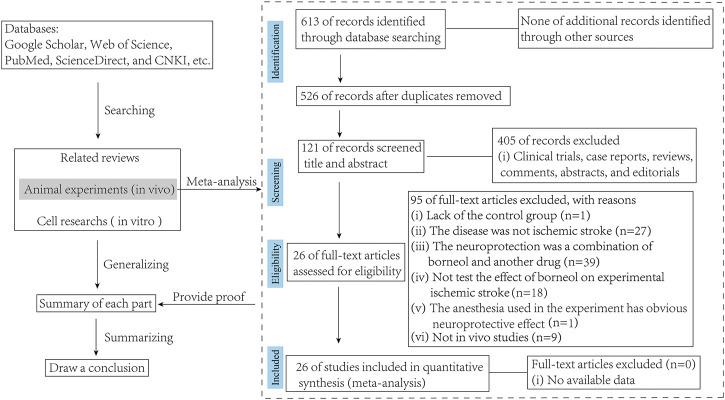
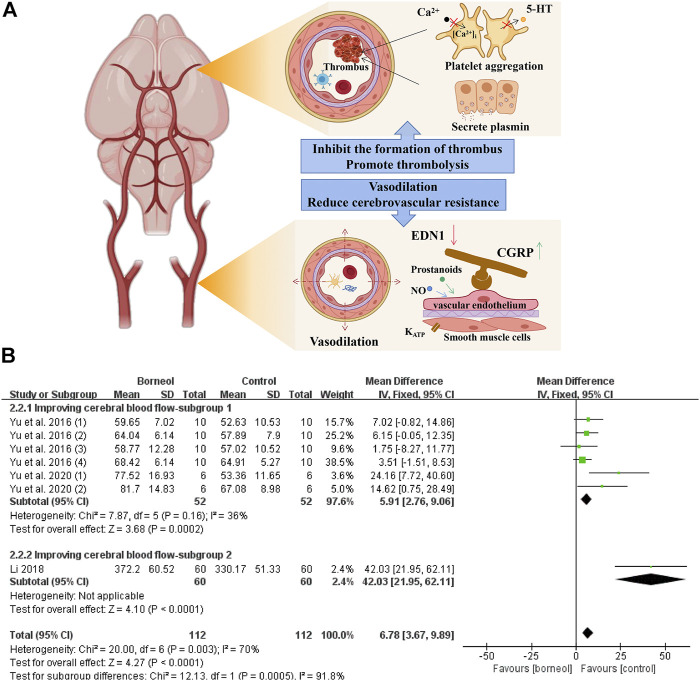
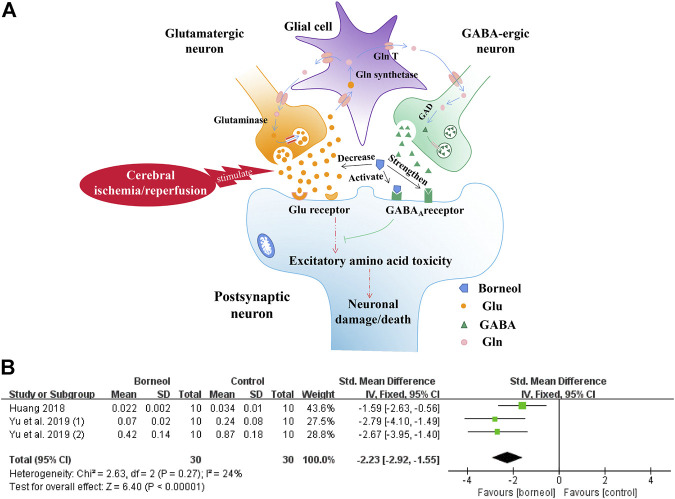
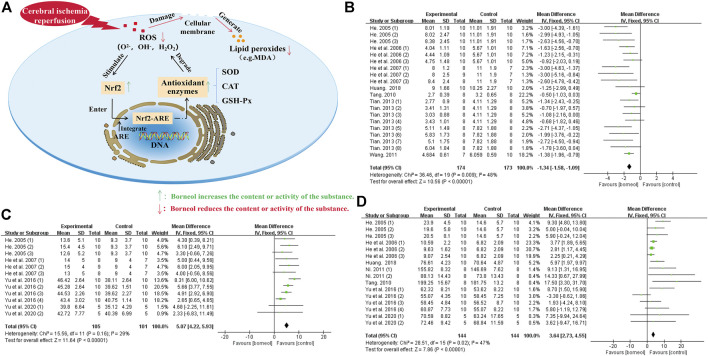
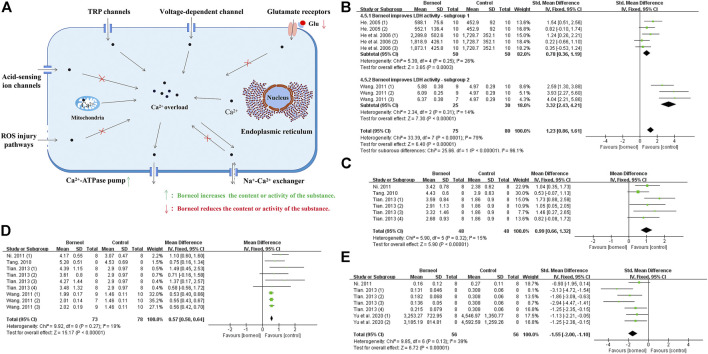
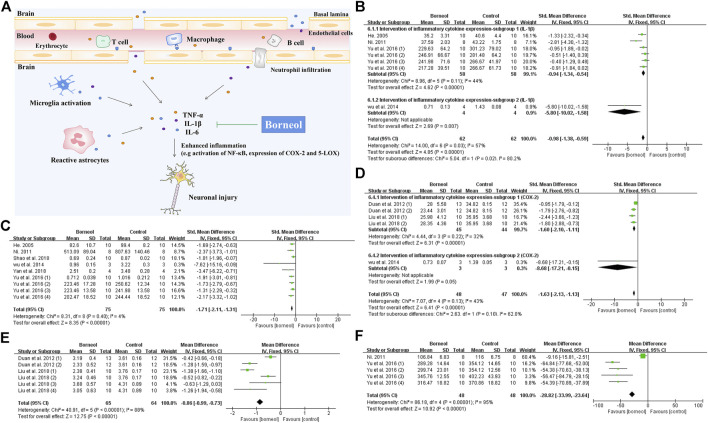
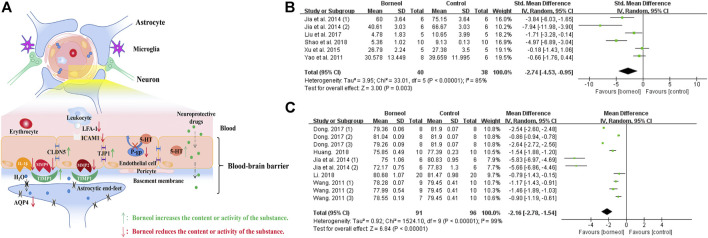
Borneol is a terpene and bicyclic organic compound that can be extracted from plants or chemically synthesized. As an important component of proprietary Chinese medicine for the treatment of stroke, its neuroprotective effects have been confirmed in many experiments. Unfortunately, there is no systematic review of these studies. This study aimed to systematically examine the neuroprotective effects of borneol in the cascade reaction of experimental ischemic stroke at different periods. Articles on animal experiments and cell-based research on the actions of borneol against ischemic stroke in the past 20°years were collected from Google Scholar, Web of Science, PubMed, ScienceDirect, China National Knowledge Infrastructure (CNKI), and other biomedical databases. Meta-analysis was performed on key indicators experiments. After sorting the articles, we focused on the neuroprotective effects and mechanism of action of borneol at different stages of cerebral ischemia. Borneol is effective in the prevention and treatment of nerve injury in ischemic stroke. Its mechanisms of action include improvement of cerebral blood flow, inhibition of neuronal excitotoxicity, blocking of Ca overload, and resistance to reactive oxygen species injury in the acute ischemic stage. In the subacute ischemic stage, borneol may antagonize blood-brain barrier injury, intervene in inflammatory reactions, and prevent neuron excessive death. In the late stage, borneol promotes neurogenesis and angiogenesis in the treatment of ischemic stroke. Borneol prevents neuronal injury after cerebral ischemia via multiple action mechanisms, and it can mobilize endogenous nutritional factors to hasten repair and regeneration of brain tissue. Because the neuroprotective effects of borneol are mediated by various therapeutic factors, deficiency caused by a single-target drug is avoided. Besides, borneol promotes other drugs to pass through the blood-brain barrier to exert synergistic therapeutic effects.
冰片是一种萜类双环有机化合物,可从植物中提取或通过化学合成得到。作为治疗中风的中成药的重要成分,其神经保护作用已在许多实验中得到证实。遗憾的是,尚未对这些研究进行系统综述。本研究旨在系统考察冰片在实验性缺血性中风不同时期的级联反应中的神经保护作用。从谷歌学术、科学网、PubMed、ScienceDirect、中国知网(CNKI)和其他生物医学数据库中收集了过去20年关于冰片对缺血性中风作用的动物实验和细胞研究文章。对关键指标实验进行荟萃分析。在对文章进行整理后,我们重点关注了冰片在脑缺血不同阶段的神经保护作用及作用机制。冰片对缺血性中风神经损伤的防治有效。其作用机制包括在急性缺血期改善脑血流量、抑制神经元兴奋性毒性、阻断钙超载以及抵抗活性氧损伤。在亚急性缺血期,冰片可能拮抗血脑屏障损伤、干预炎症反应并防止神经元过度死亡。在后期,冰片在治疗缺血性中风时促进神经发生和血管生成。冰片通过多种作用机制预防脑缺血后的神经元损伤,并且可以调动内源性营养因子来加速脑组织的修复和再生。由于冰片的神经保护作用由多种治疗因子介导,避免了单靶点药物所致的缺陷。此外,冰片促进其他药物透过血脑屏障发挥协同治疗作用。