Gao Zhiyun, Zhao Wentao, Liu Sha, Liu Zhifen, Yang Chengxiang, Xu Yong
Department of Psychiatry, First Hospital/First Clinical Medical College of Shanxi Medical University, Taiyuan, China.
Department of Humanities and Social Science, Shanxi Medical University, Taiyuan, China.
Front Psychiatry. 2021 May 4;12:633717. doi: 10.3389/fpsyt.2021.633717. eCollection 2021.
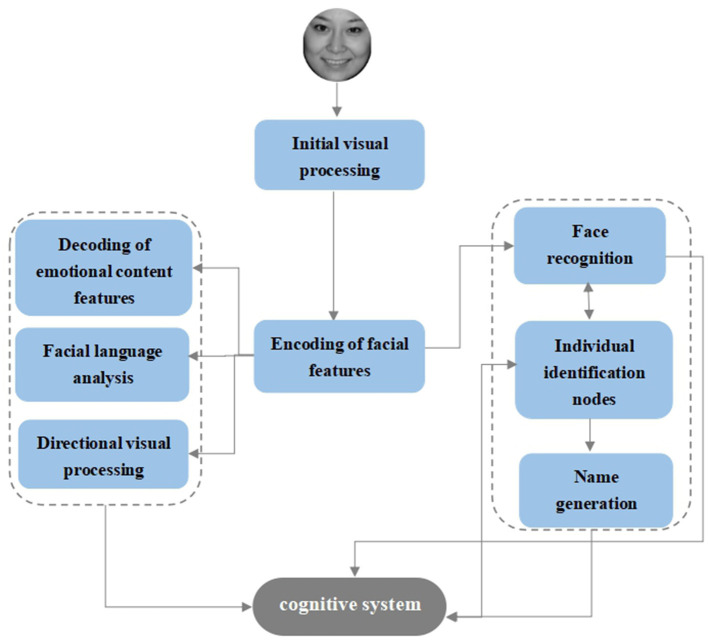
Deficits in facial emotion recognition are one of the most common cognitive impairments, and they have been extensively studied in various psychiatric disorders, especially in schizophrenia. However, there is still a lack of conclusive evidence about the factors associated with schizophrenia and impairment at each stage of the disease, which poses a challenge to the clinical management of patients. Based on this, we summarize facial emotion cognition among patients with schizophrenia, introduce the internationally recognized Bruce-Young face recognition model, and review the behavioral and event-related potential studies on the recognition of emotions at each stage of the face recognition process, including suggestions for the future direction of clinical research to explore the underlying mechanisms of schizophrenia.
面部情绪识别缺陷是最常见的认知障碍之一,并且已在各种精神疾病中得到广泛研究,尤其是精神分裂症。然而,关于精神分裂症及其疾病各阶段损伤相关因素仍缺乏确凿证据,这给患者的临床管理带来了挑战。基于此,我们总结了精神分裂症患者的面部情绪认知,介绍了国际公认的布鲁斯 - 扬面部识别模型,并回顾了关于面部识别过程各阶段情绪识别的行为和事件相关电位研究,包括对探索精神分裂症潜在机制的临床研究未来方向的建议。